
 Flexible Packaging Solutions | Nov 25, 2025
The food packaging industry faces an unprecedented challenge in developing sustainable packaging solutions that minimize environmental impact while maintaining the rigorous food safety standards essential for consumer protection and regulatory compliance. At BW Packaging, we recognize that modern packaging operations must effectively manage the intersection of sustainability goals, food safety requirements, and operational efficiency to remain competitive in today's environmentally conscious marketplace. The key to success lies in understanding how innovative materials, advanced equipment design, and optimized processes can achieve sustainability objectives without compromising the fundamental responsibility to protect food products and consumers.
The Sustainability Imperative in Food Packaging
Consumer awareness and regulatory pressure have transformed sustainability from an optional consideration to a business imperative that affects market access, customer relationships, and competitive positioning. Companies that fail to address sustainability concerns risk losing market share to more environmentally conscious competitors.
Environmental Impact of Traditional Packaging
Conventional packaging systems contribute significantly to environmental challenges through resource consumption, waste generation, and carbon emissions. Traditional plastic packaging materials depend heavily on fossil fuel feedstocks while creating persistent waste that accumulates in landfills and natural environments.
Manufacturing processes for conventional packaging materials require substantial energy inputs and generate significant greenhouse gas emissions. These impacts extend throughout the supply chain from raw material extraction through final disposal or recycling.
End-of-life challenges for traditional packaging include limited recyclability, contamination issues, and inadequate waste management infrastructure that result in environmental accumulation. These challenges have focused attention on alternative materials and packaging designs that reduce environmental impact.
Food waste prevention represents a critical consideration in sustainability discussions, as packaging that effectively protects products can significantly reduce the environmental impact of food loss throughout the supply chain.
Consumer and Regulatory Pressure for Change
Environmental consciousness among consumers has created market demand for sustainable packaging that influences purchasing decisions across demographic groups. A few examples include:
- Growing consumer awareness and purchasing preferences for sustainable products driving market demand for environmentally responsible packaging
- Corporate sustainability commitments and ESG reporting requirements creating internal pressure for measurable environmental improvements
- Emerging regulations targeting packaging waste and environmental impact establishing legal requirements for sustainability performance
- Retailer demands for sustainable packaging solutions as major retailers implement sustainability requirements for suppliers
- Investor pressure for environmental responsibility affecting capital availability and corporate valuation based on sustainability performance
These pressures create compelling business cases for sustainability initiatives while requiring practical solutions that maintain operational effectiveness and regulatory compliance.
Key Sustainability Challenges in Food Packaging
Implementing sustainable packaging solutions requires addressing fundamental tensions between environmental objectives and food safety requirements. These challenges demand innovative approaches that optimize multiple criteria simultaneously.
Material Selection and Performance Tradeoffs
Sustainable materials must maintain essential barrier properties including oxygen, moisture, and light protection while reducing environmental impact through renewable content, recyclability, or biodegradability. This requirement often involves trade-offs between environmental benefits and protective performance.
Mechanical properties including strength, flexibility, and processability must be maintained to ensure packaging integrity throughout manufacturing, distribution, and consumer use. Sustainable materials often exhibit different processing characteristics that require equipment modifications or operational adjustments.
Shelf life considerations become critical when evaluating sustainable materials, as reduced barrier performance could lead to food spoilage and waste that negates environmental benefits. Comprehensive testing and validation ensure that sustainable materials provide adequate protection for specific applications.
Cost implications of sustainable materials often include premium pricing that must be evaluated against long-term benefits including brand value, customer loyalty, and regulatory compliance advantages.
End-of-Life Considerations and Circularity
Designing for end-of-life requires comprehensive understanding of waste management systems and material recovery infrastructure. Key points to keep in mind include:
- Recyclability and material recovery systems ensuring that packaging materials can be effectively processed through existing or developing recycling infrastructure
- Compostability and biodegradation requirements meeting standards for industrial or home composting while maintaining performance during product shelf life
- Reusability and refillable packaging options creating durable packaging systems that support multiple use cycles
- Source reduction and right-sizing initiatives minimizing material usage while maintaining protective function and consumer appeal
- Design for disassembly and material separation enabling efficient separation of different materials for recycling or composting
These considerations require collaboration throughout the supply chain to ensure that sustainable packaging designs align with available end-of-life infrastructure and capabilities.
Sustainable Material Innovations
The development of sustainable packaging materials continues to advance rapidly, with new solutions that address traditional performance limitations while providing environmental benefits. Understanding these innovations enables informed selection of materials that balance sustainability with functionality.
Bio-Based and Renewable Materials
Plant-based polymers derived from renewable feedstocks including corn, sugarcane, and cellulose provide alternatives to petroleum-based plastics while maintaining essential packaging properties. These materials can be engineered to provide specific barrier and mechanical characteristics required for food packaging applications.
Renewable barrier coatings developed from natural materials including proteins, polysaccharides, and lipids offer sustainable alternatives to synthetic barrier films. These coatings can be applied to paper or other sustainable substrates to create effective barrier packaging.
Biodegradable polymers that break down under specific environmental conditions provide end-of-life advantages while maintaining performance during product shelf life. These materials require careful selection based on application requirements and available composting infrastructure.
Bio-based additives including natural antioxidants, antimicrobials, and UV protectants enhance packaging performance while supporting sustainability objectives through renewable sourcing and reduced synthetic chemical usage.
Recycled Content and Circular Materials
Post-consumer recycled content incorporation reduces demand for virgin materials while supporting circular economy principles. Advanced recycling technologies enable higher recycled content levels while maintaining food safety compliance through effective contamination removal.
Chemical recycling processes break down plastic waste into molecular components that can be reformed into new packaging materials with virgin-equivalent properties. These technologies enable true circularity for packaging materials that were previously difficult to recycle.
Closed-loop systems within specific supply chains enable packaging materials to be collected, processed, and reused within controlled systems that ensure quality and safety. These systems maximize material utilization while minimizing environmental impact.
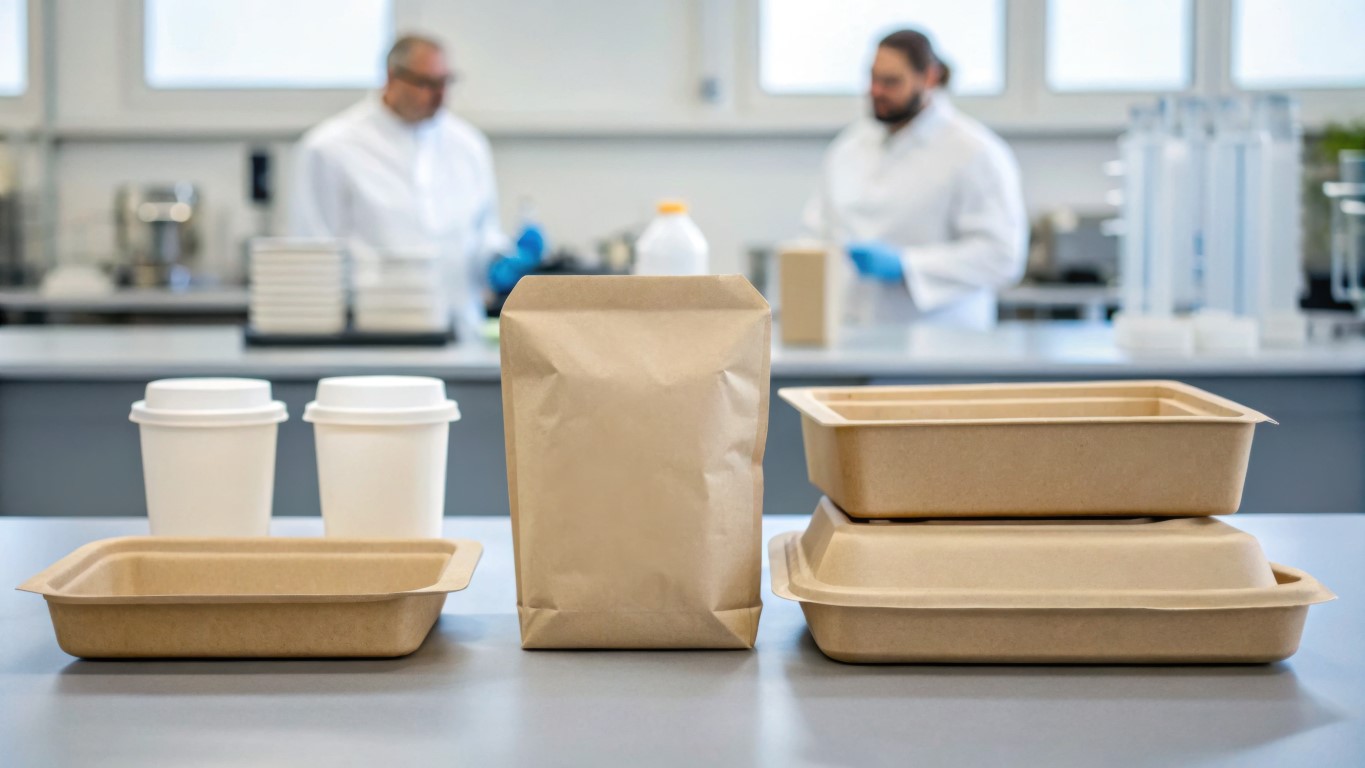
Recycled fiber products including molded pulp and recycled paperboard provide sustainable alternatives for secondary packaging and protective applications while utilizing existing waste streams.
Equipment Considerations for Sustainable Packaging
Modern packaging equipment must adapt to handle sustainable materials that often exhibit different properties compared to traditional packaging films and substrates. These adaptations enable successful implementation of sustainable solutions without compromising operational efficiency.
Advanced packaging systems incorporate features that optimize performance with sustainable materials while maintaining the speed and reliability essential for commercial operations. This equipment flexibility enables manufacturers to adopt sustainable solutions without major capital investments.
Material Handling and Processing Adaptations
Sustainable materials often require modified handling procedures due to different mechanical properties, temperature sensitivity, or processing characteristics. Equipment must provide adjustable controls that accommodate these variations while maintaining consistent performance.
Film tension control systems must adapt to varying material properties including stretch characteristics, tear resistance, and temperature sensitivity. These adaptations ensure optimal package formation while preventing material waste or damage.
Sealing technology adjustments may be required for sustainable materials that exhibit different melting characteristics, heat sensitivity, or adhesion properties. Advanced sealing systems provide precise control over temperature, pressure, and timing to optimize performance with diverse materials.
Static control measures become particularly important with certain sustainable materials that may exhibit different electrical properties compared to traditional packaging films. Effective static control ensures smooth material handling and consistent package formation.
Energy Efficiency and Process Optimization
Energy-efficient equipment design reduces the environmental impact of packaging operations while supporting sustainability objectives. Modern packaging systems incorporate features including variable frequency drives, heat recovery, and optimized heating systems that minimize energy consumption.
Process optimization through advanced controls and monitoring systems reduces waste while improving efficiency. These systems automatically adjust operating parameters to maintain optimal performance while minimizing material usage and energy consumption.
Predictive maintenance capabilities reduce equipment downtime while extending equipment life through proactive maintenance scheduling. This approach reduces the environmental impact of equipment replacement while maintaining operational reliability.
Modular equipment design enables upgrades and improvements without complete equipment replacement, supporting sustainable equipment lifecycle management while enabling adoption of new technologies and capabilities.
Implementation Strategies and Best Practices
Successful implementation of sustainable packaging solutions requires systematic approaches that address technical, operational, and commercial considerations. These strategies ensure that sustainability initiatives achieve intended objectives while maintaining business performance.
Phased implementation enables gradual transition to sustainable solutions while managing risks and learning from initial experiences. This approach allows optimization of processes and procedures before full-scale implementation.
Supplier collaboration ensures that sustainable materials meet quality and performance requirements while providing reliable supply and technical support. Strong supplier relationships enable successful implementation and continuous improvement of sustainable solutions.
Life cycle assessment provides comprehensive evaluation of environmental impacts throughout the packaging lifecycle from raw material production through end-of-life management. This assessment enables informed decision-making and optimization of environmental benefits.
Let BW Packaging Help You Maximize Your Sustainability Packaging Solutions
We understand the complexity of balancing sustainability with food safety and operational requirements. Our equipment designs support sustainable packaging initiatives while maintaining the performance and reliability essential for food packaging applications.
Contact our sustainability packaging specialists to uncover our advanced packaging technology that can support your sustainability objectives while maintaining food safety and operational excellence.
 %> "Flexible Packaging Solutions")