 Floor Space Requirements for Palletizing Systems: A Layout Planning Guide
May 18, 2026
<h2>When Every Square Foot Counts</h2><p>Maximizing end-of-line efficiency often hinges on a single, critical factor: your palletizer floor plan. But how much space do you really need?</p><p>It's a question that trips up more engineering teams than you might expect. You've identified the throughput requirements. You've selected a palletizer that meets your speed and product handling needs. You've even gotten capital approval. Then reality hits: the machine that looked perfect on the spec sheet doesn't actually fit in your facility—at least not when you account for everything else that needs to go around it.</p><p>The palletizer itself is just the beginning. Infeed conveyors, pallet dispensers, stretch wrappers, safety fencing, maintenance access, forklift traffic patterns—all of these require floor space that's easy to underestimate during the planning phase. And the consequences of getting it wrong are expensive: production bottlenecks, safety hazards, costly redesigns, and systems that never achieve their rated throughput because everything is too cramped.</p><p>A well-planned palletizer layout is more than just fitting a machine into available space. It's the cornerstone of unlocking optimal efficiency, optimizing forklift traffic, ensuring operator safety, and future-proofing your packaging operations. Get this right, and your end-of-line becomes a competitive advantage. Get it wrong, and you'll be living with the consequences for years.</p><p>At BW Packaging, we've helped manufacturers across food, pet food, agriculture, and industrial sectors design palletizing systems that maximize performance within real-world space constraints. This guide shares what we've learned about getting floor plans right the first time.</p><h3>Who We Are</h3><p>BW Packaging helps manufacturers across agriculture, pet food, industrial, and bulk ingredients sectors transform their end-of-line operations through flexible bag filling, sealing, and palletizing solutions. Our automated <a href="/products/flexible-bagging-wrapping/bag-filling">Thiele bagging</a>, <a href="/products/palletizing/bag-palletizers">SYMACH conventional palletizing</a>, and <a href="https://www.bwintegratedsystems.com/products/palletizing" data-sf-ec-immutable=""></a><a href="/products/palletizing/case-tray-bulk-package-palletizers">robotic palletizing </a>solutions are known for their efficiency, versatility, precision, and ease of operation. We offer our clients training, service, and a lifetime of support for every solution sold.</p><h2>Why Your Palletizer Floor Plan is More Than Just a Footprint</h2><p>Floor space costs money—whether you're paying rent, maintaining climate control, or simply accounting for opportunity cost of what else could occupy that area. But cramming equipment into the minimum possible footprint creates problems that cost far more than the space you saved.</p><h3>Impact on Workflow and Throughput</h3><p>A palletizer's rated speed means nothing if upstream and downstream constraints prevent it from operating at capacity. Poor layouts create bottlenecks that ripple through your entire production line.</p><p>Without adequate accumulation space on the infeed, your palletizer starves whenever the filling line hiccups. Products back up, sensors trigger stops, and your theoretical 25 bags per minute becomes 18 in actual operation. Without proper buffering at the end of the line, completed pallets stack up waiting for forklifts, and the whole system grinds to a halt while operators scramble to clear the jam.</p><p>The most sophisticated palletizer in the world can't overcome a layout that doesn't allow products and materials to flow smoothly through the system.</p><h3>Safety First</h3><p>Layout decisions directly impact operator safety—and the regulatory compliance that goes with it. Cramped spaces create hazards: operators reaching into pinch points, forklifts navigating tight corners with limited visibility, maintenance technicians working in awkward positions because there's no room to access equipment properly.</p><p>OSHA takes a dim view of layouts that force workers into dangerous situations. Beyond regulatory concerns, manual palletizing is a leading cause of musculoskeletal injuries, costing businesses billions of dollars annually in direct costs. Automated palletizing reduces these injuries—but only if the layout provides adequate safety zoning and keeps operators out of harm's way.</p><h3>The High Cost of Poor Planning</h3><p>Layout problems are most costly when they surface after installation—especially in existing (brownfield) facilities. Failing to account for walls, utilities, access constraints, and legacy infrastructure often leads to reduced throughput, compromised safety, or expensive rework. Experienced layout planning anticipates these realities upfront, avoiding retrofits and ensuring the system performs as intended from day one.<br></p><h4>The Core Components of a Complete Palletizing Cell</h4><p>Palletizers come in two fundamental configurations, each with different space implications.</p><p><a data-sf-ec-immutable=""><strong></strong></a><strong><a href="/products/palletizing/bag-palletizers">Conventional (high-level) palletizers</a></strong> use mechanical layer-forming and placement mechanisms. They tend to have larger footprints but can achieve very high speeds. The <a href="/products/palletizing/bag-palletizers/mach-series-palletizers">MACH series</a> exemplifies this approach—combining robust construction, a compact footprint relative to many robotic alternatives, and speeds of up to 50 bags per minute—with options like the Multi‑gripper to handle bags, boxes, and crates on a single machine.</p><p><strong><a href="/products/palletizing/case-tray-bulk-package-palletizers">Robotic palletizers </a></strong>use articulated arms with end-of-arm tooling. They offer flexibility in handling multiple product types and pallet patterns but require safety cells that add to the overall footprint.<strong> </strong></p><h4>Infeed and Outfeed Conveying Systems</h4><p>Products don't teleport from your filling line to the palletizer. Conveyor systems bridge that gap—and they need space.</p><p><strong>Infeed conveyors</strong> must provide accumulation capacity to buffer variations in upstream production. If your filler runs in batches or experiences periodic slowdowns, the infeed accumulation zone absorbs those fluctuations without stopping the palletizer. Plan for at least 30-60 seconds of accumulation at your target throughput rate.</p><p><strong>Outfeed conveyors</strong> move completed pallets to stretch wrapping, labeling, or pickup points. The length depends on how quickly forklifts can remove finished pallets and whether you're integrating additional end-of-line processes.</p><p>Integration with upstream equipment matters too.<a href="https://bw1.sharepoint.com/products/flexible-filling-closing/bag-filling" data-sf-ec-immutable=""> </a><a href="/products/flexible-bagging-wrapping/bag-filling">Thiele & Symach bag filling systems </a>are designed to work seamlessly with our palletizers, but that integration requires proper conveyor design to maintain product orientation and spacing.</p><h4>Pallet Handling Equipment</h4><p>Empty pallets need to get into the system, and the mechanism for doing so requires dedicated space.</p><p><strong>Pallet dispensers</strong> hold stacks of empty pallets (typically 10-15 high) and feed them into the palletizing position automatically. They eliminate the need for operators to manually place pallets but add to the cell footprint.</p><p><strong>Pallet transport systems</strong> move pallets through the cell—from dispenser to stacking position to outfeed. Options include roller conveyors, chain conveyors, and turntables for changing pallet orientation. Each has different space requirements and traffic flow implications.</p><p><strong>Empty pallet staging</strong> requires space for forklift access to replenish the dispenser. If you're running multiple shifts without stopping, you need enough pallet capacity to avoid frequent replenishment interruptions.</p><h4>End-of-Line Integration</h4><p>Most palletizing systems don't end at the palletizer. Stretch wrapping, labeling, and other processes typically follow.</p><p><strong>Automatic stretch wrappers</strong> secure loads for shipping. Turntable wrappers rotate the pallet while applying film; rotary arm wrappers keep the pallet stationary while the arm orbits around it. Rotary arm systems often work better in tight spaces but have their own clearance requirements.</p><p><strong>Labeling systems</strong> apply shipping labels, barcodes, or RFID tags. While compact, they need integration into the material flow and access for label replenishment.</p><h4>Safety Systems</h4><p>Automated palletizing creates hazards that require proper safety protocol. The safety system often consumes as much floor space as the palletizer itself.</p><p><strong>Physical guarding</strong> (fencing, barriers) creates a perimeter around the automated cell. Standard industrial fencing requires posts every 6-8 feet with adequate clearance from moving equipment inside.</p><p><strong>Light curtains and safety scanners</strong> can reduce physical guarding requirements in some configurations, but they have their own installation requirements and monitored zones.</p><p><strong>Emergency stops</strong> need to be accessible from multiple positions around the cell—which means those positions need to exist in your layout.</p><p><strong>Access gates</strong> with interlocks allow entry for maintenance while ensuring the system stops when someone enters the guarded area. Gate locations influence traffic flow and maintenance accessibility.</p><h2>Four Critical Factors That Determine Your Space Requirements</h2><p>Every palletizing application is different. These four factors drive the specific space requirements for your system.</p><p>Throughput Needs</p><p>Higher throughput generally requires more space—not just for a larger or faster palletizer, but for the supporting systems that keep products flowing.</p><p>At 15 bags per minute, many palletizing setups can run with minimal accumulation and a single pallet position. As rates climb toward 40 bags per minute, continuous operation typically requires more buffer/accumulation and often dual or multiple pallet stations to keep the line running during pallet changeovers. SYMACH changes that equation: the <a href="/products/palletizing/bag-palletizers/mach-series-palletizers">ROTAX palletizing head</a> is designed for capacity, reducing movements and delivering positioning speeds up to 50 BPM so you can often maintain high‑speed bagging performance with less reliance on accumulation, making SYMACH the go‑to choice when throughput and uptime are non‑negotiable.</p><p>The relationship isn't linear. Doubling throughput might require tripling floor space once you account for all the supporting equipment.</p><h3>Product and Pallet Specifications</h3><p>The physical characteristics of what you're palletizing directly impact space requirements.</p><p><strong>Product dimensions</strong> determine how much accumulation space you need per unit of time. Large bags take more conveyor length than small cases at the same throughput rate.</p><p><strong>Product weight</strong> affects conveyor specifications and structural requirements. Heavy products need more robust (and often larger) equipment.</p><p><strong>Pallet dimensions</strong> set the baseline for the stacking area. Standard GMA pallets (48" x 40") are common, but if you're also handling Euro pallets (800mm x 1200mm) or other sizes, your system needs to accommodate the largest option.</p><p><strong>Stack height</strong> determines vertical clearance requirements. A 2650mm stack height (common for SYMACH systems) needs adequate overhead clearance plus room for the palletizer mechanisms above the stack.</p><h3>Number of Production Lines Served</h3><p>A palletizer that receives product from a single filling line has straightforward infeed requirements. A palletizer serving multiple lines requires merge conveying, traffic management, and potentially product identification systems—all of which consume floor space.</p><p>Each additional line feeding the palletizer adds complexity. Plan for the routing, merging, and buffering required to handle products from all sources without creating conflicts. Robotic palletizers often provide the most efficient use of floor space when flexibility, multi‑line feeding, or SKU variety is required.</p><h3>Level of Automation and Flexibility</h3><p>More automation typically means more equipment—and more space. But it also means less manual intervention, fewer operators, and more consistent operation.</p><p><strong>Automatic changeovers</strong> eliminate manual adjustments when switching products but require space for the mechanisms that enable them.</p><p><strong>Multiple pallet positions</strong> allow continuous operation (building one pallet while removing another) but double the space requirement in the stacking area.</p><p><strong>Integrated controls and sensors</strong> for automatic operation need cabinet space and wire routing that manual systems don't require.</p><p>The flexibility to handle multiple products, pallet patterns, and packaging formats adds value—but it also adds equipment. Plan accordingly.</p><h2>Partner with BW Packaging for an Optimized End-of-Line Solution</h2><p>Navigating the complexities of palletizer floor planning requires expertise that most facilities don't have in-house. The interactions between throughput requirements, product characteristics, safety systems, and physical constraints create a multidimensional puzzle that benefits from experienced guidance.</p><p>BW Packaging brings specific capabilities to this challenge:</p><p><strong>Technical expertise across diverse applications.</strong> We've designed palletizing systems for pet food, agricultural products, industrial chemicals, and food processing—each with unique requirements. That breadth of experience informs solutions that address your specific challenges.</p><p><strong>Integrated solutions from filling to palletizing.</strong> Our Thiele bag filling systems and SYMACH palletizers are designed to work together. That integration simplifies layout planning because we understand how the complete system functions, not just individual machines.</p><p><strong>Focus on total cost of ownership.</strong> The cheapest palletizer isn't the best value if layout compromises force you to accept reduced throughput or increased maintenance costs. We design for long-term performance, not just initial price.</p><p><strong>Lifetime support for sustained performance.</strong><a href="https://www.bwflexiblesystems.com/customer-services" data-sf-ec-immutable=""> Our service teams</a> support your system throughout its operational life. That ongoing relationship means we're invested in designs that work well over time, not just on day one.</p><p>Ready to design a palletizing system that maximizes your floor space and boosts end-of-line efficiency? <a href="/contact">Contact our integrated end-of-line automation experts</a> at BW Packaging today for a personalized layout consultation.</p><div align="center"></div><h2>Frequently Asked Questions</h2><p><strong>How much floor space does an automatic palletizer actually need?</strong></p><p>Space requirements vary significantly based on palletizer type, throughput, and required peripherals. A typical palletizing cell—including the machine, safety guarding, conveyors, and buffer zones—might range from 15' x 15' to 25' x 25' or more. High-speed applications or those with extensive pallet handling requirements need additional space. The most accurate answer comes from a detailed assessment of your specific application.</p><p><strong>What components must be included in a palletizer system floor plan besides the machine itself?</strong></p><p>Essential components include infeed and outfeed conveyors (with appropriate accumulation zones), pallet dispensers, pallet transport conveyors or turntables, stretch wrappers, safety guarding (fencing, light curtains, or scanners), maintenance access clearances, and staging areas for empty and full pallets. Depending on your application, you may also need labeling systems, inspection stations, or product conditioning equipment.</p><p><strong>How do you design a palletizer layout for maximum safety and efficiency?</strong></p><p>Start by mapping product flow from upstream processes through palletizing to shipping. Then map personnel flow for operators, maintenance technicians, and forklift drivers. Ensure these flows don't conflict. Define clear safety zones with appropriate guarding that doesn't impede necessary access. Position operator interfaces where they're accessible without entering hazardous areas. Design maintenance access that allows service without excessive disassembly. Finally, validate the layout against throughput requirements to ensure the system can actually achieve target performance.</p><p><strong>Can a palletizing system be integrated into an existing line with limited space?</strong></p><p>Yes, especially with compact solutions designed for space-constrained applications. The SYMACH 3500S palletizer, for example, combines high throughput with a compact footprint specifically suited to challenging installations. Careful planning of infeed/outfeed routing, creative use of vertical space, and selection of appropriately sized components can enable palletizing automation in facilities that seem too small for traditional systems. An experienced integration partner can identify opportunities that might not be obvious from catalog specifications alone.</p>
 The Hidden Costs of a Bad Pallet
May 4, 2026
<h2><strong>The Perfect Pallet: Built for the Automated Warehouse</strong></h2><p>What's changed isn't your product, it's the environment your pallets are entering.</p><p>More and more customers are moving toward highly automated warehouses equipped with AS/RS systems, robotic pallet handling, automated depalletizing, and zero tolerance for instability or variation. In these environments, there is no forklift operator compensating for a soft corner or a slightly uneven layer. Every movement is programmed. Every handoff is precise. The system assumes one thing: every pallet is perfect.</p><p>If a load shifts, overhangs, or deviates even slightly from specification, the automation doesn't adapt, it stops. What might pass in a manual operation becomes a rejection in an automated one: delayed shipments, rework, and added cost.</p><p>As automated warehousing becomes the standard, pallet quality is emerging as a critical success factor. Variability that once went unnoticed now directly impacts throughput, warehouse acceptance, and customer satisfaction. Pallet pattern optimization is no longer optional, it's the foundation for building stable, dimensionally consistent, automation-ready loads that move seamlessly through today's most demanding distribution environments.</p><h2>Who We Are</h2><p>BW Packaging helps manufacturers across agriculture, pet food, industrial, and bulk ingredients sectors transform their end-of-line operations through flexible bag filling, sealing, and palletizing solutions. Our automated <a href="/products/palletizing/bag-palletizers">SYMACH conventional palletizing</a>, and <a href="/products/palletizing/case-tray-bulk-package-palletizers">robotic palletizing</a> solutions are known for their efficiency, versatility, precision, and ease of operation. We offer our clients training, service, and a lifetime of support for every solution sold.</p><h2>What is Pallet Overhang (And Why Is It Costing You Money)?</h2><p>Pallet overhang occurs when products extend beyond the edge of the pallet footprint. You might see bags or cases hanging over by just an inch or two and think it's not a big deal. But that small overhang creates a cascade of expensive problems.</p><p>Products extending beyond the pallet edge are highly susceptible to compression damage. When pallets are stacked in a warehouse or truck, the weight doesn't rest on the pallet deck, it rests on your product. That overhang gets crushed, compressed, and damaged before it ever reaches your customer. During transit, those exposed edges are vulnerable to punctures and impacts from other pallets, warehouse equipment, and handling.</p><p>The flip side - underhang - creates its own problems. When products are placed too far inside the pallet edge, you're wasting valuable space and creating instability. The load becomes unbalanced and is more likely to shift during transport.</p><p>Here's where it gets expensive. Many distribution centers now use automated storage and retrieval systems (AS/RS) that require precise pallet dimensions. A load with overhang won't fit properly and will be automatically rejected. Your shipment goes back, your customer waits, and you absorb the cost of rework.</p><p>Industry research shows that up to 11% of products arriving at distribution centers have some level of damage, according to <a href="https://www.packagingdigest.com/trends-issues/mitigating-packaging-damage-in-the-supply-chain" data-sf-ec-immutable="">Packaging Digest,</a> with a significant portion attributed to poor palletizing and transit-related issues. In the CPG and grocery sectors alone, damaged goods result in an estimated $1 billion to $2 billion in annual losses in the U.S. That's money coming directly out of manufacturers' margins, and much of it is preventable.</p><h2>The Pillars of an Optimized Pallet Pattern</h2><p>Getting palletization right requires balancing three interconnected factors: stability, density, and integrity. Each one impacts the others, and all three affect your costs.</p><h3>Stability: The Foundation of Safe Shipping</h3><p>The way you arrange products on a pallet determines whether that load arrives intact or becomes a mess in the back of a truck. There are two primary stacking approaches and understanding when to use each is critical.</p><p>Columnar stacking places products directly on top of each other in vertical columns. This approach offers excellent compression strength because the weight transfers straight down through aligned units. However, it provides poor lateral stability, meaning loads can topple sideways if they shift during transit.</p><p>Interlocking patterns rotate product orientation between layers, so units overlap, creating a unified block that resists lateral movement. This approach sacrifices some compression strength but dramatically improves stability during handling and transport.</p><p>For most applications, interlocking patterns deliver superior results. Our experience with agricultural products, pet food, and industrial materials has taught us that this stacking method guarantees the best stability for challenging products like filled bags that can shift and settle.</p><h3>Density: Maximizing Every Shipment</h3><p>Cube utilization—how efficiently you fill available space—directly impacts your shipping costs. Every inch of wasted space on a pallet translates to more pallets shipped, more trucks on the road, and higher freight expenses.</p><p>Optimizing pallet density means calculating the ideal arrangement to achieve the highest product count per pallet while respecting weight limits and stability requirements. When done correctly, companies can improve truckload space utilization by 5-10%, directly reducing fuel consumption and freight costs. For a facility shipping thousands of pallets annually, those percentage points translate into substantial savings.</p><h3>Integrity: Protecting Products from Bottom to Top</h3><p>A proper pallet pattern maintains the structural integrity of every unit in the stack. Products at the bottom bear the weight of everything above them, and a poorly designed pattern can crush lower layers while leaving space wasted at the top.</p><p>Pattern optimization considers product characteristics—bag stiffness, settling behavior, surface friction—to distribute weight appropriately and prevent damage at every level. This is especially critical for products like pet food or agricultural commodities where bag contents can shift during handling.</p><h2>From Manual Chaos to Automated Consistency: Solving the Optimization Puzzle</h2><p>If you're still relying on manual pallet stacking, you're fighting an uphill battle. Human error introduces inconsistency into every load—varying techniques between operators, fatigue-related mistakes during long shifts, and the simple reality that people can't maintain machine-level precision over thousands of repetitions.</p><p>Traditional slide valve systems or conventional grippers can stack inaccurately and damage packaging. You might achieve a good pattern on one pallet and find the next one off by inches. That inconsistency creates quality issues, rework, and customer complaints that are impossible to eliminate through training alone.</p><p>Automated palletizing solves this problem at its root. Modern systems execute patterns with precision every single time, eliminating the variability that causes problems downstream. For operations requiring maximum pallet pattern flexibility, robotic palletizers provide virtually unlimited pattern combinations and rapid changeovers—particularly for case‑packed products.</p><h2>What Makes SYMACH Palletizers Different</h2><p>Not all automated palletizers are created equal. SYMACH solutions incorporate unique features specifically designed to address the challenges of pallet pattern optimization.</p><p><strong>Product-Friendly Handling with the Manipulator: </strong>A unique and important feature of SYMACH palletizers is the manipulator, which handles each bag individually. Unlike systems that drop or slide products into position, bags glide horizontally into the manipulator over a smooth surface. Once inside, bags are stopped by a fixed final partition and carefully centered. The position is secured before the bag is released exactly over the programmed position. This method enables precise stacking with overlaps while protecting product and packaging integrity.</p><p><strong>The Stacking Cage: Eliminating Overhang at the Source: </strong>The optional stacking cage is a SYMACH innovation that prevents overlapping stacked bags from gliding on one another and causing the load to extend beyond the pallet. By completely enclosing bags when stacking them onto the pallet, bag gliding is prevented. The load maintains the desired measurements and has a tight, professional appearance that meets AS/RS requirements and impresses customers.</p><p><strong>Intuitive Software for Fast Changeovers: </strong>SYMACH palletizers feature user-friendly software with intuitive drag-and-drop operation. Operators can create and switch patterns for different SKUs quickly—critical for facilities managing multiple products. The system stores up to 250 programs and 350 sack configurations, enabling rapid changeovers without reprogramming.</p><p><strong>Flexibility Across Product Types: </strong>The Symach philosophy is that any palletizer should be capable of producing the same level of stacking quality, regardless of speed. Unlike other palletizer systems, SYMACH will stack any bag, regardless of type. Whether you're handling pet food, onions, carrots, potatoes, grass seed, cartons, or bakery products, the system adapts without compromising quality.</p><p>For high-speed applications, the <a href="/products/palletizing/bag-palletizers/mach-series-palletizers">MACH series with Rotax technology</a> achieves speeds of up to 50 bags per minute without compromising stacking quality. The Rotax technology enables bags to be positioned quickly and accurately, resulting in stable pallets without overhang.</p><p>For facilities with space constraints or those primarily handling boxes and crates, the <a href="/products/palletizing/bag-palletizers/symach-3500s-palletizer">3500S palletizer</a> combines a compact footprint with the stacking cage technology to ensure tight, stable stacks even at higher speeds.</p><h2>The ROI of Getting It Right: Quantifying the Benefits</h2><p>When you move from manual or inconsistent palletizing to an optimized, automated approach, the benefits compound across your operation:</p><p><strong>Reduced Product Damage: </strong>Fewer unsaleable goods, improved customer satisfaction, and reduced returns. Every bag that arrives intact is revenue protected.</p><p><strong>Lower Shipping Costs: </strong>Maximize truckload capacity through optimized cube utilization, leading to fewer shipments and reduced freight expenses.</p><p><strong>Improved Warehouse Safety: </strong>Eliminate unstable loads and the risk of collapses. Protect your workers and avoid costly incidents.</p><p><strong>Enhanced Sustainability: </strong>Reduce product waste from damage and decrease your carbon footprint through optimized transportation. Fewer trucks, less fuel, smaller environmental impact.</p><p><strong>Increased Throughput: </strong>Automate what's often a manual bottleneck at the end of the line. Companies that implement automated palletizing can see a 10-15% reduction in packaging material costs due to more stable, uniform loads, and can increase end-of-line throughput by over 25%.</p><p><strong>Material Savings: </strong>Stable, uniform loads require less stretch wrap to secure. Those material savings add up across thousands of pallets.</p><h2>Build a Better Pallet, Build a Better Bottom Line</h2><p>A well-built, optimized pallet is more than just the last step in your production process, it's a competitive advantage that impacts profitability with every shipment. The pallet that arrives at your customer's dock is often the first physical impression they have of your operation. A tight, stable, professional-looking load communicates quality. A shifted, damaged mess communicates the opposite.</p><p>Moving from manual methods to an automated, optimized approach isn't just about preventing problems. It's about transforming the end of your line from a potential liability into a calling card you can be proud of.</p><p>The technology exists today to solve pallet pattern challenges at their root—with precision, consistency, and features like the stacking cage and product-friendly manipulator that address the specific problems manufacturers face. The question isn't whether you can afford to upgrade your palletizing operation. It's whether you can afford not to.</p><p>Ready to see how an optimized pallet pattern can transform your end-of-line efficiency and reduce costs? <a href="/contact">Contact BW Packaging </a>to learn more about our integrated palletizing solutions and how they can benefit your operation.</p>
 Palletizing: How to Recognize the Right Opportunity — and Ask the Right Questions
April 26, 2026
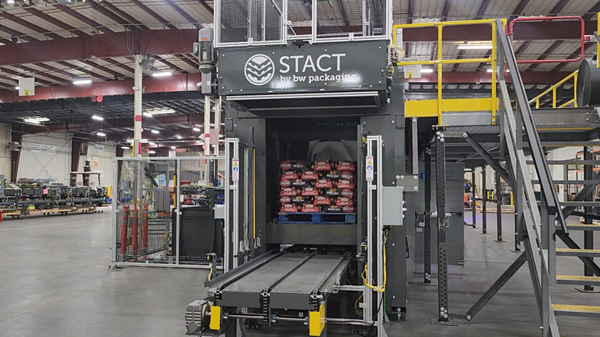
<p>Most palletizing conversations don't start with palletizing.</p><p><a data-sf-ec-immutable=""></a>They start with a problem. A safety incident on the end-of-line that triggers a corrective action. A <a href="https://www.uschamber.com/workforce/understanding-americas-labor-shortage" target="_blank" data-sf-ec-immutable="">labor shortage</a> that's finally forced the issue everyone has been deferring for two years. A complaint about a damaged product arriving at a distribution center. A new line is being planned for a plant expansion that doesn't have room for a manual palletizing crew.</p><p>These aren't isolated events. They're signals, and they almost always point to the same place: the end-of-line has become a constraint, and palletizing is where that constraint is doing the most damage.</p><p>If you recognize any of these situations in your own facility, you're not looking palletizing problem. You're looking at a palletizing opportunity.</p><p>One of the most common misconceptions plant managers carry into a palletizing conversation is that it only applies to a specific type of product or operation. A bag line. A case packer. A beverage facility.</p><p>In reality, it doesn't matter whether your product arrives at the end-of-line in a bag, box, carton, can, crate, or bottle, there is always a viable solution. What changes is the application: how the product needs to be handled, how the pallet needs to be built, and what level of automation is right for your throughput and operating environment.</p><p>That's why the best palletizing projects don't start with a technology discussion. They start with an application discussion—one grounded in the specifics of what you're running, what you're trying to solve, and what your facility can realistically support.</p><p>Across every market BW Packaging serves, from agricultural bags of carrots and potatoes to industrial sacks of cement and fertilizer, from retail cases of food products to bulk bags of coffee, salt, and sugar, the same principle applies: if pallets are leaving your facility, palletizing is worth evaluating.</p><h3><strong>The Signals That Tell You It's Time</strong><strong></strong></h3><p>Palletizing typically surfaces as an opportunity when one or more of the following situations exists in your operation. These aren't hypotheticals, they're the conversations we have with plant managers every day.</p><table cellspacing="5" style="margin-right: auto"><tbody><tr><td style="width: 50%; padding-left: 5px; padding-right: 5px"><p><strong>Product Damage in Transit:</strong> Bags, cases, or cartons arriving at customer docks damaged, collapsed, or out of pattern are often a direct result of inconsistent manual pallet building. When people build pallets by hand under production pressure, consistency suffers, and so do your customer relationships.</p><p><strong>End-of-Line Congestion:</strong> When your upstream equipment is running well but product is backing up at the end-of-line, palletizing is usually the bottleneck. Automated palletizing solves this by maintaining a consistent, uninterrupted output rate that keeps pace with your line.</p><p><strong>Labor Shortages and Safety Concerns:</strong> Manual palletizing is one of the most physically demanding jobs in a packaging facility, and one of the hardest to staff reliably. Repetitive heavy lifting creates ergonomic risk, drives injury claims, and makes it increasingly difficult to maintain consistent end-of-line performance. Automation removes the physical burden and the staffing vulnerability at the same time.</p><p><strong>Capacity Expansion or New Line Investment:</strong> When you're adding a line or expanding a facility, building manual palletizing into the plan is building a future constraint into your investment. Automated palletizing designed into a new line from the start is almost always more cost-effective, and more capable than retrofitting it later.<br></p></td><td style="width: 50%; padding-left: 5px; padding-right: 5px"><img src="https://bwpkg-bw-ppt-sf-prod-stage.azurewebsites.net/images/default-source/blog/palletizing-blog-graphic-5-signals-it's-time-to-revisit-palletizing.png?sfvrsn=96792658_1" sf-image-responsive="true" sf-size="221266" data-sf-ec-immutable="" width="2250" height="2814" alt="5 Signals it's time to revisit palletizing" title="Palletizing Blog Graphic 5 Signals it's time to revisit palletizing" style="max-width: 100%; height: auto"><p><br></p></td></tr></tbody></table><p><strong>Moves Toward Automated Warehousing or AGVs:</strong> If your distribution network is evolving toward automated storage and retrieval or automated guided vehicles, pallet quality and consistency aren't optional. Automated palletizing ensures every pallet meets the dimensional and stability requirements those systems demand.</p><p>If any of these descriptions fits a situation in your facility, the question isn't whether palletizing is worth exploring. The question is where to start.</p><h3><strong>The Questions That Define a Palletizing Project</strong></h3><p>Before any solution is discussed, before equipment types, automation levels, or footprints enter the conversation, there are a small number of fundamentals that determine what a palletizing application actually requires. These questions are deliberately straightforward. They surface what matters.</p><img style="max-width: 100%; height: auto" width="500" height="261" title="Palletizing Blog Graphic 4 questions that define a palletizing opportunity" src="/images/default-source/blog/palletizing-blog-graphic-4-questions-that-define-a-palletizing-opportunity.png?sfvrsn=deaefef6_1" sf-image-responsive="true" sf-size="275186" alt="4 questions that define a palletizing opportunity"><p><br></p><p><strong>What Is Being Palletized?</strong><strong></strong></p><p>Packaging format is the foundation of every palletizing application. A bag of cat litter handles differently than a case of canned goods. A carton of frozen food stacks differently than a crate of produce. A bottle palletizes differently than a barrel. Understanding the format, and the product characteristics that affect handling, stability, and orientation is step one in every application qualification.</p><p><strong>What Performance Is Required?</strong></p><p>Line speed determines the throughput demands the palletizer must meet. More importantly, it reveals whether palletizing has already become the constraint limiting your overall line output. If your upstream equipment is capable of running faster than your end-of-line can keep up, the throughput gap is costing you production you've already paid for in upstream equipment capacity.</p><p><strong>How Does the Pallet Need to Be Built?</strong></p><p>Pallet size, stacking pattern, and build height aren't aesthetic preferences, they're engineering requirements. They determine the mechanical and control complexity of the palletizing solution, the pallet stability needed to survive your supply chain, and the consistency expectations your customers or distribution centers have placed on incoming loads.</p><p><strong>What Problem Is Actually Being Solved?</strong><strong></strong></p><p>This is the most important question in a palletizing discussion, and the one most often skipped in favor of jumping straight to equipment specifications. Palletizing projects that succeed are anchored in a clear understanding of why the customer is changing, not just what they're buying.</p><p>Labor reduction, safety improvement, pallet quality, capacity growth, and distribution network integration are all legitimate drivers, but they point toward different solution priorities. Understanding the primary driver shapes everything from the automation level to the support model to the metrics that will define project success.</p><h3><strong>The Factors That Shape Complexity</strong></h3><p>Two operations with identical line speeds can require entirely different palletizing approaches. Understanding what creates that difference early in the conversation prevents over-engineering, under-engineering, and expensive surprises later.</p><p><strong>Variability and SKU Complexity</strong></p><p>The number of SKUs running through a line, the frequency of changeovers, and the need to build multiple pallet configurations simultaneously all effect palletizing complexity in ways that throughput alone doesn't reveal. An operation running one product into one pallet pattern has fundamentally different requirements than one running twenty SKUs across multiple pallet configurations throughout a shift. Identifying variability early is what separates a well-matched solution from one that creates new problems while solving old ones.</p><p><strong>Space and Environment</strong></p><p>Many palletizing projects become expensive late because physical constraints are discovered after a solution has already been specified. Available floor space, ceiling height, access for maintenance, and the presence of environmental challenges, dust, washdown requirements, extreme temperatures, corrosive materials, all directly influence layout, equipment selection, and long-term reliability.</p><p>In agricultural and industrial environments, dust and moisture exposure are daily realities that equipment must be built to handle. In food applications, cleanability and hygienic design are non-negotiable. In bulk ingredients facilities, ceiling height and pallet staging space often determine what palletizing configurations are even feasible.</p><p>These are not secondary details to sort out after a solution is selected. They are qualification criteria that belong at the beginning of the conversation.</p><h3><strong>When a Discussion Becomes a Project</strong></h3><p>A palletizing inquiry moves from exploratory to active when the operational pressure behind it reaches a tipping point. That typically happens when one or more of the following is true:</p><p>Manual palletizing can no longer support the throughput your upstream equipment is capable of producing. A new line or plant expansion is being planned and palletizing needs to be included from the start. Labor availability or ergonomic safety requirements have made manual end-of-line operations unsustainable. End-of-line performance is limiting the output of an otherwise well-running production operation.</p><p>At that point, a structured qualification process is what separates projects that move forward cleanly from those that stall on redesigns, budget revisions, and misaligned expectations.</p><h3><strong>A Practical Way to Move Forward</strong></h3><p>The fastest path to clarity on a palletizing project isn't a full RFQ or a lengthy specification document. It's a focused qualification conversation that captures the essentials: what's being palletized, what performance is required, how the pallet needs to be built, what space and environment constraints exist, and what's driving the project.</p><p>With those inputs, our palletizing specialists can assess feasible approaches, evaluate layout implications, and determine how and whether the opportunity should move forward without wasting your time or ours on solutions that aren't the right fit.</p><p>The rule of thumb is simple: if pallets are involved in your operation, palletizing is worth a conversation. The value isn't in pushing automation for its own sake. It's in identifying the right application, at the right time, with the right level of complexity, and making sure the solution you invest in actually solves the problem you're facing.</p><h3><strong>How BW Packaging Approaches Palletizing</strong></h3><p>At BW Packaging, our Symach, Goldco, and Stact palletizing solutions serve operations across every market we support agricultural, food, industrial, bulk ingredients, and animal nutrition. Bags, cases, cartons, cans, crates, if it ends up on a pallet, we've palletized it.</p><p>What makes our approach different isn't just the equipment. It's the application knowledge that comes from decades of experience across industries, products, and operating environments. We don't lead with automation levels or equipment catalogs. We lead with questions, the right questions to make sure what we recommend is what you need.</p><p>Our palletizing specialists work with you through qualification, layout, implementation, and beyond. Because our commitment to every solution we sell doesn't end at installation. It lasts as long as your equipment runs.</p><p>If you're seeing any of the signals: damage complaints, end-of-line congestion, labor challenges, capacity constraints, or a new line on the horizon, it's worth having the conversation.</p><p><a href="/contact">Contact our palletizing specialists </a>to discuss your application and find out what the right next step looks like for your operation.</p><div align="center"> </div><h3><strong>Who We Are</strong></h3><p>BW Packaging helps producers and packagers across agriculture, food, industrial, bulk ingredients, and animal nutrition markets transform their end-of-line operations through proven Symach palletizing solutions. Our systems handle bags, cases, cartons, cans, crates, and more. <a href="https://www.bwflexiblesystems.com/products/symach-palletizers" data-sf-ec-immutable=""></a><a href="/products/palletizing/bag-palletizers">Symach conventional palletizers</a> and<a href="https://www.bwintegratedsystems.com/products/palletizing" data-sf-ec-immutable=""> </a> <a href="/products/palletizing/case-tray-bulk-package-palletizers">robotic palletizers</a> are known for their reliability, flexibility, and ability to perform across the full range of operating environments our customers work in. We offer training, service, and a lifetime of support for every solution sold.</p>
 How Modern Palletizing Protects Delicate Agricultural Products
December 11, 2025
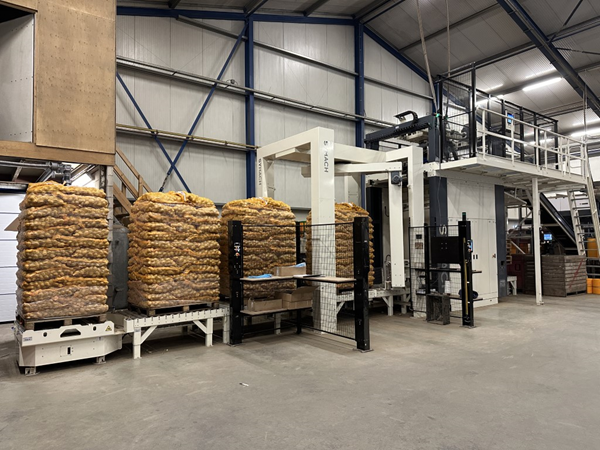
<p>At BW Packaging, we’ve witnessed firsthand how sensitive agricultural goods can suffer losses without the right packaging and palletizing approach. Our mission is to help producers maintain the quality, value, and appearance of crops through every stage of the supply chain.</p><p>Below, we will explore the key challenges of agricultural product packaging, from preserving produce integrity during transport to managing fast-paced harvest cycles, and we’ll discuss modern palletizing solutions that keep delicate items safe. By the end, you’ll see how advanced bag-filling and palletizing systems can become an essential part of a profitable and efficient agricultural operation.</p><h2 id="the-evolving-challenges-of-agricultural-product-packaging">The Evolving Challenges of Agricultural Product Packaging</h2><p>Delicate <a title="Agriculture | BW Packaging" href="https://www.bwflexiblesystems.com/markets/agriculture">agricultural products</a>, ranging from fruit and vegetables to grains and nuts, must handle a variety of external stressors. One major challenge is seasonal variation: harvest yields can skyrocket at certain times of the year, placing sudden strain on packaging lines. A packaging system that operates smoothly in low-volume months may struggle to keep pace when volume spikes, leading to bottlenecks and product mishandling. Modern solutions aim to adapt quickly to these seasonal fluctuations, ensuring that farms and facilities can scale production without sacrificing quality.</p><p>Another key issue is preserving product integrity throughout long-distance transport. Regardless of the commodity, be it apples, onions, potatoes, or grains, any damage along the way can reduce quality, increase shrink, and erode profits. Climate factors, including humidity shifts and temperature extremes, can sap freshness and invite mold or decay. Packaging and palletizing equipment must remain robust enough to form secure, uniform loads that stay stable on trucks, ships, or trains, even when road conditions are bumpy.</p><h3 id="meeting-seasonal-variations-and-demand">Meeting Seasonal Variations and Demand</h3><p>Agricultural enterprises face unpredictable harvest cycles. In bumper-crop years, volumes may exceed the typical capacity of an older, partially automated system. Operators are forced to rely on manual pallet stacking risk injuries, slow throughput, and inconsistent loads.</p><p>On the flip side, investing in an oversized or inflexible palletizing system that sits idle for part of the year can be financially draining. As a result, many producers seek modular palletizing solutions that can be expanded or reduced based on actual harvest output.</p><h3 id="preserving-quality-in-transport-and-storage">Preserving Quality in Transport and Storage</h3><p>Beyond harvest logistics, producers need to maintain product quality until the items reach wholesalers or consumers. For many types of produce, minor bruises or cracks can accelerate spoilage, while for grains, improper moisture levels can trigger mold growth or pest infestation.</p><p>A carefully optimized palletizing layout helps ensure gentle handling, minimal vibration, and stable stacking patterns that reduce the chance of goods shifting or toppling mid-transit. This stability is especially crucial for long hauls, where miles of road vibrations or ship movements could otherwise degrade product condition.</p><h2 id="understanding-the-role-of-palletizing-in-agriculture">Understanding the Role of Palletizing in Agriculture</h2>Palletizing is the process of stacking items, whether they’re in bags, crates, or boxes, onto pallets in neat layers. By mechanizing this task, farms and processing facilities can achieve consistent, uniform loads that withstand typical transportation rigors. Robust palletizing provides a protective cushion against shock, ensuring that delicate produce remains intact and unblemished. Modern palletizing lines often integrate with upstream bag-filling or crate-loading stations. This synergy means that once items are packaged, they move directly to a palletizing zone without manual intervention. Not only does this minimize human error (e.g., haphazard stacking), but it also significantly speeds up packing operations and lowers labor costs.<h3 id="why-palletizing-matters-for-agricultural-products">Why Palletizing Matters for Agricultural Products</h3><ul><li>Gentle Handling: Automated systems can lower bags or crates onto pallets rather than dropping them, reducing bruising or compression.</li><li>Stable Stacking Patterns: Proper layering and interlocking help pallets remain stable even when subjected to sudden movements or abrupt stops in transit.</li><li>Adjustable Configuration: Many palletizers allow different patterns or bag orientations so that facilities can pack multiple product types on the same line.</li><li>Contamination Control: Automated stacking zones can isolate the product from outside contaminants or foreign materials.</li><li>Scalability: Small producers can start with a basic robotic palletizer and add modules as volume grows.</li></ul><h2 id="key-technologies-in-modern-palletizing">Key Technologies in Modern Palletizing</h2><p>Advancements in engineering and automation now let producers pick from a variety of palletizing technologies. Two common categories are robotic palletizers and conventional (layer-forming) palletizers. While both can handle delicate goods, each approach has distinct pros and cons.</p><h3 id="robotic-vs-conventional-palletizers">Robotic vs. Conventional Palletizers</h3><p><a href="https://www.bwintegratedsystems.com/product-group/robotic-solutions" target="_blank" title="Labeling and End-of-Line Packaging Equipment | BW Packaging" data-sf-ec-immutable="" data-sf-marked="">Robotic palletizers</a> rely on multi-axis arms equipped with specialized end effectors (like grippers or suction cups). They can handle multiple bag shapes and sizes, adapt to new patterns quickly through software, and work within compact footprints. However, their throughput rates may be limited compared to layer-forming systems if extremely high speed is required.</p><p><a title="Symach Palletizers | BW Packaging" href="https://www.bwflexiblesystems.com/products/symach-palletizers">Conventional layer-forming palletizers</a>, on the other hand, use mechanisms like turning devices and layer squaring to build entire layers of product before placing them onto a pallet. These systems can achieve very high throughput and produce exceptionally stable loads. Yet, they can be less flexible if a facility needs to switch bag sizes or patterns frequently.</p><h3 id="in-line-vision-systems-and-sensors">In-Line Vision Systems and Sensors</h3><p>Modern palletizing equipment frequently includes vision systems to verify item orientation and alignment. Sensors can detect if a bag is misaligned on the conveyor, automatically pausing the process and alerting operators to prevent jam-ups. Advanced software then compensates for minor variations in bag positioning, ensuring neat, consistent layers.</p><h2>Benefits of Automated Palletizing for Delicate Produce</h2><p>When it comes to crops like tomatoes, peaches, and even bagged produce, mechanized stacking can provide remarkable advantages. While it’s tempting to assume only manual workers can “feel” the fragility of items, the latest robotic end effectors, combined with advanced controls, can emulate gentle handling and create stable, damage-free loads.</p><ol><li>Reduced Product Damage: Automated systems use low-impact gripping or controlled pushers that carefully position bags or crates.</li><li>Enhanced Speed and Throughput: Instead of waiting for human operators to align every layer, the line can run continuously, even during peak harvest periods.</li><li>Greater Consistency: Standardized stacking patterns mean less risk of collapsed pallets in transit.</li><li>Labor Efficiency: Workers can focus on supervising and quality checks instead of repetitive lifting.</li><li>Data Integration: Many palletizers log production metrics, allowing managers to track rates and identify bottlenecks over time.</li></ol><p>Each of these benefits directly contributes to maintaining product integrity and an efficient overall operation.</p><h2 id="designing-an-efficient-palletizing-layout">Designing an Efficient Palletizing Layout</h2><p>Even the best palletizing technology won’t perform optimally if the facility’s layout isn’t planned carefully. In some agricultural operations, space is at a premium, especially near post-harvest cleaning or sorting stations. The flow of product, from washing or sorting lines to bag filling and eventually to palletizing, must be smooth.</p><h3 id="managing-workflow-and-floor-space">Managing Workflow and Floor Space</h3><p>A layout that minimizes travel distance between stations is preferable. For instance, placing a bag-filling machine next to a conveyor that feeds directly into the palletizing cell keeps each step in close proximity. This reduces handling time and the chance of accidental drops or collisions. In addition, creating ample forklift lanes ensures pallets can be swiftly moved to cold storage or loading docks without crossing paths with ongoing production lines.</p><h3 id="adjusting-for-seasonal-surges">Adjusting for Seasonal Surges</h3><p>Producers often see large spikes in output during harvest peaks. A modular palletizing cell can be expanded by adding another robotic arm or layer-forming module for these high-demand periods. Once the season ends, portions of the system can be idled or reconfigured. This flexibility helps maintain consistent speed without overinvesting in permanent capacity that might remain underutilized for part of the year.</p><h2 id="overcoming-common-palletizing-pitfalls">Overcoming Common Palletizing Pitfalls</h2><p>Switching to automated palletizing can solve many issues but also introduces new variables. One overlooked aspect is ensuring proper bag or crate filling so that each unit is symmetrical and stable. Irregular fill weights or shapes can hamper the robot or conventional palletizer, resulting in shaky layers.</p><h3 id="proper-bag-crate-filling">Proper Bag/Crate Filling</h3><p>Using high-precision weighers ensure each bag meets a target fill weight, which not only complies with labeling laws but also fosters consistent stacking. Overfilled bags can bulge, while underfilled ones may be too flimsy. In both scenarios, the risk of toppling increases. Employing bag vibrators or spreaders during the filling process can help distribute products evenly, especially for granular or irregularly shaped goods.</p><h3 id="material-compatibility">Material Compatibility</h3><p>Agricultural products come in all shapes and densities; some are dusty, oily, or prone to static cling. Likewise, bag materials can range from woven polypropylene to biodegradable paper-based sacks. Each of these factors influences how well a palletizer’s gripper or layer pusher can handle the units. Thorough testing with actual products and packaging materials is key to verifying system compatibility before finalizing a palletizing solution.</p><h2 id="best-practices-for-employee-training-and-maintenance">Best Practices for Employee Training and Maintenance</h2><p>Beyond hardware and software, employee expertise plays a pivotal role. Operators should understand how to perform basic troubleshooting, such as clearing minor jams or recalibrating the end effector. Written SOPs and <a title="Cross Training Strategies for Packaging Line Efficiency" href="https://www.bwflexiblesystems.com/our-company/blog/post/2025/05/22/cross-training-strategies-for-packaging-line-efficiency">consistent training sessions</a> equip staff to resolve issues swiftly, minimizing costly downtime.</p><p>Scheduled maintenance is equally crucial. Replacing worn grippers, recalibrating sensors, and lubricating moving parts help maintain gentle, accurate stacking. For facilities that run around the clock during harvest season, a <a title="Proactive Strategies for Packaging Machine Maintenance" href="https://www.bwflexiblesystems.com/our-company/blog/post/2025/05/20/proactive-strategies-for-packaging-machine-maintenance">robust preventive maintenance plan</a> can be the difference between on-time shipment and a backlog of produce waiting for repair crews.</p><h2 id="protect-your-agricultural-products-with-bag-filling-palletizing">Protect Your Agricultural Products with Bag Filling & Palletizing</h2><p>We invite you to explore how <a title="Thiele Bag Filling | BW Packaging" href="https://www.bwflexiblesystems.com/products/thiele-bag-filling">Thiele</a>, <a title="Symach Palletizers | BW Packaging" href="https://www.bwflexiblesystems.com/products/symach-palletizers">Symach</a>, and integrated bag-filling technologies can bolster your agricultural packaging line. By combining gentle handling, robust construction, and modular expansion options, these systems offer a tailored approach to protecting delicate crops from the field to the destination.</p><p>When you partner with BW Packaging, you benefit from our extensive experience in optimizing production layouts and securing stable, damage-free loads. <a title="Contact Us" href="https://www.bwflexiblesystems.com/our-company/contact">Contact us today</a> to learn how we can design a solution that preserves freshness, reduces waste, and helps your operation thrive in a competitive market.</p>
 A Plant Manager's Guide to Animal Feed Plant OEE Implementation
December 9, 2025
<p>You’re running a feed mill in an industry that’s fundamentally changed. Rising costs, labor shortages, and customers demanding faster delivery with perfect quality have made operational efficiency non-negotiable. But if you’re still tracking performance manually, relying on reactive maintenance, and making decisions based on gut feel, you’re fighting with one hand tied behind your back.</p><p>As a plant manager, you see it every day. Unplanned downtime eats into your production schedule. Inconsistent bagging operations create quality issues that lead to rework and customer complaints. Your maintenance team is always putting out fires instead of preventing them. And the worst part? You don’t have the real-time visibility to know which problems to tackle first for maximum impact.</p><p>These aren’t just numbers on a spreadsheet, they’re daily frustrations that make it harder to hit your targets and maintain profitability. The good news? There’s a systematic approach to turning this around, and it starts with understanding Overall Equipment Effectiveness (OEE).</p><p>In this guide, we’ll demystify OEE implementation specifically for feed operations. You’ll learn how to establish meaningful baseline measurements, leverage modern automation to improve all three OEE components simultaneously, and build a data-driven culture that sustains improvements long-term.</p><h2 id="understanding-the-operational-challenges-youre-facing">Understanding the Operational Challenges You’re Facing</h2><p>Your feed mill probably wasn’t built for today’s demands. Legacy equipment, manual processes, and reactive approaches create barriers that get harder to overcome as customer expectations rise and skilled workers become harder to find.</p><p>You’re dealing with a mismatch between how operations have always been run and what the market now requires. This misalignment creates inefficiencies that cascade through your operation, impacting profitability, customer satisfaction, and your ability to compete effectively.</p><p>Before you can fix these problems, you need to understand exactly where you’re losing ground.</p><h3 id="the-hidden-costs-eating-your-profits">The Hidden Costs Eating Your Profits</h3><p>The financial impact of operational inefficiencies goes far beyond obvious production losses. Here’s what you might be experiencing:</p><p><strong>Quality Issues:</strong> Stacking errors during palletizing result in damaged bags you can’t sell. Every damaged unit is product you’ve already paid to manufacture, package, and handle—pure loss.</p><p><strong>Capacity Constraints:</strong> Production bottlenecks limit your sales growth potential. You’re leaving money on the table because you can’t fulfill customer demand fast enough.</p><p><strong>Maintenance Drain:</strong> Reactive repair approaches drive up costs. You’re spending more on emergency fixes than you would on preventive maintenance, and emergency repairs always cost more.</p><p><strong>Labor Turnover:</strong> High turnover rates create constant training costs and knowledge loss. Every time someone leaves, you’re starting over with a new operator who needs weeks or months to reach full productivity.</p><p><strong>Customer Relationships at Risk:</strong> Delivery delays damage relationships with key accounts and jeopardize long-term contracts. In a competitive market, unreliable delivery can be the deciding factor that sends customers to your competitors.</p><p>These inefficiencies compound over time. Before long, firefighting becomes your default mode instead of systematic improvement. Breaking this cycle requires moving from manual processes to automated systems that deliver consistency and reliability.</p><h2 id="what-is-oee-and-why-should-you-care">What is OEE and Why Should You Care?</h2><p>Overall Equipment Effectiveness (OEE) is a comprehensive metric that measures how well your manufacturing operation converts raw materials into finished products. It multiplies three critical components: Availability ⨯ Performance ⨯ Quality.</p><p>For animal feed manufacturing, OEE implementation gives you an objective measurement of equipment effectiveness while maintaining quality standards and operational reliability.</p><p>But OEE is more than just a metric. When implemented correctly, it transforms reactive operations into proactive, data-driven facilities where you make decisions based on real-time performance data rather than assumptions or guesswork. This transformation helps you identify improvement opportunities, optimize resource allocation, and demonstrate measurable progress toward operational excellence.</p><h3 id="the-three-pillars-of-oee-in-feed-manufacturing">The Three Pillars of OEE in Feed Manufacturing</h3><p>To implement OEE successfully, you need to understand how each component contributes to overall effectiveness:</p><p>Availability focuses on minimizing unplanned downtime. This means shifting from reactive to predictive maintenance—catching problems before they cause failures that shut down your line.</p><p>Performance involves maximizing speed rates while maintaining quality standards. You want your equipment running at optimal speeds without pushing so hard that you damage components or compromise product quality.</p><p>Quality reduces defects and rework in your bagging and palletizing operations. When you achieve precise control and monitoring, you minimize the bags that don’t meet specifications and need to be reprocessed.</p><p>Integration ensures all three metrics work together synergistically rather than competing for priority. You don’t want to boost performance at the expense of quality, or maximize availability while running equipment so slowly that you can’t meet demand.</p><p>The key is a balanced approach. Integrated palletizing solutions demonstrate how comprehensive approaches deliver superior results compared to tackling problems in isolation.</p><h2 id="strategic-approaches-to-oee-implementation">Strategic Approaches to OEE Implementation</h2><p>Implementing OEE effectively requires treating it as a cultural transformation, not just a metrics exercise. You need buy-in across all operational levels while establishing systems that support sustained improvement over time.</p><p>Your strategic approach should create alignment between operational objectives, measurement systems, and improvement activities. This ensures that OEE metrics drive behaviors that contribute to overall excellence rather than creating conflicting priorities.</p><p>You also need clear communication channels that enable rapid response when performance deviates from targets while maintaining focus on long-term improvement objectives. Ongoing equipment optimization provides the foundation for sustained OEE performance.</p><h3 id="building-a-data-driven-culture">Building a Data-Driven Culture</h3><p>Cultural transformation is the most challenging aspect of OEE implementation. It requires sustained leadership commitment and comprehensive change management.</p><p>You need to demonstrate the value of data-driven decision-making while providing your team with the tools and training necessary for success. This means establishing measurement systems that provide actionable insights rather than overwhelming operators with excessive information.</p><p>Focus on metrics that directly relate to operator activities and enable immediate corrective actions. When operators can see how their actions impact performance and have the ability to make adjustments, they become engaged participants in improvement rather than passive observers.</p><p>Effective culture change also requires celebrating successes and learning from failures without creating a blame-oriented environment. You want to encourage experimentation and improvement initiatives, not shut them down because people fear making mistakes.</p><h2 id="technology-solutions-for-oee-optimization">Technology Solutions for OEE Optimization</h2><p>Modern equipment technology provides unprecedented opportunities for OEE optimization through advanced automation, real-time monitoring, and integrated control systems. These technological capabilities directly impact all three OEE components while providing the data you need for continuous improvement.</p><p>High-capacity bagging solutions demonstrate how equipment design influences OEE performance through improved reliability, consistent operation, and reduced maintenance requirements. Similarly, flexible bagging technology enables rapid changeovers, minimizing downtime while maintaining quality standards.</p><p>Integrating advanced technology with your existing operations requires careful planning and phased implementation to minimize disruption while maximizing benefits. Technology solutions should complement rather than complicate existing processes while providing clear pathways for future expansion and improvement.</p><h3 id="how-automated-systems-impact-oee-metrics">How Automated Systems Impact OEE Metrics</h3><p>Modern automated systems deliver measurable improvements across all OEE components. Here’s what you can expect:</p><p><strong>Reduced Downtime:</strong> Predictive maintenance capabilities identify potential problems before they cause failures. Instead of reacting to breakdowns, you’re preventing them.</p><p><strong>Consistent Performance:</strong> Automated systems deliver consistent performance rates independent of operator variability. You eliminate the human factors that create production inconsistencies.</p><p><strong>Quality Improvements:</strong> Precision weighing and handling minimize defects and rework requirements. When every bag meets specifications, you reduce waste and customer complaints.</p><p><strong>Real-Time Monitoring:</strong> Immediate visibility enables corrective actions when performance deviates from optimal parameters. You can address small issues before they become big problems.</p><p><strong>Integration Capabilities:</strong> Seamless production flow eliminates bottlenecks and coordination issues. When all your equipment communicates and works together, throughput improves dramatically.</p><p>These improvements compound over time, creating sustainable competitive advantages that justify technology investments while providing platforms for continuous improvement.</p><h3 id="the-role-of-lifetime-support-in-sustained-oee-performance">The Role of Lifetime Support in Sustained OEE Performance</h3><p>Sustaining OEE performance requires comprehensive support programs that maintain equipment effectiveness throughout operational lifecycles. Initial improvements are great, but you need ongoing support to maintain and enhance those gains over time.</p><p>Effective support programs include operator training, technical assistance, and performance optimization services that address both immediate needs and long-term improvement opportunities. Advanced palletizing technology showcases how equipment design and support services work together to deliver sustained performance.</p><h2 id="measuring-and-monitoring-oee-success">Measuring and Monitoring OEE Success</h2><p>Effective OEE measurement starts with establishing baseline performance levels, setting realistic improvement targets, and creating reporting systems that drive continuous improvement rather than simply documenting performance.</p><p>Your measurement system should provide actionable insights that enable immediate corrective actions while supporting long-term strategic planning and decision-making. Strike a balance between real-time operational needs and strategic improvement objectives.</p><p>The focus should be on metrics that directly relate to operational activities and enable meaningful improvement initiatives. Your measurement system should also provide clear communication of performance trends and improvement opportunities to all organizational levels, ensuring that OEE data drives alignment rather than creating confusion.</p><h3 id="key-performance-indicators-beyond-basic-oee">Key Performance Indicators Beyond Basic OEE</h3><p>Comprehensive OEE monitoring includes supplementary metrics that provide deeper insights into operational performance and improvement opportunities:</p><p><strong>Throughput per Hour:</strong> Track this across different product lines to optimize production scheduling and resource allocation. Understanding throughput variations helps you identify bottlenecks and capacity constraints.</p><p><strong>First-Pass Yield Rates:</strong> Monitor quality control performance to identify opportunities for process improvement and waste reduction. High first-pass yields mean you’re getting it right the first time.</p><p><strong>Mean Time Between Failures:</strong> Use this for predictive maintenance, supporting proactive equipment management strategies. When you know how often equipment typically fails, you can schedule maintenance before problems occur.</p><p><strong>Changeover Efficiency:</strong> For multi-product operations, track how quickly you can switch between products while maintaining productivity. Efficient changeovers maximize your flexibility without sacrificing throughput.</p><p><strong>Overall Line Effectiveness:</strong> Include material handling in your measurements to ensure comprehensive performance assessment. OEE at individual stations doesn’t matter if bottlenecks elsewhere limit overall output.</p><p>These supplementary metrics provide context for OEE performance, identifying specific improvement opportunities that may not be apparent from basic OEE calculations alone.</p><h2 id="transform-your-feed-plant-operations-with-proven-oee-solutions">Transform Your Feed Plant Operations with Proven OEE Solutions</h2><p>Implementing effective OEE programs requires a comprehensive approach that integrates advanced technology, systematic processes, and organizational alignment around continuous improvement objectives. At BW Flexible Systems, we provide the expertise, equipment, and ongoing support necessary for successful OEE implementation in animal feed operations.</p><p>Our integrated approach combines proven automation technology with comprehensive support services to ensure that your OEE implementation achieves its full potential while providing platforms for future growth and improvement. Here are the solutions that can help you maximize equipment effectiveness in your feed plant:</p><ul><li><p>Thiele Bagging Systems: Our Thiele bagging solutions deliver consistent performance and precise weighing that directly improve your quality and performance metrics. With intuitive controls and predictive maintenance capabilities, you’ll reduce downtime while maintaining the accuracy your customers expect.</p></li><li><p>Symach Palletizing Solutions: Symach palletizers offer reliable stacking with minimal errors, improving your quality metric while maximizing throughput. With various speeds and footprints available, you can match the solution to your specific operation without over- or under-investing.</p></li><li><p>Comprehensive Service and Support: From initial assessment through ongoing optimization, we partner with you to create operational excellence that drives profitability and competitive positioning. Our lifetime support ensures that your OEE improvements are sustained and enhanced over time.</p></li></ul><p>Contact our specialists to discuss your OEE implementation strategy and discover how our comprehensive solutions can transform your feed plant operations through systematic improvement and advanced technology integration.</p>
 7 Critical Steps To Prepare For FDA Food Safety Audits In Packaging Operations
December 4, 2025
<p>At BW Packaging, we realize that food safety regulations have never been more stringent. As supply chains grow more complex and consumer awareness of contaminants increases, adhering to the Food and Drug Administration (FDA) standards is essential for maintaining brand integrity and public trust, particularly with looming food safety audits.</p><p>Now, we will review the main pillars of FDA food safety compliance and outline seven critical steps that packaging operations can take to ensure thorough readiness for audits. That way, you can learn how leveraging advanced equipment including the Hayssen ISB leading sanitary VFFS bagger can streamline these efforts and set you on a path of consistent success.</p><h2 id="Understanding-FDA-Food-Safety-Regulations">Understanding FDA Food Safety Regulations</h2><p>Food packaging is no longer just a matter of aesthetics and shelf life. Regulators have recognized that contaminants can enter at various points in the supply chain, from raw material handling to final sealing and labeling. For operations that directly handle or package consumables, the FDA’s rules, primarily driven by the Food Safety Modernization Act (FSMA), lay out strict requirements on cleanliness, traceability, and preventive measures.</p><h3 id="key-regulatory-frameworks">Key Regulatory Frameworks</h3><p>The FSMA empowered the FDA to move from a primarily reactive role, where action followed contamination events, to a more preventive approach. This shift has resulted in:</p><ul><li>Hazard Analysis and Risk-Based Preventive Controls (HARPC): Requiring facilities to identify potential hazards, implement control measures, and monitor their effectiveness.</li><li>Sanitary Transportation Regulations: Mandating conditions under which food is transported, ensuring temperature and hygiene controls.</li><li>Foreign Supplier Verification Programs (FSVP): Holding importers accountable for verifying the safety and quality of foreign-sourced products.</li></ul><p>Taken together, these frameworks challenge packaging lines to maintain rigorous standards around equipment sanitation, product coding, and employee training. A single weak link, like a poorly cleaned filling nozzle or misapplied date code, can invite a warning letter or recall.</p><h3 id="common-compliance-issues">Common Compliance Issues</h3><p>Even well-intentioned operations can stumble. Some typical pitfalls include incomplete documentation, which can obscure how thoroughly cleaning was performed or whether each step in the chain was logged. Cross-contamination can occur if the same machinery is used for different product types without proper cleaning, especially where allergens are involved. Another frequent shortfall lies in employee knowledge; if staff don’t grasp the “why” behind each procedure, corners might get cut under time pressure, leading to lapses in safety.</p><p>By recognizing these vulnerabilities, packaging managers can proactively address them, reinforcing a culture where safety is integral, not just an afterthought.</p><h2 id="importance-of-a-proactive-audit-mindset">Importance of a Proactive Audit Mindset</h2><p>A scheduled inspection, a reported issue, or a random check can prompt an FDA audit. Being proactive means implementing best practices year-round rather than scrambling at the last minute. By normalizing rigorous standards and continuous improvement, a facility can confidently welcome inspectors, knowing that routine practices align with regulatory benchmarks.</p><p>Operating with a proactive mindset yields several advantages. First, it prevents surprises: if you’re already documenting cleaning, calibrating equipment, and enforcing SOPs, you’re less likely to discover major gaps under the scrutiny of an auditor. Second, staff remain calmer and more prepared.</p><p>A few essential elements of proactive compliance include:</p><ul><li>Continuous Improvement: Regularly review processes for possible enhancements.</li><li>Detailed Record-Keeping: Maintain up-to-date logs of cleaning, maintenance, and product traceability.</li><li>Employee Involvement: Engage staff at all levels to foster ownership of food safety responsibilities.</li><li>Risk-Based Approach: Allocate resources to areas with the highest contamination or hazard potential.</li><li>Effective Communication: Keep lines open between departments so that any safety concerns surface quickly.</li></ul><p>By embedding these principles into day-to-day operations, you transform your facility into one that stands ready for any regulatory review.</p><h2 id="7-critical-steps-to-ensure-audit-success">7 Critical Steps to Ensure Audit Success</h2><p>Compliance with FDA rules is multifaceted. Each facility has unique products, machinery, and workflows, but certain fundamentals hold true across the board. Key steps to help packaging operations prepare comprehensively include:</p><ol><li>Conduct Regular Internal Assessments: Periodically simulate an FDA-style audit in-house. Use checklists mirroring official criteria, covering cleaning, labeling, traceability, and employee training.</li><li>Establish Clear SOPs: Standard Operating Procedures for tasks like sanitation, allergen handling, and maintenance ensure uniformity across shifts. These SOPs should be detailed, consistently followed, and easily accessible to staff.</li><li>Document Everything: Thorough documentation underpins food safety compliance. Keep logs for temperature monitoring, equipment calibration, cleaning schedules, and production batches.</li><li>Train Staff Thoroughly: A well-trained workforce is your first defense against contamination or mislabeling. Provide onboarding programs, regular refresher courses, and on-the-floor mentoring.</li><li>Implement Traceability Systems: From raw materials to final packaging, each stage must be traceable. Barcoding or RFID can track which batches went where, so if a recall occurs, you can isolate the affected products quickly.</li><li>Validate Equipment and Processes: Regular calibration and performance checks on weighers, sealers, and labeling systems confirm they meet the required tolerances. If your packaging line includes sensors for temperature or fill verification, ensure these devices are tested routinely.</li><li>Create a Crisis Management Plan: Even the best-prepared facility can face contamination, labeling errors, or product mix-ups. Outline recall procedures, define communication channels, and assign responsibilities beforehand.</li></ol><p>Each of these measures reinforces the others, forming a cohesive safety net against hazards. Furthermore, the structure helps avoid duplication of efforts, allowing managers to focus resources where they’ll have the greatest impact.</p><h2 id="overcoming-common-audit-challenges">Overcoming Common Audit Challenges</h2><p>Adopting these steps systematically can mitigate many pitfalls. Still, certain challenges frequently pop up during actual audits. Preparation and consistency are key in addressing them before they become major liabilities.</p><h3 id="documentation-gaps">Documentation Gaps</h3><p>One of the biggest audit red flags is missing or inconsistent documentation. Inspectors often ask to see logs or records for any random date or batch, and if the requested paperwork is incomplete, the facility could be cited. A digital recordkeeping platform, one that time-stamps entries and prevents retroactive edits, can reduce the risk of human error or lost files. Managers should periodically check documentation to ensure data integrity.</p><h3 id="equipment-sanidation-concerns">Equipment Sanitation Concerns</h3><p>Packaging lines are only as clean as their last wash-down. If residues, especially from allergen-containing products, remain on conveyors or filler components, cross-contact can compromise the entire batch. Regularly verifying equipment hygiene, visually and through swab tests, helps demonstrate vigilance. Some facilities adopt automated cleaning-in-place (CIP) systems for filling lines, ensuring consistent sanitation cycles without relying on manual scrubbing.</p><h2 id="the-role-of-technology-in-food-safety-compliance">The Role of Technology in Food Safety Compliance</h2><p>Staying ahead of regulatory scrutiny increasingly involves harnessing modern tech solutions that streamline data collection and machine operation. In many packaging environments, sensors and IoT devices track machine performance around the clock, automatically logging metrics like sealing temperatures, throughput rates, and downtime events. These data points create a digital audit trail that inspectors can review to confirm consistent operation within safe parameters.</p><p>In addition, user authentication features on advanced control systems ensure that only authorized personnel can alter critical settings, preventing unauthorized changes that might lead to contamination. Alerts or alarms can also be set up to notify supervisors if equipment drifts outside of validated specifications, letting you address issues instantly rather than discovering them post-production.</p><h2 id="secure-fda-compliance-with-hayssen-isb">Secure FDA Compliance With Hayssen ISB</h2><p>No matter how rigorous your procedures, reliable packaging machinery remains a cornerstone of food safety. The Hayssen ISB line exemplifies hygienic design, effortless cleaning, and integrated data capture that simplify compliance tasks. Every seam, surface, and control panel is engineered to minimize harborage points where bacteria could lurk, supporting your broader sanitation efforts.</p><p>By relying on BW Packaging, you’ll tap into a blend of advanced equipment and expert guidance. We’ll help you configure a system that merges seamlessly with your SOPs, traceability protocols, and documentation platforms. Reach out to us today to learn how Hayssen ISB can bolster your FDA audit readiness.</p>
 Sustainable Packaging Solutions: Balancing Environmental Impact with Food Safety
November 25, 2025
<p>The food packaging industry faces an unprecedented challenge in developing sustainable packaging solutions that minimize environmental impact while maintaining the rigorous food safety standards essential for consumer protection and regulatory compliance. At BW Packaging, we recognize that modern packaging operations must effectively manage the intersection of sustainability goals, food safety requirements, and operational efficiency to remain competitive in today's environmentally conscious marketplace. The key to success lies in understanding how innovative materials, advanced equipment design, and optimized processes can achieve sustainability objectives without compromising the fundamental responsibility to protect food products and consumers.</p><h2>The Sustainability Imperative in Food Packaging</h2><p>Consumer awareness and regulatory pressure have transformed sustainability from an optional consideration to a business imperative that affects market access, customer relationships, and competitive positioning. Companies that fail to address sustainability concerns risk losing market share to more environmentally conscious competitors.</p><h2>Environmental Impact of Traditional Packaging</h2><p>Conventional packaging systems contribute significantly to environmental challenges through resource consumption, waste generation, and carbon emissions. Traditional plastic packaging materials depend heavily on fossil fuel feedstocks while creating persistent waste that accumulates in landfills and natural environments.</p><p>Manufacturing processes for conventional packaging materials require substantial energy inputs and generate significant greenhouse gas emissions. These impacts extend throughout the supply chain from raw material extraction through final disposal or recycling.</p><p>End-of-life challenges for traditional packaging include limited recyclability, contamination issues, and inadequate waste management infrastructure that result in environmental accumulation. These challenges have focused attention on alternative materials and packaging designs that reduce environmental impact.</p><p>Food waste prevention represents a critical consideration in sustainability discussions, as packaging that effectively protects products can significantly reduce the environmental impact of food loss throughout the supply chain.</p><h2>Consumer and Regulatory Pressure for Change</h2><p>Environmental consciousness among consumers has created market demand for sustainable packaging that influences purchasing decisions across demographic groups. A few examples include:</p><ul><li><strong>Growing consumer awareness and purchasing preferences for sustainable products</strong> driving market demand for environmentally responsible packaging</li><li><strong>Corporate sustainability commitments and ESG reporting requirements</strong> creating internal pressure for measurable environmental improvements</li><li><strong>Emerging regulations targeting packaging waste and environmental impact</strong> establishing legal requirements for sustainability performance</li><li><strong>Retailer demands for sustainable packaging solutions</strong> as major retailers implement sustainability requirements for suppliers</li><li><strong>Investor pressure for environmental responsibility</strong> affecting capital availability and corporate valuation based on sustainability performance</li></ul><p>These pressures create compelling business cases for sustainability initiatives while requiring practical solutions that maintain operational effectiveness and regulatory compliance.</p><h2 id="key-sustainability-challenges-in-food-packaging">Key Sustainability Challenges in Food Packaging</h2><p>Implementing sustainable packaging solutions requires addressing fundamental tensions between environmental objectives and food safety requirements. These challenges demand innovative approaches that optimize multiple criteria simultaneously.</p><h3 id="material-selection-and-performance-tradeoffs">Material Selection and Performance Tradeoffs</h3><p>Sustainable materials must maintain essential barrier properties including oxygen, moisture, and light protection while reducing environmental impact through renewable content, recyclability, or biodegradability. This requirement often involves trade-offs between environmental benefits and protective performance.</p><p>Mechanical properties including strength, flexibility, and processability must be maintained to ensure packaging integrity throughout manufacturing, distribution, and consumer use. Sustainable materials often exhibit different processing characteristics that require equipment modifications or operational adjustments.</p><p>Shelf life considerations become critical when evaluating sustainable materials, as reduced barrier performance could lead to food spoilage and waste that negates environmental benefits. Comprehensive testing and validation ensure that sustainable materials provide adequate protection for specific applications.</p><p>Cost implications of sustainable materials often include premium pricing that must be evaluated against long-term benefits including brand value, customer loyalty, and regulatory compliance advantages.</p><h3 id="end-of-life-considerations-and-circularity">End-of-Life Considerations and Circularity</h3><p>Designing for end-of-life requires comprehensive understanding of waste management systems and material recovery infrastructure. Key points to keep in mind include:</p><ol><li><strong>Recyclability and material recovery systems</strong> ensuring that packaging materials can be effectively processed through existing or developing recycling infrastructure</li><li><strong>Compostability and biodegradation requirements</strong> meeting standards for industrial or home composting while maintaining performance during product shelf life</li><li><strong>Reusability and refillable packaging options</strong> creating durable packaging systems that support multiple use cycles</li><li><strong>Source reduction and right-sizing initiatives</strong> minimizing material usage while maintaining protective function and consumer appeal</li><li><strong>Design for disassembly and material separation</strong> enabling efficient separation of different materials for recycling or composting</li></ol><p>These considerations require collaboration throughout the supply chain to ensure that sustainable packaging designs align with available end-of-life infrastructure and capabilities.</p><h2 id="Sustainable Material Innovations">Sustainable Material Innovations</h2><p>The development of sustainable packaging materials continues to advance rapidly, with new solutions that address traditional performance limitations while providing environmental benefits. Understanding these innovations enables informed selection of materials that balance sustainability with functionality.</p><h3 id="Bio-Based and Renewable Materials">Bio-Based and Renewable Materials</h3><p>Plant-based polymers derived from renewable feedstocks including corn, sugarcane, and cellulose provide alternatives to petroleum-based plastics while maintaining essential packaging properties. These materials can be engineered to provide specific barrier and mechanical characteristics required for food packaging applications.</p><p>Renewable barrier coatings developed from natural materials including proteins, polysaccharides, and lipids offer sustainable alternatives to synthetic barrier films. These coatings can be applied to paper or other sustainable substrates to create effective barrier packaging.</p><p>Biodegradable polymers that break down under specific environmental conditions provide end-of-life advantages while maintaining performance during product shelf life. These materials require careful selection based on application requirements and available composting infrastructure.</p><p>Bio-based additives including natural antioxidants, antimicrobials, and UV protectants enhance packaging performance while supporting sustainability objectives through renewable sourcing and reduced synthetic chemical usage.</p><h3 id="Recycled Content and Circular Materials">Recycled Content and Circular Materials</h3><p>Post-consumer recycled content incorporation reduces demand for virgin materials while supporting circular economy principles. Advanced recycling technologies enable higher recycled content levels while maintaining food safety compliance through effective contamination removal.</p><p>Chemical recycling processes break down plastic waste into molecular components that can be reformed into new packaging materials with virgin-equivalent properties. These technologies enable true circularity for packaging materials that were previously difficult to recycle.</p><p>Closed-loop systems within specific supply chains enable packaging materials to be collected, processed, and reused within controlled systems that ensure quality and safety. These systems maximize material utilization while minimizing environmental impact.</p><p>Recycled fiber products including molded pulp and recycled paperboard provide sustainable alternatives for secondary packaging and protective applications while utilizing existing waste streams.</p><h2 id="equipment-considerations-for-sustainable-packaging">Equipment Considerations for Sustainable Packaging</h2><p>Modern packaging equipment must adapt to handle sustainable materials that often exhibit different properties compared to traditional packaging films and substrates. These adaptations enable successful implementation of sustainable solutions without compromising operational efficiency.</p><p>Advanced packaging systems incorporate features that optimize performance with sustainable materials while maintaining the speed and reliability essential for commercial operations. This equipment flexibility enables manufacturers to adopt sustainable solutions without major capital investments.</p><h3 id="material-handling-and-processing-adaptations">Material Handling and Processing Adaptations</h3><p>Sustainable materials often require modified handling procedures due to different mechanical properties, temperature sensitivity, or processing characteristics. Equipment must provide adjustable controls that accommodate these variations while maintaining consistent performance.</p><p>Film tension control systems must adapt to varying material properties including stretch characteristics, tear resistance, and temperature sensitivity. These adaptations ensure optimal package formation while preventing material waste or damage.</p><p>Sealing technology adjustments may be required for sustainable materials that exhibit different melting characteristics, heat sensitivity, or adhesion properties. Advanced sealing systems provide precise control over temperature, pressure, and timing to optimize performance with diverse materials.</p><p>Static control measures become particularly important with certain sustainable materials that may exhibit different electrical properties compared to traditional packaging films. Effective static control ensures smooth material handling and consistent package formation.</p><h3 id="energy-efficiency-and-process-optimization">Energy Efficiency and Process Optimization</h3><p>Energy-efficient equipment design reduces the environmental impact of packaging operations while supporting sustainability objectives. Modern packaging systems incorporate features including variable frequency drives, heat recovery, and optimized heating systems that minimize energy consumption.</p><p>Process optimization through advanced controls and monitoring systems reduces waste while improving efficiency. These systems automatically adjust operating parameters to maintain optimal performance while minimizing material usage and energy consumption.</p><p>Predictive maintenance capabilities reduce equipment downtime while extending equipment life through proactive maintenance scheduling. This approach reduces the environmental impact of equipment replacement while maintaining operational reliability.</p><p>Modular equipment design enables upgrades and improvements without complete equipment replacement, supporting sustainable equipment lifecycle management while enabling adoption of new technologies and capabilities.</p><h2 id="implementation-strategies-and-best-practices">Implementation Strategies and Best Practices</h2><p>Successful implementation of sustainable packaging solutions requires systematic approaches that address technical, operational, and commercial considerations. These strategies ensure that sustainability initiatives achieve intended objectives while maintaining business performance.</p><p>Phased implementation enables gradual transition to sustainable solutions while managing risks and learning from initial experiences. This approach allows optimization of processes and procedures before full-scale implementation.</p><p>Supplier collaboration ensures that sustainable materials meet quality and performance requirements while providing reliable supply and technical support. Strong supplier relationships enable successful implementation and continuous improvement of sustainable solutions.</p><p>Life cycle assessment provides comprehensive evaluation of environmental impacts throughout the packaging lifecycle from raw material production through end-of-life management. This assessment enables informed decision-making and optimization of environmental benefits.</p><h2 id="let-bw-packaging-help-you-maximize-your-sustainability-packaging-solutions">Let BW Packaging Help You Maximize Your Sustainability Packaging Solutions</h2><p>We understand the complexity of balancing sustainability with food safety and operational requirements. Our equipment designs support sustainable packaging initiatives while maintaining the performance and reliability essential for food packaging applications.</p><p>Contact our sustainability packaging specialists to uncover our advanced packaging technology that can support your sustainability objectives while maintaining food safety and operational excellence.</p>
 Cost Analysis: Manual vs. Automated Packaging Operations
November 20, 2025
<p>In today’s competitive manufacturing landscape, the decision between manual and automated packaging operations has become increasingly critical for business success. Many companies continue to rely on manual packaging processes, often underestimating the true costs and limitations of these operations. At BW Packaging, we’ve helped countless businesses transition to automated packaging equipment, and the financial benefits consistently exceed expectations. Understanding the comprehensive cost analysis between manual and automated systems is essential for making informed decisions that impact both immediate profitability and long-term growth potential.</p><h2 id="the-true-cost-of-manual-packaging-operations">The True Cost of Manual Packaging Operations</h2><p>Manual packaging operations carry numerous costs that extend far beyond basic hourly wages. When conducting a thorough analysis, many businesses discover that their manual operations are significantly more expensive than initially apparent. These costs compound over time, creating operational vulnerabilities that can impact business continuity and growth potential.</p><p>Realizing the full scope of manual packaging costs requires examining both direct expenses and hidden costs that may not be immediately obvious but significantly impact overall profitability. These expenses often increase over time due to wage inflation, benefits cost escalation, and growing regulatory requirements.</p><h3>Direct Labor Costs and Productivity Factors</h3><p>Direct labor represents the most visible component of manual packaging costs, but even these obvious expenses are often underestimated. Hourly wages must be supplemented by comprehensive benefits packages that add substantially to base wage costs. These benefits include health insurance, retirement contributions, workers’ compensation, unemployment insurance, and paid time off.</p><p>Overtime costs can significantly impact manual operations, particularly during peak production periods or when attempting to meet tight delivery schedules. Manual packaging operations often require overtime to compensate for productivity limitations, with premium pay rates that can double the effective hourly cost of packaging activities.</p><p>Human productivity factors introduce additional cost considerations that are not present in automated systems. Worker fatigue leads to declining productivity throughout shifts, which hurts the company’s bottom line. Consistency challenges result in packaging quality and speed variations between operators and even within the same operator across different shifts.</p><p>Training costs for new employees represent a significant investment, particularly in industries with high turnover rates. The learning curve for manual packaging operations can extend several weeks, during which productivity remains below optimal levels while training costs accumulate.</p><h3 id="hidden-costs-in-manual-operations">Hidden Costs in Manual Operations</h3><p>The hidden costs of manual packaging operations often exceed direct labor expenses and create ongoing financial drains that impact competitiveness. A few common examples include:</p><ul><li>Workers’ compensation claims and safety incidents that increase insurance premiums and create potential liability exposure</li><li>Quality inconsistencies leading to rework and customer complaints that damage brand reputation and require additional labor to resolve</li><li>Product damage from handling errors that results in waste and reduced margins on affected products</li><li>Time lost to breaks and shift changes that create downtime and reduces overall equipment effectiveness</li><li>Supervision and management overhead required to coordinate manual operations and maintain quality standards</li></ul><p>Additional hidden costs include the space requirements for manual packaging stations, which typically require more floor space per unit of output compared to automated systems. Manual operations also generate higher utility costs due to lighting, heating, and cooling requirements for larger work areas.</p><h2 id="automated-packaging-equipment-investment-analysis">Automated Packaging Equipment Investment Analysis</h2><p>Investing in automated packaging equipment requires a careful analysis of both initial costs and long-term operational benefits. While the upfront investment is substantial, the total cost of ownership calculation typically reveals compelling financial advantages that justify the investment in automation.</p><p>Modern automated packaging systems offer sophisticated capabilities that address the limitations of manual operations while providing scalability for future growth. The key to successful automation investment lies in understanding how these systems deliver value across multiple operational dimensions.</p><h3 id="initial-capital-investment-considerations">Initial Capital Investment Considerations</h3><p>Equipment costs vary significantly based on system complexity, production capacity, and customization requirements. However, these costs must be evaluated against the total operational benefits rather than simply compared to current manual operation expenses. Financing options, including leasing, equipment loans, and technology refresh programs, can help manage initial cash flow requirements while enabling immediate operational benefits.</p><p>Installation expenses include electrical work, compressed air systems, safety installations, and integration with existing production lines. Facility modifications may be required but often result in more efficient space utilization compared to manual operations.</p><p>Training and startup costs should be factored into initial investment calculations, though these represent one-time expenses that quickly pay dividends through improved operational efficiency. Most automated packaging systems achieve full operational capacity within a few weeks of installation.</p><h3 id="operational-cost-advantages">Operational Cost Advantages</h3><p>Automated packaging equipment delivers measurable cost advantages across multiple operational categories. They include:</p><ol><li><strong>Reduced labor costs and dependency</strong> that eliminate wage inflation exposure and reduce vulnerability to labor shortages</li><li><strong>Improved packaging consistency and quality</strong> that reduces customer complaints and supports premium pricing strategies</li><li><strong>Increased production speed and throughput</strong> that enables higher output from existing facility space and infrastructure</li><li><strong>Lower material waste and damage rates</strong> that improve margins and reduce environmental impact</li><li><strong>Reduced supervision requirements</strong> that allow management focus on strategic activities rather than operational oversight</li></ol><p>systems typically consume less energy per packaged unit compared to the combined requirements of manual workstations and associated infrastructure.</p><h2 id="productivity-and-efficiency-comparisons">Productivity and Efficiency Comparisons</h2><p>The productivity advantages of automated packaging equipment become apparent when comparing actual operational performance between manual and automated systems. These comparisons must account for real-world conditions, including peak demand periods, staff availability, and quality requirements.</p><p>Automated systems deliver consistent performance regardless of time of day, shift schedules, or seasonal factors that significantly impact manual operations. This consistency enables better production planning and improved customer service through reliable delivery schedules.</p><h3>Speed and Throughput Analysis</h3><p>Automated packaging systems typically operate many times faster than manual operations while maintaining superior consistency. Peak performance capabilities represent a significant advantage during periods of high demand. Manual operations are limited by physical constraints, which prevent sustained peak performance, whereas automated systems maintain consistent speed regardless of duration or external pressures.</p><p>Changeover efficiency provides additional productivity benefits, as modern automated systems can complete product changeovers in a few minutes, compared to manual line reconfiguration, which can take up to an hour.</p><h3>Quality and Consistency Metrics</h3><p>Package quality consistency represents one of the most significant advantages of automated systems. Manual operations inherently produce variation in seal quality, package appearance, and dimensional accuracy. Automated systems eliminate human variability while providing continuous monitoring and quality control capabilities.</p><p>Error rates in automated systems are also much lower when compared to manual operations. These improvements reduce rework costs, customer complaints, and quality control labor requirements.</p><p>Traceability capabilities built into modern automated systems provide detailed production records that support quality investigations and regulatory compliance requirements.</p><h2 id="long-term-financial-impact-assessment">Long-Term Financial Impact Assessment</h2><p>The long-term financial benefits of automated packaging equipment extend well beyond immediate operational savings. These systems offer strategic advantages that compound over time, supporting business growth objectives.</p><p>Equipment lifecycle costs favor automation when properly maintained. Automated systems deliver years of productive service life with appropriate upgrades and maintenance. Manual operations face ongoing cost escalation due to wage inflation and increases in benefits costs.</p><h3 id="scalability-and-future-growth-considerations">Scalability and Future Growth Considerations</h3><p>Automated packaging systems offer inherent scalability, supporting business growth without proportional increases in labor requirements. Additional capacity can often be achieved through speed optimization or extended operating hours rather than equipment multiplication.</p><p>Technology upgrade paths ensure that automated systems remain current with evolving industry requirements and customer expectations. Modern packaging equipment includes upgrade capabilities that extend useful life and maintain competitive advantages.</p><p>Market adaptability represents a crucial long-term benefit, as automated systems can be reconfigured for new products or packaging formats more efficiently than rebuilding manual operations.</p><h2 id="making-the-right-decision-for-your-operation">Making the Right Decision for Your Operation</h2><p>The decision to implement automated packaging equipment requires careful evaluation of current operations, growth objectives, and competitive pressures. Businesses that delay automation often find themselves at an increasing disadvantage as competitors achieve cost and quality advantages through technology investment.</p><p>Timing considerations should account for current market conditions, capital availability, and strategic objectives. However, the compelling financial benefits of automation mean that delays often cost more than immediate implementation.</p><p>Implementation planning should include phased approaches that minimize operational disruption while enabling immediate benefits. Many businesses successfully implement automation in stages, allowing learning and optimization before full system deployment.</p><h2 id="get-the-most-out-of-your-automated-packaging-equipment">Get the Most Out of Your Automated Packaging Equipment</h2><p>At BW Packaging, we understand that every operation has unique requirements and constraints. Our team of packaging experts can help you develop a comprehensive cost analysis tailored to your specific situation and objectives. We provide implementation and ongoing support to ensure that your automation investment delivers the expected returns.</p><p>Do you want to learn more about how our automated packaging equipment can transform your operations? Contact our packaging specialists today to schedule an exploratory discussion of your needs and discover the potential benefits for your business.</p>
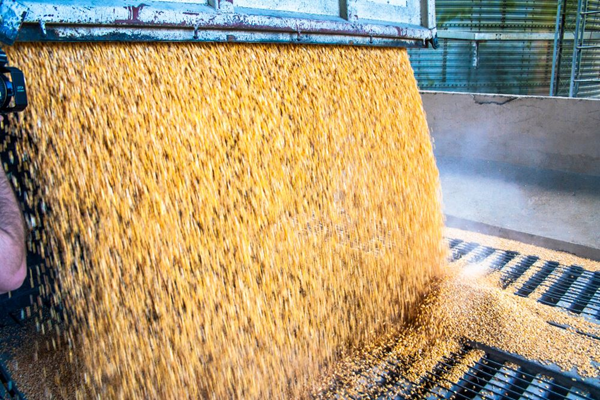 The Hidden Costs of Regulatory Compliance in Animal Feed Manufacturing
November 18, 2025
<p>Regulatory compliance in animal feed manufacturing isn't what it used to be. What was once a straightforward set of guidelines has evolved into a complex web of requirements that touches every aspect of your production operation. FDA and CFIA regulations now demand comprehensive documentation, rigorous testing protocols, preventive controls, and continuous monitoring systems that significantly impact both your operational procedures and capital investments.</p><p>Yes, these regulations ensure product safety and maintain consumer trust. But their implementation generates substantial costs that extend well beyond the obvious expenses like inspections and paperwork.</p><p>As a plant manager, you're living the true burden of compliance every day. You're managing the constant tension between maintaining strict regulatory standards and controlling costs. Unplanned production shutdowns during inspections derail your schedules. Documentation requirements pull your staff away from productive tasks. Equipment that wasn't designed with compliance in mind requires expensive retrofits or workarounds. And the ever-present risk of non-compliance hangs over every decision—you know that a single violation could trigger cascading costs from production holds to lost customer contracts.</p><p>In this article, we'll uncover the often-overlooked financial impacts of regulatory compliance, demonstrate how strategic equipment selection can dramatically reduce these costs, and provide a framework for building a compliance-first strategy that turns regulatory requirements from a burden into a competitive advantage.</p><h2 id="understanding-fda-and-cfia-compliance-requirements">Understanding FDA and CFIA Compliance Requirements</h2><p>The Food Safety Modernization Act (FSMA) and Canadian Food Inspection Agency regulations establish comprehensive frameworks that govern every aspect of animal feed manufacturing—from facility design through final product distribution. These regulations require systematic approaches to hazard analysis, preventive controls, and documentation that significantly impact your operational procedures and equipment requirements.</p><p>FDA-compliant equipment design has become essential for maintaining market access while minimizing long-term compliance costs. Similarly, regulatory-compliant manufacturing systems provide the foundation for sustainable compliance programs that protect both product safety and business profitability.</p><p>Here's the challenge: compliance requirements continue to evolve as regulatory agencies refine their approaches and expand oversight capabilities. You must anticipate these changes while building flexible compliance systems that can adapt to new requirements without major operational disruptions or capital investments.</p><p>The complexity of modern compliance requirements necessitates integrated approaches that simultaneously address multiple regulatory objectives, rather than treating each requirement as an isolated obligation.</p><h3 id="direct-compliance-costs-most-companies-track">Direct Compliance Costs Most Companies Track</h3><p>Understanding direct compliance costs provides the foundation for comprehensive cost analysis and budget planning. You're probably already tracking expenses like:</p><p><strong>Documentation and Record-Keeping Systems</strong>: You need specialized software, staff training, and ongoing maintenance to implement and maintain these systems properly.</p><p><strong>Staff Training and Certification Programs</strong>: Your personnel need to understand and follow current regulatory requirements, which means regular training sessions and certification renewals.</p><p><strong>Regular Facility and Equipment Inspections</strong>: You're conducting inspections with internal teams and external auditors to verify compliance.</p><p><strong>Laboratory Testing and Quality Assurance Protocols</strong>: You're verifying product safety and regulatory compliance through ongoing testing programs.</p><p><strong>Legal and Consulting Fees</strong>: You need compliance guidance, regulatory interpretation, and incident response expertise—especially when questions arise.</p><p>These direct costs represent only the visible portion of your total compliance expenses. Hidden costs often exceed these tracked expenses by significant margins. Effective cost management requires understanding both direct and indirect compliance impacts.</p><h2 id="the-hidden-financial-impact-of-non-compliance">The Hidden Financial Impact of Non-Compliance</h2><p>The indirect costs associated with regulatory compliance often exceed direct expenses while creating operational disruptions that compound over time. These hidden costs often catch you unprepared, resulting in budget overruns and operational challenges that persist long after initial compliance issues are resolved.</p><p>Non-compliance incidents generate cascading costs that affect multiple operational areas simultaneously—from production capacity through customer relationships. Understanding these potential impacts enables proactive planning that minimizes risk while optimizing compliance investments.</p><p>Market access limitations represent one of the most significant hidden costs. Compliance failures can result in product holds, shipment rejections, and customer contract cancellations that far exceed direct remediation expenses.</p><h3 id="operational-disruption-costs">Operational Disruption Costs</h3><p>The operational impact of compliance issues creates substantial hidden costs that extend far beyond immediate remediation expenses:</p><p><strong>Production Shutdowns</strong>: When inspections reveal failures, you lose capacity and miss delivery commitments while addressing the issues.</p><p><strong>Emergency Equipment Modifications</strong>: You're forced into expensive retrofits to address compliance deficiencies—often on rushed timelines that drive up costs.</p><p><strong>Expedited Shipping Costs</strong>: You need compliant replacement parts and emergency repairs fast, which means paying premium shipping rates.</p><p><strong>Overtime Labor</strong>: Compliance remediation efforts and catch-up production require your team to work extra hours at premium rates.</p><p><strong>Lost Production Capacity</strong>: During corrective action periods and system validation, your lines sit idle or run at reduced capacity.</p><p>These disruption costs often exceed direct compliance expenses while creating operational inefficiencies that persist beyond immediate remediation efforts. Compliance-ready design features help prevent these costly disruptions through proactive engineering approaches.</p><h2 id="how-equipment-design-impacts-your-cost-of-regulatory-compliance">How Equipment Design Impacts Your Cost of Regulatory Compliance</h2><p>Your equipment selection fundamentally determines long-term compliance costs through design features that either facilitate or complicate regulatory adherence. Modern equipment designed with compliance requirements integrated from the outset eliminates many costly retrofits and operational modifications typically required with traditional systems.</p><p>Sanitary construction standards demonstrate how proper equipment design reduces ongoing compliance costs while improving operational efficiency and product quality. These design principles address regulatory requirements through engineering solutions rather than procedural workarounds.</p><p>Investment in compliance-ready equipment provides long-term cost advantages that justify higher initial expenses through reduced ongoing compliance costs, improved operational efficiency, and elimination of costly retrofits and modifications.</p><p>Understanding how equipment design affects compliance costs enables informed decision-making that optimizes both your immediate operational needs and long-term regulatory requirements.</p><h3 id="sanitary-design-principles-in-feed-manufacturing">Sanitary Design Principles in Feed Manufacturing</h3><p>Proper equipment design eliminates compliance vulnerabilities while reducing your ongoing maintenance and cleaning costs through the integration of sanitary features. Stainless steel construction, smooth surfaces, and accessible cleaning points represent essential design elements that facilitate compliance while minimizing operational complexity.</p><p>Equipment with integrated sanitary design reduces labor requirements for cleaning and sanitization while providing consistent results that support regulatory compliance. These design features also extend equipment life and reduce maintenance costs through corrosion resistance and improved durability.</p><p>Sanitary design principles must be integrated throughout equipment systems rather than added as aftermarket modifications. This comprehensive approach ensures that all components support compliance objectives while maintaining operational efficiency.</p><h2 id="technology-solutions-that-reduce-compliance-costs">Technology Solutions That Reduce Compliance Costs</h2><p>Modern automated systems built with compliance requirements integrated from design inception significantly reduce your long-term regulatory expenses through improved consistency, automated documentation, and proactive monitoring capabilities. These technological solutions address compliance requirements through systematic approaches rather than manual procedures that are prone to error and inconsistency.</p><p>Built-in compliance features demonstrate how equipment design can eliminate many compliance challenges while improving operational efficiency. Similarly, food-grade construction provides the foundation for sustainable compliance programs that minimize ongoing costs.</p><p>Technology solutions should complement your existing operational procedures while providing enhanced capabilities that simplify compliance and reduce associated costs. The focus should be on systems that simplify compliance while improving your overall operational performance.</p><h3 id="automated-documentation-and-traceability">Automated Documentation and Traceability</h3><p>Modern equipment systems provide comprehensive documentation capabilities that eliminate manual record-keeping while ensuring consistency and accuracy:</p><p><strong>Real-Time Production Records</strong>: The system captures all critical parameters automatically, eliminating manual logging and associated errors.</p><p><strong>Automated Lot Tracking</strong>: Batch identification provides complete traceability throughout production, so you can quickly track any product through your entire operation.</p><p><strong>Digital Quality Control Documentation</strong>: No more manual data entry and the errors that come with it. The system records quality checks automatically.</p><p><strong>Integrated HACCP<sup>Hazard Analysis Critical Control Points (HACCP) is a globally recognized food safety management system that identifies and controls potential hazards during food production.<br>Source: Occupational Health and Safety Blog</sup> Monitoring</strong>: Continuous oversight with immediate alerts means you catch potential issues before they become compliance problems.</p><p><strong>Compliance Reporting Automation</strong>: Generate required documentation with minimal manual intervention, saving your team countless hours of paperwork.</p><p>These automated capabilities reduce labor requirements while improving documentation quality and consistency. The elimination of manual processes also reduces the risk of compliance errors that could result in regulatory actions or operational disruptions.</p><h3 id="preventive-design-features-that-eliminate-compliance-risks">Preventive Design Features That Eliminate Compliance Risks</h3><p>Equipment design features that proactively address compliance requirements provide long-term cost advantages through risk elimination:</p><p><strong>Stainless Steel Construction</strong>: Prevents contamination concerns and reduces cleaning requirements compared to traditional materials.</p><p><strong>Easy-Clean Surfaces</strong>: Reduces sanitation labor requirements while ensuring consistent results that meet regulatory standards.</p><p><strong>Enclosed Systems</strong>: Minimizes environmental exposure and contamination risks by protecting product throughout the packaging process.</p><p><strong>Automated Cleaning Cycles</strong>: Ensures consistent sanitation without manual intervention, eliminating variability in cleaning effectiveness.</p><p><strong>Built-In Safety Systems</strong>: Prevents operator errors that could create compliance issues, protecting both your workers and your regulatory standing.</p><p>These preventive features address compliance requirements through engineering solutions rather than procedural controls, providing more reliable and cost-effective approaches to regulatory adherence.</p><h2 id="the-roi-of-compliance-ready-equipment">The ROI of Compliance-Ready Equipment</h2><p>Financial analysis consistently demonstrates that upfront investment in compliance-ready equipment delivers significant long-term cost savings compared to retrofitting existing systems or managing compliance through procedural approaches. These savings result from reduced labor requirements, eliminated retrofit costs, and improved operational efficiency.</p><p>Compliance maintenance programs extend these benefits through ongoing optimization and support services that maintain compliance effectiveness while preventing costly problems. Operator certification support ensures that your personnel can effectively utilize compliance features while maintaining operational efficiency.</p><p>Your ROI calculations should include both direct cost savings and indirect benefits, including reduced risk, improved operational efficiency, and enhanced market positioning through demonstrated compliance leadership.</p><h3 id="long-term-cost-avoidance-through-proper-equipment-selection">Long-Term Cost Avoidance Through Proper Equipment Selection</h3><p>Choosing compliance-ready equipment eliminates future modification costs and operational disruptions while providing platforms for enhanced compliance capabilities as requirements evolve. This forward-looking approach prevents the costly retrofits and system modifications that plague operations using traditional equipment.</p><p>Proper equipment selection also provides operational advantages including improved efficiency, reduced maintenance requirements, and enhanced product quality that justify investments beyond simple compliance considerations.</p><h2 id="building-a-compliance-first-operational-strategy">Building a Compliance-First Operational Strategy</h2><p>Sustainable compliance programs require strategic approaches that integrate regulatory requirements into your operational planning, rather than treating compliance as a separate set of obligations. This integration minimizes costs while ensuring that compliance activities support rather than hinder your operational objectives.</p><p>Effective compliance strategies anticipate regulatory evolution while building flexible systems that can adapt to new requirements without major operational disruptions. This proactive approach prevents the reactive responses that generate excessive compliance costs.</p><p>Compliance-first strategies also recognize that regulatory adherence provides competitive advantages through improved operational discipline, enhanced product quality, and demonstrated commitment to safety standards that support market positioning.</p><p>Your leadership commitment to compliance excellence creates an organizational culture that views regulatory requirements as opportunities for operational improvement rather than burdensome obligations that increase costs without providing value.</p><h2 id="minimize-compliance-costs-with-integrated-solutions">Minimize Compliance Costs with Integrated Solutions</h2><p>Effective regulatory compliance in animal feed manufacturing requires equipment designed with FDA and CFIA requirements built in from the start. BW Flexible Systems offers comprehensive compliance solutions that integrate advanced equipment with expert guidance, delivering sustainable compliance programs that optimize both regulatory adherence and operational performance.</p><p>Our integrated approach helps you minimize compliance costs while enhancing operational performance and competitive positioning in the demanding animal feed market. Here are the solutions that can help you turn compliance from a burden into an advantage:</p><ul><li><p><strong>Thiele Bagging Systems</strong>: Our Thiele systems feature sanitary design principles, stainless steel construction, and automated documentation capabilities that simplify compliance while improving efficiency. Easy-clean surfaces and enclosed filling stations minimize contamination risks while reducing labor requirements.</p></li><li><p><strong>SYMACH Palletizing Solutions</strong>: SYMACH palletizers provide reliable stacking with integrated traceability features that support lot tracking and batch identification requirements. Built with food-grade materials and easy-access cleaning points, they maintain compliance standards throughout your operation.</p></li><li><p><strong>Comprehensive Service and Support</strong>: From initial compliance assessment through long-term optimization, we partner with you to develop compliance programs that deliver competitive advantages rather than merely meeting minimum requirements. Our lifetime support ensures your systems continue to meet evolving regulatory standards.</p></li></ul><p>Contact our compliance specialists to discuss your regulatory requirements and explore how our comprehensive solutions can help minimize the cost of regulatory compliance while enhancing operational performance and competitive positioning in the animal feed market.</p>
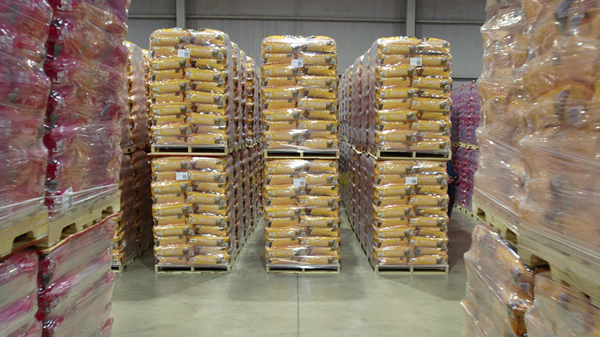 How to Prevent Pallet Overhang in Animal Feed Operations
November 13, 2025
<p>Pallet overhang is one of those problems that seems minor until it costs you thousands of dollars in a single day. When feed bags extend beyond standard pallet dimensions, the instability triggers a cascade of issues—damaged products, rejected shipments, increased transportation costs, and safety hazards. These dimensional failures at your packaging line compound into significant financial losses throughout the distribution chain.</p><p>As a plant manager, you know these challenges intimately. You've experienced that sinking feeling when a retailer rejects an entire shipment due to overhang. You've dealt with the frustration of damage claims that could have been avoided. You feel the pressure from logistics teams struggling with unstable loads that won't fit properly in trucks. And there's the constant worry about worker safety when your team handles compromised pallets.</p><p>These aren't just operational hiccups—they're profit drains that affect your bottom line and customer relationships. In this article, we'll examine the root causes of pallet overhang specific to feed operations, explore how advanced palletizing technology can eliminate these issues, and provide actionable quality control strategies you can implement immediately to ensure every pallet leaving your facility meets exact dimensional specifications.</p><h2 id="understanding-the-pallet-overhang-problem-in-feed-manufacturing">Understanding the Pallet Overhang Problem in Feed Manufacturing</h2><p>Pallet overhang occurs when packaged products extend beyond standard pallet dimensions—typically 48" x 40" in North America. This creates structural instability and operational complications throughout the supply chain. In animal feed operations handling 50-pound feed bags and requiring bulk packaging, even minor overhang can result in significant problems during transportation, storage, and handling.</p><p>Feed manufacturing faces specific challenges: varying bag sizes, dense product weights, and high-volume production requirements that demand precise pallet construction to maintain operational efficiency. Specialized feed packaging solutions address these unique requirements through engineering approaches designed specifically for agricultural product handling.</p><p>Here's what makes overhang particularly problematic: seemingly minor dimensional variations compound throughout stacking operations. What starts as a quarter-inch error on the first layer can result in several inches of overhang by the time your pallet reaches full height. Precision pallet construction eliminates these cumulative errors through systematic control of bag placement and compression.</p><h3 id="the-hidden-costs-of-poor-pallet-construction">The Hidden Costs of Poor Pallet Construction</h3><p>The financial impact of pallet overhang extends far beyond immediate product damage. It creates operational inefficiencies that ripple through multiple aspects of your distribution process:</p><p><strong>Structural Weakness</strong>: Overhang reduces compression strength, dramatically increasing damage risk during transportation and storage. Bags on the edges bear uneven loads and are more likely to tear or burst.</p><p><strong>Product Damage</strong>: Shifting loads during transportation result in customer complaints and replacement costs. You're not just replacing damaged product—you're paying for return shipping, processing claims, and potentially losing the customer's trust.</p><p><strong>Increased Shipping Costs</strong>: Space inefficiency and special handling requirements for non-standard loads drive up costs per unit. When pallets don't stack efficiently, you're paying to ship air instead of product.</p><p><strong>Retailer Rejections</strong>: Delivery delays and penalties damage customer relationships and impact cash flow. Some retailers have zero-tolerance policies for dimensional issues, meaning an entire truckload could be rejected at the dock.</p><p><strong>Safety Hazards</strong>: Warehouse and logistics personnel face increased risk when handling unstable loads and overhanging materials. Beyond the human cost, workplace injuries drive up insurance premiums and create liability exposure.</p><p>These costs compound over time while creating operational complications that extend throughout your supply chain. Prevention requires systematic approaches that address both immediate pallet construction and long-term operational consistency.</p><h2 id="how-pallet-overhang-impacts-your-feed-distribution-operations">How Pallet Overhang Impacts Your Feed Distribution Operations</h2><p>The cascading effects of pallet overhang begin at your packaging line and continue through every stage of the distribution process. Understanding these impacts helps you justify investments in overhang prevention technology and procedures.</p><p>Distribution complications from overhang affect multiple stakeholders throughout the supply chain—from transportation providers to retail customers—creating relationship challenges that can impact your long-term business success beyond immediate operational costs.</p><h3 id="shipping-and-logistics-complications">Shipping and Logistics Complications</h3><p>Pallet overhang creates systematic problems throughout distribution operations that compound your costs and operational complexity:</p><p><strong>Reduced Truck Loading Efficiency</strong>: Space utilization suffers, increasing transportation costs per unit and limiting load optimization. Instead of fitting 26 pallets per truck, you might only fit 22—that's a 15% increase in shipping costs right there.</p><p><strong>Increased Damage Claims</strong>: Transportation providers deal with load instability and handling difficulties, leading to more damage claims that you ultimately pay for through higher rates or direct reimbursement.</p><p><strong>Additional Handling Requirements</strong>: Distribution centers need special equipment and extended processing time for non-standard loads. This often means surcharges and delays that impact your entire distribution schedule.</p><p><strong>Load Rejections</strong>: When carriers or receivers reject loads, you face expensive repalletizing operations and delivery delays. These emergency interventions are always more costly than getting it right the first time.</p><p><strong>Higher Insurance Premiums</strong>: Increased damage risks and liability exposure from unstable loads drive up your insurance costs year after year.</p><p>These complications create ongoing operational challenges that require systematic solutions rather than case-by-case remediation efforts.</p><h2 id="root-causes-of-pallet-overhang-in-feed-operations">Root Causes of Pallet Overhang in Feed Operations</h2><p>Identifying the fundamental causes of pallet overhang enables you to develop targeted solutions that address problems at their source, rather than constantly managing symptoms. Most overhang issues result from equipment limitations, process inconsistencies, and operational factors that can be systematically addressed through proper technology and procedures.</p><p>Consistent bag dimensions provide the foundation for overhang prevention through precise control of package formation and sealing. Precise placement technology ensures that even perfectly formed bags are positioned accurately for optimal pallet construction.</p><p>Understanding root causes requires systematic analysis of your entire packaging process—from bag formation through final pallet compression—identifying each point where dimensional variations can occur and compound into overhang problems.</p><p>Effective solutions address multiple causes simultaneously, rather than focusing on individual factors, to create comprehensive approaches that ensure consistent pallet quality regardless of operational variables.</p><h3 id="equipment-related-factors-contributing-to-overhang">Equipment-Related Factors Contributing to Overhang</h3><p>Outdated or improperly calibrated equipment creates the fundamental conditions that lead to pallet overhang, resulting in inconsistent bag formation, improper placement, and inadequate compression control. Traditional palletizing systems often lack the precision required for consistent pallet construction, particularly when handling dense products like animal feed.</p><p>Manual palletizing operations inherently create dimensional variations through human inconsistency. Even your best operators can't match the precision of modern automated systems, especially during long shifts or high-volume periods.</p><p>Outdated automated systems may lack the control and precision necessary for tight pallet construction. Worn equipment components—including grippers, conveyors, and compression systems—contribute to placement errors that accumulate into overhang.</p><p>Inadequate bag sealing creates dimensional inconsistencies that affect stacking geometry, while improper conveyor alignment can introduce systematic placement errors that compound throughout pallet construction.</p><h2 id="advanced-technology-solutions-for-pallet-overhang-prevention">Advanced Technology Solutions for Pallet Overhang Prevention</h2><p>Modern automated palletizing systems eliminate overhang through precision engineering, advanced control systems, and integrated quality monitoring. These technological solutions address root causes systematically rather than attempting to manage overhang through operational procedures alone.</p><p>Precision stacking technology showcases how advanced engineering techniques enable perfect pallet construction through systematic control of every aspect of the stacking process. Seamless bag-to-pallet workflow integration ensures that bag formation and pallet construction work together to optimize dimensional consistency.</p><p>Technology solutions must address both individual bag placement accuracy and overall pallet compression to achieve optimal results. This comprehensive approach ensures that dimensional precision is maintained throughout the entire stacking process.</p><p>Advanced systems also provide real-time monitoring and adjustment capabilities that maintain pallet quality even when dealing with normal variations in product characteristics and operating conditions.</p><h3 id="symach-mach-series-stacking-cage-technology">SYMACH Mach Series Stacking Cage Technology</h3><p>The SYMACH Mach Series palletizing systems incorporate revolutionary stacking cage technology that eliminates overhang through comprehensive compression and containment. Here's how it works:</p><p><strong>Four-Sided Compression</strong>: Up to 4,000 lbs of upward pressure ensures all bags remain within pallet boundaries. This isn't just pushing down from the top—it's creating uniform compression from all sides to prevent any bag from shifting or extending past the edge.</p><p><strong>Telescopic Belt Delivery System</strong>: Ensures consistent bag positioning and orientation before placement. Each bag arrives at exactly the right position, eliminating the variability that causes cumulative errors.</p><p><strong>Sensor-Controlled Gripper Head</strong>: Provides precise placement with automated detection and correction capabilities. If a bag isn't positioned correctly, the system adjusts before placing it on the pallet.</p><p><strong>Sliding Plate Stacking Cage</strong>: Contains all bag movement during compression and stacking operations. The cage acts as a physical boundary that prevents overhang from occurring in the first place.</p><p><strong>Automated Compression Cycles</strong>: Creates perfectly cubed pallets that meet exact dimensional specifications. Every pallet that comes off your line looks identical—no variations, no overhang, no problems.</p><p>This integrated approach addresses all factors that contribute to overhang while providing the precision necessary for consistent pallet quality regardless of production variables.</p><h3 id="integrated-bag-filling-and-palletizing-systems">Integrated Bag Filling and Palletizing Systems</h3><p>Comprehensive overhang prevention requires coordination between bag formation and pallet construction systems to ensure dimensional consistency throughout your entire packaging process:</p><p><strong>Consistent Bag Formation</strong>: Reduces dimensional variations that could affect stacking geometry and pallet construction. When every bag is the same size and shape, building a perfect pallet becomes much easier.</p><p><strong>Controlled Bag Release Timing</strong>: Ensures optimal placement positioning and prevents placement errors. The timing between bag release and gripper engagement is precisely controlled to eliminate variables.</p><p><strong>Automated Orientation Systems</strong>: Ensure uniform stacking patterns that optimize space utilization and dimensional control. The system knows exactly how each bag should be oriented for maximum stability.</p><p><strong>Real-Time Monitoring Systems</strong>: Detect and correct placement errors before they can create overhang. If something starts to drift out of spec, you know immediately—not after you've built ten more pallets.</p><p><strong>Quality Verification Systems</strong>: Ensure pallet specifications are maintained throughout production runs. Automated checks confirm that every pallet meets your dimensional requirements before it moves to the warehouse.</p><p>This systematic integration eliminates the disconnects between bag formation and pallet construction that often contribute to dimensional problems and overhang issues.</p><h2 id="operational-best-practices-for-overhang-prevention">Operational Best Practices for Overhang Prevention</h2><p>Systematic overhang prevention requires operational procedures and quality control systems that support your equipment capabilities while ensuring consistent execution regardless of operational variables. These best practices complement advanced technology while providing the organizational framework necessary for sustained performance.</p><p>Adaptable bag formatting capabilities enable optimization for different product characteristics while maintaining dimensional consistency. Operator skill development ensures that your personnel understand their role in overhang prevention and can execute procedures consistently.</p><p>Effective operational procedures must address normal variations in product characteristics, environmental conditions, and equipment performance while maintaining dimensional precision and pallet quality standards.</p><p>Your quality control systems should provide real-time feedback that enables immediate corrective action when dimensional variations are detected, preventing overhang before pallets are completed.</p><h3 id="quality-control-and-monitoring-systems">Quality Control and Monitoring Systems</h3><p>Comprehensive quality control requires systematic inspection protocols and measurement systems that ensure pallet dimensions remain within acceptable tolerances throughout production operations. These systems must provide objective measurements rather than subjective assessments while enabling rapid correction of dimensional deviations.</p><p>Automated measurement systems provide consistent and accurate assessment of pallet dimensions, generating documentation that supports quality management and meets customer requirements. Manual inspection procedures should complement automated systems while providing backup verification capabilities.</p><p>Statistical process control approaches enable you to identify trends and patterns that could indicate developing overhang problems before they become systematic issues affecting multiple pallets. When you spot a trend early, you can make adjustments that prevent problems rather than fixing them after they occur.</p><h2 id="the-financial-benefits-of-eliminating-pallet-overhang">The Financial Benefits of Eliminating Pallet Overhang</h2><p>Comprehensive ROI analysis demonstrates substantial cost savings and operational benefits achieved through proper pallet construction technology and procedures. These benefits include direct cost reduction through elimination of damage and improved efficiency, as well as indirect benefits through enhanced customer satisfaction and operational reliability.</p><p>Investment costs for overhang prevention technology are typically recovered quickly through direct savings on damage claims, shipping costs, and operational inefficiencies. Long-term benefits include improved customer relationships, enhanced operational reliability, and competitive advantages through superior pallet quality.</p><p>Maintaining optimal performance through ongoing service and support ensures that overhang prevention benefits are sustained throughout the equipment lifecycle while providing opportunities for continuous improvement.</p><h2 id="eliminate-pallet-overhang-with-proven-solutions">Eliminate Pallet Overhang with Proven Solutions</h2><p>Preventing pallet overhang requires a comprehensive approach that integrates advanced technology with systematic operational procedures and ongoing quality management. At BW Flexible Systems, we offer proven solutions that eliminate overhang through precision engineering, comprehensive automation, and integrated support services.</p><p>Our integrated approach ensures sustained performance and continuous improvement in your animal feed packaging operations. Here are the solutions that can help you build perfect pallets every time:</p><ul><li><strong>SYMACH Palletizing Solutions</strong>: Our SYMACH Mach Series palletizers feature revolutionary stacking cage technology with four-sided compression up to 4,000 lbs. The telescopic belt delivery system and sensor-controlled gripper head ensure precise placement, while automated compression cycles create perfectly cubed pallets that eliminate overhang.</li><li><strong>Thiele Bagging Systems</strong>: Consistent bag formation is the foundation of perfect pallets. Our Thiele bagging solutions deliver precise fill weights and consistent bag dimensions that optimize stacking geometry and eliminate the variations that contribute to overhang.</li><li><strong>Comprehensive Service and Support</strong>: From initial assessment through ongoing optimization, we partner with you to create quality management systems that ensure every pallet meets exact specifications. Our lifetime support includes operator training, preventive maintenance, and continuous improvement programs.</li></ul><p>Contact our palletizing experts to discuss your pallet quality challenges and discover how our comprehensive solutions can eliminate overhang while optimizing your distribution operations for maximum efficiency and customer satisfaction.</p>
 How to Preserve Freshness with Flow Wrap Packaging of Bakery Products
November 11, 2025
<p>At BW Packaging, we’ve witnessed how critical the right packaging can be in delivering consistently fresh, appealing bakery products. From artisanal breads to delicate pastries, maintaining texture, flavor, and shelf-life hinges on precise wrapping techniques and materials. Next, explore how flow wrapping helps retain bakery freshness, reduce spoilage, and satisfy consumer expectations for taste and convenience. Then, discover how the right machinery and operational choices can transform your bakery operation into a high-efficiency, high-quality production line.</p><h2 id="understanding-the-unique-challenges-in-bakery-packaging">Understanding the Unique Challenges in Bakery Packaging</h2><p>Baked goods are prized for their aroma, crust, and texture; however, those characteristics are notoriously short-lived if exposed to air, heat, or moisture fluctuations. Freshly baked items can lose their appeal within hours if not properly wrapped and stored. Small pinholes or misaligned seals can lead to dryness, staleness, or even mold development. With consumer expectations at an all-time high, packaging has become a frontline defense in preserving the premium eating experience customers crave.</p><p>Beyond preserving the product, packaging also heavily influences brand perception. Shoppers often equate well-presented baked goods with superior taste and freshness. Eye-catching designs, clear branding, and resealable features help differentiate offerings in a competitive market. When done correctly, packaging can extend product shelf life, reduce returns for staleness, and bolster a company’s reputation for consistent quality.</p><h2 id="the-basics-of-flow-wrap-technology">The Basics of Flow Wrap Technology</h2><p>Flow wrapping involves feeding products horizontally into a forming machine that encloses them in film and then seals both the top and ends. This continuous process is highly efficient, making it popular for baked goods that need a quick turnaround. The forming collar shapes the film into a tube, allowing items to pass through, after which a fin seal closes the underside. Subsequent end seals create individual packages at consistent spacing.</p><p>This approach is particularly useful for bakery items because it allows for gentle handling. Fragile pastries or intricately decorated items can be inserted onto infeed conveyors with minimal jostling. Compared to other packaging methods, flow wrapping reduces friction and compression, preserving the product’s structure.</p><h2 id="selecting-the-right-packaging-materials-for-bakery-freshness">Selecting the Right Packaging Materials for Bakery Freshness</h2><p>One of the primary goals of bakery packaging is to guard against oxygen ingress and moisture loss. Oxygen speeds up staling, while excess moisture can soften crispy surfaces or encourage microbial growth. Multi-layer films with high oxygen and moisture barriers slow these processes significantly, helping bread and pastries remain flavorful. For example, polypropylene films are frequently used because they combine clarity, seal ability, and moderate barrier properties, striking a balance between cost and protection.</p><p>Yet not every product needs a complete moisture lock. Some bakery items benefit from slight breathability to prevent condensation. Specialty materials that incorporate micro-perforations or anti-fog treatments can maintain an equilibrium between protecting products and avoiding excess humidity. The choice of film hinges on the item’s shelf-life requirements, desired texture, and whether the product is packaged immediately post-bake or after cooling.</p><h3 id="controlling-atmosphere-and-sealing-for-optimal-shelf-life">Controlling Atmosphere and Sealing for Optimal Shelf Life</h3><p>Modified Atmosphere Packaging<sup>Modified atmosphere packaging (MAP) is a method of packaging products in polymer films that maintain a commodity-specific modified atmosphere such as reduced oxygen levels and elevated carbon dioxide levels.<br>Source: <a target="_blank" href="https://www.sciencedirect.com/topics/food-science/modified-atmosphere-packaging" data-sf-ec-immutable="">ScienceDirect.com</a></sup> (MAP) can be integrated with flow wrap lines, replacing oxygen with gases like nitrogen or carbon dioxide. This environment slows mold growth and preserves softness, particularly useful for items like tortillas, bagels, or packaged pastries sold over extended periods. The machine’s forming and sealing process must be carefully synchronized with gas flushing to ensure a proper seal under the modified atmosphere.</p><p>Even for products not using MAP, accurate temperature controls in the seal jaws are vital. If sealing temperatures are too low, the film may not fuse completely; if it is too high, the film can degrade or cause wrinkles that allow air pockets. Achieving the right balance secures a tight, reliable seal.</p><h2 id="setting-up-a-flow-wrapping-line-for-bakery-products">Setting Up a Flow Wrapping Line for Bakery Products</h2><p>A successful flow wrap line starts with how items are fed onto the conveyor. Aligning products in a single-file arrangement, often using infeed guides or product grouping modules, prevents collisions or overlapping. If a product arrives at the wrapping station misaligned, the system can jam, or the seal might form unevenly.</p><p>Managing residual heat from freshly baked goods is another key concern. Packaging items that are still slightly warm can trap steam, leading to sogginess. Installing cooling racks or conveyors that allow ambient air to circulate helps regulate moisture. For high-humidity environments, dehumidifiers near the packaging line can stave off condensation that otherwise forms on the film.</p><h3 id="maintaining-product-quality-during-high-speed-operations">Maintaining Product Quality During High-Speed Operations</h3><p>Achieving high throughput without damaging bakery products requires striking a careful balance between conveyor speed and gentle handling. Overly rapid conveyor speeds can cause items to bump or fall, especially if the packaging line must handle multiple shapes or sizes. Smart sensors help monitor product position, detecting if a pastry becomes askew. When a jam is imminent, the system can pause or slow, preventing product damage.</p><p>Automated inspection systems further reduce errors. Vision or weight checks can flag any package lacking the correct seal or containing the wrong item. By removing the defective package before it proceeds further, bakeries avoid shipping compromised goods.</p><h2 id="storage-and-distribution-considerations">Storage and Distribution Considerations</h2><p>Once sealed, products must remain in an environment that supports the chosen packaging’s barrier properties. Temperature fluctuations can cause condensation, leading to soggy or mold-prone baked goods. Warehouses and transport vehicles equipped with temperature or humidity control help maintain the sealed environment’s integrity. For sensitive pastries, even short exposure to high heat or extreme cold can degrade quality.</p><p>Proper labeling and coding also play a role in maintaining product standards. Printing batch numbers and best-before dates directly on each flow-wrapped item ensures traceability. In the event of a quality concern, lot numbers can quickly pinpoint the production run. This transparency not only safeguards consumers but also instills confidence in retailers.</p><h2 id="leveraging-data-and-analytics-to-boost-efficiency">Leveraging Data and Analytics to Boost Efficiency</h2><p>Modern flow wrappers often come with integrated software that monitors performance metrics like packaging rate, downtime frequency, and seal integrity. Operators can analyze these data points to identify consistent bottlenecks, whether it’s film misalignment or insufficient cooling time. By making incremental adjustments, such as slightly reducing line speed or adjusting seal jaw temperatures, managers can see immediate improvements in output consistency.</p><p>In addition, historical data reveals trends that might not be evident on the factory floor day-to-day. If a spike in rejects correlates with a particular batch of film, procurement can investigate potential material defects. If throughput dips whenever a certain product is run, the line configuration might need fine-tuning.</p><h2 id="best-practices-for-worker-training-and-maintenance">Best Practices for Worker Training and Maintenance</h2><p>A few key steps to ensure well-trained operators and reliable flow wrapper performance include:</p><ul><li><strong>Focus on Core Machinery Mechanics</strong>: Operators should know how to load film correctly, adjust tension, and monitor seal consistency. A solid grounding in these fundamentals reduces mistakes and optimizes uptime.</li><li><strong>Provide Ongoing Training and Refreshers</strong>: Regular sessions keep experienced staff updated on new software or materials. New employees learn faster with a structured approach, minimizing early errors and downtime.</li><li><strong>Use Practical and Digital Resources</strong>: Hands-on demonstrations let workers hone skills in real-world scenarios. Online manuals and video tutorials reinforce lessons and clarify troubleshooting techniques.</li><li><strong>Conduct </strong>Routine Maintenance<strong> Checks</strong>: Scheduling cleaning, lubrication, and part inspections prevents crumb buildup or gear misalignment. Early detection of minor faults avoids sudden breakdowns that stall production.</li><li><strong>Replace Worn Parts Preemptively</strong>: Proactively switching out belts or cutting jaws keeps the line running smoothly. This approach averts extensive repairs and safeguards both machinery investments and product quality.</li></ul><p>Together, these measures maintain steady output and ensure bakery teams can adapt seamlessly to fluctuating production demands.</p><h2 id="potential-innovations-on-the-horizon">Potential Innovations on the Horizon</h2><p>Sustainable packaging materials are a rising focus in the bakery sector. Compostable or biodegradable films are under development, though they must still provide adequate moisture and oxygen barriers. As technology advances, we may see new hybrid materials that break down more readily in landfills yet remain sturdy enough to protect delicate pastries.</p><p>Smart packaging is another emerging area, with the possibility of QR codes or embedded sensors that track product freshness. Consumers could scan a code to learn about storage instructions, ingredients, or even the date the item was baked. These innovations tie into broader Internet of Things (IoT) trends, where data flows seamlessly from production through to the consumer’s experience.</p><h2 id="achieve-optimal-freshness-with-the-hayssen-r300">Achieve Optimal Freshness with the Hayssen R300</h2><p>At BW Packaging, quality control is key, and we give our clients the tools they need to do just that. Explore the Hayssen R300 flow wrapper, a high-performance solution designed to maintain product quality while maximizing throughput. Its precise control systems, robust sealing mechanisms, and user-friendly interfaces help ensure that each baked good emerges neatly wrapped and protected.</p><p>Contact us today and discover how the Hayssen R300 can elevate your bakery’s efficiency and product freshness.</p>
 FSMA Compliance: What Packaging Managers Need to Know in 2025
November 5, 2025
<p>The regulatory landscape surrounding food safety continues to evolve, with FSMA compliance requirements becoming increasingly complex and enforcement becoming more stringent throughout 2025. At BW Packaging, we understand that packaging managers face mounting pressure to overcome these regulatory challenges while maintaining operational efficiency and product quality.</p><p>The Food Safety Modernization Act has fundamentally transformed how packaging operations must approach food safety, shifting from reactive compliance to proactive prevention. As we progress through 2025, FDA enforcement priorities have evolved to focus more heavily on documentation quality, system effectiveness, and genuine implementation rather than simple procedural compliance.</p><h2 id="fsma-regulartory-updates-and-changes-for-2025">FSMA Regulatory Updates and Changes for 2025</h2><p>The regulatory environment continues to evolve with new guidance documents, updated enforcement priorities, and enhanced inspection procedures that directly affect packaging operations. These changes reflect FDA's commitment to strengthening food safety through more effective regulation and enforcement.</p><p>Recent enforcement actions have highlighted common compliance gaps, providing valuable insights into FDA expectations and priorities. These actions demonstrate the importance of thorough documentation, effective implementation, and continuous monitoring of food safety systems.</p><p>Supply chain verification requirements have been strengthened, with enhanced expectations for supplier oversight and documentation. Packaging operations must now demonstrate more comprehensive verification of material suppliers and service providers.</p><h3 id="enforcement-trends-and-inspection-focus-areas">Enforcement Trends and Inspection Focus Areas</h3><p>Current FDA inspection priorities reflect evolving enforcement strategies that emphasize system effectiveness over procedural compliance, including:</p><ul><li><strong>Increased focus on environmental monitoring programs</strong> with enhanced scrutiny of sampling procedures and corrective actions</li><li><strong>Enhanced scrutiny of cleaning and sanitization procedures</strong> including validation studies and effectiveness verification</li><li><strong>Expanded review of supplier verification programs</strong> with emphasis on risk-based approaches and documentation quality</li><li><strong>Deeper examination of corrective action effectiveness</strong> including root cause analysis and prevention of recurrence</li><li><strong>Greater emphasis on record-keeping accuracy and completeness</strong> with detailed review of documentation systems</li></ul><p>These enforcement trends require packaging operations to ensure that their compliance programs address not just regulatory requirements but also FDA's evolving expectations for implementation quality and system effectiveness.</p><h2 id="key-fsma-requirements-for-packaging-opearations">Key FSMA Requirements for Packaging Operations</h2><p>FSMA requirements specific to packaging operations encompass multiple areas that require careful attention and systematic implementation. Understanding these requirements and their practical implications is essential for maintaining compliance while supporting operational efficiency.</p><h3 id="preventive-controls-and-hazard-analysis">Preventive Controls and Hazard Analysis</h3><p>Comprehensive hazard analysis forms the foundation of FSMA compliance for packaging operations. This analysis must identify potential biological, chemical, and physical hazards that could affect product safety during packaging processes.</p><p>Critical control points in packaging operations typically include sealing processes, metal detection, package integrity verification, and environmental controls. These control points require systematic monitoring, documented procedures, and verified effectiveness through validation studies.</p><p>Preventive control measures must be designed and implemented to significantly minimize or prevent identified hazards. These measures require documented procedures, monitoring systems, and verification activities that demonstrate ongoing effectiveness.</p><p>Validation requirements ensure that preventive controls are capable of achieving their intended purpose under normal operating conditions. This validation must be conducted by qualified individuals using appropriate scientific methods and documentation.</p><h3 id="supplier-verification-and-traceability">Supplier Verification and Traceability</h3><p>Supplier verification programs must address all materials and services that could affect food safety in packaging operations, such as:</p><ol><li><strong>Raw material and packaging material supplier verification requirements</strong> including risk assessments and periodic audits</li><li><strong>Documentation and record-keeping for supplier approvals</strong> with comprehensive files supporting qualification decisions</li><li><strong>Traceability systems for rapid response to food safety incidents</strong> enabling quick identification of affected products</li><li><strong>Lot tracking and product identification throughout packaging processes</strong> with clear documentation of material flow</li><li><strong>Integration with upstream and downstream traceability systems</strong> ensuring comprehensive supply chain visibility</li></ol><p>These requirements demand sophisticated systems that can track materials and products throughout complex packaging operations while maintaining the speed and efficiency necessary for commercial viability.</p><h2 id="documentation-and-record-keeping-requirements">Documentation and Record-Keeping Requirements</h2><p>FSMA documentation requirements are extensive and specific, requiring packaging operations to maintain comprehensive records that demonstrate ongoing compliance and system effectiveness. These requirements extend beyond traditional record-keeping to include validation studies, verification activities, and corrective action documentation.</p><h3 id="required-documentation-for-packaging-operations">Required Documentation for Packaging Operations</h3><p>Food safety plans must include comprehensive hazard analyses, preventive control descriptions, monitoring procedures, and verification activities specific to packaging operations. These plans require regular review and updating to reflect operational changes and regulatory developments.</p><p>Monitoring records must document compliance with established critical limits and demonstrate consistent implementation of preventive controls. These records must be maintained in real-time and include all relevant parameters and observations.</p><p>Corrective action documentation must include detailed descriptions of problems, root cause analyses, corrective measures implemented, and verification of effectiveness. This documentation demonstrates systematic approaches to problem resolution and prevention of recurrence.</p><p>Training records must document initial training, ongoing education, and competency verification for all personnel involved in food safety activities. These records must demonstrate that personnel understand their responsibilities and can effectively implement required procedures.</p><h3 id="record-retention-and-accessibility-standards">Record Retention and Accessibility Standards</h3><p>Record retention requirements vary by document type but generally require maintenance for at least two years or longer depending on product shelf life and specific regulations. Electronic records must include appropriate backup and security measures to ensure data integrity and availability.</p><p>Document organization must enable rapid retrieval during inspections or audit activities. Inspectors expect immediate access to relevant records, making organization and accessibility critical for successful audit outcomes.</p><p>Version control systems must ensure that current procedures are available to personnel while maintaining historical records for compliance demonstrations. These systems must prevent unauthorized changes while enabling appropriate updates and revisions.</p><h2 id="technology-solutions-for-fsma-compliance">Technology Solutions for FSMA Compliance</h2><p>Modern packaging equipment and digital systems provide significant advantages for FSMA compliance through automated monitoring, documentation, and control capabilities. These technological solutions can improve compliance while reducing manual effort and potential errors.</p><p>Advanced packaging equipment incorporates features that automatically generate compliance records and monitor critical control points throughout packaging operations. This automation reduces documentation burden while improving accuracy and consistency.</p><h3 id="automated-monitoring-and-documentation-systems">Automated Monitoring and Documentation Systems</h3><p>Integrated monitoring systems continuously track critical parameters including temperatures, pressures, speeds, and other factors that affect food safety. These systems provide real-time alerts when parameters exceed acceptable limits while automatically documenting compliance.</p><p>Data logging capabilities capture comprehensive information about packaging operations including production parameters, alarm conditions, and operator actions. This data provides valuable evidence of compliance while supporting investigation and improvement activities.</p><p>Automatic report generation creates standardized compliance reports that summarize key performance indicators and demonstrate ongoing compliance with FSMA requirements. These reports reduce manual effort while ensuring consistent documentation.</p><h3 id="digital-record-keeping-and-data-management">Digital Record-Keeping and Data Management</h3><p>Electronic document management systems provide centralized storage and organization of compliance documentation while ensuring version control and access security. These systems improve accessibility while reducing storage requirements and administrative burden.</p><p>Integration capabilities enable coordination between different systems and databases, providing comprehensive views of compliance status and performance trends. This integration supports more effective compliance management and decision-making.</p><p>Cloud-based solutions provide secure, accessible record-keeping that enables real-time updates and remote access while maintaining appropriate security and backup measures. These solutions can improve flexibility while ensuring data protection.</p><h2 id="training-and-personnel-requirements">Training and Personnel Requirements</h2><p>FSMA compliance depends heavily on personnel competency and understanding of food safety requirements. Training programs must address both technical requirements and practical implementation to ensure effective compliance throughout packaging operations.</p><p>Ongoing training reflects the evolving nature of food safety regulation and the need for continuous improvement in compliance systems. Training effectiveness directly affects compliance outcomes and operational performance.</p><p>Comprehensive training programs must address role-specific requirements while providing general awareness of food safety principles and FSMA requirements. Training documentation must demonstrate competency and understanding through testing or practical demonstration.</p><p>Supervisor and management training must include additional responsibilities for oversight, corrective action, and compliance verification. This training should address regulatory requirements as well as practical implementation challenges.</p><h2 id="common-compliance-pitfalls-and-how-to-avoid-them">Common Compliance Pitfalls and How to Avoid Them</h2><p>Experience with FSMA inspections has identified common compliance issues that can be avoided through proactive preparation and systematic implementation. Understanding these pitfalls enables packaging operations to focus attention on high-risk areas.</p><p>Documentation issues represent the most common compliance problems, including incomplete records, missing validation studies, and inadequate corrective action documentation. These issues can be prevented through systematic record-keeping procedures and regular self-audits.</p><p>Implementation gaps occur when procedures exist but are not consistently followed or effectively implemented. These gaps can be addressed through training, monitoring, and management oversight that ensures consistent execution.</p><p>System maintenance issues include outdated procedures, inadequate equipment maintenance, and insufficient environmental monitoring. Regular review and updating of compliance systems prevent these problems from developing into violations.</p><h2 id="preparing-for-fsma-inspections-in-2025">Preparing for FSMA Inspections in 2025</h2><p>FDA inspections in 2025 emphasize comprehensive evaluation of system effectiveness rather than simple procedural compliance. Preparation must address both documentation and practical implementation to demonstrate genuine commitment to food safety.</p><p>Inspector expectations include immediate access to relevant documentation, knowledgeable personnel who can explain systems and procedures, and evidence of consistent implementation throughout operations. Meeting these expectations requires systematic preparation and ongoing maintenance of compliance systems.</p><p>Mock audits provide valuable preparation opportunities that identify potential problems before official inspections. These audits should address all aspects of FSMA compliance while simulating actual inspection conditions and procedures.</p><p>Personnel preparation includes training on inspector interactions, documentation retrieval, and communication procedures that support positive audit outcomes. Well-prepared personnel project confidence and competency that supports favorable inspection results.</p><h2 id="get-help-with-all-of-your-fsma-compliance-need">Get Help With All of Your FSMA Compliance Needs</h2><p>At BW Packaging, we understand the complexity of FSMA compliance and provide equipment and support that helps packaging operations meet their regulatory objectives. Our sanitary design expertise and compliance experience enable us to support comprehensive FSMA implementation and ongoing compliance management.</p><p>Contact our food safety compliance specialists to ensure you meet your regulatory compliance and operational objectives.</p>
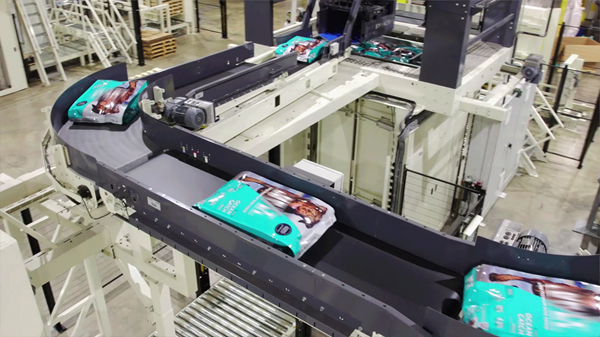 Modern Animal Food Packaging: How Automatic Bagging Equipment Improves Efficiency
October 20, 2025
<p>In the animal feed industry, producers must package an expanding range of products efficiently while maintaining accurate weights and meeting strict standards. Even semi-automated bag filling systems that once sufficed are now struggling to keep pace with modern demands.</p><p>As a plant manager, you're feeling the pressure from multiple angles. Labor shortages make it harder to staff manual bagging stations. Inconsistent fill weights lead to giveaway or compliance issues. Frequent changeovers between different feed types and bag sizes eat into production time. And aging equipment requires constant maintenance just to achieve baseline performance. Ultimately, these challenges demonstrate that automated solutions are not merely an upgrade, but a competitive necessity.</p><p>In this post, we'll explore how modern automated bag filling solutions address these specific pain points, what features to prioritize for animal feed applications, and how integrated systems like Thiele bag filling and Symach palletizers can transform your operational efficiency while ensuring consistent quality across diverse feed types.</p><h2 id="who-we-are">Who We Are</h2><p>BW Flexible Systems helps animal feed producers safeguard product integrity while modernizing their operations with flexible bag filling, sealing and palletizing solutions. Our automated Thiele bagging and Symach palletizing solutions are known for their efficiency, versatility, precision, and ease of operability. We offer our clients training, service and a lifetime of support for every solution sold.</p><h3 id="expanding-scope-animal-feed-packaging">The Expanding Scope of Animal Feed Packaging</h3><p>Animal feed has come a long way from basic grains or standard pellets. Today›s formulations might include carefully balanced nutrients, medicated additives, or tailored blends for specific breeds. This growing diversity pushes packaging lines to become more flexible and precise, ensuring each bag meets the exact nutritional requirements promised on the label.</p><h3 id="beyond-traditional-livestock">Beyond Traditional Livestock</h3><p>Historically, the animal feed market revolved around livestock like cattle, poultry, and swine. However, demand for pet food - especially for dogs and cats - has also grown significantly, and other niche markets are on the rise. Each segment has its product characteristics. For instance, a large, pellet-based livestock feed can be more forgiving when filling bags quickly, whereas specialized canine diets might use smaller kibble or require gentle handling to avoid crushing. Additionally, some companion animal feeds including freeze-dried ingredients or high-fat content can complicate the bagging process if the machinery isn›t adapted for those properties.</p><p>Producers serving multiple segments must manage a wide range of raw materials, ranging from powders and ground ingredients to more dense pellets. This diversity can introduce challenges for weighers, sealing machines, and conveyors alike.</p><h3 id="implications-packaging-lines">Implications for Packaging Lines</h3><p>The shift toward specialized formulas and broader range of feed options means that packaging lines must be versatile enough to handle numerous bag sizes, materials, and fill targets. For instance, a line exclusively designed for 50-pound paper sacks may struggle if the company introduces a 20-pound plastic-laminated option for a niche pet feed. An outdated or manual packaging approach can lead to downtime, inconsistent weights, or even product contamination when switching product SKUs.</p><p>At the same time, regulatory scrutiny around labeling and feed safety is increasing. Labels must accurately display ingredients, usage instructions, and batch data for traceability. If these labels are misapplied or missing, producers face potential legal repercussions and consumer distrust. The solution often lies in automated bag-filling equipment with integrated labeling, check weighing, and data logging to guarantee accuracy.</p><h2 id="why-automation-critical-animal-feed-packaging">Why Automation Is Critical in Animal Feed Packaging</h2><p>Many feed manufacturers still rely on labor-intensive processes, with teams manually scooping, weighing, and sealing bags. While this approach might have sufficed decades ago, the sheer volume and variety of modern feed requirements exceed manual capacity.</p><p>Automation addresses these pressures by improving consistency, cutting labor costs, and shortening turnaround times. It also helps control dust, spillage, and potential contamination risks that can arise when employees have to handle open bags repeatedly. Key benefits of automation include:</p><ul><li><strong>Labor Reduction</strong>: Automated systems reduce the need for operators to lift heavy loads and perform repetitive tasks. This can lower workplace injuries and free up staff for higher-value activities, such as quality assurance or machine supervision.</li><li><strong>Precise Weighing</strong>: Modern weighers and bag-filling systems ensure each package meets the target net weight, eliminating both underfills and costly overfills.</li><li><strong>Dust and Spillage Control</strong>: Enclosed filling stations minimize product loss and create a cleaner workspace, which is vital when dealing with fine or potentially allergenic materials.</li><li><strong>Scalability</strong>: Automated lines can be expanded with additional stations or faster palletizing modules as production demands grow without a full system overhauling the entire system.</li><li><strong>Enhanced Traceability</strong>: Digital controls track lot codes, packaging times, and fill weights, aiding in audits or recalls.</li></ul><p>Each of these advantages contributes directly to improved efficiency and profitability, especially for large or multi-line operations handling varied feed types.</p><h2 id="modern-bag-filling-systems">Modern Bag Filling Systems: A Closer Look</h2><p>At the heart of any automated feed line is the bag-filling solution itself. Today›s equipment goes well beyond simple augers or gravity-fed hoppers. Engineers have introduced advanced mechanical, pneumatic, and hybrid fillers tailored for the texture, density, and flow properties of different feeds.</p><h3 id="mechanical-vs-pneumatic-filling-approaches">Mechanical vs. Pneumatic Filling Approaches</h3><p>Mechanical systems typically use gravity or belt conveyors to move product into the bag, coupled with adjustable gates or feeders to control flow rate. These systems are ideal for free-flowing pellets or grains where minimal bridging occurs. In contrast, pneumatic fillers use pressurized air to move lighter or more powdery materials, which can be prone to clumping or dust generation. Pneumatic systems can reduce bridging, but they might be slower for very large bag sizes.</p><p>Choosing between mechanical, pneumatic or hybrid systems or adopting a combined approach hinges on the product›s characteristics. For instance, a producer with mostly high-density pellets might prefer a mechanical filler, while one handling fine powders or light fluffs might lean toward a pneumatic setup. The end goal remains the same: achieve consistent fill weights, minimal product damage, and dust-free operation.</p><h3 id="integrated-scales-quality-checks">Integrated Scales and Quality Checks</h3><p>Modern bag fillers often feature built-in weigh scales, real-time data displays, and alarm systems for quality assurance. Each bag›s weight is measured precisely before sealing, and if it›s outside specified tolerances, the system can divert it to a rework station. This not only preserves brand integrity but also cuts losses from overweight bags.</p><p>Another emerging trend is metal detection or X-ray inspection integrated into bagging lines, ensuring contaminants like metal shards don›t end up sealed inside. Some lines also include vision systems to verify correct labeling and bag closure. By embedding these checks directly into the packaging stage, manufacturers reduce the risk of shipping flawed products, mitigating potential recalls or consumer complaints.</p><h2 id="designing-efficient-animal-feed-packaging-workflow">Designing an Efficient Animal Feed Packaging Workflow</h2><p>For maximum benefit, bag-filling solutions should slot into a well-orchestrated production environment. The steps from raw material intake to final palletizing must flow in a way that supports high throughput, minimal downtime, and consistent product quality. The key steps involved in this process include:</p><ol><li><strong>Pre-Processing Storage</strong>: Designate silos, hoppers, or bins to hold raw ingredients. Organizing these storage points can reduce cross-contamination and simplify product routing.</li><li><strong>Weighing and Blending</strong>: Use dedicated mixing stations or batch scales to ensure uniform ingredient distribution. Maintaining recipe integrity is critical, as even minor deviations can alter feed performance.</li><li><strong>Bag Filling and Sealing</strong>: Position your automated filler in a dust-controlled area, especially if dealing with fine powders. Sealing mechanisms like pinch seal or sewn closure depend on bag material and product density.</li><li><strong>Coding and Labeling</strong>: Integrate date codes, batch numbers, and brand graphics. Any label mismatch can lead to compliance issues, so automated printing or application stations are often used.</li><li><strong>Palletizing and Shipping</strong>: Once bags are sealed, they move to a palletizing zone where they›re stacked for storage or transit. Consistent stacking patterns limit damage during transport.</li></ol><p>Together, these steps create a cohesive packaging line that transforms raw inputs cleanly packaged, accurately labeled feed products.</p><h2 id="overcoming-common-pitfalls">Overcoming Common Pitfalls in Automated Animal Food Packaging</h2><p>While automation streamlines operations, it›s not without challenges. Identifying and mitigating common challenges can spell the difference between a smooth rollout and costly downtime.</p><h3 id="clogging-vs-bridging">Clogging or Bridging</h3><p>Feed products, especially those with higher moisture or fine particulates, can bridge in hoppers, forming clumps that block flow. When product flow stalls, the filler may deliver inconsistent weights or completely stop. Solutions include installing agitators, vibrators, carefully sloped hopper walls, pulsing mechanisms or air knives to prevent material buildup.</p><p>Controlling humidity in the filling area also helps. If the environment is overly damp, certain feeds can stick to metal surfaces, creating partial blockages. A stable, climate-controlled packaging zone significantly reduces bridging incidents and keeps throughput steady.</p><h3 id="bag-integrity-issues">Bag Integrity Issues</h3><p>Different bag materials, woven polypropylene, paper, and laminated plastics, have varying strengths and sealing requirements. If a bag›s structure isn›t sturdy enough to handle the product weight, rips or punctures become more likely. Operators might see small tears near the seams or corners, especially during high-speed filling. Overfilling or uneven product distribution can also stress the bag, leading to lumps or bulges that hamper sealing.</p><p>Before committing to a packaging material, test it under realistic conditions. Consider how it behaves with the filler›s feed rate, the product›s texture, and the chosen sealing mechanism (sewn vs. heat-sealed).</p><h2 id="training-your-team-maintaining-equipment">Training Your Team and Maintaining Equipment</h2><p>Automation technologies deliver full value when operated and maintained by well-trained staff. Employees should understand the fundamentals of bag filling, such as calibrating weighers, recognizing bridging, and performing emergency stops. Frequent training refreshers keep even experienced team members updated on software changes and best practices.</p><p>Maintenance is equally critical. Track each machine›s performance metrics to spot trends like gradual fill-weight drift or increased downtime. Proactive tasks - such as replacing worn belts, lubricating critical parts, and cleaning dust-laden areas can prevent sudden malfunctions. Ideally, these activities should be scheduled around production lulls to minimize downtime.</p><p>An overlooked area is spare parts inventory. Storing frequently replaced components (like sensors or motor belts) on-site allows for quick swaps rather than waiting on emergency shipments. For bigger repairs, forging a strong relationship with your machinery supplier pays dividends in terms of fast support and minimal disruption.</p><h2 id="boost-your-feed-operations">Boost Your Feed Operations with Automated Bagging & Palletizing</h2><p>As the animal feed industry diversifies, efficient and reliable packaging has become a competitive necessity. Systems like Thiele or Symach offer integrated solutions for bag filling and palletizing, combining gentle product handling, high-accuracy weighing, and robust stacking into one streamlined workflow.</p><p>When you work with BW Flexible Systems, you benefit from our decades of experience tailoring technology to match your unique feed formulations and throughput targets. Here are a few of our systems that can help you get started automating your animal food packaging:</p><ul><li>Thiele Swinger Bag Filling System: The Thiele Swinger is a compact, semi- or fully automated bag filling system that helps small feed mills transition from manual to efficient, scalable operations. With intuitive controls, quick changeovers, and a low-profile design, it›s ideal for producers with limited space and growing demand.</li><li>Thiele OmniStar Bag Filling Machine: Built for speed and precision, the Thiele OmniStar fills up to 20 mid-to-large bags per minute while minimizing spillage and downtime. Its smart diagnostics, automatic reject system, and barcode-driven changeovers make it a powerful solution for producers ready to scale.</li><li>Thiele 6128 Gross Weigh Scale: The Thiele 6128 delivers accurate, consistent weighing with a two-stage system and automatic compensation to ensure every bag meets your standards. It›s fast, easy to operate, and integrates seamlessly with BWFS bagging systems for a streamlined workflow.</li><li>Symach Palletizing Solutions: Symach palletizers come in a variety of speeds and footprints, offering feed producers a variety of options for automating their palletizing.</li></ul><p>Contact us today to learn how these modern systems can drive productivity, quality, and profitability across your entire feed operation.</p>
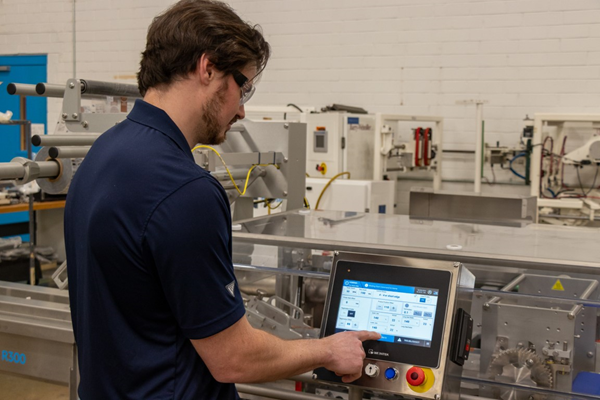 Quick Changeover Best Practices For Modern Packaging Lines
August 28, 2025
<p>At BW Packaging, we understand that packaging lines must remain agile to meet shifting consumer tastes, seasonal promotions, and fast-paced product launches. In many factories, transitioning from one product SKU to another can take hours or even days, time during which machines sit idle and production stalls. </p><p>Industry leaders must understand the importance of quick changeovers, why they’re essential for modern manufacturing, and specific best practices that maintain product quality without sacrificing production speed. Now, see how a combination of smart planning, staff training, and strategic machinery choices can transform your packaging line into a nimble, profit-driving asset. </p><h2 id="why-quick-changeovers-are-crucial">Why Quick Changeovers Are Crucial </h2><p>In a highly competitive marketplace, the ability to pivot swiftly from one product run to another can separate leading brands from those that lag behind. Quick changeovers reduce downtime, enabling you to produce more SKUs in less time and rapidly respond to <a href="/blog/pet-food-packaging-industry-trends-to-watch">market trends</a>. </p><h3 id="adapting-to-rapid-sku-expansion">Adapting to Rapid SKU Expansion </h3><p>As consumer demand shifts, brands introduce new flavors, seasonal variants, and limited-edition products at a rapid clip. This variety drives the need for changeovers, sometimes multiple times a day. If switching from one bag size or labeling requirement to another is cumbersome, you risk missing prime market windows. Alternatively, you might overproduce certain SKUs to avoid frequent changeovers, which can lead to wasted inventory or stale products. </p><p>A well-orchestrated quick changeover process allows operators to swap packaging films, adjust sealing temperatures, and reprogram weighers without a drawn-out shutdown. This responsiveness is critical for meeting tight retailer deadlines, capturing impulse-buy markets, and ensuring a consistent supply of fresh goods. </p><h3 id="minimizing-downtime">Minimizing Downtime </h3><p><a href="/blog/proactive-strategies-for-packaging-machine-maintenance" title="Proactive Strategies for Packaging Machine Maintenance | Packed with Expertise">Downtime</a> bleeds profitability. When machines aren’t running, labor, overhead, and equipment costs accumulate with no offsetting revenue. While no operation can avoid stoppages entirely, quick changeovers aim to keep them as brief as possible. Ultimately, the leaner the transition, the greater the overall throughput and the healthier the bottom line. </p><p>It’s also worth noting that poor changeover processes can cause stress among operators, leading to mistakes like incorrect sealing parameters or mislabeled packaging. By standardizing and refining each step of the changeover, you create a calmer, more predictable work environment that supports high-quality output. </p><h2 id="common-obstacles-during-line-changeovers">Common Obstacles During Line Changeovers </h2><p>Even straightforward packaging lines contain multiple machines and components, think form-fill-seal equipment, labelers, weighers, and conveyors, all of which must be realigned or reconfigured for a new SKU. Inconsistencies or delays at any one station can cascade into extended downtime. </p><p>Without a standardized approach, operators may improvise each time, resulting in missed steps or overlooked details. It’s easy for screws, tools, and parts to go missing in the shuffle, especially if they aren’t stored properly. A few obstacles during changeovers that must be overcome include: </p><ul><li><strong>Lack of Standardized Procedures</strong>: Without documented steps, staff rely on tribal knowledge that may vary widely.</li><li>Inefficient Machine Adjustments: If equipment settings must be manually dialed in each time, small errors or guesswork can create further delays.</li><li><strong>Equipment Cleaning Delays</strong>: Thorough cleaning between SKUs is often necessary—especially with allergen or hygiene concerns—but can become a bottleneck if not well planned.</li><li><strong>Limited </strong> <a href="/blog/cross-training-strategies-for-packaging-line-efficiency" title="Cross-Training Strategies for Packaging Line Efficiency | Packed with Expertise" class="font-weight-bold">Operator Training</a>: If only one or two technicians know how to do a changeover, any absence can bring the line to a standstill.</li><li><strong>Unclear Communication</strong>: Lack of real-time updates can cause operators to stand by waiting for instructions or searching for needed parts.</li></ul><p>By identifying these pain points, companies can systematically address them through standardized protocols, better training, and the right tooling strategies. </p><h2 id="best-practices-for-faster-transitions">Best Practices for Faster Transitions </h2><p>A thoughtful blend of organizational tactics and mechanical optimizations can shorten changeover times dramatically. A few steps and best practices to follow include: </p><ol><li><strong>Pre-Stage Materials</strong>:<br>Before a run ends, gather the new packaging films, labels, and product components at the line. This way, operators aren’t scrambling to locate items once it’s time to change over.</li><li><strong>Implement Quick-Release Mechanisms</strong>:<br>Minimizing the number of tools required for adjustments cuts down on fumbling or misplacement. Quick-clamp or snap-on parts let operators switch forming tubes, seal jaws, or guides with minimal fuss.</li><li><strong>Use Visual Aids and Checklists</strong>:<br>Detailed checklists eliminate memory reliance and inconsistency. A large, laminated guide near each station helps keep staff on track, ensuring essential tasks aren’t overlooked.</li><li><a href="/blog/cross-training-strategies-for-packaging-line-efficiency" title="Cross-Training Strategies for Packaging Line Efficiency | Packed with Expertise" class="font-weight-bold">Cross-Train Staff</a>:<br>If only one person knows how to adjust the weigher, any absence or backlog at that station stalls the whole line. Cross-training multiple operators fosters team collaboration, making it easier for staff to step in and handle each step of the process.</li><li><strong>Leverage Digital Controls</strong>:<br>Modern packaging machinery can store multiple recipes or parameter sets. By selecting the correct program on the control panel, operators rapidly shift from one product’s sealing temperature, fill weight, or labeling layout to another.</li></ol><p>Each of these tactics, when combined, yields a streamlined transition that not only shortens downtime but also maintains rigorous product standards. </p><h3 id="why-changeover-speed-doesnt-mean-compromised-quality">Why Changeover Speed Doesn’t Mean Compromised Quality </h3><p>A key concern is that speeding up transitions might create errors, like mislabeled packages or incomplete cleaning between SKUs. Yet, following the above best practices systematically actually helps maintain quality. <a href="/blog/quick-changeover-techniques-for-multi-product-bakery-operations" title="Quick Changeover Techniques for Multi-Product Bakery Operations | Packed with Expertise">Standardized processes</a> reduce guesswork, while pre-staging ensures that everything is ready before the line is halted. </p><h2 id="maintaining-quality-through-rapid-changeovers">Maintaining Quality Through Rapid Changeovers </h2><p>While speed is paramount, it’s crucial not to let <a href="/blog/reducing-product-damage--gentle-packaging-solutions-for-delicate-baked-goods" title="Reducing Product Damage: Gentle Packaging Solutions for Delicate Baked Goods | Packed with Expertise">product quality</a> slip. A quick changeover that leads to mislabeled or poorly sealed packages is self-defeating. Instead, quality checks should be integrated into the transition process to confirm that each new run meets specifications. </p><h3 id="checking-seals-and-fill-accuracy">Checking Seals and Fill Accuracy </h3><p>As soon as the new film roll is loaded, run a short test batch. Inspect the seals under real operating conditions. Tug at the seal to ensure it doesn’t split, check for wrinkles or gaps, and verify that the seal jaws align properly. At the same time, random samples will be weighed to confirm fill accuracy. If you notice any discrepancies, address them immediately rather than waiting until you’ve produced a large batch of off-spec product. </p><h3 id="documenting-results">Documenting Results </h3><p>Keep a record of how each changeover proceeds. Note the time taken for each step, any issues encountered, and the solutions. Over subsequent runs, look for patterns, as perhaps the same clamp causes delays or certain cleaning tasks consistently run long. </p><h2 id="scheduling-and-planning-for-frequent-changes">Scheduling and Planning for Frequent Changes </h2><p>Even with excellent systems in place, multiple daily changeovers can still strain staff and resources if not carefully scheduled. Where possible, group similar SKUs back-to-back to reduce the extent of each transition. For instance, if you package snacks in 8-ounce, 12-ounce, and 16-ounce formats, line up the runs so minimal adjustments are needed between them. Consolidate bigger leaps for the end or start of a shift when comprehensive cleaning is more convenient. </p><p>In addition, consider how shift schedules influence changeover success. If operators know a change is coming at the halfway point of a shift, they can proactively gather new materials and label reels. Similarly, a short daily meeting can highlight the upcoming schedule, ensuring everyone is aligned on priorities. This fosters accountability and reduces communication lapses. </p><h2 id="streamline-your-packaging-lines-for-greater-efficiency">Streamline Your Packaging Lines for Greater Efficiency </h2><p>A well-executed quick changeover strategy can do more than <a href="/blog/proactive-strategies-for-packaging-machine-maintenance" title="Proactive Strategies for Packaging Machine Maintenance | Packed with Expertise">cut downtime</a>; it can re-energize an entire production environment. When the staff sees that management values their efficiency and provides the right tools, morale often improves, resulting in fewer mistakes and a more cohesive team dynamic. Whether you produce confections, beverages, pharmaceuticals, or any item with frequent packaging variations, quick changeovers help you stay competitive in a fast-moving market. </p><p>By partnering with BW Packaging, you can explore machinery features, like recipe storage, quick-release assemblies, and modular designs, that inherently facilitate smoother transitions. We also offer consultancy on process optimization, ensuring each station is placed logically to minimize travel time and confusion. <a href="/contact">Contact us today</a> to learn how we can tailor advanced packaging solutions to your needs, transforming slow, error-prone changeovers into a streamlined, efficient routine. </p>
.tmb-webp-md.webp?Culture=en&sfvrsn=7075535f_0) The Evolution Of Seed Packaging Solutions
The Evolution Of Seed Packaging Solutions
August 20, 2025
<p>At BW Packaging, we understand that seeds require precision handling at every stage, from harvest to final packaging. Over the past decades, the seed industry has undergone significant changes, driven by advances in genetics, sustainability goals, and evolving consumer demands.</p><p>In this article, we'll explore the key phases in the evolution of seed packaging, highlight the unique challenges seeds present, and explain how modern solutions accommodate a wide range of seed types with minimal waste. Finally, we'll show how integrating bag filling and palletizing technology, such as Thiele or Symach systems, can help seed producers maintain viability, traceability, and enhance profitability across the supply chain.</p><h2 id="hand-scooped-to-high-tech">From Hand-Scooped To High-Tech</h2><p>Early seed packaging was a straightforward affair, relying on manual scoops, basic weight estimates, and rudimentary sacks. With fewer commercial seed varieties on the market, variations in weight or quantity were often tolerated, provided that farmers ended up with a roughly accurate volume for sowing. However, as agriculture scaled up, the limitations of this guesswork became more apparent, leading to issues like risk of miscounted seeds, uneven germination, and reduced yields.</p><h3 id="traditional-methods">Traditional Methods</h3><p>In small-scale settings, farm workers used hand scoops and mechanical balances to portion seeds into burlap or paper sacks. This approach introduced inconsistencies, as the volume-to-weight ratio could shift depending on seed size and moisture content. Manual handling also increased the risk of contamination, especially if storage areas and tools weren't meticulously cleaned.</p><p>Quality control was minimal, and most efforts focused on discarding visibly damaged or moldy seeds. Seed treatment, if performed at all, was handled separately, often without standardized protocols or reliable labeling practices. As a result, early commercial seed offerings varied widely in purity and germination performance.</p><h3 id="modern-requirements">Modern Requirements</h3><p>Over time, seed producers have recognized that precision and consistency are critical to growers. A single bag with inconsistent seed counts can disrupt planting schedules, waste acreage or reduce yields. Today's seed packaging must meet several key demands:</p><ul><li><strong>Exact Weight or Count:</strong> Growers expect each bag to contain a specified number of seeds, allowing precise row spacing and population density.</li><li><strong>Detailed Traceability:</strong> Varietal purity, lot data, and treatment history must be clearly labeled for compliance and customer trust.</li><li><strong>Protection of Viability:</strong> Seeds are sensitive to moisture, extreme temperatures, and rough handling. Packaging must shield them from threats while maintaining integrity through the supply chain.</li><li><strong>User-Friendly Design:</strong> Modern planting operations benefit from features like easy-pour spouts, resealable closures, and ergonomic bag formats that simplify handling in the field.</li></ul><h2 id="unique-challenges-seed-packaging">Unique Challenges In Seed Packaging</h2><p>Though seeds may appear simple, they vary widely in size, shape, and coats. Some are round and smooth (like peas), while others are elongated and fragile (like flower seeds). This diversity complicates packaging, particularly at scale.</p><p>Environmental factors greatly influence seed viability. High humidity can promote fungal growth or cause premature germination. Conversely, extremely dry environments can weaken seed coats, reducing success rates in the field. Any misstep in packaging can undermine months of breeding and cultivation efforts.</p><p>Key complications encountered by seed producers include:</p><ul><li><strong>Dust Generation:</strong> Many seeds leave behind particulates or fine powders after cleaning, which can clog machinery or affect seals.</li><li><strong>Static Build-Up:</strong> Lightweight or chaff-like seeds may cling to machine surfaces due to static electricity, leading to inaccurate fills or inconsistent flow.</li><li><strong>Moisture Sensitivity:</strong> Residual moisture can shorten shelf life and compromise germination if not sealed with correct barrier properties.</li><li><strong>Fragile Seed Coatings:</strong> Harsh mechanical handling can crack protective layers, lowering emergence rates.</li><li><strong>Regulatory Labeling Requirements:</strong> Most regions require detailed labeling, including germination rates, chemical treatments, and GMO status - adding complexity to the packaging process.</li></ul><p>Addressing these challenges is essential for delivering high-quality seed output that satisfies both legal standards and grower expectations.</p><h2 id="modern-packaging-technologies-for-seeds">Modern Packaging Technologies For Seeds</h2><p>As market demands evolve, seed producers require specialized packaging machinery that ensures accurate fills, airtight seals, and minimal damage. Advances in weighing, product handling, and container design now help producers manage seeds of varying sizes and textures on a single production line.</p><h3 id="automated-weighing-and-counting">Automated Weighing And Counting</h3><p>Weigh-fill systems are ideal for medium-to-large seeds such as maize, sunflower, or soybean. These systems use load cells to measure seed weight precisely before releasing the product into a bag or pouch once the target weight is met. They excel in high-volume scenarios but may introduce slight discrepancies if seed density or shape fluctuates.</p><p>In contrast, optical or mechanical seed counters cater to smaller, higher-value seeds that require pinpoint accuracy (e.g., vegetable or flower seeds). These systems use cameras or sensors to detect each seed passing through a narrow channel, stopping once the required count is reached. Though slower, they provide near-perfect precision, which is essential for premium seed packets that might contain only a few hundred seeds.</p><h3 id="sealing-and-material-choices">Sealing And Material Choices</h3><p>Seeds are often susceptible to humidity and temperature extremes. Packaging materials must offer robust protection, locking out moisture while retaining internal dryness. Multi-layer films combining polyethylene, polyester, or foil layers prevent gas and water vapor infiltration, extending shelf life. Reclosable pouches with zippers or spouts allow partial usage without exposing the remaining seeds to the ambient environment.</p><p>For bulk packaging, where seed bags can range from a few kilograms to large totes, woven polypropylene is widely used for strength and durability. However, they may require lamination or specialized coatings to improve water resistance. Producers must balance the cost with barrier performance, considering factors like transport distance, storage conditions, and the seed's intrinsic value.</p><h2 id="integrating-seed-quality-assurance-into-packaging-lines">Integrating Seed Quality Assurance Into Packaging Lines</h2><p>Maintaining seed viability and purity isn't just about correct counting or weighing; it's also about controlling each production step. A few steps to follow include:</p><ol><li><strong>Moisture Control:</strong><br>Seeds must be dried to a safe moisture content before packaging. This prevents mold growth and early germination.</li><li><strong>Seed Treatment And Coating:</strong><br>Applying fungicides, insecticides, or nutrient coatings can enhance germination rates, but requires uniform application. Automated coaters tumble seeds in a controlled environment, ensuring consistent coverage.</li><li><strong>Accurate Lot Tracking:</strong><br>Every batch gets a unique lot number, linking to its genetic lineage and treatment records. This data is critical for recalls or grower inquiries.</li><li><strong>Automated Inspection:</strong><br>Vision systems can detect broken seeds, color variances, or foreign matter. Damaged seeds are ejected to maintain overall quality.</li><li><strong>Final Seal Verification:</strong><br>Ensures the bag or pouch is truly airtight, preserving dryness. Systems can measure seal pressure or conduct leak tests, preventing compromised packages from shipping.</li></ol><p>If one step falters, downstream tasks can't compensate for the deficiency. By aligning QA checks with packaging operations, seed producers enhance consistency and traceability.</p><h2 id="storage-and-distribution-considerations">Storage And Distribution Considerations</h2><p>After packaging, seeds may spend weeks or months in storage, transit, or retail displays. Even minor temperature or humidity fluctuations can degrade germination rates. Proper storage conditions, packaging materials, and palletizing strategies work in tandem to preserve seed quality until planting season.</p><h3 id="temperature-and-light-exposure">Temperature And Light Exposure</h3><p>Excessive heat can desiccate seeds, depleting their stored reserves and accelerating aging. Direct sunlight accelerates these effects, especially for seeds in transparent or translucent packaging. As a rule, seeds typically prefer cool, dark, and dry storage, with many facilities adopting climate-controlled environments that maintain stable humidity levels.</p><p>If shipping internationally, seeds might endure significant transit times under varying conditions. Specialized containers or reefer units help mitigate temperature swings, ensuring that a shipment of costly hybrid corn or specialized turfgrass seeds reaches its destination intact.</p><h3 id="palletizing-for-bulk-seed-bags">Palletizing For Bulk Seed Bags</h3><p>For large-scale seed operations, bulk packaging remains vital, particularly for commercial farmers planting many hectares at once. Properly palletizing these heavy bags is key, preventing load shifts or compression damage to the seeds at the bottom. Standardized stacking patterns, corner supports, and stretch wrapping bolster load stability.</p><p>Rigid load stability is paramount: a single toppling pallet can rupture multiple bags, spill valuable seeds, and risk contamination. By carefully matching pallet dimensions and weight distributions, seed producers reduce in-transit losses and maintain professional standards when delivering to major agribusiness clients.</p><h2 id="future-directions-in-seed-packaging">Future Directions In Seed Packaging</h2><p>The seed sector is poised for ongoing innovation as market forces and regulatory requirements evolve. Producers increasingly adopt advanced sensor technologies, such as humidity or oxygen-level monitors embedded in packaging, to capture real-time data on seed micro-environments. This approach furthers transparency, letting users know if a package has maintained ideal conditions throughout storage.</p><p>Biodegradable films are gaining attention as well, reflecting a broader push for sustainable packaging. However, balancing eco-friendliness with adequate moisture and oxygen barriers remains challenging. Some companies experiment with plant-based laminates or recyclable multi-layer solutions, but these must undergo rigorous testing to ensure they don't compromise seed viability or degrade prematurely on warehouse shelves.</p><p>There's also an ongoing push toward smart labeling, integrating QR codes or near-field communication (NFC) tags. Farmers could scan a code to access planting tips, variety-specific recommendations, or track batch lineage. As farmers demand more interactive tools, seed packaging could become an informative touchpoint, merging physical goods with digital agronomic support.</p><h2 id="innovate-your-seed-packaging-thiele-symach">Innovate Your Seed Packaging With Thiele Bag Filling & Symach Palletizing</h2><p>As seeds continue to rise in value, the technology behind packaging them must keep pace. Thiele and Symach solutions integrate bag-filling precision with gentle handling and stable palletizing, ensuring seeds remain protected at every stage. Coupled with robust data capture, these systems support complete traceability and efficient workflows.</p><p>Partnering with BW Packaging gives you access to decades of expertise in designing lines tailored to seed producers' specific challenges, whether handling bulk grain or high-value horticultural varieties. Contact us today to discover how advanced filling and palletizing solutions can optimize seed viability, reduce waste, and give your operations a competitive edge.</p>
.tmb-webp-md.webp?Culture=en&sfvrsn=dc3b535f_0) Fresh Produce Packaging Challenges: Solutions for Extended Shelf Life
Fresh Produce Packaging Challenges: Solutions for Extended Shelf Life
August 5, 2025
<p>At BW Flexible Systems, we understand that keeping produce fresh and appealing requires a delicate balance of technology, handling practices, and packaging strategies. Next, we will dive into the key obstacles faced with fresh produce packaging, alongside proven methods for extending shelf life and maintaining food safety. You'll discover why specialized materials, precise atmosphere control, and robust production workflows are essential for meeting the high expectations of consumers and retailers.</p><p>Now, get a clearer picture of how the Hayssen line of vertical form-fill-seal (VFFS) baggers can help you rise to these challenges and secure a reputation for delivering top-quality produce.</p><h2 id="why-fresh-produce-requires-specialized-packaging">Why Fresh Produce Requires Specialized Packaging</h2><p>Agriculture products, like fresh produce, are inherently perishable. Unlike shelf-stable products, fruits and vegetables remain “alive” after harvest, continuing to respire and experience biochemical changes that influence taste, texture, and shelf life. Consequently, even the slightest misstep in packaging can accelerate spoilage and degrade the final product.</p><h3 id="natural-respiration-rates">Natural Respiration Rates</h3><p>Every piece of produce, from leafy greens to stone fruit, consumes oxygen and releases carbon dioxide after harvest. This metabolic process continues until the produce either spoils or is consumed, driving key changes such as flavor development, color shifts, and eventual decay. Packaging materials and designs must account for this ongoing respiration by allowing some degree of gas exchange, where appropriate. Overly restrictive packaging can trap excess CO2 and moisture, creating an environment conducive to mold or off-flavors. Conversely, packaging with too much airflow may cause excessive dehydration and wilting.</p><p>Balancing these opposing forces is a core objective for anyone trying to extend freshness. By regulating oxygen intake and CO2 release, packaging can effectively slow the ripening process, giving producers and retailers more time to move their products. Achieving that delicate equilibrium often involves specialized films or techniques like modified atmosphere packaging (MAP), both of which we'll cover in detail later.</p><h3 id="sensitivity-to-temperature-and-humidity">Sensitivity to Temperature and Humidity</h3><p>In addition to respiration, produce quality is highly sensitive to temperature and humidity fluctuations. Most fruits and vegetables thrive in cold chain conditions that reduce metabolic rates, thereby slowing the onset of spoilage. However, abrupt temperature changes, such as moving items from a chilled warehouse to a warm packaging station, can spark condensation, leading to mold growth or accelerated wilting. High humidity levels, while beneficial for preventing dehydration, can invite bacterial proliferation if not carefully controlled.</p><p>These environmental sensitivities mean packaging lines must be designed with climate considerations in mind. Cooling produce prior to packaging, maintaining suitable humidity levels during sealing, and swiftly returning items to cold storage can each dramatically improve shelf life. If temperature and humidity are not monitored consistently, even the most advanced packaging solutions may fall short.</p><h2 id="common-obstacles-in-fresh-produce-packaging">Common Obstacles in Fresh Produce Packaging</h2><p>A myriad of issues can surface when dealing with produce packaging, all of which can disrupt production schedules and lead to quality or safety concerns. A proactive, integrated approach is vital for tackling these challenges head-on.</p><p>A few of the most prevalent hurdles include:</p><ul><li>Limited Shelf Life: High perishability demands quick turnaround times, and extended storage can result in shrinkage due to spoilage.</li><li>Physical Damage: Mishandling or compression can produce bruises, hasten decay, and create an unappealing visual presentation.</li><li>Moisture Control: Too much moisture fosters microbial growth, while too little causes dehydration and textural deterioration.</li><li>Temperature Fluctuations: Even minor variations outside optimal ranges can cause internal breakdowns, discoloration, and nutrient loss.</li><li>Regulatory Compliance: Increasing food safety requirements means traceability, labeling, and record-keeping must be precise and transparent.</li></ul><p>Addressing these obstacles systematically helps maximize yield, ensuring your produce reaches consumers in prime condition.</p><h2 id="advanced-materials-and-modified-atmosphere-techniques">Advanced Materials and Modified Atmosphere Techniques</h2><p>Combining high-performance packaging materials with innovative atmospheric controls can create a stable, protective environment around fresh produce. The objective is twofold: to slow the aging process and safeguard against microbial threats, all while preserving each product's natural qualities.</p><h3 id="high-barrier-films-for-produce">High-Barrier Films for Produce</h3><p>In many cases, multi-layer plastic films serve as an effective barrier, preventing oxygen from penetrating and trapping the CO2 produced by respiration. This helps maintain an atmosphere that slows ripening. Some advanced films also incorporate anti-fog treatments, keeping visibility clear so consumers can see the product without condensation buildup.</p><p>Choosing the right film means considering factors like the produce's respiration rate, desired shelf life, and storage temperature. For items that release substantial moisture, micro-perforated or breathable films can allow excess water vapor to escape, preventing a soggy environment. Ultimately, film selection hinges on balancing oxygen, CO2, and moisture levels to create optimal conditions for each specific fruit or vegetable.</p><h3 id="map-modified-atmosphere-packaging">MAP (Modified Atmosphere Packaging)</h3><p>Modified Atmosphere Packaging (MAP) is a step beyond using barrier films alone. By actively replacing the ambient air within the package with a custom mix of gases, commonly nitrogen, carbon dioxide, and a precise measure of oxygen, processors can significantly delay spoilage. This method works particularly well for delicate greens, berries, and salad mixes, which suffer quick nutrient and color losses if their environment isn't controlled.</p><p>Implementing MAP may require specialized machinery capable of flushing the package with the chosen gas blend just before sealing. However, the return on this investment can be substantial, as products exhibit noticeably prolonged shelf life and maintain better visual appeal. Nonetheless, MAP can be more complex to manage, as certain produce varieties react differently to gas compositions, and overexposing items to high CO2 can lead to off-odors or flavors.</p><h2 id="leveraging-technology-for-extended-shelf-life">Leveraging Technology for Extended Shelf Life</h2><p>Staying at the forefront of fresh produce packaging often involves adopting cutting-edge equipment and data-driven methods that improve process control. A few key steps involved in leveraging technology to extend shelf life include:</p><ol><li>Pre-Cooling: Rapidly reducing field heat slows metabolic activity. Proper pre-cooling helps preserve color and nutrients.</li><li>Accurate Weighing and Portioning: Automated weighers ensure consistent packaging weights, allowing for uniform distribution and eliminating confusion at checkout.</li><li>Intelligent Seal Monitoring: Sensor-based systems detect leaks or incomplete seals, preventing compromised packages from leaving the facility.</li><li>Integrated Sensors: Temperature, humidity, and even respiratory sensors can track internal package conditions, alerting operators to anomalies.</li><li>Data Recording: Detailed logs of packaging conditions and lot numbers enable traceability and expedite any necessary recalls.</li></ol><p>By weaving these practices together, producers form a robust network of quality checks, each one reinforcing the stability and freshness of the final product.</p><h2 id="strategies-for-efficient-produce-packaging-lines">Strategies for Efficient Produce Packaging Lines</h2><p>Operational excellence requires designing a smooth, logical workflow. Inefficiencies in product flow or suboptimal line layouts can undercut the benefits of advanced packaging techniques.</p><h3 id="layout-and-workflow">Layout and Workflow</h3><p>The journey from harvest to packaging should be as brief and untroubled as possible. Post-harvest cleaning or sorting stations ideally feed directly into the weighing and filling segment, minimizing time in uncontrolled environments. Automated conveyors can position items accurately, reducing manual handling that might cause bruising or contamination. Ensuring that each section is ergonomically designed also helps maintain worker productivity and safety.</p><p>When building a new facility or retrofitting an existing one, many packers use process mapping to visualize where slowdowns might occur. This can highlight whether adding a buffer station before delicate tasks, such as sealing, could improve throughput. The key is keeping perishable items in the best possible environment during every stage, never letting them languish in hot or humid conditions for too long.</p><h3 id="packaging-design-considerations">Packaging Design Considerations</h3><p>Packaging also involves how those elements come together around the product. Clamshell packaging, for example, offers sturdy physical protection for berries, while vented bags might serve better for certain root vegetables and lettuce. Operators must also account for labeling space, whether that includes branding, nutritional facts, or quick-response (QR) codes for traceability.</p><p>In addition, clear instructions regarding correct disposal or recycling can appeal to eco-conscious consumers. Shelf presence matters, too. Eye-catching graphics and windows showcasing the freshness of the product can drive sales. By aligning packaging design with produce needs, brand identity, and consumer interests, companies can transform what might otherwise be a simple container into a persuasive marketing tool.</p><h2 id="maximizing-shelf-life-through-temperature-control">Maximizing Shelf Life Through Temperature Control</h2><p>Even the most sophisticated films and sealing methods can't compensate for lax temperature management. From the moment produce is harvested, it's locked in a race against time as internal chemical and biological reactions keep ticking onward.</p><h3 id="the-cold-chains-impact-on-packaging">The Cold Chain's Impact on Packaging</h3><p>Keeping produce in the proper temperature zone is vital for preserving flavor, texture, and overall appearance. If the packaged goods fluctuate between cold and warm environments, condensation can form inside the bag or container, boosting microbial growth or prompting wilt. Cold chain oversight extends not just through the packaging line but also into storage and distribution. Palletized items often need to be placed in climate-controlled trucks or containers, ensuring they don't suffer temperature spikes while in transit.</p><p>Producers aiming for broader markets, such as international export, should maintain meticulous logs of temperature readings from packaging to arrival. Even short-term deviations can nullify the benefits of advanced packaging, as spores or bacteria may flourish unseen until the product is on shelves.</p><h3 id="handling-seasonal-variations">Handling Seasonal Variations</h3><p>Produce variety shifts dramatically with the seasons, meaning your facility could be inundated with delicate berries one month and hardy squashes the next. Each crop demands specific temperature and humidity settings. By investing in flexible, multi-zone refrigeration systems and easy-to-adjust packaging stations, operators can pivot without major disruptions.</p><p>In times of peak harvests, storing products in chilled holding areas or temporary coolers prior to packaging prevents an overload of warm produce from prematurely raising packing room temperatures. Planning for seasonal surges and dips is key to retaining the best possible quality across an entire product portfolio.</p><h2 id="workforce-training-and-maintenance-for-produce-packaging">Workforce Training and Maintenance for Produce Packaging</h2><p>Even the most advanced machinery can't run at full potential without skilled operators who understand both the technology and the principles of produce handling. Training should cover equipment calibration, basic troubleshooting, and best practices for gentle product movement. Employees must also recognize contamination hazards, cleaning protocols, and the science behind maintaining a consistent cold chain.</p><p>Maintenance must be a routine, not an afterthought. Residue from sticky fruits or leafy scraps can clog sealers or form-fill-seal machinery, throwing off alignment or sealing temperature. Thorough wash-down procedures, particularly in wet environments, mitigate bacteria growth and extend equipment life. Regular inspections of sealing components, sensor calibration, and conveyance belts safeguard against breakdowns that might leave crates of perishable produce waiting in non-ideal conditions.</p><h2 id="extend-your-produce-shelf-life-with-hayssen-isb--verus">Extend Your Produce Shelf Life with Hayssen ISB / Verus</h2><p>If you're seeking advanced solutions that uphold the integrity of fresh produce while meeting the demands of modern markets, consider how Hayssen vertical form-fill-seal baggers could transform your packaging line. Precision controls, rugged construction, and integration options for modified atmosphere packaging can help you address seasonal fluctuations and reduce waste from spoilage.</p><p>At BW Flexible Systems, you can leverage decades of expertise in optimizing workflows and safeguarding product freshness at every stage. Contact us today to learn how we can tailor a solution that delivers extended shelf life, consistent quality, and confidence throughout your produce operations.</p>
.tmb-webp-md.webp?Culture=en&sfvrsn=c73b535f_0) Snack Food Packaging: Optimizing For High-Speed Production
Snack Food Packaging: Optimizing For High-Speed Production
July 29, 2025
<p>At BW Flexible Systems, we know how critical speed, consistency, and flexibility are in today's snack food market. A surge in demand for on-the-go options has pushed manufacturers to produce an ever-growing variety of items, from chips and pretzels to protein bars and popped snacks, at a record pace.</p><p>Next, learn how advanced snack food packaging technology and strategic line setups can preserve flavor, reduce waste, and keep up with rapid throughput demands. Then, discover how the Hayssen line of vertical form-fill-seal (VFFS) baggers can help you meet consumer expectations while maintaining product integrity and brand reputation.</p><h2 id="rapid-growth-of-the-snack-industry">The Rapid Growth of the Snack Industry</h2><p>Worldwide, snack consumption has exploded in recent years. Busy lifestyles have pushed people to replace traditional meals with smaller, more frequent snacks, fueling sales of items like trail mixes, popcorn, and baked chips. This surge of demand has also spawned countless flavor variations and portion sizes, from single-serve pouches to jumbo family bags. As a result, producers must juggle different product formats, film types, and sealing parameters, all while meeting stringent quality standards and tight deadlines.</p><h3 id="shifting-consumer-preferences">Shifting Consumer Preferences</h3><p>Taste remains paramount for snackers, but modern consumers also crave variety and convenience. Some look for better-for-you options (reduced salt, baked instead of fried, or high in protein), while others opt for indulgent treats. This desire for diverse snack profiles causes manufacturers to pivot frequently.</p><p>In high-volume production environments, these flavor transitions are challenging. Operators need swift changeovers, robust cleaning procedures to avoid cross-contamination, and packaging lines capable of handling multiple bag sizes seamlessly. Flexibility is key, as a single packaging system might handle a dozen different product types or pack configurations throughout the week.</p><h3 id="need-for-quick-turnaround">Need for Quick Turnaround</h3><p>The snack sector's swift pace isn't just about variety; it's also about getting products onto shelves fast. Snack foods often have shorter shelf lives than canned or dried goods, especially if they rely on natural oils or minimal preservatives. Ensuring those items reach consumers quickly in prime condition is crucial for preserving taste and texture.</p><p>Production lines must be nimble enough to maintain consistent speed and throughput, even during promotional runs or unexpected order spikes. If you lag behind, stale products or empty shelves can harm the brand's reputation and cost valuable retail space. Achieving reliable speed requires integrating automation at every stage, from mixing and forming snacks to filling, and sealing bags.</p><h2 id="balancing-efficiency-and-product-integrity">Balancing Efficiency and Product Integrity</h2><p>Despite the laser focus on speed, preserving product quality remains a top priority. Consumers won't accept stale, broken, or off-tasting snacks, no matter how quickly they arrive at the store. Hence, packaging technology must protect each snack's texture, flavor, and visual appeal while still meeting production targets.</p><p>Bulky or oddly shaped items like extruded cheese puffs or vegetable chips might require gentler handling to avoid breakage. Similarly, oily or powdered seasonings can cause film-sealing challenges if not managed carefully. Designing lines that cater to each snack's unique properties ensures optimal outcomes.</p><h3 id="why-both-speed-and-quality-matter">Why Both Speed and Quality Matter</h3><p>High-speed lines with insufficient checks can lead to underfilled packages, poor seals, or contamination risks. Over time, these quality slips undermine consumer confidence and invite regulatory scrutiny. On the flip side, lines hyper-focused on quality at the expense of speed might yield perfectly sealed bags, but at throughput rates, they are too low to meet demand profitably. The sweet spot is a solution that merges both, providing rapid throughput and consistent quality in each bag.</p><p>For many operators, the answer lies in advanced equipment featuring real-time sensors, automated weighers, and intuitive control systems. These allow for continuous monitoring and fine-tuning, ensuring performance remains stable even as packaging materials or product characteristics change.</p><h2 id="types-of-automation-for-snack-packaging">Types of Automation for Snack Packaging</h2><p>Automation options vary depending on a manufacturer's product mix, production goals, and budget. Two broad categories are commonly referenced: continuous motion and intermittent motion packaging systems.</p><h3 id="continuous-motion-vs-intermittent-motion">Continuous Motion vs. Intermittent Motion</h3><p>In continuous motion setups, the film and product move steadily through the system without pausing. This design maximizes throughput but can be more complex to operate and maintain. Precise synchronization is critical, as the product, sealing jaws, and film feed must remain in perfect alignment. This system works well for uniformly shaped snacks like regular chips or crackers, especially when combined with high-accuracy weighers that drop product at just the right intervals.</p><p>In contrast, intermittent motion systems start and stop the film for each cycle. Though slightly slower in theory, they may accommodate more diverse bag types or allow for more precise seal placement. This can benefit snack lines that frequently shift between large family bags, single-serve pouches, or specialty shapes. Some intermittent motion machines are surprisingly fast, using advanced servo motors to minimize the time spent stopping and starting.</p><h3 id="integrating-multihead-weighers">Integrating Multihead Weighers</h3><p>A critical component of modern snack lines, multi-head weighers (often called combination weighers) handle portion control for irregular products like chips, popcorn, or trail mix. A series of weigh hoppers quickly calculates which combination of partial weights comes closest to the target. By automating this process, producers achieve near-perfect accuracy while maintaining thousands of weight checks per hour.</p><p>Multihead weighers typically mount above vertical form-fill-seal (VFFS) machines, so the product drops directly into waiting bags once the correct portion is assembled. This real-time synergy minimizes giveaways, ensuring each bag meets the declared net weight. For premium snacks, it also helps preserve brand image by guaranteeing that each package contains the correct ratio of components (for instance, chocolate pieces vs. nuts in a mixed bag).</p><h2 id="implementing-high-speed-solutions">Implementing High-Speed Solutions Without Compromising Quality</h2><p>Setting up a high-speed operation goes beyond simply buying faster machines. It requires carefully choreographed systems, thorough testing, and a holistic perspective that accounts for everything from raw materials to final distribution. A few key strategies include:</p><ol><li>Proper Line Configuration: Synchronize the steps from the fryer or oven through to product infeed, weighers, and sealing. Smooth transitions prevent product pile-ups or bridging that slow output.</li><li>Quality Control Checkpoints: Incorporate inline checks for seal integrity, fill weight, and product appearance. Automated reject lanes quickly remove flawed bags without halting production.</li><li>Material Selection: Choose films that block oxygen and moisture, preserving crispness and flavor. Shifting to advanced laminates or zipper features requires thorough equipment calibration.</li><li>Data Management: Track run rates, downtime incidents, and seal failures in real-time. Analyzing these metrics identifies performance trends and potential improvements.</li><li>Preventive Maintenance Routines: Create schedules for cleaning seal jaws, calibrating weighers, and inspecting servo motors. Routine upkeep keeps throughput consistent, dodging unexpected breakdowns.</li></ol><p>By addressing these considerations systematically, manufacturers can strike an ideal balance between speed and product integrity.</p><h2 id="overcoming-challenges-in-snack-packaging">Overcoming Challenges in Snack Packaging</h2><p>Even with strong planning, issues can arise. For instance, greasy or powder-coated snacks might cling to surfaces or gunk up, forming tubes, while extremely fragile items risk breakage if line speeds are too high. Recognizing these pitfalls early paves the way for workable solutions.</p><h3 id="handling-fragile-or-greasy-snacks">Handling Fragile or Greasy Snacks</h3><p>Certain snacks break or crumble easily, especially those with airy structures or delicate dough compositions. Solutions include specialized product handling features such as soft-drop weighers, anti-static conveyors, and controlled velocity infeed systems. By limiting the height and angle of each drop, snacks remain intact, preserving visual appeal and perceived quality.</p><h3 id="adapting-to-seasonal-and-promotional-runs">Adapting to Seasonal and Promotional Runs</h3><p>Snack producers often introduce limited-edition flavors around holidays or partner with promotional events. These short runs demand quick changeovers and flexible packaging lines capable of altering bag sizes or branding quickly. Operators must pre-plan the transitions, gather the right films, update labels, and possibly modify weigh or fill parameters.</p><h2 id="training-and-maintenance">Training and Maintenance for High-Speed Lines</h2><p>Technology alone can't guarantee success if operators and maintenance crews lack the know-how to run lines effectively. Thorough training programs, covering everything from daily start-up routines to troubleshooting advanced sensors, foster confidence and reduce errors.</p><p>In addition, maintenance must be consistent and proactive. High-speed lines run at tight tolerances, leaving little room for wear or misalignment to go unnoticed. Even slightly miscalibrated weigher buckets can cause overfill or underfill problems, while a worn sealing jaw can lead to compromised packages. Scheduling regular inspections, replacing worn parts before they fail, and maintaining lubrication records all contribute to a smooth-running, profitable line.</p><h2 id="maximize-snack-throughput-with-hayssen">Maximize Snack Throughput with Hayssen</h2><p>If you're looking for an automated packaging solution that can balance high speed with reliable bag integrity, consider a Hayssen VFFS bagger. Their robust designs and flexible configurations enable you to manage various snack formats. The machines user-friendly interface and advanced controls allow for quick program changes and real-time performance tracking, ensuring you maintain ideal output rates without sacrificing quality.</p><p>At BW Flexible Systems, we understand how vital it is to keep lines running smoothly, from raw product infeed to finished pallets. Together, we can tailor a solution that meets your speed demands, respects your product's unique characteristics, and delivers a consistently appealing snack experience to consumers. Reach out to us today to see how a Hayssen vertical form-fill-seal bagger could revolutionize your snack production.</p>
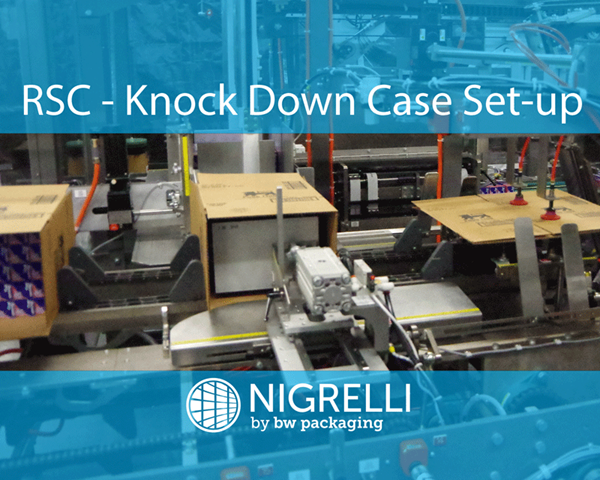 Case Packers 101: Case Styles, Packaging Machinery & Value Adds
July 25, 2025
<h2>Introduction</h2><p>In the world of packaging automation, understanding case styles is crucial for selecting the right case packing solution to meet your production needs. As experts in integrated packaging solutions, we are frequently asked about various case types and how they impact automation choices. This comprehensive guide will walk you through everything you need to know about common case styles and the packing technologies designed to handle them, including:</p><ul><li><a data-sf-ec-immutable="" href="#CaseTypes">Common Case Types in Packaging</a></li><li><a data-sf-ec-immutable="" href="#CasePacking">Automated Case Packing Technologies</a></li><li><a data-sf-ec-immutable="" href="#value">Value-Add Solution for Case Packing Equipment</a></li></ul><h2 id="CaseTypes">Common Case Types in Packaging</h2><p>Understanding the various case styles available is the first step in optimizing your packaging process. Let's examine the most common case types employed across various industries and their distinctive characteristics that make them suitable for different products and applications.</p><h3>RSC/Knock-Down Cases</h3><p>The Regular Slotted Container (RSC), also known as a knock-down case, is the most widely used case style across global supply chains. These versatile containers feature:</p><ul><li>Four side panels with flaps on both top and bottom</li><li>A manufacturer's flap that's pre-glued during production</li><li>Minimal material usage while fully protecting contents</li><li>Easy manual erection from a folded state</li></ul><p>RSCs are popular for their cost-effectiveness and versatility across nearly all product categories, from food and beverage to consumer goods.</p><h3>Tray-Style Cases</h3><p>Tray cases resemble RSCs but lack one side panel and two flaps. Their distinctive features include:</p><ul><li>Open top design that allows product visibility</li><li>Typically uniform flap length from score to edge</li><li>Often overwrapped after loading to create retail-ready packaging</li><li>Reduced corrugate usage compared to full RSCs</li></ul><p>Trays are increasingly popular for retail environments where easy shelf stocking and product visibility are priorities.</p><h3>HSC (Half-Slotted Container)</h3><p>The Half-Slotted Container includes:</p><ul><li>Similar construction to RSCs, but with only one set of flaps</li><li>Pre-secured manufacturer's flap</li><li>Often requires additional overwrapping or a lid</li><li>Ideal for co-packers and repackaging operations</li></ul><h3>Wrap Around Cases</h3><p>Wraparound cases are the second most common case style and offer several advantages:</p><ul><li>Similar final appearance to RSCs but without a pre-sealed manufacturer's flap</li><li>Cost savings in manufacturing (no flap sealing process required)</li><li>Space efficiency in transport and magazine loading (shipped as flat blanks)</li><li>Better ability to conform tightly around products</li><li>Reduced catch points compared to RSCs</li></ul><h2 id="CasePacking">Automated Case Packing Technologies</h2><p>Once you've selected the appropriate case style, the next consideration is which automation technology will best suit your production needs. These advanced packing systems offer various approaches to case loading, each with specific advantages that depend on your product characteristics and production requirements.</p><h3>Side Load Case Packers</h3><p>Side load (or horizontal load) case packers insert products horizontally into the case. These systems:</p><ul><li>Can handle all common case styles mentioned above</li><li>May require tilting some case types before loading</li><li>Excel at efficiently packing products that can be pushed or swept into cases</li><li>Work well with products that can withstand side pressure</li><li>Offer some of the most advanced, flexible options for end-of-line packaging</li></ul><p>Nigrelli's side load case packers are designed for quiet, low-maintenance operation while maximizing efficiency.</p><h3>Top Load Case Packers</h3><p>Top load case packers typically utilize a gantry system with specialized end-of-arm tooling to:</p><ul><li>Pick products from a conveyor or staging area</li><li>Place items into cases from above</li><li>Handle products that cannot be loaded from the side</li><li>Accommodate RSC, tray, and HSC case styles</li><li>Provide gentle handling for fragile items</li></ul><p>Our top load case packers feature customizable load patterns and versatile designs for both flexible and rigid products.</p><h3>Robotic Case Packing</h3><p>A specialized form of top loading, robotic case packing employs:</p><ul><li>Six-axis robotic arms, delta robots, or SCARA robots</li><li>Vision systems for increased flexibility</li><li>Advanced product manipulation capabilities</li><li>Adaptability for various case styles and product types</li><li>Greater flexibility in pack patterns and product arrangements</li></ul><p>With over 900 robotic systems installed across 13+ countries, BW Integrated Systems is a global leader in robotic case packing solutions.</p><h3>Wrap Around Case Packers</h3><p>These specialized machines:</p><ul><li>Form cases around products rather than inserting products into cases</li><li>Reduce material costs</li><li>Allow for tighter case fits</li><li>Handle a variety of products including cans, cartons, and bottles</li><li>Provide superior performance with low operational costs</li></ul><p>Our wraparound packers deliver consistent performance with simple maintenance requirements.</p><h3>Selecting the Right Case Packing Solution</h3><p>When choosing a case packing system, consider these key factors:</p><ul><li>Product characteristics - fragility, shape, weight, and orientation requirements</li><li>Production speeds needed to meet output targets</li><li>Available floor space and line configuration</li><li>Initial budget, expected OEE, and lifetime cost</li><li>Cost of raw material – cases (KD vs wrap around), glue, cartons, film, etc.</li><li>Case style preferences based on downstream handling</li><li>Changeover frequency between products or case sizes</li><li>Labor availability for machine operation and maintenance</li></ul><p>View <a href="https://www.bwintegratedsystems.com/products/case-packing-and-tray-packing">Nigrelli's case packer portfolio</a> for examples of various styles of case packing machinery. </p><h2 id="value">Value-Add Solutions for Case Packing Equipment</h2><p>Beyond the machinery itself, comprehensive support and integration capabilities are crucial factors in maximizing the long-term success of your packaging line. BW Integrated Systems provides value-added solutions that enhance equipment performance, reduce downtime, and ensure your packaging operation remains efficient throughout its entire lifecycle.</p><h3>Integrated Packaging Solutions</h3><p>While understanding individual case packers is important, the greatest efficiency gains often come from properly integrated packaging lines. As both machine manufacturers and systems integrators, BW Integrated Systems uniquely understands how to:</p><ul><li>Design optimal case packing lines for your specific facility layout</li><li>Get you a true turnkey solution for your packaging needs</li><li>Ensure proper spacing and product flow between equipment</li><li>Coordinate controls for seamless operation across the entire packaging line</li><li>Maximize throughput while minimizing footprint</li><li>Collect and share your production data and metrics to allow fine-tuning of your production line</li><li>Create solutions that accommodate future production needs</li></ul><p>Our comprehensive approach ensures that your case packing equipment operates as part of a cohesive system rather than an isolated component. View our <a href="https://www.bwintegratedsystems.com/products/integrated-packaging-solutions" data-sf-ec-immutable="">Integrated Packaging Solutions</a> webpage to learn more!</p><h3>Lifetime After-Sales Support</h3><p>In today's manufacturing environment, equipment reliability and consistent operation are critical to maintaining production schedules and meeting market demands. Comprehensive after-sales support provides manufacturers with ongoing technical expertise, rapid response to maintenance needs, and solutions for skill gaps caused by workforce turnover. </p><p>The most effective packaging partners offer long-term support that includes technical troubleshooting, drawings, and manuals, rapid replacement parts availability, automation upgrades to extend equipment life, and training resources for new operators. This sustained partnership approach ensures that initial equipment investments continue to deliver value throughout their operational lifespan, even as production requirements and personnel change over time. We are always here.</p>
.tmb-webp-md.webp?Culture=en&sfvrsn=ce3b535f_0) Creating An Efficient Workflow For Produce Packaging
Creating An Efficient Workflow For Produce Packaging
July 22, 2025
<p>At BW Flexible Systems, we know how produce packers face intense pressure to deliver fresh, visually appealing fruits and vegetables under stringent time constraints. In a market where consumer expectations for quality and shelf life are ever-increasing, optimizing the workflow for packaging for produce can be the difference between success and costly spoilage.</p><p>Next, we'll explore how smart line design, flexible machinery configurations, and effective training can keep your operation agile and efficient from harvest to distribution. Learn how the Hayssen line of vertical form-fill-seal (VFFS) baggers can help you build a streamlined packaging process that maintains produce quality and earns customer trust.</p><h2 id="the-importance-of-workflow-design-in-produce-packaging">The Importance Of Workflow Design In Produce Packaging</h2><p>The packaging of fresh produce is a race against time. Once harvested, fruits and vegetables begin a slow but inexorable decline in quality. The quicker they are cooled, sorted, and sealed into protective packaging, the better they can retain nutritional value and visual appeal. This urgency places significant demands on packaging systems, which must manage high volumes of perishable items with minimal errors.</p><h3 id="high-volume-limited-shelf-life">High Volume, Limited Shelf Life</h3><p>Unlike shelf-stable goods, produce has a short window before it loses taste, texture, or color. A one- or two-day delay can transform crisp lettuce into wilted leaves or firm tomatoes into bruised, leaky bags. Scaling up production to handle large orders, such as meeting peak seasonal demand, only heightens these challenges. If your line isn't equipped to handle high throughput, you risk leaving produce in non-ideal conditions, accelerating spoilage.</p><p>Furthermore, produce diversity complicates matters. From delicate berries that crush easily to robust root vegetables that must be protected from moisture build-up, each category has unique handling and packaging requirements. Achieving consistent results across multiple produce types demands careful workflow planning and possibly dedicated or adaptable equipment.</p><h3 id="continuous-cold-chain-managementour-company"><a href="/blog/post/2025/12/12/frozen-food-packaging--meeting-the-demands-of-cold-chain-operations" title="Frozen Food Packaging: Meeting the Demands of Cold Chain Operations">Continuous Cold Chain Management</a></h3><p>Temperature is a major factor in keeping produce fresh, so controlling it at every step is crucial. If your packaging floor is significantly warmer than the storage zone, produce can briefly “sweat,” leading to condensation within packages and subsequent mold growth. Conversely, packaging cold produce in an overly dry environment can result in shrinkage or surface cracking.</p><p>Modern facilities often use cooled air curtains, cold tunnels, or dedicated climate zones to preserve the cold chain from initial washing to final sealing. The more consistently you can maintain the correct temperature range, the higher your success in extending shelf life. This need for climate control also influences line design: too many manual transfers or production stops can invite damaging temperature swings.</p><h2 id="mapping-out-a-streamlined-packaging-process">Mapping Out A Streamlined Packaging Process</h2><p>Every step in produce packaging, sorting, weighing, sealing, and labeling should flow logically, avoiding backups and minimizing product handling. Bottlenecks or inefficient layouts can quickly degrade product quality and hamper throughput.</p><p>The major stages of produce packaging include:</p><ul><li>Pre-Sort and Cleaning: Removing field debris, damaged items, and any contaminants before they enter the main line.</li><li>Weighing and Portioning: Ensuring each package meets marketing standards (e.g., 1 lb of apples) while keeping produce intact.</li><li>Film/Form-Fill-Seal Operations: Using horizontal or vertical sealing equipment to create sealed pouches, trays, or bags.</li><li>Labeling and Coding: Applying accurate data on contents, weights, and expiry dates for traceability.</li><li>Crating or Palletizing: Protecting packaged produce for transport or storage.</li></ul><p>By spacing out these stations carefully, you reduce the chance of produce piling up in a single area. Effective conveyor design, complete with alignment guides, buffering zones, and surge capacity, helps maintain continuous flow without forcing produce to sit idle.</p><h2 id="overcoming-common-produce-packaging-bottlenecks">Overcoming Common Produce Packaging Bottlenecks</h2><p>Even well-planned lines face potential stumbling blocks. Identifying and resolving them early can deliver major efficiency gains while sparing your staff from frustration and your produce from damaging delays.</p><h3 id="sorting-and-grading-delays">Sorting And Grading Delays</h3><p>A major bottleneck often appears at the sorting or grading stage, where workers or automated systems remove subpar items. If not enough staff or machinery is allocated, or if produce arrives with significant quality variance, the entire line can slow down to a crawl. Upgrading to optical sorters can alleviate some manual tasks, efficiently differentiating items by color, size, and shape. Pre-sorting near the field or using mobile units can also help split out poor-quality items early, reducing the load on your main facility.</p><h3 id="alignment-with-downstream-operations">Alignment With Downstream Operations</h3><p>Once produce is sorted, it must move seamlessly to weighing, filling, and sealing. If the speed of one station exceeds the capacity of the next, product backup can occur, pushing items outside safe temperature ranges. For example, a high-speed weigh station might deliver produce at a faster clip than your packaging machine can seal bags. Ensuring real-time communication between stations (via sensors or line management software) helps maintain synchronized speeds. When one station detects a slowdown, upstream equipment can adjust its pace accordingly.</p><h2 id="incorporating-flexibility-for-seasonal-variations">Incorporating Flexibility For Seasonal Variations</h2><p>Produce operations rarely maintain a stable, year-round product mix. Seasonal shifts—think strawberries in spring, melons in summer—change the volume and characteristics of what's being packed. To remain profitable, lines must adjust swiftly to a new influx of produce type or volume.</p><ol><li>Modular Equipment: Machinery with interchangeable modules or adjustable conveyor widths allows you to adapt the line to new product sizes without major overhauls.</li><li>Adjustable Conveyor Speeds: Harvest booms can require higher throughput, while slower off-seasons demand less capacity. Being able to modify speed on the fly keeps labor and energy usage efficient.</li><li>Quick-Change Mechanisms: Swapping out forming tubes, sealing jaws, or label templates quickly is essential for a plant that routinely switches between different produce SKUs.</li><li>Cross-Trained Staff: Workers trained on multiple stations help reallocate labor precisely where it's needed. If sorting requires more attention during peak harvest, staff can be moved from less busy segments.</li><li>Buffer Zones: Temporary storage or holding areas can absorb supply surges without overloading packaging stations. A short-term “buffer” also prevents abrupt line shutdowns if a downstream station encounters a glitch.</li></ol><p>Together, these strategies enable a flexible operation that can handle shifts in product variety and volume without significant downtime or product loss.</p><h2 id="technology-solutions-to-enhance-workflow">Technology Solutions To Enhance Workflow</h2><p>One advantage of modern produce packaging is the rise of automation and data analytics tools that optimize operations in real-time. These solutions can offer immediate performance feedback, highlighting slow-downs or error rates in your line.</p><h3 id="automated-infeed-systems">Automated Infeed Systems</h3><p>Manually placing produce on conveyors invites inconsistency. Automated infeed systems arrange products so they're evenly distributed, minimizing collisions or sorting mistakes further down the line. For delicate items like peaches or tomatoes, gentle mechanical handling reduces bruising. Sensors can measure product flow, adjusting conveyor speeds to keep throughput steady.</p><h3 id="data-analytics-and-performance-dashboards">Data Analytics And Performance Dashboards</h3><p>Industrial software often includes dashboards showing line performance metrics: units per minute, downtime occurrences, seal integrity rates, etc. By analyzing this data, managers can pinpoint persistent pinch points, such as if the labeling station is slower than anticipated or if a specific conveyor frequently jams. Adjusting machine parameters or scheduling extra staff at the problem station corrects issues before they become full-blown bottlenecks.</p><h2 id="training-and-maintenance-for-reliability">Training And Maintenance For Reliability</h2><p>Human expertise remains crucial, no matter how advanced your machinery. If operators don't fully grasp produce handling techniques or how to adjust equipment for each fruit or vegetable type, errors and rework become common. Comprehensive cross-training fosters agility, ensuring your team is prepared for last-minute product changes or maintenance tasks.</p><p>Maintenance must be a regular habit, too. Bits of produce debris, juice, or leaves can gather in machine crevices, affecting seals or leading to cross-contamination. Designating specific cleaning breaks, especially after finishing a produce type that generates a lot of residue, maintains hygiene. Routine checks on belts, sealing jaws, or sensors ward off unexpected stoppages.</p><h2 id="streamline-your-produce-packaging">Streamline Your Produce Packaging Workflow With Hayssen VFFS Baggers</h2><p>An efficient produce packaging process requires both robust technology and well-choreographed workflows. That's where Hayssen vertical form-fill-seal baggers can make a critical difference. Engineered for flexibility and reliability, these systems handle diverse produce types while maintaining high-speed, yet gentle handling and precise sealing. Built-in data analytics help managers track performance metrics, enabling quick response to seasonal shifts or unexpected supply surges.</p><p>At BW Flexible Systems, we leverage our decades of experience in designing custom packaging lines for fresh produce. We consider every facet: cooling solutions, infeed stations, conveyor layouts, sealing methods, and labeling requirements. Reach out to us today to learn how these intelligent, scalable systems can protect your produce's freshness and integrity while boosting speed and consistency.</p>
 Meeting Food Safety Standards in Modern Bakery Packaging
July 9, 2025
<p>The modern bakery industry operates under increasingly stringent food safety regulations that demand comprehensive approaches to packaging operations. At BW Flexible Systems, we understand that meeting food safety standards in bakery packaging extends far beyond basic cleanliness; it requires integrated systems, specialized equipment design, and rigorous operational protocols that protect product integrity throughout the packaging process.</p><p>Food safety in bakery packaging has evolved from basic sanitary practices to sophisticated systems that address potential hazards at every stage of the packaging process. Modern regulations require proactive approaches that identify and control risks before they can impact product safety, creating a comprehensive framework that protects both consumers and business operations from food safety incidents.</p><h2 id="current-food-safety-regulatory-landscape-for-bakeries">Current Food Safety Regulatory Landscape for Bakeries</h2><p>The regulatory environment governing bakery packaging continues to evolve, with new requirements and enhanced enforcement creating challenges for operations of all sizes. Understanding this landscape is essential for maintaining compliance while optimizing operational efficiency and competitive positioning.</p><h3 id="fda-and-usda-requirements">FDA and USDA Requirements</h3><p>The Food Safety Modernization Act (FSMA) represents the most significant transformation in food safety regulation in decades, shifting focus from reactive responses to preventive controls. FSMA requirements mandate that bakery operations implement comprehensive food safety plans that identify potential hazards and establish controls to prevent contamination throughout the packaging process.</p><p>Preventive controls regulations require bakeries to conduct hazard analyses that identify potential biological, chemical, and physical contamination risks associated with packaging operations. These analyses must be supported by written procedures, monitoring systems, and corrective action protocols that ensure effective hazard control.</p><p>Traceability requirements enable rapid response to potential food safety incidents by maintaining detailed records of ingredients, production processes, and distribution activities. Packaging operations must contribute to these traceability systems through accurate record-keeping and lot identification procedures.</p><h3 id="industry-standards-and-certifications">Industry Standards and Certifications</h3><p>Meeting food safety standards often involves pursuing third-party certifications that demonstrate compliance with industry best practices:</p><ul><li><strong>SQF (<a href="https://www.sqfi.com/our-program/what-is-sqf" data-sf-ec-immutable="">Safe Quality Food</a>) certification requirements</strong> that establish comprehensive food safety and quality management systems</li><li><strong>BRC (<a href="https://www.brcgs.com/our-standards/food-safety/" data-sf-ec-immutable="">British Retail Consortium</a>) standards</strong> providing globally recognized food safety and quality criteria</li><li><strong>AIB (<a href="https://aibinternational.com/" data-sf-ec-immutable="">American Institute of Baking</a>) guidelines</strong> offering industry-specific standards for bakery operations</li><li><strong>HACCP (<a href="https://www.fda.gov/food/guidance-regulation-food-and-dietary-supplements/hazard-analysis-critical-control-point-haccp" data-sf-ec-immutable="">Hazard Analysis Critical Control Points</a>) implementation</strong> requiring systematic approaches to hazard identification and control</li><li><a href="https://www.iso.org/iso-22000-food-safety-management.html" data-sf-ec-immutable=""><strong>ISO 22000</strong></a> <strong>food safety management systems</strong> providing international standards for food safety management</li></ul><h2 id="critical-control-points-in-bakery-packaging">Critical Control Points in Bakery Packaging</h2><p>Effective food safety management requires identification and control of critical points where contamination risks are highest. Packaging operations contain multiple potential control points that must be carefully managed to prevent food safety incidents.</p><h3 id="contamination-prevention-strategies">Contamination Prevention Strategies</h3><p>Physical contamination prevention requires equipment design and operational procedures that eliminate potential sources of foreign materials. Packaging equipment must be constructed with appropriate materials that resist wear and prevent particle generation, while operational procedures must address potential contamination sources, including maintenance activities, cleaning operations, and material handling.</p><p>Chemical contamination risks include cleaning and sanitizing chemicals, lubricants, and other maintenance materials that may come into contact with food products. Prevention strategies include selecting appropriate chemicals, following application procedures, and implementing verification methods to ensure that chemical residues do not contaminate products.</p><p>Biological contamination prevention focuses on controlling pathogenic organisms and spoilage bacteria that could affect product safety and quality. This requires comprehensive environmental monitoring, personnel hygiene programs, and equipment design features that prevent bacterial growth and facilitate effective sanitization.</p><p>Preventing cross-contamination becomes critical in multi-product operations where different products or allergens can be transferred between batches. Effective prevention requires equipment design features, cleaning procedures, and operational protocols that eliminate cross-contamination risks.</p><h3 id="package-integrity-and-seal-quality">Package Integrity and Seal Quality</h3><p>Package integrity represents a critical control point that directly affects product safety and shelf life. Effective sealing prevents contamination after packaging while maintaining the protective atmosphere necessary for product stability.</p><p>Seal quality monitoring requires continuous verification that packages meet integrity standards throughout production runs. This monitoring includes visual inspection, seal strength testing, and leak detection procedures that identify potential problems before products reach distribution channels.</p><p>Temperature and pressure control during sealing operations ensure consistent seal formation while preventing damage to temperature-sensitive products. Automated monitoring and control systems maintain optimal sealing conditions while providing documentation of critical parameters.</p><h2 id="sanitary-equipment-design-and-operation">Sanitary Equipment Design and Operation</h2><p>Sanitary design principles form the foundation of effective food safety management in packaging operations. These principles must be integrated throughout equipment design, rather than added as afterthoughts, to create systems that inherently support food safety objectives.</p><p>Modern bakery packaging equipment features a sanitary design that facilitates cleaning and sanitization while preventing contamination during operation. These features represent essential investments in food safety compliance and operational efficiency.</p><h3 id="hygienic-design-principles">Hygienic Design Principles</h3><p>Effective sanitary design requires the systematic application of principles that prevent contamination while enabling thorough cleaning and sanitization:</p><ol><li><strong>Smooth, non-porous surfaces that resist bacterial growth</strong> and prevent particle accumulation in hard-to-clean areas</li><li><strong>Minimal crevices and joints where contaminants can accumulate</strong> through careful design and construction techniques</li><li><strong>Easy-to-clean and sanitize components</strong> that can be thoroughly cleaned without disassembly or special tools</li><li><strong>Drainage design to prevent standing water</strong> that could harbor bacteria or create cleaning challenges</li><li><strong>Accessible areas for thorough inspection and cleaning</strong> enabling verification of cleaning effectiveness</li></ol><p>Material selection plays a crucial role in sanitary design, with stainless steel grades and surface finishes that resist corrosion while maintaining smooth surfaces throughout equipment life. Surface roughness specifications must be appropriate for food contact applications while supporting effective cleaning procedures.</p><h2 id="cleaning-and-sanitization-protocols">Cleaning and Sanitization Protocols</h2><p>Effective cleaning and sanitization represent essential components of food safety management that require systematic approaches, appropriate procedures, and thorough documentation. These protocols must be tailored to meet specific equipment and operational requirements while also complying with regulatory standards.</p><p>The development of effective cleaning protocols requires an understanding of soil types, cleaning chemistry, and equipment design features that affect cleaning effectiveness. Protocols must strike a balance between thoroughness and efficiency to maintain both food safety standards and operational productivity.</p><h3 id="daily-cleaning-procedures">Daily Cleaning Procedures</h3><p>Daily cleaning procedures establish baseline sanitation standards that prevent the buildup of contamination while maintaining equipment performance. These procedures must be documented, validated, and consistently executed to ensure effectiveness.</p><p>Pre-cleaning preparation includes equipment shutdown procedures, removal of product residues, and preparation of cleaning solutions at appropriate concentrations and temperatures. Proper preparation ensures cleaning effectiveness while preventing damage to equipment components.</p><p>Cleaning sequence protocols specify the order and methods for cleaning different equipment areas, ensuring that contaminated areas don't cross-contaminate cleaned surfaces. These sequences must account for equipment design and operational requirements while maximizing cleaning effectiveness.</p><p>Chemical application procedures specify appropriate cleaning agents, concentrations, contact times, and application methods for different equipment areas and soil types. Proper chemical selection and application ensure effective cleaning while preventing damage to equipment and chemical residues.</p><h3 id="deep-cleaning-and-maintenance-schedules">Deep Cleaning and Maintenance Schedules</h3><p>Periodic deep cleaning addresses areas and equipment components that cannot be effectively cleaned during daily procedures. These activities require more extensive disassembly and specialized procedures, but are essential for maintaining long-term food safety compliance.</p><p>Preventive maintenance schedules must be coordinated with cleaning requirements to ensure that maintenance activities don't compromise food safety. Maintenance procedures should include cleaning and sanitization of components before reassembly.</p><p>Component replacement schedules address wear parts that could affect food safety, including seals, gaskets, and other components that may harbor contaminants as they age. Replacement schedules should be based on manufacturer recommendations and operational experience.</p><p>Documentation requirements include maintenance records, verification of cleaning, and any corrective actions taken to address problems. This documentation supports regulatory compliance while providing data for continuous improvement efforts.</p><h2 id="contact-bw-flexible-systems-to-ensure-your-bakery-operation-meets-food-safety-standards">Contact BW Flexible Systems To Ensure Your Bakery Operation Meets Food Safety Standards</h2><h3 id="the-hayssen-r300s-food-safety-features">The Hayssen R300's Food Safety Features</h3><p>The <a href="/products/flexible-bagging-wrapping/flow-wrapping/hayssen-r300-flow-wrapper">Hayssen R300 flow wrapper</a> incorporates comprehensive food safety features specifically designed for bakery applications. These features are designed for easy access while maintaining the structural integrity and operational efficiency necessary for commercial production environments.</p><p>Stainless steel construction throughout product contact areas provides corrosion resistance and cleanability essential for food safety compliance. The R300 utilizes appropriate stainless steel grades with surface finishes that meet food industry standards, while resisting wear and maintaining its appearance throughout the equipment's life.</p><p>Open wire mesh guarding along the underside of the entire machine allows crumbs to fall through eliminating crevices that could harbor bacteria while providing adequate drainage for cleaning solutions and rinse water. The tool-less infeed cover removal also enables easy cleaning without extensive disassembly or specialized tools.</p><p>At BW Flexible Systems, we're committed to helping bakeries achieve their food safety objectives through innovative equipment design, comprehensive support services, and ongoing partnership throughout the equipment lifecycle. Our expertise in food safety standards enables us to provide solutions that meet current requirements while adapting to evolving regulations.</p><p>Connect with our Bakery packaging experts to discuss your specific requirements and discover how our easy to operate and easy to clean flow wrappers can support your food safety objectives while optimizing operational efficiency and profitability.</p>
 Flexible Packaging Solutions for Various Bag Sizes for Agricultural Products
July 7, 2025
<p>The agricultural industry requires packaging solutions that can accommodate a wide range of products, from delicate seeds that require precise portion control to bulk commodities that necessitate efficient large-scale packaging. At BW Flexible Systems, we recognize that successful agricultural packaging operations necessitate flexible packaging solutions that can accommodate diverse product characteristics, multiple bag sizes, and varying production volumes across seasonal cycles.</p><p>Our complete solution approach combines advanced bag filling technology with integrated palletizing systems to create packaging lines which adapt to the dynamic requirements of a modern agricultural operations.</p><h2 id="understanding-agricultural-product-packaging-needs">Understanding Agricultural Product Packaging Needs</h2><p>Agricultural packaging requirements span a broader range of applications than virtually any other industry, demanding equipment that quickly adapt to different products, while maintaining consistent performance standards. With the seasonal nature of agricultural production introducing additional complexity, packaging operations frequently experience significant volume fluctuations and product changeovers throughout the year.</p><p>The diversity of agricultural products require packaging systems to accommodate varying flow characteristics, density differences, and special handling requirements. From precision seed packaging, requiring exact counts, to bulk commodity packaging that prioritizes speed and efficiency, agricultural operations need flexible solutions that optimize performance for each specific application.</p><h3 id="product-characteristics-and-handling-requirements">Product Characteristics and Handling Requirements</h3><p>Agricultural products exhibit a wide range of flow characteristics that significantly impact packaging system design and operation. Free-flowing materials, such as grain, rice, and processed feeds, require different handling approaches compared to semi-free-flowing products, including seeds, pelletized feeds, and specialty crops. Understanding these characteristics is crucial for selecting suitable equipment and maximizing packaging performance.</p><p>Particle size variations create additional handling challenges, as some products contain uniform particles while others include mixed sizes which lead to segregation or bridging issues. Density differences between products require packaging systems which adjust and maintain accurate weights for consistent package appearance.</p><p>Moisture sensitivity affects both product handling and the selection of packaging materials. Some agricultural products must be protected from moisture exposure during packaging, while others require controlled humidity levels to maintain quality. Packaging systems must accommodate these requirements while ensuring product protection throughout storage and distribution to maintain optimal quality.</p><h3 id="bag-size-and-weight-considerations">Bag Size and Weight Considerations</h3><p>Agricultural packaging operations must accommodate an extensive range of bag sizes and weights to serve diverse market segments and applications. A few key points to note include:</p><ul><li><strong>Small retail packages (1-50 lbs)</strong> designed for consumer markets including home gardeners, pet owners, and specialty applications</li><li><strong>Medium commercial bags (50-100 lbs)</strong> serving smaller farms, feed stores, and regional distributors</li><li><strong>Large industrial bags (100+ lbs)</strong> for bulk applications, large-scale farming operations, and industrial users</li><li><strong>Custom sizes for specialized products</strong> including seed packets, specialty feeds, and premium products</li><li><strong>Multi-layer packaging for premium products</strong> requiring enhanced protection and extended shelf life</li></ul><p>The ability to changeover efficiently between different bag sizes represents a critical capability for agricultural packaging operations. Quick-changeover features minimize downtime while ensuring consistent performance across the entire range of package sizes and products.</p><h2 id="challenges-in-agricultural-packaging-operations">Challenges in Agricultural Packaging Operations</h2><p>Agricultural packaging operations face unique challenges that require specialized solutions and expertise. This is compounded by the seasonality of agricultural production, which creates periods of intense activity followed by reduced demand. Packaging systems need to be robust enough to handle peak loads, while remaining cost-effective during periods of lower demand.</p><h3 id="product-flow-and-handling-challenges">Product Flow and Handling Challenges</h3><p>Material flow characteristics have a significant impact on packaging system performance and require careful consideration during equipment selection and installation. Bridging<sup>Bridging occurs when a particulate forms a stable arch or crust over an outlet, preventing the uniform discharge of powder.</sup> and ratholing<sup>Ratholing occurs when a tunnel forms within a bulk powder material, causing the powder to channel through a specific region of a hopper while other areas remain stagnant.</sup> issues can occur with certain products, particularly those with irregular particle shapes or varying moisture content.</p><p>Segregation problems may occur when packaging products that contain particles of different sizes or densities. This segregation can impact package consistency and customer satisfaction, necessitating specialized handling techniques and equipment design features that ensure product uniformity.</p><p>The generation of static electricity can create handling difficulties with certain agricultural products, particularly in dry conditions. Static buildup can cause product adhesion to equipment surfaces, erratic flow patterns, and potential safety concerns. Effective static control measures must be integrated into the packaging system design.</p><p>Abrasive products, such as sand, certain fertilizers, and processed feeds, can cause accelerated wear on packaging equipment components. Systems designed for agricultural applications must incorporate wear-resistant materials and design features that minimize maintenance requirements and extend equipment life.</p><h3 id="packaging-consistency-and-quality-control">Packaging Consistency and Quality Control</h3><p>Weight accuracy requirements vary significantly across agricultural applications, ranging from precision seed packaging, which requires exact counts, to bulk commodity packaging, where slight variations are acceptable. Packaging systems must provide accurate results while maintaining the speed necessary for efficient operations.</p><p>Seal integrity standards ensure package protection during handling, storage, and transportation. Agricultural products often undergo rough handling and extended storage periods, requiring robust sealing that maintains integrity throughout the distribution cycle.</p><p>Package appearance considerations affect customer perception and brand value, particularly for retail and premium products. Consistent bag filling, proper seal formation, and a professional appearance all contribute to customer satisfaction and effective brand positioning.</p><h2 id="comprehensive-bag-filling-and-palletizing-solutions">Comprehensive Bag Filling and Palletizing Solutions</h2><p>Modern agricultural packaging operations require integrated systems that combine bag filling, sealing, and palletizing capabilities to create efficient, automated packaging lines. These comprehensive solutions eliminate manual handling between processes while improving consistency and reducing labor requirements.</p><p>Integrated packaging systems provide significant advantages over individual machines by optimizing material flow, reducing handling damage, and enabling centralized control and monitoring. The coordination between bag filling and palletizing operations ensures smooth production flow while maintaining the flexibility necessary for multi-product operations.</p><h3 id="thiele-bag-filling-technology">Thiele Bag Filling Technology</h3><p>Thiele bag filling systems represent the pinnacle of agricultural packaging technology, combining decades of experience with continuous innovation to deliver reliable, accurate, and efficient packaging solutions. These systems are engineered specifically for the demanding requirements of agricultural applications, where durability, flexibility, and accuracy are essential for profitable operations.</p><p>The Thiele approach to bag filling emphasizes versatility and broad application capability, enabling operations to handle diverse product ranges with minimal changeover requirements. Advanced weighing systems offer precise control, regardless of product characteristics, while their robust construction ensures reliable operation in demanding agricultural environments.</p><p>Gross and net weighing options accommodate different operational preferences and accuracy requirements. Net weighing systems provide maximum accuracy for precision applications, while gross weighing offers speed advantages for high-volume operations. The flexibility to select the most suitable weighing methods for various products optimizes overall system performance.</p><p>Multiple product handling capabilities enable efficient multi-product operations through quick changeover features and adaptable handling systems. Product-specific configurations can be stored and recalled automatically, minimizing changeover time while ensuring optimal performance for each application.</p><h3 id="symach-palletizing-systems-integration">Symach Palletizing Systems Integration</h3><p>Symach palletizing systems provide seamless integration with upstream filling equipment to create complete packaging lines that maximize efficiency while minimizing labor requirements. A few examples include:</p><ol><li><strong>Automated bag handling and positioning</strong> that eliminates manual lifting and reduces workplace injury risks</li><li><strong>Multiple pallet pattern configurations</strong> accommodating different bag sizes and customer requirements</li><li><strong>Variable bag size accommodation</strong> enabling efficient handling of diverse package formats without extensive changeover</li><li><strong>Integration with upstream filling equipment</strong> ensuring coordinated operation and optimal production flow</li><li><strong>Quality monitoring and reject systems</strong> that maintain package quality standards and prevent defective packages from reaching pallets</li></ol><p>The integration between Thiele filling systems and Symach palletizers enables optimized material flow, eliminating bottlenecks while maintaining precise control over the entire packaging process. This coordination enables higher overall line efficiency compared to individual machines operating independently.</p><h2 id="flexibility-in-bag-size-and-format-options">Flexibility in Bag Size and Format Options</h2><p>The ability to efficiently handle multiple bag sizes represents a critical competitive advantage for agricultural packaging operations. Modern equipment must accommodate rapid changeovers between different package formats while maintaining accuracy and speed throughout the transition process.</p><p>Flexibility requirements extend beyond simple size changes to include different bag materials, closure types, and handling requirements. Agricultural operations often package the same products in different formats for various market segments, requiring packaging systems that can quickly adapt to these different requirements.</p><h3 id="multi-size-bag-handling-capabilities">Multi-Size Bag Handling Capabilities</h3><p>Quick changeover features minimize production interruptions when transitioning between different bag sizes or products. Modern systems incorporate tool-free adjustments, automatic positioning systems, and stored configurations, enabling changeovers in minutes rather than hours.</p><p>Adjustable guides and support systems accommodate different bag dimensions while maintaining proper positioning and handling throughout the filling and sealing process. These systems must provide secure handling without causing damage to the bags or affecting fill accuracy.</p><p>Automated size detection systems can identify bag dimensions and automatically configure equipment settings for optimal performance. This capability reduces operator intervention while ensuring consistent performance across different package sizes.</p><h3 id="material-compatibility-and-bag-types">Material Compatibility and Bag Types</h3><p>Paper bag options offer excellent printability and environmental benefits for various agricultural applications. Modern filling systems accommodate various paper bag constructions, including multi-wall bags, valve bags, and specialty barrier bags designed for specific products.</p><p>Plastic bag alternatives provide superior moisture protection and durability for products that require extended storage or challenging distribution conditions. Packaging systems must handle different plastic film properties while maintaining consistent sealing performance.</p><p>Multi-wall bag construction provides enhanced strength and barrier properties for demanding applications. These bags require specialized handling and sealing techniques that must be integrated into the packaging system design.</p><p>Valve bag systems enable the efficient filling of free-flowing products while providing a secure closure and a professional appearance. Specialized equipment features support valve bag applications, including precision filling control and automatic valve closure systems.</p><p>Now is the time to transform your agricultural operations. Connect with our agricultural packaging experts to discuss your specific requirements and discover how our integrated bag filling and palletizing systems can enhance your competitive position while addressing the unique challenges of agricultural packaging.</p>
 Optimize Your Packaging Operations: Revealing Hidden TCO Costs for Rigid Filling Lines
July 1, 2025
<h2><strong>Uncover and Control the Hidden Costs of TCO and their Impact on Your Profits</strong></h2><p><strong>What’s Inside?</strong></p><p>Total Cost of Ownership (TCO) is impacted by hidden costs that will affect your bottom line. This guide is packed with cost-saving tips developed with feedback from BW Packaging customers. It uncovers surprising TCO drivers, and provides actionable steps you can take to optimize operations and reduce costs.</p><p>Our holistic approach looks deeply into the cost of owning and maintaining equipment throughout its lifetime and includes:</p><ul><li>Operator costs</li><li>Geographical impacts</li><li>ESG considerations</li><li>Aftermarket services</li><li>Packaging design optimization</li></ul><p>Maintain your competitive edge in the market—download this free white paper now!</p><p><a href="https://share.hsforms.com/1QEKk4ciuRx-_1i_8Yyh-Cw3c53k" data-sf-ec-immutable="" class="button blue" data-sf-marked="">Download White Paper</a></p>
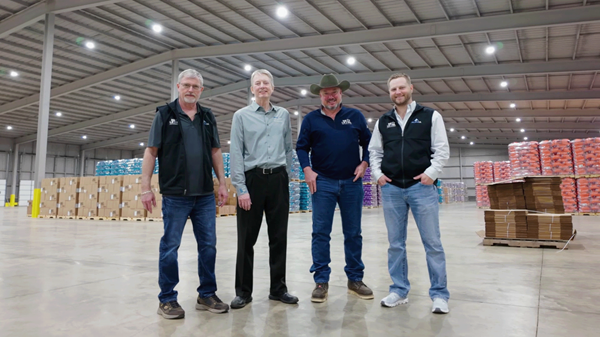 How Next Level Pet Food Accelerated Production with Advanced Pet Food Packaging Machinery
June 5, 2025
<p>When two veteran pet food entrepreneurs needed packaging equipment for their new facility during unprecedented supply chain challenges, they turned to BW Flexible Systems for a solution that aligned with their values of hard work, integrity, and accountability.</p><p><em>Watch: Play the video below to hear Next Level Pet Food's account of their collaboration with BW Flexible Systems.</em></p><h2>The Challenge</h2><h3>A Mission to Produce Pet Food the Right Way</h3><p>For <a href="https://nextlevelpetfood.com/?utm_source=BW+Flexible+Systems&utm_medium=Blog+Post&utm_campaign=Testimonial&utm_content=Next+Level+Pet+Food+Testimonial" target="_blank" title="Next Level Super Premium Pet Food - Next Level Pet Food" data-sf-ec-immutable="" data-sf-marked="">Next Level Pet Food</a> co-founders Scott Glover and Antoine Albin, building the Next Level brand wasn't just about starting another business, it was about creating a company that reflected their core values.</p><p>"If we're going to do something, we're going to do it right or not at all," said Antoine. "That's what pet food takes."</p><p>Their mission was clear: develop nutritious pet food products that deliver genuine value.</p><p>"In pet specialty, it's a race to the top; in feed and farm, it's a race to the bottom," said Scott. "What's in the middle is common sense: we wanted to develop a brand that brings all the nutrition in at a price people can afford."</p><h3>Sourcing Critical Pet Food Packaging Machinery During Supply Chain Disruptions</h3><p>The Next Level team faced a daunting challenge: constructing and equipping a greenfield pet food production facility in Pittsburg, Texas during the height of COVID-19 supply chain disruptions. Their goal? To reach full production within 22 months.</p><p>"With this COVID stuff, the lead times were just crazy on equipment," Scott recalls. "I didn't realize how far out it was for equipment, and I thought I had plenty of time, but I waited just a little bit too long."</p><h3>Selecting a Pet Food Packaging Machinery Partner</h3><p>When it came time to source pet food packaging machinery, Antoine and Scott needed a partner who shared their values and could meet their aggressive timeline. After comparing multiple pet food packaging machinery suppliers, they decided to call BW Flexible Systems because they were familiar with the reputations of its Thiele bag filling and SYMACH palletizing machine brands.</p><h2>The Solution</h2><h3>BW Flexible Systems Delivered Pet Food Packaging Machinery in Record Time</h3><p>Scott and Antoine met Mark Dunn, a Sales Executive for BW Flexible Systems with over 30 years of experience providing pet food packaging solutions to the pet food industry. Mark immediately recognized the urgency and importance of what Next Level Pet Food was trying to accomplish.</p><p>"They said, 'we are building a new plant from scratch' and they told me they wanted to have full production within 22 months," Mark recalls. "I learned that there was so much at stake for these folks. Failure was not an option, so this required some creative thinking."</p><h3>Creative Thinking to Meet Aggressive Timelines</h3><p>After assessing Next Level's needs, Mark developed a strategic plan that would allow the company to start production quickly while positioning them for future growth.</p><p>"They came up with a game plan knowing that we were trying to get running very quickly," said Hayden Fox, Site Director for Next Level Pet Food.</p><h2>The Results</h2><h3>Success Beyond Expectations</h3><p>Thanks to their partnership with BW Flexible Systems, Next Level Pet Food achieved their ambitious timeline and started producing pet food within 22 months of their initial discussions.</p><p>The solution required thinking outside the box. "We actually had a palletizer that was working that we used for demonstration purposes," Mark explained. "I asked our leadership, 'Would it be a good idea if we offered that to Next Level Pet Food?' They said, 'Yes, let's do that." This creative approach made a tremendous difference. "Mark was able to get us the equipment that we needed within 2-3 months, compared to the 18 months that we would have to normally wait," Hayden said.</p><p>"After working with BW for the last two years, it's unreal what we came from to where we are now with their Thiele and their SYMACH packaging line," said Hayden. "I couldn't tell you any other piece of equipment that we have here that I would trust more than the Thiele or the SYMACH."</p><h3>A Partnership Built on Shared Values</h3><p>The relationship between BW Flexible Systems and Next Level Pet Food quickly became more than just a supplier-customer transaction. It was a partnership built on mutual respect, a shared purpose and prioritization of hard work, integrity, and accountability.</p><p>"Before we ever started running, Antoine and I made the decision to go ahead and put in our second line," Scott recalls.</p><p>Having earned the Next Level team's trust, Mark proposed and sold a second pet food packaging line, which was similar to the first from an operator's perspective—simplifying training for the company's employees—but offered enhanced speed capabilities to support future growth.</p><h3>Long-Term Benefits of Investing in Premium Packaging Machinery</h3><p>The ongoing partnership with BW Flexible Systems will help support these growth targets, which have become even more ambitious following major distribution agreements with top big box retailers.</p><p>“We are very, very proud of the equipment out there that we're running now,” said Antoine. “We plan on [adding] two more lines, possibly three more lines here.”</p><h3>The Importance of Genuine partnership</h3><p>For the Next Level team, what made the difference was finding a partner who genuinely understood their values and was willing to go the extra mile to help them succeed. "I wouldn't want to work with anybody else but BW in the packaging world - there's no way," Hayden said. "When it comes to techs that know what they're doing, BW's got them. They stay for weeks at a time to ensure that everything after it was installed was running properly as well."</p><p>As Antoine put it, "A lot of companies sometimes give you the runaround and whatnot, but Barry-Wehmiller has always been there for us. That's how business is done."</p><h2>BW Flexible Systems for Your Pet Food Packaging Machinery Needs</h2><p>If you're a pet food manufacturer looking for a packaging equipment partner that delivers on promises, understands your unique challenges, and provides lifetime support, BW Flexible Systems is ready to help. With our complete range of bag filling, sealing, and palletizing solutions, we can design a complete system to meet your production goals – no matter how ambitious.</p><p>Contact us to discuss how we can support your next project with the same level of dedication and expertise that helped Next Level Pet Food achieve its remarkable success.</p>
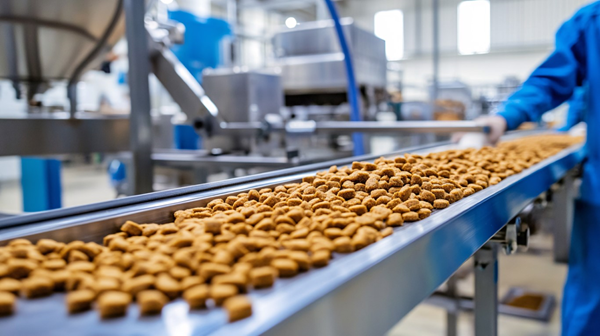 Pet Food Packaging Trends: Meeting Consumer Demands Through Advanced Automation
May 29, 2025
<p>At BW Packaging, we've seen firsthand how rapidly the pet food industry is evolving and, with it, the demands placed on packaging lines. Automation is no longer a luxury but an essential tool for meeting consumer expectations around product quality, transparency, and sustainability.</p><p>Now, we will explore the trends shaping pet food packaging, from eco-conscious materials to high-speed filling systems, and show how advanced technologies can boost efficiency. Learn more about why adopting smart packaging practices, along with the right equipment, has become a critical part of succeeding in this dynamic market.</p><h2 id="understanding-the-evolving-pet-food-market">Understanding the Evolving Pet Food Market</h2><p>The global pet food industry has grown exponentially in recent years, driven in part by increased pet ownership and the elevated status pets hold as part of the family. Pet owners look for specialized diets (such as grain-free, limited-ingredient, or high-protein) and premium offerings that mirror their health-centric approach to eating. This trend has fueled a wide variety of product formats, from freeze-dried treats to customized nutrition packages. Consequently, packaging must do more than just hold the product, as it must also visually communicate brand values, nutritional benefits, and a commitment to quality.</p><p>With consumers increasingly viewing their pets as family members, transparency in labeling has become a central focus. Shoppers demand to know the origin of ingredients, the manufacturing processes used, and the steps taken to ensure safety. This heightened scrutiny drives innovation in packaging materials and designs, emphasizing resealability, portion control, and clear product information.</p><h2 id="the-importance-of-packaging-in-pet-food">The Importance of Packaging in Pet Food</h2><p>Packaging serves as a frontline guardian for preserving the freshness, flavor, and nutritional value of pet food, whether it's dry kibble or wet formulations. For dry foods, moisture barrier technologies prevent the product from absorbing humidity and losing its crunch or potency. For wet or semi-moist foods, hermetically sealed pouches help extend shelf life by keeping oxygen out and locking in flavor.</p><p>Beyond product protection, packaging is a powerful marketing tool. Stand-up pouches with convenient zippers, eye-catching graphics, and brand mascots can make a strong impression on busy shoppers. Premium packaging elements, like metallic finishes or special textures, can amplify the sense of product superiority. More than ever, companies rely on packaging to differentiate themselves in a crowded market where cost, nutritional profiles, and brand trust all intersect.</p><h3 id="current-consumer-demands-driving-packaging-innovation">Current Consumer Demands Driving Packaging Innovation</h3><p>Sustainability is at the forefront of consumer demands. Many pet owners are environmentally conscious and want to see packaging that minimizes waste and uses recyclable materials. Brands that adopt biodegradable films or plant-based plastics often win favor among this audience. Similarly, smaller portion sizes and multipacks can reduce overall food waste by allowing pet owners to open only as much as needed.</p><p>Simultaneously, a growing number of consumers seek premium, specialized pet foods. These diets cater to pets with allergies, sensitive stomachs, or breed-specific requirements. The packaging must reflect this niche positioning, often featuring distinct shapes, high-quality finishes, and detailed nutritional labeling. As a result, pet food manufacturers and brand owners look for flexible bag filling and palletizing solutions that can handle different weights, sizes, and labeling requirements without extensive retooling.</p><h3 id="how-advanced-automation-meets-these-demands">How Advanced Automation Meets These Demands</h3><p>As product diversity grows, automation becomes a critical ally in maintaining cost-effective production. Automated lines reduce reliance on manual labor, minimize the risk of human error, and deliver consistent results, even as SKUs multiply. By leveraging robotics, sensors, and digital controls, manufacturers can run multiple product formats on the same line with rapid changeovers.</p><p>Quality control also improves with automation. State-of-the-art machines use inline check weighers, metal detectors, and vision systems to confirm each bag meets weight specifications and is properly sealed. These tools help prevent underfills, overfills, and potential safety hazards. Automated inspection data can be captured in real time, enabling quick intervention if a problem arises.</p><h2 id="types-of-automation-in-pet-food-packaging">Types of Automation in Pet Food Packaging</h2><p>A typical automated system might start with bulk feeding equipment, where the product is delivered to a weigh station that precisely measures out the correct amount. From there, bag fillers deposit the product into pre-made bags or form them from roll stock film, and high-speed sealers close the bags. Labelers or printers then apply brand graphics, barcodes, and date codes. Finally, the finished products are transported to palletizing robots, which stack them efficiently for shipping.</p><p>Each stage can be tailored to the specific type of pet food. For instance, chunky wet foods might need specialized dispensing nozzles and sealing equipment to handle higher moisture levels. Meanwhile, freeze-dried treats or powders require gentle handling and specialized materials to protect against contamination.</p><h2 id="selecting-the-right-automation-equipment">Selecting the Right Automation Equipment</h2><p>A few key considerations for choosing optimal machinery for automated pet food packaging include:</p><ul><li><strong>Match Equipment to Production Demands:</strong><br>Evaluating overall throughput and the variety of SKUs ensures machines can accommodate different package sizes without excessive downtime. Brands expecting rapid growth often lean toward flexible, modular systems that adjust to changing demands.</li><li><strong>Flexibility vs. Specialization:</strong><br>Operations launching new products frequently may benefit from adaptable machinery that easily handles new formats. A stable, established product line might favor specialized, high-speed fillers built for a specific bag or pouch type.</li><li><strong>Assess Material Compatibility:</strong><br>Some companies prefer paper-based packaging for sustainability, while others need multi-layer films with strong barrier properties. Identifying which fillers and sealers handle thin or delicate materials best prevents packaging failures and maintains product quality.</li><li><strong>Account for Product Characteristics:</strong><br>Kibble size, moisture level, and oily residue can all affect how equipment handles and seals bags. Working closely with packaging engineers ensures the chosen system meets these unique physical requirements.</li><li><strong>Plan for Expansion or Upgrades:</strong><br>Thinking ahead about production growth or additional SKUs allows investment in equipment that can be expanded without major disruption. This future-focused approach avoids frequent overhauls and keeps operations running smoothly.</li></ul><p>These factors collectively lay the groundwork for selecting automation solutions that consistently meet production goals while aligning with brand identity.</p><h2 id="best-practices-for-implementing-automated-pet-food-packaging">Best Practices for Implementing Automated Pet Food Packaging</h2><p>A few best practices to ensure a smooth transition to automated operations and optimal production outcomes include:</p><ul><li><strong>Map Out Facility Layout Thoroughly:</strong><br>Position filling, sealing, and palletizing stations to minimize the distance each product travels. This arrangement cuts down on contamination risk and boosts overall workflow efficiency.</li><li><strong>Optimize Space Around Equipment:</strong><br>Providing ample room around each machine eases maintenance tasks like part replacements and troubleshooting. Operators can access critical components quickly without halting production for extended periods.</li><li><strong>Focus on Contamination Control:</strong><br>Ensuring clear separation of incoming raw materials and finished goods reduces cross-contamination risk. Designing enclosed conveyor paths or dedicated lanes further protects product integrity.</li><li><strong>Invest in Operator Training:</strong><br>The most advanced equipment only performs well when run by knowledgeable staff. Comprehensive training on daily maintenance, basic repairs, and troubleshooting fosters reliable output and minimal downtime.</li><li><strong>Create a Maintenance Schedule:</strong><br>Regular lubrication, part inspections, and software updates prevent unexpected failures. These proactive measures lengthen machine life and enhance return on investment in the long run.</li></ul><p>By following these guidelines, manufacturers can seamlessly integrate automated systems while preserving product quality and achieving consistent throughput.</p><h2 id="future-outlook-innovations-shaping-pet-food-packaging">Future Outlook: Innovations Shaping Pet Food Packaging</h2><p>Smart packaging technologies are poised to transform the pet food aisle. RFID tags or QR codes could provide consumers with instant access to product traceability information, such as farm origins, ingredient certifications, and recommended usage guidelines. This level of transparency deepens consumer trust, an especially critical factor in the premium pet food segment.</p><p>Sustainability efforts will also continue to evolve. Single-material packaging designs that simplify recycling processes are in high demand, while compostable or biodegradable solutions are gaining traction. Emerging innovations such as edible films or water-soluble packaging might even appear in the not-too-distant future. As regulations on plastics tighten, manufacturers will need to stay agile, continually assessing and updating their packaging to meet both consumer and legal requirements.</p><h2 id="enhance-your-pet-food-packaging-with-bag-filling-and-palletizing-solutions">Enhance Your Pet Food Packaging with Bag Filling and Palletizing Solutions</h2><p>At BW Packaging, we are committed to remaining at the forefront of our industry in an effort to better meet the needs of our clients. We invite you to discover how Thiele Bag Fillers and Symach Palletizer Solutions can address the complexities of modern pet food packaging. From precise weighing and filling to robust sealing mechanisms and perfectly stacked pallets with no overhang, these systems provide the reliability and flexibility necessary to keep pace with evolving market demands. Reach out to us today to learn how we can help you optimize your operations and stay ahead in the competitive pet food industry.</p>
 The Evolution of Feed Bagging Technology: From Manual to Automated Systems
May 27, 2025
<p>At BW Packaging, we have witnessed dramatic changes in how the feed bagging is performed. There has been a tremendous evolution from simple, labor-intensive methods to advanced automated lines that handle measuring, sealing, and more with remarkable efficiency. The journey reflects both shifting market demands and the need for precision, consistency, and speed in feed production.</p><p>Learn more about how animal feed bagging developments can boost your operation's output, reduce waste, and modernize your overall approach to bagging. Then, contact us to optimize your operations.</p><h2 id="manual-bagging-in-traditional-feed-operations">Manual Bagging in Traditional Feed Operations</h2><p>Manual feed bagging originally involved workers scooping or shoveling feed into bags using simple scales or estimated measures. Although it demanded minimal capital investment, it also relied heavily on the dexterity and accuracy of the operators. Frequent miscalculations and spillage were common, as staff struggled to handle large volumes by hand. This straightforward setup could work for small-scale farms or early agricultural ventures, but it often fell short when higher output was required.</p><p>On top of the inherent inefficiencies, manual bagging took a considerable physical toll on laborers. Repetitive motions, heavy lifting, and long hours of standing could lead to muscle strain and workplace injuries. Because of these factors, production speed was inherently limited by worker stamina, slowing throughput significantly during peak demand periods.</p><h2 id="transitioning-toward-mechanized-approaches">Transitioning Toward Mechanized Approaches</h2><p>Early mechanized bagging introduced basic machinery, such as motorized augers or automated sealers, that partially offloaded tasks from human operators. These devices improved speed and accuracy, particularly in the weighing and sealing stages. While the system was still partially manual, with workers positioning bags and controlling start-stop sequences, the introduction of machines eased some of the repetitive workload.</p><p>Despite representing a step forward, mechanized methods still depended on substantial human intervention. Operators were required to keep a close eye on each machine's functions, pausing production to resolve clogs or misalignments. As a result, more feed operations started to view technology as a practical investment for scaling up production without overwhelming their workforce.</p><h2 id="the-role-of-automation-in-modern-feed-bagging">The Role of Automation in Modern Feed Bagging</h2><p>Today's fully automated solutions integrate everything from feed measurement and bag formation to sealing and labeling, all of which is key for animal nutrition. High-precision load cells measure out exact feed quantities, while bagging units swiftly position and secure bags for filling. Once the feed is dispensed, automated sealers ensure tight, consistent closures that preserve quality and reduce spillage.</p><p>Aside from accuracy, automation delivers impressive speed improvements that simply aren't possible with manual or semi-automated lines. Machines can process a continuous stream of feed at rapid rates, leading to higher output volumes and more efficient turnaround times. This consistency in operation also helps to maintain uniform bag weights, meeting stringent standards and customer expectations.</p><h2 id="essential-features-of-automated-bagging-machines">Essential Features of Automated Bagging Machines</h2><p>Modern feed bagging machines include several sophisticated elements that help them operate efficiently and precisely. A few key features to look for when evaluating a new system include:</p><ul><li><strong>Advanced Load Cells:</strong> These sensors provide accurate weight measurements of feed, reducing the risk of under- or over-filling. Consistent weights also help maintain compliance with labeling regulations.</li><li><strong>Real-Time Weight Checks:</strong> Continuous feedback loops let operators or software detect deviations in bag weight, triggering adjustments on the fly. This immediate responsiveness minimizes waste and rework.</li><li><strong>User-Friendly Control Panels:</strong> Intuitive interfaces allow staff to change settings quickly, such as bag size or fill rate, without extensive downtime. Simple graphics or touch-screen navigation also reduce operator training time.</li><li><strong>Automated Sealing and Labeling:</strong> Integration of sealers, printers, or labelers ensures uniform closures and clear product information. This consolidated approach streamlines the entire end-of-line process.</li><li><strong>Smart Alarms and Diagnostics:</strong> Built-in sensors can diagnose irregularities like material jams or mechanical wear. Early alerts let technicians take preemptive action, preventing bigger malfunctions.</li></ul><p>By choosing equipment designed for precise weight control and easy operation, businesses can achieve stable productivity and fewer costly disruptions.</p><h2 id="scalability-and-flexibility-in-automated-systems">Scalability and Flexibility in Automated Systems</h2><p>Many modern systems are designed with adjustable settings that accommodate multiple bag sizes and shapes, as well as varied feed formulations. Operators can fine-tune dispensing rates, sealing pressures, and other parameters through a user-friendly interface. This capability allows producers to shift seamlessly from packaging standard formulas to specialized blends without incurring extensive downtime.</p><p>In addition, forward-thinking suppliers offer modular systems that can be expanded as output needs grow. For example, an operation starting with one fill-and-seal module may later add another if production volume spikes. This modular approach not only spreads out capital costs but also ensures that upgrades can be integrated with minimal disruption.</p><h2 id="maintenance-and-upkeep-for-continuous-operation">Maintenance and Upkeep for Continuous Operation</h2><p>Automated feed bagging machinery, while highly efficient, require scheduled downtime for inspections and part replacements. Proactive measures such as lubricating moving components, cleaning dust buildup, and replacing worn belts or seals all extend the equipment's lifespan. By allocating specific days or shifts for maintenance and service, facilities avoid the urgent chaos of breakdowns during peak production hours.</p><p>A forward-looking strategy entails stocking essential spare parts and forming relationships with reliable repair technicians. Keeping critical components on hand can drastically cut wait times if the machine encounters a malfunction. Similarly, training maintenance staff or operators on basic troubleshooting fosters a sense of ownership and quicker resolution of minor issues.</p><h2 id="shifting-workforce-dynamics-in-automated-environments">Shifting Workforce Dynamics in Automated Environments</h2><p>Automation inevitably changes how employees interact with machinery, requiring teams to develop new skill sets and adapt to less physically demanding tasks. Instead of manual lifting or prolonged scooping, staff may shift to monitoring system readouts, troubleshooting software alerts, or fine-tuning operational parameters.</p><p>Several strategies that can keep staff engaged and prepared for automated processes include:</p><ul><li><strong>Cross-Training:</strong> Ensuring multiple employees can operate and troubleshoot equipment fosters flexibility. It also mitigates the impact if someone knowledgeable is absent.</li><li><strong>Incremental Learning:</strong> Introduce new technology in stages. Gradual adoption eases staff anxiety and allows them to master smaller changes before tackling bigger shifts.</li><li><strong>Hands-On Workshops:</strong> Offer practical sessions that walk employees through common machine settings and error resolutions. This boosts confidence and reduces downtime.</li><li><strong>Performance Feedback:</strong> Track metrics like throughput and error rates, then share this data with the team. Encouraging staff involvement in improvements builds a sense of ownership.</li><li><strong>Mentorship Programs:</strong> Pair newer hires with seasoned operators who understand both manual and automated processes. This dual perspective helps preserve institutional knowledge.</li></ul><p>By actively managing workforce transitions, businesses can harness the strengths of modern machinery while retaining an engaged, capable team.</p>
 Cross-Training Strategies for Packaging Line Efficiency
May 22, 2025
<p>At <a href="D85F2E51-76A6-674E-8383-FF0300805640" title="BW Flexible Systems">BW Flexible Systems</a>, we believe building a capable and versatile workforce is key to maximizing your packaging line efficiency. Systemic cross-training can help your team handle multiple stations and responsibilities, ultimately reducing production delays and boosting overall productivity. Through structured programs that identify skill gaps and foster ongoing improvement, companies can empower workers to address challenges quickly and efficiently.</p><p>Learn more about how to maximize your packaging line efficiency below. Then <a href="0DB12E51-76A6-674E-8383-FF0300805640" title="Contact Us | BW Flexible Systems">contact us</a> for <a href="8D282F51-76A6-674E-8383-FF0300805640" title="Training | BW Flexible Systems">customized training solutions</a>.</p><h2 id="defining-cross-training-in-a-packaging-environment">Defining Cross-Training in a Packaging Environment </h2><p>Cross-training involves teaching employees the essential skills needed to perform duties outside of their primary roles, ensuring they can step in when necessary. Unlike standard job rotation, where employees might cycle through various positions mainly for exposure and basic understanding, cross-training focuses on deep functional expertise in each station. This approach emphasizes flexibility and rapid adaptability in changing production environments.</p><p>In a fast-paced packaging line, interruptions or bottlenecks often occur when only one person knows how to run a particular machine. Having multiple team members who can step into any role ensures continuity, even if someone is absent or equipment needs shifting. Over time, this collective agility enhances both morale and the bottom line.</p><h2 id="identifying-roles-and-essential-skill-sets">Identifying Roles and Essential Skill Sets </h2><p>The first step toward effective cross-training is a clear understanding of every role on the packaging floor. Managers should list each station's tasks, technical requirements, and soft skills, such as communication or problem-solving. This comprehensive role map allows teams to see how various stations interact within the broader workflow.</p><p>Once roles are documented, the next step is to assess which team members have already mastered or partially acquired relevant competencies. A structured skill inventory, often collected through questionnaires or simple testing, helps highlight where the greatest gaps lie. This data-driven approach ensures training resources are used efficiently, focusing on bridging the most critical deficits first.</p><h2 id="how-to-structure-a-targeted-training-program">How To Structure a Targeted Training Program</h2><p>Establishing a systematic program is crucial for helping employees develop the right skills in the right order. The top steps to follow to structure an effective cross-training initiative include:</p><ol><li><strong>Define Learning Objectives:</strong> Specify the key takeaways for each skill or station. Clear objectives ensure that trainees understand what is expected and how it relates to broader goals.</li><li><strong>Segment Tasks by Complexity:</strong> Start with basic procedures before moving on to advanced operations or troubleshooting. This gradual progression builds confidence and reduces overwhelm.</li><li><strong>Create a Training Timeline:</strong> Allocate specific time frames for each skill module, balancing the demands of daily production. A well-planned schedule helps prevent training from clashing with critical deliverables.</li><li><strong>Incorporate Hands-On Exercises:</strong> Provide learners with real equipment and scenarios to apply new knowledge. Practical experience cements lessons far more effectively than lectures alone.</li><li><strong>Use Checklists and Documentation:</strong> Standardize procedures in written or digital formats for easy reference. This consistency helps maintain uniform quality and minimizes confusion.</li><li><strong>Assign Mentors:</strong> Pair novices with seasoned operators who can offer tips, reinforce best practices, and correct minor errors in real time. Mentoring accelerates learning and fosters camaraderie.</li><li><strong>Set Milestones and Assessments:</strong> Evaluate progress at regular intervals to confirm trainees have internalized the material. Frequent check-ins encourage steady development and show where extra support might be needed.</li></ol><p>As new equipment or processes emerge, the structure can easily adapt, ensuring ongoing growth and operational resilience.</p><h2 id="effective-teaching-methods-for-maximum-retention">Effective Teaching Methods for Maximum Retention </h2><p>Choosing the right mix of teaching methods is vital for engaging diverse learning styles and reinforcing new information effectively. Several strategies to enhance cross-training outcomes include:</p><ul><li><strong>Hands-On Learning:</strong> Allow trainees to perform tasks under supervision. Practicing real actions builds muscle memory and confidence.</li><li><strong>Digital Resources and Tutorials:</strong> Offer videos, slide decks, or interactive software modules. These materials let employees revisit lessons anytime they need a refresher.</li><li><strong>Practice-Based Testing:</strong> After each training session, use quizzes or mini-assessments to confirm understanding. Immediate feedback helps correct misconceptions before they become ingrained.</li><li><strong>Peer-to-Peer Coaching:</strong> Encourage employees who have mastered a skill to guide newer learners. This promotes knowledge sharing and fosters supportive relationships.</li><li><strong>Scenario Simulations:</strong> Present hypothetical situations or production challenges. Asking teams to work through solutions together boosts problem-solving skills in real-world contexts.</li></ul><p>By combining these methods, you cater to varied learning preferences and maintain consistent knowledge transfer.</p><h2 id="measuring-the-impact-on-packaging-line-efficiency">Measuring the Impact on Packaging Line Efficiency </h2><p>Implementing cross-training without monitoring its effects can lead to missed opportunities for improvement. By focusing on specific metrics, you gain valuable insights into how new skills translate to tangible performance gains. Key KPIs to consider include:</p><ol><li><strong>Error Rates:</strong> Reflects how accurately tasks are performed without mishaps.</li><li><strong>Throughput Speed:</strong> Measures how quickly products move through the packaging line.</li><li><strong>Downtime Frequency:</strong> Indicates how often line stops occur due to operator shortages or technical mishaps.</li><li><strong>Changeover Duration:</strong> Shows how quickly employees switch tasks or reconfigure machinery for different product runs.</li><li><strong>Overall Equipment Effectiveness (OEE):</strong> Encompasses availability, performance, and quality across the line.</li><li><strong>Employee Turnover Rates:</strong> Reveals how staff retention correlates with job satisfaction and skill development opportunities.</li><li><strong>Training Completion Rates:</strong> Tracks how many employees fully master each cross-trained skill.</li></ol><p>Once your team starts tracking these metrics, you can correlate improvements or declines with specific changes in training strategy. For instance, a drop in error rates might align with a newly implemented hands-on workshop, suggesting that the approach is particularly effective. By analyzing these data points regularly, managers can adjust training sequences or expand modules to target weaker areas.</p><h2 id="balancing-workloads-and-preventing-burnout">Balancing Workloads and Preventing Burnout </h2><p>With cross-training in place, multiple employees can perform identical tasks, so managers need to carefully assign duties to avoid overloading certain individuals. A rotating schedule allows each person to alternate between stations, providing variety and preventing fatigue. By maintaining transparency about who handles what tasks, the entire team can see the rationale behind these distributions.</p><p>In high-volume environments, breaking the day into distinct segments or shifts can help prevent mental and physical strain. Strategically assigning people to different roles throughout a shift keeps monotony at bay. Aligning schedules with production peaks and troughs ensures the right number of trained hands are always on deck when needed.</p><h2 id="boost-your-packaging-line-performance-with-bw-flexible-systems">Boost Your Packaging Line Performance with BW Flexible Systems </h2><p>At <a href="5FB52E51-76A6-674E-8383-FF0300805640" title="About Us | BW Flexible Systems">BW Flexible Systems</a>, we can support your cross-training initiatives through integrated machinery solutions and expert guidance. By aligning automated packaging equipment with a skilled, versatile workforce, you can maximize your packaging line efficiency. <a href="0DB12E51-76A6-674E-8383-FF0300805640" title="Contact Us | BW Flexible Systems">Contact us today</a> to discover how our <a href="8D282F51-76A6-674E-8383-FF0300805640" title="Training | BW Flexible Systems">training program</a> can help your packaging operation reach new levels of efficiency and reliability.</p>
 Proactive Strategies for Packaging Machine Maintenance
May 20, 2025
<p>At BW Packaging, we understand that proactive packaging machine maintenance practices are fundamental to keeping packaging lines efficient, reliable, and profitable. It is crucial to understand the importance of anticipating equipment needs rather than reacting to breakdowns.</p><p>Next, we will explore best practices such as routine inspections, preventive scheduling, and predictive technologies. Then, contact our team to learn how we can put your packaging lines in a position for success.</p><h2 id="recognizing-the-pitfalls-of-reactive-maintenance">Recognizing the Pitfalls of Reactive Maintenance</h2><p>When maintenance is only performed after a malfunction, businesses often face steep, unplanned repair expenses. These sudden costs may include rush shipping fees for parts and overtime pay for maintenance crews, quickly inflating the overall repair bill. Furthermore, resolving breakdowns in a hurry can sometimes result in subpar fixes, increasing the likelihood of repeat issues.</p><p>Unplanned machine downtime throws production timelines into chaos, causing missed deadlines and halting the flow of packaged goods. In many areas, a single delay can set off a domino effect, impacting other dependent processes and external supply chain partners. The scramble to reschedule tasks or expedite products often leads to overtime labor and increased logistical expenses, straining already tight budgets. Repeated disruptions can even erode customer trust and tarnish a company's reputation.</p><h2 id="building-a-preventive-packaging-machine-maintenance-roadmap">Building a Preventive Packaging Machine Maintenance Roadmap</h2><p>A structured preventive maintenance roadmap helps companies stay ahead of breakdowns and preserve their packaging equipment's performance. A few steps to follow when crafting your own roadmap for packaging machine maintenance include:</p><ol><li><strong>Assessment of Equipment History:</strong><br>Begin by reviewing past performance, failure points, and repair logs. This background informs which components need closer attention and more frequent upkeep or upgrades.</li><li><strong>Detailed Checklists:</strong><br>Develop specific checklists for each piece of equipment to ensure that routine tasks aren't overlooked. Clear instructions minimize errors and allow easy delegation.</li><li><strong>Scheduled Intervals:</strong><br>Define daily, weekly, monthly, and quarterly tasks based on OEM guidelines and machine usage patterns. This ensures critical components are serviced well before they wear out.</li><li><strong>Spare Parts Inventory:</strong><br>Keep essential parts on hand to reduce downtime when replacements become necessary. Strategic stock management also helps control costs by avoiding overnight shipping fees.</li><li><strong>Consistent Documentation:</strong><br>Record maintenance activities so patterns can be identified and improvements made over time. Comprehensive tracking also assists with audits and compliance requirements.</li><li><strong>Training and Cross-Functional Collaboration:</strong><br>Engage both operators and technicians in the maintenance process. A shared understanding of responsibilities fosters quicker resolution of minor issues.</li><li><strong>Regular Review and Adaptation:</strong><br>Continuously update your roadmap as new technologies emerge or operational conditions change. Flexibility ensures your plan remains relevant over the machine's lifespan.</li></ol><p>Over time, a carefully executed roadmap saves both money and resources and significantly reduces unexpected downtime.</p><h2 id="essential-maintenance-tasks-for-packaging-equipment">Essential Maintenance Tasks for Packaging Equipment</h2><p>Preventive care for packaging machinery generally includes a range of essential tasks at varying intervals. A few tasks to add to your packaging machine maintenance list include:</p><ul><li><strong>Cleaning and Sanitation:</strong><br>Regular removal of dust, debris, and food particles prevents buildup that can affect sensors and drive mechanisms. Thorough cleaning also supports compliance with hygiene standards.</li><li><strong>Lubrication of Moving Parts:</strong><br>Applying the right lubricants at recommended intervals minimizes friction and prevents wear on gears, rollers, and bearings. Proper lubrication extends the equipment's operational life.</li><li><strong>Belt and Conveyor Inspections:</strong><br>Checking for misalignment or damage avoids tension issues that lead to poor packaging quality. Adjusting belts promptly eliminates stress on motors and reduces unplanned shutdowns.</li><li><strong>Electrical and Sensor Checks:</strong><br>Testing sensors, switches, and wiring ensures accurate detection of packaging materials. Identifying faulty components early prevents inconsistent machine behavior.</li><li><strong>Temperature and Pressure Monitoring:</strong><br>For sealing and forming systems, keeping heat and pneumatic levels within specified ranges maintains seal integrity. Early detection of anomalies helps avert deeper mechanical failures.</li></ul><p>Staying on top of these tasks keeps packaging lines functioning smoothly and aligned with manufacturer specifications.</p><h2 id="tracking-machine-performance-and-key-metrics">Tracking Machine Performance and Key Metrics</h2><p>Measuring downtime, cycle counts, and overall productivity is essential for understanding how effectively a packaging machine is running. For instance, recurring spikes in downtime may reveal a pattern of component failures tied to specific processes or time intervals. Having clear data also helps managers justify maintenance budgets and expansions, as they can demonstrate tangible impacts on throughput and quality.</p><p>Establishing a baseline means collecting data over a defined period under normal, stable operations. This initial dataset indicates expected run speeds, average downtime, and output levels. Any subsequent deviations from these norms can signify a developing problem, such as a critical part nearing its end of life or misalignment in the packaging line.</p><h2 id="integrating-predictive-maintenance-technologies">Integrating Predictive Maintenance Technologies</h2><p>Predictive packaging machine maintenance leverages advanced sensors and software algorithms to monitor equipment in real time. These sensors measure parameters like vibration, temperature, and electrical currents, providing early warning signs of deteriorating components. When an anomaly is detected, the system alerts technicians, allowing them to investigate before a breakdown occurs.</p><p>Historical performance data can be analyzed by AI-driven tools to determine patterns and calculate the most effective intervals for maintenance. Instead of relying solely on fixed schedules, the machinery itself dictates when certain parts need attention. Over time, this adaptive scheduling minimizes unnecessary part replacements while still preventing breakdowns.</p><h2 id="ensuring-operator-and-technician-training">Ensuring Operator and Technician Training</h2><p>Even the most sophisticated machinery relies on knowledgeable humans to keep it running. By training operators to spot unusual noises, small fluid leaks, or subtle performance dips, minor issues can be addressed quickly before they escalate. Skilled technicians also play a crucial role in performing complex diagnostics and executing more extensive repairs.</p><p>Generic instructions often fall short when dealing with highly specialized packaging lines. Developing modules focused on your exact equipment helps employees gain a deeper understanding of each component's function. Tailored lessons might include hands-on workshops, digital simulations, or vendor-led seminars to hone both technical and troubleshooting skills.</p><h2 id="how-to-balance-maintenance-costs-with-production-goals">How To Balance Maintenance Costs with Production Goals</h2><p>Determining the right maintenance schedule involves weighing equipment longevity against the potential cost of taking machines offline. A few key steps to follow include:</p><ol><li><strong>Evaluate Historical Repair Trends:</strong><br>Review records of past failures and their financial impact. This clarifies areas where a small investment could have prevented larger expenses.</li><li><strong>Analyze Production Peaks:</strong><br>Identify high-volume seasons or cycles. Plan preventive tasks for quieter windows to avoid interfering with critical output periods.</li><li><strong>Set Tolerances for Minimal Interruptions:</strong><br>Decide how much downtime is acceptable based on your demand forecasts. Short, planned halts often outperform prolonged unplanned outages.</li><li><strong>Adjust Maintenance Frequency Gradually:</strong><br>Start with manufacturer-recommended intervals and fine-tune them as data becomes available. Incremental modifications help avoid over-servicing.</li><li><strong>Implement Cost-Benefit Analysis for Parts:</strong><br>Replace components strategically instead of routinely discarding everything. Factor in wear rates and potential downtime costs.</li><li><strong>Standardize Workflows:</strong><br>Document procedures so every technician follows the same protocols. Consistency leads to clearer performance metrics and easier evaluation.</li><li><strong>Review and Optimize Regularly:</strong><br>Hold periodic meetings to reassess both machine health and scheduling effectiveness. This iterative process refines the balance between maintenance and production needs.</li></ol><p>By applying these principles, companies can make informed decisions about the frequency and scope of upkeep.</p><h2 id="partner-with-bw-flexible-systems-for-effective-maintenance-solutions">Partner with BW Packaging for Effective Maintenance Solutions</h2><p>At BW Packaging, we provide guidance on tailored service programs, quality spare parts, and long-term support aimed at preserving equipment health. Our team understands the nuances of packaging machinery and works closely with you to streamline maintenance strategies. By fostering consistent collaboration, we help minimize breakdowns, extend machine lifespans, and optimize operational efficiency. Contact us today for packaging machine maintenance that can keep your packaging lines running at peak performance for years to come.</p>
 Reducing Product Damage: Gentle Packaging Solutions for Delicate Baked Goods
May 14, 2025
<p>At BW Packaging, we recognize that gentle packaging solutions can protect baked goods like pastries, cookies, and other fragile treats. Several methods and technologies help preserve product shape, texture, and appearance—ultimately ensuring consumers receive visually appealing, high-quality baked goods.</p><p>By focusing on gentle handling techniques, careful material selection, and appropriate machine settings, you can minimize waste, reduce returns, and uphold your bakery's reputation for excellence. Learn how flow wrapping gentle packaging solutions can help you better meet the needs of your customers. Then contact us to get started!</p><h2 id="identifying-common-sources-of-damage-in-delicate-goods">Identifying Common Sources of Damage in Delicate Goods</h2><p>Fragile baked goods like puff pastries and crumbly cookies can fracture or crumble if subjected to excessive force or jostling during the packaging process. Often, friction between product surfaces or between the product and machine components can cause hairline cracks that become visible over time. Mishandling by untrained operators—whether through rough conveyor transitions or improperly loaded trays—further increases the risk of breakage.</p><p>Beyond direct mechanical stress, environmental variables such as humidity can also undermine the integrity of delicate baked goods. Overly moist conditions can make products more pliable, leading to deformation or stickiness that worsens when they contact other surfaces. Conversely, excessively dry air can cause brittleness, causing items to crack or crumble more easily. Maintaining balanced storage conditions is therefore a critical component of gentle handling.</p><h2 id="designing-equipment-with-low-impact-handling">Designing Equipment with Low-Impact Handling</h2><p>The right machinery design can dramatically reduce impact and pressure on fragile food products. Conveyors that use modular belts, for example, can shift items with minimal friction, preventing surface abrasion. Baggers and flow wrappers outfitted with adjustable guides or soft rollers help keep delicate baked goods in line without pressing too firmly. These low-impact enhancements allow products to move smoothly down the line, preserving shape and reducing the potential for damage.</p><p>Vibration dampeners, shock absorbers, and carefully placed supports all contribute to stable, gentle product movement. By isolating vibration-heavy components—like motors or fans—from direct contact with the conveyor, bakeries can minimize jostling that leads to product breakage. When every mechanism is tuned for softer handling, items are much less likely to endure damaging bumps.</p><h2 id="minimizing-contact-points-during-packaging">Minimizing Contact Points During Packaging</h2><p>Each time a baked good comes into contact with a machine surface, there is a chance for friction or force to be applied. Excessive handling points or changes in direction multiply these opportunities for breakage. By reducing the number of times items are physically touched or transferred, bakeries can dramatically lower the probability of cracks forming.</p><p>When products exit the oven, they should move as directly as possible into the packaging process. Long or convoluted pathways often mean extra conveyors, manual handling, or multiple machinery stations that increase the likelihood of accidental collisions. Simplifying the route removes unnecessary transitions and cuts back on potential damage scenarios.</p><h2 id="gentle-packaging-solutions-selecting-protective-materials">Gentle Packaging Solutions: Selecting Protective Materials</h2><p>Evaluating and choosing the right film or wrap is crucial for cushioning and preserving delicate baked goods. A few factors and options that play a role include:</p><table><thead><tr><th scope="col">Film/Wrap Type</th><th scope="col">Thickness</th><th scope="col">Texture</th><th scope="col">Breathability</th><th scope="col">Protective Capacity</th><th scope="col">Cost-Effectiveness</th></tr></thead><tbody><tr><th scope="row">Polypropylene (PP)</th><td>Moderate, can be multilayered</td><td>Smooth surface</td><td>Low-to-moderate</td><td>High barrier for moisture</td><td>Generally affordable at scale</td></tr><tr><th scope="row">Polyethylene (PE)</th><td>Varies, often thinner</td><td>Slightly flexible</td><td>Moderate</td><td>Good resistance to tearing</td><td>Typically cost-effective for bulk</td></tr><tr><th scope="row">Laminated Films</th><td>Can be thicker multi-layers</td><td>Smooth, sometimes glossy</td><td>Low</td><td>Excellent gas/moisture block</td><td>Higher upfront cost, high protection</td></tr><tr><th scope="row">Cellophane</th><td>Thin, biodegradable</td><td>Smooth, crisp texture</td><td>High</td><td>Minimal impact resistance</td><td>Moderately priced, eco-friendly</td></tr><tr><th scope="row">Paper-Based Wraps</th><td>Ranges from thin to thick</td><td>Textured surface</td><td>Moderate</td><td>Absorbs shock but not water</td><td>Low cost, but variable performance</td></tr></tbody></table><p>Thicker films generally offer superior barrier qualities but can increase packaging expenses. In contrast, thinner materials may be more breathable but might lack sufficient resilience for extremely delicate goods.</p><h2 id="calibrating-speeds-and-settings-for-fragile-products">Calibrating Speeds and Settings for Fragile Products</h2><p>Machine speed is a key variable when handling fragile baked goods, including brownies. High-speed settings can cause abrupt acceleration or deceleration, leading to items jostling against each other or the machine. Slowing down the conveyor or packaging line at critical transition points reduces impact force, allowing delicate pastries or cookies to stay intact.</p><p>Sensors placed strategically along the packaging line can quickly identify when products have deviated from their intended path. Early detection of a jam or misalignment enables operators to pause the process before significant damage occurs. Modern sensors can measure various data points, including spacing, tension, and product orientation, providing real-time visibility into line conditions.</p><h2 id="establishing-clean-controlled-packaging-environments">Establishing Clean, Controlled Packaging Environments</h2><p>Controlling temperature and humidity within the packaging area helps prevent delicate goods from drying out or becoming overly moist. An environment that's too humid can soften the product, increasing the likelihood of dents and tears. Alternatively, extremely dry air can make baked items brittle and prone to breakage under even slight pressure.</p><p>Sanitation plays a significant role in preserving product quality, especially for perishable baked goods. Residues from previous runs or spills on equipment can attract moisture or contaminants, such as listeria, that weaken product structure. Regular, thorough cleaning of surfaces, belts, and packaging stations reduces the risk of microbial buildup.</p><h2 id="how-to-train-staff-to-handle-fragile-items-properly">How To Train Staff to Handle Fragile Items Properly</h2><p>Ensuring consistent, gentle handling methods hinges on well-trained operators. Key training steps you need to follow include:</p><ol><li><strong>Orientation on Fragility:</strong> Present real-life examples of breakage and wasted product. This helps employees appreciate the need for careful movements.</li><li><strong>Equipment Familiarity:</strong> Teach staff how conveyors, baggers, and wrappers function. Knowledge of machine settings helps them make quick, informed adjustments.</li><li><strong>Observation Techniques:</strong> Instruct operators to watch for subtle signs of friction or product contact. Early detection can avert damage before it spreads.</li><li><strong>Handling Scripts:</strong> Provide clear procedures for lifting, moving, and placing products. Uniform methods ensure consistent results across shifts.</li><li><strong>Protective Material Awareness:</strong> Explain how various films and wraps affect product integrity. This insight fosters better decisions when restocking packaging supplies.</li><li><strong>Interactive Practice Sessions:</strong> Let employees experiment with different speeds and angles in a controlled setting. Hands-on learning cements best practices.</li><li><strong>Refresher Courses and Continuous Feedback:</strong> Schedule periodic reviews to reinforce training and address new challenges. An ongoing loop of instruction maintains skill levels over time.</li></ol><p>When employees fully grasp gentle handling fundamentals, delicate goods stand a better chance of reaching consumers intact.</p><h2 id="improve-delicate-baked-goods-packaging-with-bw-flexible-systems">Improve Delicate Baked Goods Packaging with BW Packaging</h2><p>At BW Packaging, our team of flexible packaging specialists, including innovation, customer support, and everyone in between, is focused on protecting your fragile baked goods. By combining low-impact conveyor systems with advanced packaging materials and carefully calibrated equipment settings, we help baked good manufacturers deliver consistently flawless products. Our commitment to gentle packaging solutions ensures minimal breakage, reduced waste, and heightened customer satisfaction. Contact us today to learn more about how the <a href="/products/flexible-bagging-wrapping/flow-wrapping/hayssen-r300-flow-wrapper">Hayssen R300</a> can help you.</p>
 Frozen Food Packaging: Meeting the Demands of Cold Chain Operations
May 12, 2025
<p>Frozen food packaging demands meticulous attention to environmental conditions, regulatory standards, and logistical complexities. Temperature fluctuations, humidity, and physical handling can degrade product quality if not managed effectively. Specialized films, pouches, and machinery are essential to protect flavor, texture, and nutritional value throughout cold chain operations.</p><p>At BW Packaging, we help you customize your frozen food packaging to meet your needs. By implementing the right solutions for cold chain operations, manufacturers can maintain consistent temperatures and deliver a safe, high-quality product to consumers.</p><h2 id="key-points-about-cold-chain-operations-and-frozen-foods">Key Points About Cold Chain Operations and Frozen Foods</h2><p>Frozen foods generally need to remain at or below specific temperatures (often around -18℃ / 0℉ or lower) to prevent microbial growth and preserve taste and texture. Deviations from these strict ranges can lead to partial thawing, refreezing, and a decline in overall product quality. Furthermore, transport and storage facilities must be carefully monitored to avoid prolonged exposure to warmer environments.</p><p>Each step along the cold chain—processing, packaging, distribution, and retail—must be consistently maintained within the specified temperature range. Any interruption can compromise product safety or lead to freezer burn and texture changes. Even brief temperature spikes may allow bacteria to proliferate before the food is refrozen, posing potential health hazards.</p><h2 id="core-challenges-in-frozen-food-packaging">Core Challenges in Frozen Food Packaging</h2><p>Freezing technology preserves shelf life, but it also introduces complexities such as ice crystal formation and potential brittleness of packaging. A few major considerations that can influence efficiency and overall product quality include:</p><ul><li><strong>Moisture Control:</strong> Excess moisture can crystallize on food surfaces, altering taste and texture. Proper dehydration or controlled humidity in the packaging environment can minimize these issues.</li><li><strong>Packaging Brittleness:</strong> Films and containers become more susceptible to cracking at sub-zero temperatures. Selecting materials designed for low-temperature resilience helps avoid product leaks.</li><li><strong>Product Crystallization:</strong> Ice crystals that form during slow freezing can damage cell structures. Faster freezing methods, like IQF (Individually Quick Frozen), reduce crystal size and improve consistency.</li><li><strong>Sealing Integrity:</strong> At low temperatures, seals must remain tight to prevent freezer burn. Special adhesives and sealing methods ensure packaging integrity despite expansion or contraction.</li><li><strong>Thermal Shock:</strong> Rapid transitions from hot production areas to cold storage can stress packaging layers. Gradual cooling or pre-chilled surfaces can lessen the risk of damage.</li></ul><p>Successfully managing these factors not only extends product shelf life but also reduces waste from spoiled or damaged goods. Ultimately, a robust freezing and packaging system helps solidify consumer trust in your brand's quality.</p><h2 id="selecting-temperature-resistant-packaging-materials">Selecting Temperature-Resistant Packaging Materials</h2><p>Materials intended for frozen applications must withstand significant temperature swings without losing structural integrity. Certain polymer blends, like polyethylene or polypropylene, are commonly chosen for their flexibility and resistance to cracking under cold conditions. Multi-layer films may incorporate barrier properties that lock out air and moisture, further stabilizing product quality.</p><p>Handling during distribution often involves forklift movements, stacking, and other mechanical impacts that can puncture weak packaging. A robust film or pouch can absorb minor shocks without tearing, keeping the product sealed against external influences. In addition, effective barrier layers help maintain low-oxygen environments, preventing freezer burn and flavor loss. Choosing materials that align with these protective needs is fundamental for a high-performing cold chain operation.</p><h2 id="best-practices-for-frozen-food-packaging-line-configuration">Best Practices for Frozen Food Packaging Line Configuration</h2><p>Designing an efficient packaging line involves not only buying the right equipment but also considering layout, ambient conditions, and process flow. A few practices that can minimize damage and maintain quality during frozen food packaging:</p><ul><li><strong>Adequate Spacing:</strong> Leave room between units on conveyors to avoid collisions. This spacing also ensures cold air can circulate freely around packaged items.</li><li><strong>Controlled Conveyor Speeds:</strong> Adjust speeds so that products don't pile up or jam. Slow, steady flow helps maintain consistent temperatures and lowers the chance of breakage.</li><li><strong>Temperature Management:</strong> Keep packaging areas slightly cooler than normal room temperature. This reduces thermal shock when products exit the freezer environment.</li><li><strong>Proper Sealing Techniques:</strong> Use heat-sealing or ultrasonic methods calibrated for low temperatures. An airtight seal minimizes moisture entry and freezer burn.</li><li><strong>Hygienic Environment:</strong> Frequent cleaning reduces ice buildup and bacterial growth. Maintaining cleanliness is crucial to both food safety and equipment longevity.</li></ul><p>With these cold chain operations, the packaging line can run smoothly, preserving product integrity and preventing unnecessary downtime.</p><h2 id="ensuring-food-safety-and-compliance-in-cold-chain-operations">Ensuring Food Safety and Compliance in Cold Chain Operations</h2><p>Managing frozen foods means adhering to strict legal and industry guidelines around labeling, handling, and longevity. Key requirements that producers must consider include:</p><ol><li><strong>Accurate Labeling:</strong> Product names, net weight, and nutritional facts must be correct and legible.</li><li><strong>Temperature Documentation:</strong> Records of storage and transport temperatures are often mandatory for audits.</li><li><strong>Proper Shelf-Life Declarations:</strong> Expiration or best-by dates guide consumers in safe usage.</li><li><strong>Allergen Warnings:</strong> Declare any potential cross-contamination risks on the label.</li><li><strong>Hygiene Standards:</strong> Compliance with local and international safety regulations is essential for consumer trust.</li></ol><p>Clear monitoring and record-keeping processes are key to meeting these demands. Frequent temperature checks, routine package inspections, and written logs help prove the cold chain was never broken. Finally, transparent documentation can expedite recalls if a contamination issue arises, minimizing harm to both consumers and brand reputation.</p><h2 id="quality-control-protocols-in-cold-chain-environments">Quality Control Protocols in Cold Chain Environments</h2><p>Quality control starts with verifying that seals remain airtight and puncture-free, as even tiny gaps can allow ice crystals or contaminants to form. Temperature logs, whether automated or manual, should confirm that products have stayed within safe limits during transitions between storage, transit, and packaging. Visual or weight-based inspections can catch irregularities like damaged corners or missing labels. This layered approach identifies problems quickly, avoiding large-scale spoilage or recalls.</p><p>Developing a clear protocol for when temperature spikes or machine failures occur is crucial in protecting product quality. Operators must know whom to notify and what steps to take immediately, such as transferring items to an alternate freezer or pausing the line until repairs are made. Having backup resources, like spare parts or emergency storage, can prevent widespread losses.</p><h2 id="optimizing-storage-and-distribution-after-packaging">Optimizing Storage and Distribution After Packaging</h2><p>A well-maintained warehouse equipped with powerful refrigeration units is essential for safeguarding frozen goods before shipment. Monitoring devices should track ambient temperature and humidity levels around the clock. Regular defrost cycles in coolers or freezers prevent ice buildup that can hamper airflow and energy efficiency.</p><p>Transporting frozen items to retailers or distribution centers requires insulated trucks, containers, or reefer trailers capable of holding consistent temperatures. Load plans should minimize exposure to external air, and quick transfers between loading docks and vehicles further limit thermal fluctuations. In addition, carriers must be trained in best practices like verifying refrigeration unit functionality and documenting temperature changes en route.</p><h2 id="get-the-most-out-of-your-frozen-food-packaging-with-bw-flexible-systems">Get The Most Out of Your Frozen Food Packaging with BW Packaging</h2><p>At BW Packaging, we offer advanced packaging machinery designed specifically to handle the unique demands of cold chain operations. From efficient filling and sealing systems to hygienically designed VFFS machines, we tailor our solutions to enhance throughput without compromising on quality. Contact us today and see how our innovations, like the <a href="/products/flexible-bagging-wrapping/vertical-form-fill-seal/hayssen-isb">Hayssen Intelligent Sanitary Bagger (ISB)</a>, can bolster your frozen food packaging and cold chain operations.</p>
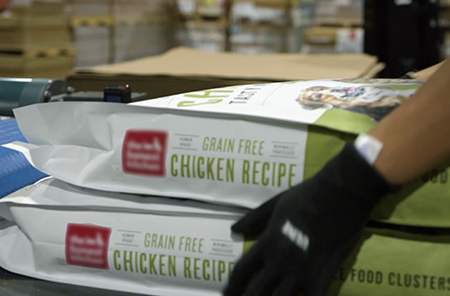 Pet Food Packaging Industry Trends to Watch
April 29, 2025
<p>Pet food packaging continues to evolve alongside shifting consumer expectations, market innovations, and sustainability demands. While many of the trends shaping this space have remained consistent over the past few years, our understanding of those trends has deepened. What were once emerging concepts—like sustainable pet food packaging, premium branding, and functional design—are now becoming standard features in a competitive and fast-growing industry.</p><p>At BW Packaging, we strive to stay on top of the latest developments in the industry to ensure we are in the best position possible to serve our clients. Learn more about the biggest trends developing in the industry, and do not hesitate to reach out to us to learn more about how we can help you meet your needs.</p><h2 id="sustainable-pet-food-packaging-solutions">Sustainable Pet Food Packaging Solutions</h2><p>While this post does cover the topic of “trends,” we’ve admittedly covered how sustainability is far from a trend and is, rather, a core pillar of our business. Sustainability in pet food packaging is no longer just a passing trend; it has firmly established itself as a core principle within the packaging industry. Pet food brands consistently seek to transition from traditional poly-woven bags to recyclable paper poly bags. However, questions about durability and the performance of sustainable materials throughout packaging and distribution processes have persisted.</p><p>Through ongoing collaboration with our upstream<sup>Upstream refers to all the parts of a manufacturing process that come before another specific manufacturing process further down the production line (e.g. raw material extraction is upstream from labeling).</sup> bag manufacturing partners, we've rigorously tested various sustainable materials with encouraging results. As our experience with these materials has grown, we've successfully optimized our packaging machines and processes to accommodate sustainable pet food packaging solutions without sacrificing strength or durability. Extensive testing has allowed us to mitigate common issues, such as bag rips and quality concerns, ensuring robust and reliable sustainable packaging solutions.</p><p>One challenge frequently encountered by pet food manufacturers occurs during palletizing, where conventional palletizers cause friction that sustainable packaging materials often can't withstand. Traditional palletizers, which slide or push bags into place, can inadvertently damage these newer, environmentally friendly options. Our solution to this issue is the Symach Mach-Series Palletizer—a hybrid robotic and conventional palletizer featuring a dual-axis gantry-style robotic arm. By utilizing the robotic arm, we eliminate damaging friction, making it possible to palletize sustainable pet food bags effectively and reliably</p><h2 id="data-driven-product-efficiencies">Data-Driven Product Efficiencies</h2><p>Data plays a critical role in modern pet food packaging operations, significantly influencing decision-making and productivity. Recognizing the importance our customers place on accessible, actionable data from their machines, we've committed to enhancing data collection, aggregation, and analytics processes. programmable logic controllers (PLCs)<sup>A programmable logic controller (PLC) is a hardened controller engineered to control manufacturing equipment and processes.</sup>—the digital systems controlling packaging machinery—have been a particular focus of our continuous innovation efforts.</p><p>Our Digital Innovation (DI) team identified opportunities to improve how PLCs manage and present data. Initially, data from various machine components was fragmented, complicating aggregation and limiting usability. By addressing these challenges, we've developed a streamlined, scalable data pipeline that consolidates diverse information sources into intuitive analytics dashboards. This enhanced capability empowers customers with actionable insights, driving significant improvements in operational efficiency and performance.</p><p>We remain dedicated to progressively implementing these advanced data analytics capabilities across our entire range of packaging machines. The goal is to consistently expand these benefits, ensuring our customers can leverage precise, reliable, and comprehensive data to optimize their operations effectively.</p><h2 id="improving-operator-training">Improving Operator Training</h2><p>Operator turnover remains a significant challenge within manufacturing industries, including pet food packaging. Effective training and retaining skilled operators are ongoing issues, and original equipment manufacturers (OEMs)<sup>In the packaging industry, an original equipment manufacturer (OEM) is the company which manufactures the machinery used to facilitate the packaging process.</sup> continue to seek effective solutions. A particularly promising approach to this challenge involves improving the usability and functionality of human-machine interfaces (HMIs)<sup>A human-machine interface (HMI) is the dashboard through which an operator interacts with packaging systems or equipment. Modern HMIs can offer operator training resources, provide preventative maintenance reminders, assist in troubleshooting machine malfunctions, and much more.</sup>.</p><p>At BW Packaging, we've prioritized the design and development of intuitive, user-friendly HMIs to simplify operator training and enhance operational efficiency. By directly engaging with machine operators and observing them in their work environment, we've gained valuable insights into the practical use of our HMIs. This hands-on approach has allowed us to optimize HMI performance to better match the daily routines and needs of operators.</p><p>Our upgraded HMIs now feature integrated video training capabilities that are directly accessible from the interface, which can help simplify operator training and save money. Additionally, custom video tutorials demonstrating precise operational steps specific to each facility can be uploaded and viewed right on the HMI screen. Furthermore, we've launched an initiative to standardize the user interface across our entire machinery portfolio, ensuring a consistent and intuitive user experience. This ongoing standardization effort will progressively benefit all markets we serve, including food packaging.</p><h2 id="innovation">Innovation</h2><p>Innovation in pet food packaging and beyond has increasingly focused on a people-centric approach, aligning closely with Barry-Wehmiller’s core vision: "We measure success by the way we touch the lives of people." By placing people at the center of our innovation strategy, we aim to comprehensively meet the needs of operators, maintenance teams, and business leaders who depend daily on our packaging solutions.</p><p>This approach involves actively asking: What challenges do operators face when interacting with our machinery? How can maintenance processes be simplified and optimized? What strategic insights do business leaders require to succeed? Answering these questions guides our development efforts, ensuring our innovations genuinely add value at every level of the customer experience.</p><p>People-centric innovation ensures our technological advancements remain focused on real-world applications and human interaction. We continuously strive to create tangible value for our customers and operators, reinforcing our commitment to quality and reliability in all aspects of our packaging solutions.</p><h2 id="exports-and-global-markets">Exports and Global Markets</h2><p>The growing global demand for pet food products highlights the necessity for sophisticated and versatile packaging solutions. The U.S. pet food industry's expanding export market underscores the need for machinery that can efficiently handle diverse packaging standards and consumer preferences worldwide. OEMs like BW Flexible Systems play a crucial role by developing customizable, adaptable, and high-capacity packaging lines to support international growth.</p><p>From North America to Asia and beyond, our innovative machinery solutions are designed to deliver speed, efficiency, and flexibility, addressing varied global market demands. This adaptability positions us as essential partners in the continued growth and expansion of the international pet food industry.</p><h2 id="phaseout-of-pfas-chemicals">Phaseout of PFAS Chemicals</h2><p>The recent voluntary phaseout of per- and polyfluoroalkyl substances (PFAS) in packaging marks an essential step toward safer and more environmentally sustainable pet food packaging solutions. This industry-wide initiative reflects our collective commitment to public health, environmental responsibility, and consumer confidence.</p><p>By proactively eliminating <a href="https://www.epa.gov/pfas/pfas-explained" target="_blank" title="PFAS Explained | US EPA" data-sf-ec-immutable="" data-sf-marked="">PFAS chemicals</a>, the packaging industry demonstrates its dedication to aligning with regulatory expectations and consumer safety priorities. Going forward, we continue to prioritize packaging innovations that emphasize material safety, sustainability, and the long-term health of pets and the environment.</p><h2 id="increased-demand-for-convenience-and-portability">Increased Demand for Convenience and Portability</h2><p>Consumer lifestyles have increasingly favored convenience and portability in pet food packaging. Easy-to-open, resealable bags and portion-controlled packaging options are highly sought-after as pet owners look to simplify feeding routines and ensure freshness. BW Flexible Systems continues to innovate packaging solutions that enhance consumer convenience without sacrificing product integrity or shelf life.</p><p>Beyond convenience at home, portable packaging also caters to pet owners who travel frequently or maintain active lifestyles. Lightweight and compact packaging solutions make it easier to feed pets on the go, increasing overall product appeal and meeting diverse consumer needs.</p><h2 id="enhanced-brand-visibility-through-customizable-packaging">Enhanced Brand Visibility Through Customizable Packaging</h2><p>As competition in the pet food market intensifies, brand differentiation through visually appealing and distinctive packaging has become critical. Customizable packaging with vibrant colors, clear branding, and engaging graphics significantly enhances product visibility on store shelves and online platforms. BW Flexible Systems offers tailored solutions that empower brands to effectively capture consumer attention and loyalty.</p><p>Moreover, customizable packaging solutions enable brands to easily adapt their packaging for seasonal promotions or special editions. This flexibility not only keeps the brand visually appealing but also helps maintain consumer interest and encourages repeat purchases.</p><h2 id="integration-of-smart-packaging-technologies">Integration of Smart Packaging Technologies</h2><p>Smart packaging technologies, such as QR codes and RFID tags, are becoming integral in pet food packaging for traceability, consumer engagement, and inventory management. These digital tools enable manufacturers to provide detailed product information, streamline logistics, and foster direct interactions with consumers. BW Flexible Systems is exploring ways to integrate smart packaging features that deliver added value across the entire supply chain.</p><p>In addition, smart packaging allows pet owners to access detailed nutritional information and source it with ease, enhancing transparency and trust in pet food brands. Leveraging these technologies can significantly improve customer loyalty and engagement, setting brands apart in a crowded marketplace.</p><h2 id="capitalize-on-packaging-trends-with-bw-flexible-systems">Capitalize on Packaging Trends with BW Packaging</h2><p>The pet food packaging industry continues to evolve with sustained momentum toward sustainability, efficiency, and innovation. From recyclable packaging materials and advanced data analytics to intuitive HMIs and people-centric innovation, BW Packaging remains dedicated to understanding and addressing the dynamic needs of our customers. As global markets expand and consumer preferences shift toward convenience and smarter packaging solutions, we are committed to continuously enhancing our offerings. Stay connected with us to explore how these ongoing trends shape the future of pet food packaging.</p>
 Second Palletizer Reaches 20 Million Bags At Vos Onions
April 24, 2025
<p>Just a year and a half ago, Johnny de Bat from Symach visited Vos Onions' new onion sorting and packing facility in Veen to mark a milestone: the first palletizer had reached 20 million bags processed. Last week, it was time for a second celebration, as the second machine also crossed the 20-million-bag threshold. Arian Vos is a satisfied user. "Apart from regular maintenance, we haven't had any issues with the machine. If that continues, we're aiming for 40 million."</p><p>The Brabant-based onion processor purchased a third palletizer when it built the new facility a few years ago. Since then, the palletizers have been supplied by two pallet warehouses with a buffer capacity of around 200 pallets. A shuttle system transports the full pallets to the wrapper. "With the new machine we acquired before moving into the new building, we gained some additional features. For example, the lift is now electric instead of hydraulic, the bag feeder is flat, so the bin doesn't need to tilt anymore, and the new palletizer can also stack crates. Since we pack at floor level and then lower the onions, we no longer need elevator belts—just lowering belts. That improves stacking and reduces wear and tear," explains Arian.</p><p>The new machine works perfectly, and even the two older palletizers have consistently performed well. "The latest machine may look more modern, but the core principle of the palletizer hasn't changed much over the years. We're very happy with our partnership with Symach," Arian says. Johnny de Bat from Symach echoes that sentiment. "Arian approaches the machine with a very technical mindset, and his feedback helps us improve our systems. For example, thanks to his input, we've modified the double-arm wrapping machine to switch automatically to the second roll of netting during changeovers."</p><p>Whether the machine will reach the 40 million bag milestone remains to be seen, according to Johnny. "The machine can last quite a while, but eventually you run into limitations with the electronics, as some components become obsolete. That said, we've had machines reach 30 million bags before, so we know they can go the distance. Vos Onions handles most of the maintenance themselves and takes great care of their machines. It's impressive that a packing station can handle such volumes—it shows they're packing significant amounts every day," Johnny adds, praising the operation.</p><p>For now, there's no shortage of work for the palletizers. "It's extremely busy at the moment, and we're packing at full capacity. The market is a bit tense, though, because right now, farm prices are rising even faster than bag prices. But that's part of the business—if a trader never loses, he'll never win anything either," says Arian. In the machinery sector, it's mainly the recently announced U.S. import duties that are raising eyebrows. "In recent years, many machine manufacturers have been very active in the U.S. market. Personally, I expect that to cool down somewhat if the 20% import tariffs are implemented, and everyone will feel the effects," says Johnny.</p><div><p><em>Originally published:</em><br>Heijboer, Izak. "Second Palletiser Reaches 20 Million Bags at Vos Onions." FreshPlaza.com, 14 April 2025, <a data-sf-ec-immutable="" href="https://www.freshplaza.com/north-america/article/9722990/second-palletiser-reaches-20-million-bags-at-vos-onions/">https://www.freshplaza.com/north-america/article/9722990/second-palletiser-reaches-20-million-bags-at-vos-onions/</a></p></div>
 Maximizing Shelf Life: Advanced Animal Feed Packaging Solutions
March 31, 2025
<p>At BW Packaging, we strive to provide innovative animal feed packaging solutions, helping producers safeguard product integrity. It is crucial to explore key considerations for controlling moisture levels, managing oxygen exposure, and preventing contaminants from degrading feed over time.</p><p>By selecting and implementing the right packaging strategies, feed manufacturers can maintain animal nutritional value, reduce waste, and enhance overall profitability. Learn more about how we can help you extend shelf life and consistently meet quality expectations. Then, contact us to speak to our team.</p><h2>Understanding the Factors that Affect Feed Freshness</h2><p>Environmental conditions have a profound influence on how long animal feed remains safe and nutritious. For example, high humidity can foster mold growth and hasten the breakdown of essential vitamins, while excessively dry air may lead to nutrient loss in sensitive additives. Temperature fluctuations, whether during storage or transportation, can also alter the chemical and physical properties of feed.</p><p>Beyond climate-related issues, the specific composition of feed can either accelerate or delay spoilage. High-fat ingredients may turn rancid quickly if exposed to oxygen or elevated temperatures. Protein sources, meanwhile, can degrade more rapidly when stored in warm conditions, affecting the feed's overall nutritional profile. Understanding each ingredient's sensitivity to factors like heat, moisture, and light allows producers to tailor food packaging solutions more effectively and keep feed fresher for longer.</p><h2>Evaluating Animal Feed Packaging Formats for Longevity</h2><p>Selecting the most suitable packaging format requires balancing material barriers, cost, and operational efficiency. Learn more about three common options—bags, pouches, and bulk containers—across five key categories:</p><table><thead><tr><th scope="col">Category</th><th scope="col">Bags</th><th scope="col">Pouches</th><th scope="col">Bulk Containers</th></tr></thead><tbody><tr><th scope="row">Barrier Protection</th><td>Moderately effective, may need multiple layers.</td><td>Often, multi-layer films for better oxygen control.</td><td>Rigid walls offer strength but might need liners.</td></tr><tr><th scope="row">Cost</th><td>Generally lower per unit, easy to store flat.</td><td>Slightly higher due to complex materials.</td><td>Significant upfront expense but reusable long-term.</td></tr><tr><th scope="row">Handling</th><td>Lightweight but can tear if mishandled.</td><td>Convenient with resealable features.</td><td>Requires machinery for loading and unloading.</td></tr><tr><th scope="row">Sealing Options</th><td>Typically, heat-sealed or sewn shut.</td><td>Heat sealing or zip closures provide tight seals.</td><td>Mechanical lids or clamps, sometimes with liners.</td></tr><tr><th scope="row">Storage Efficiency</th><td>Stackable but may shift under pressure.</td><td>Can stand upright to save space.</td><td>Highly efficient for large volumes if stored properly.</td></tr></tbody></table><h3>The Role of Moisture and Oxygen Control in Shelf Life</h3><p>Moisture is a key driver of microbial activity in feed. When water activity is high, bacterial and fungal growth can flourish, accelerating spoilage and posing potential health risks to animals. Even moderate humidity levels may allow some microbes to proliferate, especially in protein-rich formulations. Keeping moisture levels in check throughout the packaging and distribution process is critical for extending feed longevity and ensuring that nutrient profiles remain intact.</p><p>Oxygen exposure is another major concern, especially for feeds containing fats or oils that can oxidize rapidly. Oxygen scavengers, placed inside the packaging, actively remove residual oxygen, slowing the onset of rancidity and preserving the feed's flavor and nutritional potency. Desiccants, on the other hand, absorb any stray moisture that might enter the package, preventing mold development and clumping.</p><h3>Ensuring Product Integrity Through Proper Sealing Mechanisms</h3><p>One of the most straightforward sealing methods is heat sealing, where the plastic layers of a bag or pouch are fused under controlled temperature and pressure. This approach works well for many feed types, provided the correct heat range is maintained. Ultrasonic sealing, by contrast, employs high-frequency vibrations to bond packaging materials, which can be advantageous for delicate or temperature-sensitive feed formulations. Mechanical sealing options like zippers and clips are generally easier to open and reseal, but may be more vulnerable to minor leaks if not carefully monitored.</p><p>No matter which method is used, ensuring a tight, leak-proof seal is critical to preserving feed for longer periods. Even the smallest punctures or weak spots can compromise the protective atmosphere inside the package, leading to nutrient degradation and potential microbial contamination. Regular inspections, both automated and manual, can help verify that seals are consistently formed and remain intact during handling.</p><h3>Maintaining Quality During Transportation and Storage</h3><p>Once the feed is sealed, maintaining stable external conditions is the next focus. Rapid temperature swings or prolonged exposure to high heat can degrade vitamins, antioxidants, and other sensitive feed additives. Similarly, humidity spikes may introduce moisture through microscopic pinholes or imperfect seals. Using climate-controlled storage facilities and well-insulated transportation options helps to mitigate these risks.</p><p>Physical damage to the packaging is also a significant concern during transit. Rough handling, drops, or collisions can puncture bags and compromise protective layers. Implementing careful loading and unloading protocols, as well as gently palletizing feed in stable stacks with protective edges, helps prevent tearing or crushing.</p><h2>Regulatory Considerations for Animal Feed Safety</h2><p>Maintaining compliance with national and international mandates is essential to protect both animal welfare and consumer interests. A few critical regulatory areas that feed producers must consider when designing their packaging strategies include:</p><ul><li>Labeling Requirements: Accurate ingredient lists help buyers understand product contents. Clear nutrient facts and proper usage instructions also bolster brand reputation.</li><li>Traceability Protocols: Batch numbers and lot codes must be visibly noted. This measure simplifies recall processes in the event of contamination issues, such as listeria contamination.</li><li>Packaging Material Approvals: Certain regions impose strict guidelines on food-grade materials. Non-compliant materials could risk chemical migration into the feed.</li><li>Import and Export Guidelines: Different countries have varying safety and labeling rules. Meeting these guidelines ensures smooth cross-border trade without delays.</li><li>Record-Keeping Obligations: Detailed documentation of production batches and packaging settings is often audited. Proper records demonstrate a strong commitment to feed safety.</li></ul><p>By addressing these requirements from the outset, feed producers avert potential legal issues and strengthen consumer confidence.</p><h2>Balancing Cost-Effectiveness and Quality Preservation</h2><p>Securing long-term quality often hinges on investing in advanced packaging materials and machinery. While these can be pricier up front, they may substantially reduce spoilage-related losses by maintaining higher feed quality for extended periods. Weighing these costs against the expense of discarding subpar product or dealing with dissatisfied customers is crucial when making packaging decisions.</p><p>Production efficiency also influences the financial equation. Upgraded sealing technologies, for instance, can decrease labor costs by speeding up throughput and minimizing manual rechecks. Automation in quality assurance can spot potential defects earlier, reducing the need for broad product quarantines.</p><p>Balancing resources requires assessing each feed's specific risks and vulnerabilities. High-fat or nutrient-dense formulations may demand more robust barrier materials to ward off oxidation, while simpler blends might be adequately protected by mid-range films. Fine-tuning packaging around each product's needs ensures cost-effectiveness without compromising on quality.</p><h2>Discover Advanced Animal Feed Packaging with BW Packaging</h2><p>At BW Packaging, our complete <a href="/products/flexible-bagging-wrapping/bag-filling">bag filling</a> and <a href="/products/palletizing">palletizing</a> solutions can optimize your animal feed packaging processes and preserve feed quality for the long haul. Our expertise is driven by decades of building high-quality, reliable, long-lasting machinery that addresses the challenges faced by many feed manufacturers. Contact us today to learn how we can partner with you to deliver perfectly bagged and stacked animal feed.</p>
 Quick Changeover Techniques for Multi-Product Bakery Operations
March 19, 2025
<p>BW Packaging is committed to helping bakeries worldwide optimize their bakery operations to boost revenue and minimize overhead costs. It is crucial to understand how quick changeover methods can streamline multi-product operations, reduce downtime, and maintain the consistent product quality your customers expect. Learn more about reducing changeover downtime below, and contact us for the professional guidance your bakery operations need.</p><h2>Understanding the Modern Bakery Production Landscape</h2><p>Modern consumers have a growing appetite for an ever-expanding range of baked goods, from artisan bread to specialty pastries. This surge in variety pushes bakeries to diversify their product lines to stay competitive. As a result, manufacturing facilities must adapt their equipment and operations to handle frequent changes in recipes and ingredients.</p><p>Frequent product swaps mean a single packaging line might handle everything from delicate croissants to dense loaves of bread within a single shift. When changeovers are not optimized, bakeries can experience significant production lags and increased labor costs. Packaging equipment must be flexible enough to accommodate varying shapes, sizes, and formulations without sacrificing speed.</p><h3>The Core Challenges of Managing Multiple Product Lines</h3>Managing multiple product lines within a single bakery operation often presents a tangle of technical, scheduling, and workforce challenges. A few critical hurdles that frequently develop include:<ul id="core-challenges"><li>Dough Consistency and Texture: Different dough formulations require specific handling techniques to avoid damage or sticking. Packaging lines must be carefully configured to minimize pressure on softer doughs while efficiently moving sturdier baked goods.</li><li>Shape and Size Variation: A single line might handle everything from compact rolls to lengthy baguettes. Adjusting spacing and guiding mechanisms becomes essential to prevent jams and misalignment.</li><li>Packaging Material Compatibility: Switching from paper bags for bread to plastic wrappers for pastries can create bottlenecks. Operators must recalibrate sealing or folding components to maintain integrity for each packaging type.</li><li>Allergen Cross-Contamination Risks: When multiple recipes use different ingredients, swift but thorough cleanup is critical. Proper sanitization steps must be integrated into the changeover process to ensure food safety.</li><li>Regulatory and Labeling Requirements: Varying nutritional labels, ingredient lists, and batch data add complexity to product swaps. Rapid changes to coding or labeling machinery are often necessary to remain compliant.</li></ul><p>These factors highlight why bakeries need highly adaptable lines and efficient changeover strategies. By proactively planning for these challenges, managers can minimize disruptions and keep production on schedule.</p><h3>The Financial Impact of Inefficient Changeovers on Bakery Efficiency</h3><p>When changeovers take longer than planned, employees are left waiting for new setup instructions or spending excessive time recalibrating machinery. This unproductive period can quickly escalate operating expenses as labor hours go underutilized while production stalls. Even a small delay, repeated multiple times a day, compounds into significant lost throughput. The resulting shortfall in packaged products often forces overtime work or rushed production later, further inflating costs.</p><p>Extended changeovers also create bottlenecks in the overall workflow, as incoming batches cannot be processed until the line is ready. Over time, these backups jeopardize fulfillment schedules and put strain on logistics planning. If a bakery regularly misses shipment windows, it can damage relationships with distributors and retailers, undermining brand reputation and eroding client confidence.</p><h3>Efficient Packaging Lines Require Rapid, Tool-Free Adjustment</h3><p>Machinery that includes quick-release mechanisms and adjustable components enables operators to transition from one product format to another with minimal effort. By reducing the need for specialized tools, bakeries cut down on the time spent locating and using them during changeovers. Simple clamp-based fittings and easily swappable guides help maintain a steady workflow without disassembling large portions of equipment.</p><p>Modular equipment designs allow bakeries to reconfigure lines according to the product's specific size or shape. For instance, swappable conveyor sections or adjustable forming tubes let operators adapt machinery to accommodate new product dimensions quickly. Such flexibility is vital when switching from small items like cookies to larger items like artisan loaves. With modular solutions, bakeries can scale up or down efficiently, ensuring equipment investments remain viable for multiple product lines.<br></p><h2>Optimizing Workflow and Workstation Layouts</h2><p>A well-designed workspace significantly reduces time lost walking between stations or searching for parts. Placing essential tools near the machinery that requires them ensures operators can swiftly complete each stage of the changeover. Consolidating packaging supplies like trays, rolls of film, and labels within easy reach helps maintain momentum.</p><p>Beyond efficiency, ergonomics plays a pivotal role in worker comfort and productivity. When operators have to bend, reach, or stretch repeatedly, fatigue sets in quickly, slowing the line. Adjusting work surface heights and adding supportive fixtures can help reduce repetitive strain injuries and maintain consistent performance throughout a shift.</p><h3>How To Empower Teams Through Skill Development</h3><p>Developing a skilled, adaptable team is just as critical to rapid changeovers as having well-designed machinery. A few steps that can foster the expertise required for seamless product swaps include:</p><ol id="skill-development"><li>Conduct Thorough Onboarding: Make sure every new hire understands the various stations and processes involved in your bakery's production line. Early exposure to multiple tasks builds familiarity that can be expanded with advanced training later.</li><li>Schedule Regular Refresher Courses: Periodically revisit critical procedures to ensure knowledge stays up-to-date. Frequent reinforcement helps operators remember crucial details and maintain consistency.</li><li>Offer Hands-On Practice: Whenever introducing new products or equipment changes, grant the team ample time to experiment. Hands-on sessions promote confidence and reduce mistakes under real production pressure.</li><li>Rotate Roles Periodically: By moving employees between stations, they gain broader skills and a deeper understanding of the entire operation. This practice also prevents boredom and burnout from repetitive tasks.</li><li>Set Clear Performance Benchmarks: Provide metrics, such as target changeover duration, to guide each operator's development. Clear expectations give employees tangible goals and a sense of achievement when met.</li><li>Implement Peer Mentoring: Pair newer staff with experienced team members who can share insights and best practices. Mentorship encourages collaboration and quick problem-solving during day-to-day operations.</li><li>Reward Skill Growth and Initiative: Recognize employees who invest effort into learning new tasks or enhancing existing ones. Encouraging professional growth fosters a positive culture that values continuous improvement.</li></ol><p>Building a team that can pivot quickly during product transitions reduces downtime and ensures a high level of consistency. By systematically developing operator skills, bakeries can continuously refine their processes to meet shifting consumer demands.</p><h3>Establishing SOPs for Changeover Time Reduction</h3><p>Standard Operating Procedures (SOPs) act as a reference point for every step in a changeover, eliminating guesswork and reliance on memory. By documenting each action—from removing old packaging materials to verifying sealing adjustments—operators can maintain uniformity across shifts. Checklists prevent overlooked details that might lead to packaging defects or lost time searching for missing parts.</p><p>While SOPs provide structure, they should never be static. As new products emerge or more efficient techniques are discovered, updating these documents keeps procedures relevant and lean. Encouraging employees to suggest improvements builds a collective sense of ownership and responsibility.</p><h2>Enhance Your Bakery Operations with BW Packaging</h2><p>At BW Packaging, we are ready to help you maximize your bakery options. Our specialized equipment and services can transform your bakery's packaging line. By focusing on quick-changeover technology, ergonomic layouts, and robust SOPs, we help optimize your production flow. Contact us today to learn more about how we can help you get the most out of your bakery operations.</p>
 7 Key Trends Shaping the Frozen Food Packaging Industry
March 13, 2025
<p>The global frozen foods manufacturing industry, including the EMEA (Europe, Middle East, and Africa) region, is experiencing several of these key trends:</p><p>1. Health & Convenience Focus</p><p>Consumers are demanding healthier frozen food options, with an emphasis on organic, plant-based, and high-protein products. Ready meals, especially those requiring minimal preparation, are gaining popularity due to fast-paced lifestyles.</p><p>2. Global Flavors & Ethnic Cuisine</p><p>There is a rise in demand for globally inspired frozen meals, particularly Asian and Middle Eastern flavors. Social media platforms like TikTok and Instagram are driving interest in international cuisine.</p><p>3. Sustainable & Eco-Friendly Frozen Food Packaging</p><p>With growing environmental concerns, manufacturers are investing in sustainable packaging solutions, reducing plastic use, and adopting recyclable materials.</p><p>4. Growth in Frozen Snacks & Mini Portions</p><p>The demand for frozen snacks, such as bite-sized and mini-portioned products, is increasing. This trend is linked to the growing snacking culture, particularly among younger consumers.</p><p>5. Technological Advancements in Freezing Techniques</p><p>Techniques such as individual quick freezing (IQF) and blast freezing are improving product quality and shelf life, helping meet consumer expectations for freshness.</p><p>6. Rising Investments & Mergers</p><p>Large frozen food brands are investing in product innovation and strategic partnerships. Major players in the EMEA market include Nestlé, Unilever, Ajinomoto, and ConAgra Brands.</p><p>7. Cold Storage & Logistics Advancements</p><p>The expansion of cold storage infrastructure and distribution networks is supporting the growth of frozen food consumption, particularly in emerging markets within the Middle East and Africa.</p><p>The frozen food market is expected to continue growing steadily, driven by convenience, health-conscious consumers, and technological innovations. Contact BW Packaging to explore our range of trusted <a href="/products/flexible-bagging-wrapping/vertical-form-fill-seal">Hayssen Vertical Form-Fill-Seal (VFFS) machines</a> that are designed to minimize cross-contamination for food safety, along with being easy to operate and easy to clean.</p><p>View full trends report: <a data-sf-ec-immutable="" href="https://newsroom.sialparis.com/topics/frozen-products/frozen-food-trends/" title="Food Industry News: Emerging trends in frozen food, report from Conagra Brands">Food Industry News: Emerging trends in frozen food, report from Conagra Brands</a></p><p><em>Referenced sources: futuremarketinginsights.com, newsroom.sialparis.com, and refridgeratedfrozenfood.com</em></p>
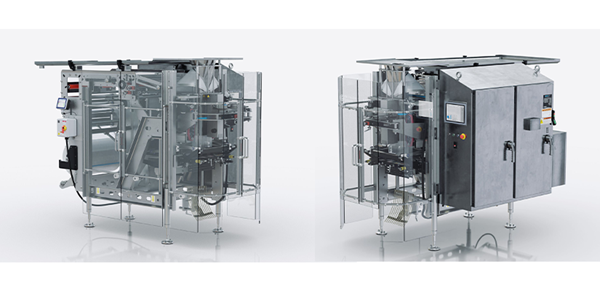 How Packaging Equipment Design Can Reduce the Risk of Listeria
February 6, 2025
<p>Data from the Food and Drug Administration shows that the number of <a href="https://www.fda.gov/safety/recalls-market-withdrawals-safety-alerts" title="Recalls, Market Withdrawals, & Safety Alerts | FDA" data-sf-ec-immutable="">food recalls in 2024</a> surpassed 1,900, reaching the highest point since 2019. As of October 2024, the count for the fiscal year 2025 has already exceeded 300. The Centers for Disease Control and Prevention estimates that foodborne illnesses in the United States impact 48 million people each year, leading to 128,000 hospitalizations and 3,000 fatalities.</p><p>As demonstrated by <a href="https://www.cidrap.umn.edu/foodborne-disease/fda-links-packing-facility-flaws-listeria-cantaloupe" title="FDA links packing facility flaws to Listeria in cantaloupe | CIDRAP" data-sf-ec-immutable="">FDA investigations</a> into past outbreaks, modern food packaging equipment is pivotal in preventing bacterial contamination. Equipment design and sanitation emerged as key factors in the <a href="https://archive.cdc.gov/www_cdc_gov/listeria/outbreaks/cantaloupes-jensen-farms/index.html" title="2011 Outbreak of Listeria Infections Linked to Whole Cantaloupes from Jensen Farms, Colorado | CDC" data-sf-ec-immutable="">Jensen Farms case</a>, highlighting how crucial proper machinery selection becomes in maintaining food safety.</p><p>This guide will explore how strategic equipment choices and innovative design features can significantly reduce Listeria risks in snack, meat, and produce packaging operations. Whether upgrading existing lines or planning new installations, understanding these principles could help safeguard consumer health and your facility's future.</p><h2>Critical Points in Packaging Where Listeria Can Thrive</h2><h3>Product Contact Surfaces</h3><p>Packaging equipment creates numerous opportunities for Listeria colonization, particularly in areas directly touching food products. Traditional equipment designs often include microscopic crevices, rough welds, and hollow regions that trap moisture and organic debris. These seemingly minor design flaws become perfect breeding grounds for bacterial colonies.</p><p>Take a typical conveyor system, for instance. The belt's tracking mechanism can harbor bacteria in its grooves and bearings, while transfer points between different sections create additional harborage points. Even tiny scratches on stainless steel surfaces can provide enough shelter for Listeria to establish itself.</p><h3>Environmental Control Zones</h3><p>The area surrounding packaging equipment requires careful consideration in Listeria prevention. Condensation from overhead pipes, floor drains, and even compressed air systems can introduce moisture into the packaging environment. These moisture and ambient temperature fluctuations create microclimates ideal for bacterial growth.</p><p>Unfortunately, many facilities discover these vulnerable areas only after routine environmental testing reveals a problem. By then, Listeria may have already established resistant biofilms in multiple locations, requiring extensive remediation efforts.</p><h3>Material Handling Transitions</h3><p>Each point where packaging materials or products transfer between processes presents a unique risk. Loading film rolls, accumulating products on catch pans, and moving packaged goods through sealing stations all create opportunities for contamination. These transition points often combine several risk factors: human interaction, product residue accumulation, and equipment complexity.</p><h2>5 Packaging Equipment Design Features That Combat Listeria</h2><h3>1. Hygienic Design Principles</h3><p>Modern packaging equipment incorporates several key design elements that actively prevent bacterial harborage. Continuous welds replace spot welds, eliminating potential debris collection points. Sloped surfaces and frame members ensure complete drainage, while standoffs keep bearings and drives away from product zones. These aren't just aesthetic choices—they fundamentally change how bacteria interact with equipment surfaces.</p><h3>2. Automated Material Handling</h3><p>Advanced automation reduces human contact with products and packaging materials, significantly lowering contamination risks. Robotic systems now handle everything from product loading to case packing, maintaining consistent hygiene levels throughout operations. These systems excel in high-risk environments where traditional manual handling might compromise food safety.</p><h3>3. Clean-in-Place Innovation</h3><p>Revolutionary Clean-in-Place (CIP) systems have transformed sanitation procedures. These systems deliver precise cleaning solutions to every equipment surface, reaching areas that manual cleaning might miss. However, the innovation goes beyond cleaning – modern CIP systems integrate with production schedules, providing automated cleaning validation and documentation.</p><h3>4. Smart Surface Technology</h3><p>Recent advances in materials science have produced surfaces that actively resist bacterial attachment. These technologies, from specialized stainless steel finishes to antimicrobial coatings, make it harder for Listeria to establish footholds. When combined with proper sanitation protocols, these surfaces significantly reduce the risks of biofilm formation.</p><h3>5. Environmental Control Integration</h3><p>Modern packaging systems now incorporate environmental monitoring capabilities. Integrated sensors track temperature, humidity, and airflow patterns, alerting operators to conditions that might promote bacterial growth. This proactive approach helps maintain optimal conditions that inhibit Listeria proliferation.</p><h2>Packaging Machinery Solutions for Minimizing Cross-Contamination</h2><p>BW Flexible Systems offers a wide range of <a href="/products/flexible-bagging-wrapping/vertical-form-fill-seal">Vertical Form-Fill-Seal (VFFS) machine solutions</a> that are designed with hygienic features for the highest food safety and sanitation. Specifically for food production, the <a href="/products/flexible-bagging-wrapping/vertical-form-fill-seal/hayssen-isb">Hayssen ISB (Intelligent Sanitary Bagger)</a> and the <a href="/products/flexible-bagging-wrapping/vertical-form-fill-seal/hayssen-verus">Hayssen Verus</a> set new standards in hygienic VFFS design, along with being easy to operate and easy to clean. Durable construction allows for high-pressure washdown, and sloped surfaces provide thorough drainage, enhancing cleanliness and efficiency throughout the machine.</p><h2>Wrapping Up</h2><p>Investing in adequately designed packaging equipment is far less costly than managing a contamination crisis.</p><p>Today's packaging technology offers unprecedented control over Listeria risk factors. Integrating automated systems, innovative materials, and intelligent monitoring capabilities creates multiple barriers against contamination. These advances and proper maintenance and sanitation protocols provide food manufacturers with powerful tools for protecting public health and brand reputation.</p><p>Ready to enhance your facility's Listeria prevention strategy? Contact BW Flexible Systems to explore our range of hygienically designed packaging solutions. Our experts can help you identify potential risks in your current setup and recommend equipment upgrades that align with the latest food safety standards.</p>
 Minor Details can Have a Major Impact
December 8, 2024
<p style="text-align: center"><strong>Start with the Engineering Details for Reliable Dry Filling Equipment</strong></p><p style="text-align: left">When it comes to your customers, you pay attention to details: details your customers will recognize, appreciate, and may even view as the solid foundation of your relationship. Maybe it's the range of sizes you provide, so there's one that's perfect for every need.</p><p style="text-align: left">Some details aren't noticed until they're overlooked. It's not just a matter of providing convenience; you're making sure your dry product is precisely filled, whether it's medication, a cleaning product, a chemical or a cake mix. That it reseals tightly so ingredients stay fresh and flavorful. That it's easy to grip and open, whether your customer is 28 or 88. That you offer sizes that work for a busy family meal or a snack that slips into a lunch box or gym bag. At <strong>Mateer</strong>, we believe in partnering with you to provide the kind of details you <em>and </em>your customers will value.</p><p style="text-align: left">Attention to detail is the foundation for excellence in the design, engineering, and performance of our Mateer precision dry filling equipment. Our semi-automatic, automatic, and rotary machines provide high filling accuracy across a wide range of product consistencies, including free-flowing and non-free-flowing powders; creams; pastes; and slurries. Every Mateer filler is manufactured with pride to even the smallest of details:</p><ul style="text-align: left"><li>Every weld is ground and polished to eliminate burrs and crevices where bacteria can grow</li><li>Standard auger bearings are replaced with an oversized heavy-duty version, resulting in longer life</li><li>Aluminum heads are cast, not formed from welding pieces together, eliminating torque twist</li><li>Auger height adjustments are located outside the production zone, allowing operators to make adjustments in seconds, <em>without disrupting production</em> and without the need to place their hands inside the hopper, ensuring their safety while also reducing the risk of product contamination</li><li>Change parts are designed to be tool-free, enabling product changeover in as little as 10 minutes</li></ul><p>Details like these minimize unscheduled downtime and improve operational efficiency with precise filling accuracy (within +/- 1.5%) and speeds from 8 to 650 Containers Per Minute (CPM), depending on the specific requirements of your application. They improve safety and cleanability. They ensure longer life for your equipment, with a lower Total Cost of Ownership (TCO), and they make it easier to operate and maintain. Mateer fillers grown with your company because our engineers design with your project's specific parameters in mind.</p><p>If you're interested in learning more about how we can build the perfect dry filling solution for you – based on the specific requirements for your product – reach out to our experts and let's talk about those details!</p><p style="text-align: left"> </p>
 How Ion Labs Boosted Gummy Production with BW Integrated Systems
November 15, 2024
<p>Faced with the rising demand for gummy supplements, Ion Nutrition Labs knew they needed to scale up quickly to stay competitive. With 350 employees across two facilities, they already produced a range of nutraceutical products but required a high-speed gummy production line to meet growth targets. That’s when they turned to BW Integrated Systems for help. </p><p>In this blog post, we share how Ion Nutrition Labs approached the production line expansion, how BW Integrated Systems and their Integrated Packaging Solutions (IPS) team provided them with a custom-fit solution, and the successful results of the new, completely integrated gummy packaging line. If you want to see the story in a video format, watch the Ion Labs Customer Testimonial video above. </p><p><strong>The Search for the Right Partner </strong></p><p>Ion Labs knew they couldn’t take on the expansion alone—they needed a partner they could trust. That's when they turned to BW Integrated Systems (BWIS). Matthew Keib, Ion Nutrition Labs Chief Operating Officer (COO) was impressed with BWIS’ expertise, their ability to act as a single point of contact throughout the project, and their US-based support.</p><p>“I wanted one company that I was working with, building that relationship with, and having that communication,” Keib explained. “Customer service in the US was very important to us.” </p><p>From the start, Ion Labs felt confident in BWIS’ approach. Not only did BWIS come in early to understand Ion’s goals, but they also provided reassurance that they could deliver the ideal solution to meet their high expectations. BWIS’ IPS team played a key role in this collaboration by managing the entire packaging line integration, coordinating with multiple OEMs to ensure seamless functionality, and streamlining the process for Ion Labs. </p><p>“They expressed to us that they really wanted to improve the level of automation and efficiency on this line,” said David Duff, Sales Executive at BW Integrated Systems. “We brought them in and provided a lot of confidence that we could integrate the equipment from OEMs they selected and have it run efficiently.” </p><p><strong>A Collaborative Journey </strong></p><p>Despite facing a major challenge – the new gummy line had to fit into a very tight footprint within the existing facility – BWIS rose to the occasion. The IPS team worked through a collaborative process to design a layout that not only fit the space but delivered incredible efficiency. </p><p>“They developed a line that not only could maintain the speed, offer full integration, and squeeze it all in,” said Jamie Mireles, Maintenance Manager at Ion Labs. “They were able to pull it off and do it well. They did amazing.” </p><p>Beyond adding new machines, the expansion project focused on building trust between the two teams. The IPS team ensured that Ion Labs had full visibility into the project by offering clear communication at every step, acting as the primary liaison with OEMs, and providing a dedicated project manager to handle any concerns. Their streamlined approach minimized complexity and allowed Ion Labs to stay focused on their production goals. </p><p><strong>The Results: Confidence and Growth </strong></p><p>With the new line in place, Ion Labs is now prepared for the next five to 10 years of growth. Their gummy production is faster, more automated, and ready for the future. The new system also provides their team with renewed confidence in their ability to meet growing demand. </p><p>“The line is state of the art,” said Jean Ramirez, Gummy Manager at Ion Labs. “It helped me as a manager to have better control of the process and make sure I’m packing a good, quality product and hitting my performance goal.” </p><p>The collaboration with the BW Integrated Systems IPS team helped Ion Labs achieve their vision, no matter the challenges they faced along the way. With the seamless integration of equipment and full support from the IPS team, Ion Labs is ready to tackle the future and continue their journey of growth. </p><p><strong>Learn More about Ion Labs’ Story and BW Integrated Systems</strong></p><p>Ion Labs’ new gummy line helped them stay competitive and keep up with demand while maintaining cost-effectiveness. Want to learn more about their success story? <a target="_blank" href="/docs/default-source/brochures/bwis-brochures/ion-nutritional-labs---integrated-packaging-solutions-(ips)_case-study.pdf?sfvrsn=e701535f_0">Click here</a> to read the full case study. </p><p>If you’re ready to transform your own packaging line with a custom solution, reach out to BW Integrated Systems today!</p>
 The Top 5 Ways to Extend the Life of Your Machinery
August 20, 2024
<h2><span style="background-color: rgba(0, 0, 0, 0); font-family: inherit; font-size: inherit; text-align: inherit; text-transform: inherit; word-spacing: normal; caret-color: auto; white-space: inherit">OPTIMIZING YOUR AFTERMARKET PACKAGING OPERATIONS: FROM CONCEPT TO EXECUTION </span></h2><p><span style="background-color: rgba(0, 0, 0, 0); color: inherit; font-family: inherit; font-size: inherit; text-align: inherit; text-transform: inherit; word-spacing: normal; caret-color: auto; white-space: inherit">In today's fast-paced CPG market (Consumer Packaging Goods), the efficiency and durability of operations is crucial for maintaining a competitive edge. This article summarizes insights from BW Filling & Closing's (BWFC) expertise across five key areas of the aftermarket business, providing a comprehensive guide to optimizing packaging processes, from product qualification to operational expenditure. </span><br></p><div><span style="background-color: rgba(0, 0, 0, 0); color: inherit; font-family: inherit; font-size: inherit; text-align: inherit; text-transform: inherit; word-spacing: normal; caret-color: auto; white-space: inherit">BWFC experts are sharing and giving solutions to the most common issues faced by manufacturers on their machines. Download the complete guide <a data-sf-ec-immutable="" target="_blank" href="https://synerlink-go.bwpackagingsystems.com/aftermarket-guide#form-to-subscribe"><strong>“How to Care for Your Equipment” </strong></a><strong> </strong></span><br></div><div><p> </p></div><h2>NAVIGATING PACKAGING COMPLEXITY </h2><p><span style="background-color: rgba(0, 0, 0, 0); color: inherit; font-family: inherit; font-size: inherit; text-align: inherit; text-transform: inherit; word-spacing: normal; caret-color: auto; white-space: inherit">The landscape of packaging is constantly evolving, driven by consumer preferences, technological advancements, and sustainability demands. To thrive, companies must ensure their packaging operations are efficient and adaptable to new products and market trends. </span>BWFC<span style="background-color: rgba(0, 0, 0, 0); color: inherit; font-family: inherit; font-size: inherit; text-align: inherit; text-transform: inherit; word-spacing: normal; caret-color: auto; white-space: inherit">'s comprehensive approach addresses these needs through innovative solutions and expert guidance to help extend the life of your equipment. Discover </span>BWFC<span style="background-color: rgba(0, 0, 0, 0); color: inherit; font-family: inherit; font-size: inherit; text-align: inherit; text-transform: inherit; word-spacing: normal; caret-color: auto; white-space: inherit">’s approach and explore the top five ways to care for your packaging equipment: </span></p><p> </p><h2>1. OPTIMIZE OPERATIONAL EXPENDITURES (OPEX) </h2><p><span style="background-color: rgba(0, 0, 0, 0); color: inherit; font-family: inherit; font-size: inherit; text-align: inherit; text-transform: inherit; word-spacing: normal; caret-color: auto; white-space: inherit">Efficient management of operational expenditures is vital for maximizing profitability and ensuring business continuity. Key strategies include optimizing raw materials, minimizing product loss, and implementing preventive maintenance plans. </span>BWFC <span style="background-color: rgba(0, 0, 0, 0); color: inherit; font-family: inherit; font-size: inherit; text-align: inherit; text-transform: inherit; word-spacing: normal; caret-color: auto; white-space: inherit">supports clients with services such as packaging design proposals, machine upgrades, and tailored service contracts. These efforts help reduce OpEx while enhancing equipment efficiency and reliability. </span><br></p><p><span style="background-color: rgba(0, 0, 0, 0); color: inherit; font-family: inherit; font-size: inherit; text-align: inherit; text-transform: inherit; word-spacing: normal; caret-color: auto; white-space: inherit">Read the full guide on <a data-sf-ec-immutable="" target="_blank" href="https://www.synerlink.com/about-us/blog/blog/2024/01/23/packaging-opex-crash-course--a-plant-manager-s-guide-to-optimizing-operational-expenditures"><strong>how to optimize Opex</strong></a></span><span style="background-color: rgba(0, 0, 0, 0); color: inherit; font-family: inherit; font-size: inherit; text-align: inherit; text-transform: inherit; word-spacing: normal; caret-color: auto; white-space: inherit"><strong> </strong></span><br></p><p> </p><h2>2. ENHANCE TECHNICAL EFFICIENCY FOR AFTERMARKET EXCELLENCE </h2><p><span style="background-color: rgba(0, 0, 0, 0); color: inherit; font-family: inherit; font-size: inherit; text-align: inherit; text-transform: inherit; word-spacing: normal; caret-color: auto; white-space: inherit">Technical efficiency is a cornerstone of productive packaging operations. It directly impacts overall equipment effectiveness (OEE) by reducing waste, extending production cycles, and improving safety. </span>BWFC <span style="background-color: rgba(0, 0, 0, 0); color: inherit; font-family: inherit; font-size: inherit; text-align: inherit; text-transform: inherit; word-spacing: normal; caret-color: auto; white-space: inherit">offers tools to help monitor efficiency and optimizing maintenance practices. By focusing on technical efficiency, companies can achieve reliable and cost-effective operations, setting the foundation for aftermarket excellence. </span><br></p><p><span style="background-color: rgba(0, 0, 0, 0); color: inherit; font-family: inherit; font-size: inherit; text-align: inherit; text-transform: inherit; word-spacing: normal; caret-color: auto; white-space: inherit">Learn more about <a data-sf-ec-immutable="" target="_blank" href="https://www.synerlink.com/about-us/blog/blog/2024/02/21/packaging-equipment-technical-efficiency-a-cpg-s-first-step-to-aftermarket-excellence"><strong>how to enhance Technical Efficiency </strong></a></span><br></p><p><span style="background-color: rgba(0, 0, 0, 0); color: inherit; font-family: inherit; font-size: inherit; text-align: inherit; text-transform: inherit; word-spacing: normal; caret-color: auto; white-space: inherit"> </span></p><h2>3. ALIGN AFTERMARKET PROGRAMS WITH MARKETING INITIATIVES </h2><p><span style="background-color: rgba(0, 0, 0, 0); color: inherit; font-family: inherit; font-size: inherit; text-align: inherit; text-transform: inherit; word-spacing: normal; caret-color: auto; white-space: inherit">Marketing-driven goals such as sustainability and premiumization often result in packaging changes. </span>BWFC <span style="background-color: rgba(0, 0, 0, 0); color: inherit; font-family: inherit; font-size: inherit; text-align: inherit; text-transform: inherit; word-spacing: normal; caret-color: auto; white-space: inherit">helps bridge the gap between marketing and production by providing machine adaptation planning and expertise in packaging design. By aligning aftermarket programs with marketing strategies, companies can achieve seamless transitions and maintain production efficiency. For example, customers who are ready to switch to sustainable materials such as PET for their packaging allow </span>BWFC <span style="background-color: rgba(0, 0, 0, 0); color: inherit; font-family: inherit; font-size: inherit; text-align: inherit; text-transform: inherit; word-spacing: normal; caret-color: auto; white-space: inherit">to demonstrate the benefits of this collaborative approach. </span><br></p><p>Read the case study and learn more about <a data-sf-ec-immutable="" target="_blank" href="https://www.synerlink.com/about-us/blog/blog/2024/03/20/aligning-aftermarket-programs-with-marketing"><strong>aligning aftermarket programs with Marketing</strong></a></p><p> </p><h2>4. OPTIMIZE SPARE PARTS WITH A RELIABLE PLAN </h2><p><span style="background-color: rgba(0, 0, 0, 0); color: inherit; font-family: inherit; font-size: inherit; text-align: inherit; text-transform: inherit; word-spacing: normal; caret-color: auto; white-space: inherit">A reliable spare parts plan is essential for minimizing production downtime and maintaining efficiency. </span>BWFC <span style="background-color: rgba(0, 0, 0, 0); color: inherit; font-family: inherit; font-size: inherit; text-align: inherit; text-transform: inherit; word-spacing: normal; caret-color: auto; white-space: inherit">emphasizes the importance of sourcing parts directly from OEMs to ensure compatibility and reliability. Stocking high-demand parts and utilizing customized kits tailored to specific machinery needs can prevent costly delays. </span>BWFC<span style="background-color: rgba(0, 0, 0, 0); color: inherit; font-family: inherit; font-size: inherit; text-align: inherit; text-transform: inherit; word-spacing: normal; caret-color: auto; white-space: inherit">'s global delivery capabilities and extensive inventory ensure quick access to essential components, reducing the risk of prolonged disruptions. </span><br></p><p><span style="background-color: rgba(0, 0, 0, 0); color: inherit; font-family: inherit; font-size: inherit; text-align: inherit; text-transform: inherit; word-spacing: normal; caret-color: auto; white-space: inherit">Discover <a data-sf-ec-immutable="" target="_blank" href="https://www.synerlink.com/about-us/blog/blog/2024/04/23/optimizing-spare-parts--how-to-build-a-reliable-spare-parts-aftermarket-plan"><strong>how to build a reliable spare parts plan </strong></a></span><br></p><p> </p><h2>5. QUALIFY NEW PRODUCTS </h2><p><span style="background-color: rgba(0, 0, 0, 0); color: inherit; font-family: inherit; font-size: inherit; text-align: inherit; text-transform: inherit; word-spacing: normal; caret-color: auto; white-space: inherit">Launching new products requires careful consideration of existing equipment capabilities. </span>BWFC <span style="background-color: rgba(0, 0, 0, 0); color: inherit; font-family: inherit; font-size: inherit; text-align: inherit; text-transform: inherit; word-spacing: normal; caret-color: auto; white-space: inherit">recommends a structured approach to product qualification, involving lab tests, on-site evaluations, and detailed reporting. This process helps identify potential challenges early, allowing for necessary adjustments and ensuring seamless integration into production lines. By collaborating closely with original equipment manufacturers (OEMs), companies can mitigate risks and ensure a smooth transition from concept to market. </span><br></p><p><span style="background-color: rgba(0, 0, 0, 0); color: inherit; font-family: inherit; font-size: inherit; text-align: inherit; text-transform: inherit; word-spacing: normal; caret-color: auto; white-space: inherit">Uncover </span> <a data-sf-marked="" data-sf-ec-immutable="" target="_blank" href="https://www.synerlink.com/about-us/blog/blog/2024/05/29/from-lab-to-launch-qualifying-new-products-and-packaging-for-your-existing-packaging-equipment"><strong>what makes an effective product qualification process </strong></a><br></p><p> </p><h2>EXTEND THE LIFE OF YOUR MACHINERY WITH BWFC</h2><p><span style="background-color: rgba(0, 0, 0, 0); color: inherit; font-family: inherit; font-size: inherit; text-align: inherit; text-transform: inherit; word-spacing: normal; caret-color: auto; white-space: inherit">To stay competitive in the market while saving on costs, a proactive aftermarket strategy is essential. </span>BWFC<span style="background-color: rgba(0, 0, 0, 0); color: inherit; font-family: inherit; font-size: inherit; text-align: inherit; text-transform: inherit; word-spacing: normal; caret-color: auto; white-space: inherit">'s comprehensive aftermarket tactics including optimizing OpEx, product qualification, technical efficiency and more, helps brands stay prepared and ensures longevity in your packaging equipment. Access more expert insight from </span>BWFC <span style="background-color: rgba(0, 0, 0, 0); color: inherit; font-family: inherit; font-size: inherit; text-align: inherit; text-transform: inherit; word-spacing: normal; caret-color: auto; white-space: inherit">today with the complete guide <a data-sf-ec-immutable="" target="_blank" href="https://synerlink-go.bwpackagingsystems.com/aftermarket-guide#form-to-subscribe"><strong>“How To care For Your Equipment” </strong></a></span><span style="background-color: initial; font-family: inherit; font-size: inherit; text-align: inherit; text-transform: inherit; word-spacing: normal; caret-color: auto; white-space: inherit"></span></p>
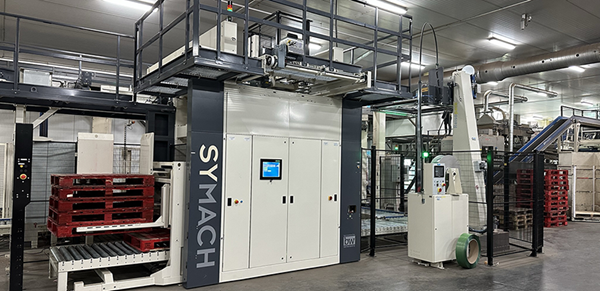 5 Key Benefits of a Conventional Palletizer
August 1, 2024
<p>Palletizing is a crucial final step in the packaging process, ensuring that products reach store shelves in optimal condition. Poorly palletized goods can damage both your reputation and customer satisfaction. Manual stacking often compromises employee well-being and operational efficiency, so an increasing number of brands are turning to automatic palletizers.</p><p>For those considering this shift, choosing the right type of palletizer is vital for optimizing your operations. Conventional palletizers, known for their reliability and efficiency, are particularly favored by many plant managers and packaging engineers. In this post, we explore the five key benefits of a conventional palletizer for bags—from operational speed to ease of changeover—highlighting why they remain a top choice for enhancing productivity in bag production.</p><h3>Operational Speed and Efficiency</h3><p>A conventional palletizer machine maintains a consistent speed, synchronizing better with upstream machines, such as a bag sewing station. This consistent speed ensures a smoother workflow and contributes to the machine's longevity and reduced maintenance needs. Conventional palletizers operate at high speeds, typically ranging from 24 to 28 bags per minute for 25kg bags. By operating at an optimal speed, conventional palletizers enhance Overall Equipment Effectiveness (OEE), making them a reliable choice for maximizing production efficiency.</p><h3>Continuous Operation</h3><p>Conventional palletizers utilize sliding doors to seamlessly transition between full and empty pallets without stopping, maintaining a continuous flow that mirrors the upstream packaging line. This consistent operation minimizes downtime and enhances productivity, ensuring that the packaging line operates without interruptions.</p><h3>Precision in Bag Positioning and Pallet Stability</h3><p>Conventional palletizers employ bag turning devices and a formation cage to ensure precise bag positioning. These systems correct positional errors before stacking, significantly reducing the risk of unstable pallets. After stacking, a conventional palletizer for bags compresses each layer against the sliding doors. This process ensures a flat, stable surface for subsequent layers, further decreasing the risk of the pallet falling apart.</p><h3>Ease of Changeover</h3><p>The versatility of conventional palletizers allows them to handle various bag types, shapes, and weights without the need for mechanical adjustments. Recipe-based changeovers enable quick and easy adjustments, reducing downtime and operational costs. Additionally, operators can easily program new stacking patterns via the Human-Machine Interface (HMI). The ability to create new patterns with the HMI enhances flexibility compared to other systems that might require vendor intervention.</p><h3>Compact Design and Space Efficiency</h3><p>Despite its substantial size and functionality, a conventional palletizer typically occupies less floor space than other types of palletizers due to its contained stacking mechanism. This function eliminates the need for safety fencing, which requires extra floor space. The compact design makes it especially suitable for facilities with limited space, optimizing the utilization of the production area.</p><h3>Concluding Thoughts and Innovation with the Symach 3500S</h3><p>Conventional palletizers are celebrated for their reliability, operational efficiency, and precise stacking capabilities, making them the preferred choice for many bag producers. As the industry evolves, BW Flexible Systems is at the forefront of innovation with machines like the <a data-sf-ec-immutable="" title="3500S Palletizer | BW Flexible Systems" href="https://www.bwflexiblesystems.com/machine/bag-palletizing/3500s-palletizer">Symach 3500S</a>.</p><p>The Symach 3500S is a next generation machine combining the original Thiele 3500 Master Palletizer with Symach palletizing innovations. It enhances the beneficial qualities of conventional palletizer machines with advanced features for diverse packaging needs.</p><h4>Symach 3500S Unique Features:</h4><div class="container-fluid"><div class="row" style="margin-bottom: 1em !important"><div class="col-sm-3"><strong>Improved Stacking Cage</strong></div><div class="col-sm-9">Ensures perfectly aligned pallets by minimizing overhang, crucial for maintaining product integrity during transport.</div></div><div class="row" style="margin-bottom: 1em !important"><div class="col-sm-3"><strong>Press Bars in Stacking Cage</strong></div><div class="col-sm-9">Specifically designed to enhance the stacking of foldable plastic crates and boxes, ensuring secure and stable interlocking.</div></div><div class="row" style="margin-bottom: 1.2em !important"><div class="col-sm-3"><strong>Formation Cage</strong></div><div class="col-sm-9">Optimizes stack quality for various bag types, especially non-brick styles, providing flexibility across product lines.</div></div></div><p>These innovations not only improve stacking quality but also simplify operations. The 3500S is engineered for ease of use, featuring a user-friendly interface for smart stacking pattern creation and a clean design that simplifies maintenance.</p><p>The 3500S builds on experience and technological developments to replace the Thiele 3500 Master Palletizer, but BWFS will continue to support owners of the older generation palletizer with parts, maintenance and upgrades.</p><p>Discover how the Symach 3500S can transform your packaging line and explore our full range of palletizing solutions, <a data-sf-ec-immutable="" title="Bag Palletizers | BW Flexible Systems" href="https://www.bwflexiblesystems.com/machine-type/bag-palletizing">click here</a></p>
 Aftermarket Shouldn't be an Afterthought
July 9, 2024
<p style="text-align: center"><strong>The Importance of the OEM-Customer Relationship</strong></p><p style="text-align: left">Before you purchase a piece of equipment for your production line, you do your research. You consider your project and objectives, you review different manufacturers, and you may even talk to industry peers about their experiences, in other words, you put a lot of time into selecting the right equipment and supplier to help you achieve your goals. It stands to reason, then, that you want to take the same care in deciding whether to use the original equipment manufacturer (OEM) for service and parts, or whether you elect to go with a third-party provider.</p><p style="text-align: left">At BW Filling & Closing (formerly Pneumatic Scale Angelus), we believe that no matter what equipment you have, it's in your best interest to rely on the OEM's expertise and the integrity of parts designed specifically for your machine to meet your aftermarket needs. Third-party providers often make what may initially seem like good arguments to choose their product, but it's important to understand what trade-offs you might be making when you choose that path. We sat down with two of our aftermarket experts to dig in a little deeper and hear what they had to say on the subject.</p><p style="text-align: left"><strong>Q. Isn't one replacement part like another? Why bother with OEM parts?</strong></p><p style="text-align: left"><strong>A. Replacement parts are as unique as the machine that was designed and built to achieve your specific goals. </strong>As Matt Spiegel, Vice President of Customer Service explains, "We have the history and knowledge and technical ability to support all the equipment we design and manufacture. The ability to look up old prints for reference.... All design upgrades and improvements are meticulously documented to make sure you get the latest version of a part — the one intended for your specific piece of equipment. A third-party provider will not have that history or know why something was designed the way it was, or why one material was chosen over another, to make sure parts and machines interact correctly. [Our customers] take comfort in knowing parts are designed and made correctly." In the end, third-party suppliers must rely on reverse engineering the design versus following the latest design specification for a given part. As a result, you can never be certain the version they modeled your part after is the most current, with all of its respective updates and enhancements.</p><p style="text-align: left">Jet Hajec, our Vice President of Seamer Sales adds another important point. "There's a guarantee and warrantee that the OEM stands behind that a third-party or aftermarket rebuilder doesn't provide. And we make it easy to get replacements quickly — simply provide the model and serial number of your machine and the part number you need, and we can usually ship it the same day."</p><p style="text-align: left"><strong>Q. Is all of your equipment designed and built to meet individual project goals?</strong></p><p style="text-align: left"><strong>A. Yes, with the exception of our industry-leading Angelus seamers, all of our machines are designed to the unique specifications of each customer's application. </strong>"Working with an OEM, you are getting the solution and parts designed to work with your specific machine," says Matt. "The measurements, fit and materials will be identical to, or an upgrade of, the originals. Which means the precision, speed and efficiency of your production line will be like new."</p><p style="text-align: left">Compare this with what you get with many third-party components. They simply don't have the hand-in-glove fit that the OEM piece will have because they aren't manufactured using the original designs. And third-party replacement parts can be noticeably thinner than the originals. Thinner parts may cost less initially, but they won't last as long and are likely to warp or snap, meaning you'll spend more money to replace them more often. You won't get the same reliability or longevity out of them as an OEM part, and your overall performance is likely to suffer.</p><p style="text-align: left"><strong>Q. What do your repairmen do that others don't?</strong></p><p style="text-align: left"><strong>A. First, we don't use repairmen, we send fully trained Field Service Technicians to work on our equipment. </strong> They may be Certified Technicians, Technical Specialists or Technical Masters, or a combination of the three, depending on the complexity of the work required.</p><p style="text-align: left">A third-party repairman's goal is to quickly install a replacement part, get the machine running, and get back to the shop. As an OEM Service Technician, our experts not only get your equipment running again, but they'll ensure it is tuned specifically to restore it to its original operational specifications. They'll look at the overall performance of the machine, noting anything that might keep if from achieving your production goals. Our experts can also identify preventive measures or upcoming maintenance that can be completed during the repair that will enable you to avoid downtime and additional expense later. That's part of our OEM commitment to service.</p><p style="text-align: left"><strong>Q. What if my equipment isn't one of your brands? Will you still provide parts and service?</strong></p><p style="text-align: left"><strong>A. Absolutely! You don't have to own our equipment to be part of the BW Filling & Closing family! </strong> Zepf Solutions is our industry-leading change parts and storage solutions provider. They provide tool-free change parts for fast changeovers, regardless of machine brand. Their storage solutions improve efficiency and decrease downtime and waste.</p><p style="text-align: left">In order to protect your warranty on another OEM's machine, we won't repair equipment that isn't ours, but many customers do elect to try our aftermarket services before investing in our equipment. "There is less risk for the customer on aftermarket," says Jet. "This is our time to demonstrate how we handle small projects — a mechanical or electrical upgrade, for example — with a sense of urgency. To showcase our ability to support your essential equipment in the field. We pride ourselves on building a relationship with our customers, so that, ultimately, they say 'Yes, we trust BW Filling & Closing, their equipment and their team.' You start small and build on that foundation."</p><p style="text-align: left"><strong>Q. Are there benefits to using my OEM for aftermarket products and services?</strong></p><p style="text-align: left"><strong>A. Yes. In addition to having a company that stands behind its work, the things that are important to BW Filling & Closing as an OEM are just as important when we are providing parts and service. </strong> "Safety is important," Jet says. "It's rare that you hear that a third-party provider has category 3 safety features — or that it's engineered for redundancy or wiring or machine-mounted safety features. This is an OSHA requirement. We will not let a machine out of one of our manufacturing facilities unless it's properly guarded. Being the OEM, you're held to a certain level. An expectation. And you don't walk away from that responsibility. We're heavily invested in the product we've designed and innovated. A third-party provider just doesn't have that same level of investment."</p><p style="text-align: left">Another key advantage with an OEM is that we will repair your equipment, regardless of its age. Matt says. "I recently quoted a part for a machine built in 1917! It's fairly common that we see parts from 60 to 70 years ago. Our service Techs know how to work on all makes and models, and it's the same for Customer Service and Sales. We support machines from over a century ago. We think that's pretty unique in this industry."</p><p style="text-align: left">When BW Filling & Closing is your OEM, letting us serve your aftermarket needs further enhances the long-term relationship we strive to build with you. Jet explains, "The end goal is to be a trusted advisor — a true partner in your success. It's not always about selling, but about being a valuable source of expertise, capable of offering the best solution. Some companies teach against building relationships. It's not that way with our team. From the Sales Exec to the Field Service Technician, to the Customer Service rep, we try to provide as many touch points as possible. We also have the backing of Barry-Wehmiller and the network of our sister companies who can provide solutions, too."</p><p style="text-align: left">Matt seconds this approach. "Number one is building the relationship. Making sure customers have appropriate names and numbers they can call for help, making sure we're responsive. It can be customer service, field service, outside sales...the relationship is what drives our business. Provide quality solutions in a timely manner. Be keenly aware of the customer's requirements. Make sure the correct questions are asked, and that timely follow-up happens."</p><p style="text-align: left">Jet went on to explain that he — and the entire BW Filling & Closing team — believes firmly in the principles outlines in the Top Gun sales training program about the importance of serving your customer, which he summarizes this way: "the attitude of servitude — be a servant to your clients. Strength comes from service. Loyalty comes from service. We never forget that each customer is running production. When production stops, there is nothing more important than accessibility and urgency."</p><p style="text-align: left">For more information on the benefits or our Aftermarket capabilities, contact us. We're happy to be of service.</p><p style="text-align: left"> </p><p style="text-align: left"><strong>About the Experts</strong></p><p style="text-align: left"><strong>Jet Hajec, Vice President of Seamer Sales, </strong>has been with BW Filling & Closing for his entire 25+-year career. He started in Customer Service, where he worked for two years before taking over an Outside Sales territory. In 2008 he was promoted to a leadership role in Aftermarket Sales, where he worked on the full range of filling and closing products, from fillers, cappers and seamers to Zepf change parts and storage carts. He moved to his current position as Vice President of Seamer Sales in 2023.</p><p style="text-align: left"><strong>Matt Spiegel, Vice President of Customer Service,</strong> has been with BW Filling & Closing for over 22 years. He started in Customer Service, where he helped acquire the Mateer-Burt product lines, integrating them into the business and serving as the primary contact. Matt then moved to Outside sales for Aftermarket for 10 years. He was asked to rejoin Customer Service as the head of the Akron and California teams, which encompass the largest part of BW Filling & Closing's aftermarket business. After 8 years, Matt was promoted to his current position, where he is responsible for Customer Service globally.</p><p style="text-align: left"><strong> </strong></p>
 Pet Food Company Optimizes Product-Mix Accuracy for 10-20 lb. Bags
May 31, 2024
<h2>Equipment Upgrades Improve Production Efficiency</h2><p>A top 10 American pet food company needed to improve the accuracy of the amount of freeze-dried meat additions included in their primary kibble products on two production lines. BW Packaging – the pet food company’s provider of bag-filling equipment – helped them reach this goal by providing upgrades to several components of their <a data-sf-ec-immutable="" href="https://www.bwflexiblesystems.com/machine/bag-filling-equipment/omnistar-bag-filling-system"></a>OmniStar baggers, including the ingredient inclusion scales, hoppers, PLCs, and HMIs. As a result, they were able to increase production rates, optimize product-mix accuracy, shorten changeover times, and improve product distribution. </p><h2>The Challenge</h2><p>In 2019, the pet food company discovered that there was an improper mix of freeze-dried meat within their 10-20 lb. dry pet food bags. While the freeze-dried inclusion product was aimed at 4%, the actual average inclusion ended up being between 3-7%. They needed this range to be narrowed down to a 4% target amount.</p><p>The bottleneck resided in the company’s inclusion delivery system, which timed product inclusion rather than weighing the product to be included. This hindered their ability to properly control and distribute the bag-filling process because the bulk density of the kibble product (27lbs/Ft3) was vastly different from the density of the freeze-dried meat product (9lbs/Ft3).</p><p>During a visit to pet food packaging facilities, BW Flexible Systems observed the underlying issue with the existing inclusion system and suggested an alternate solution that would improve inclusion accuracy and production efficiency. Given that the company’s specialty freeze-dried product was very expensive, the company accepted BW Flexible Systems’ proposal.</p><h2>The Solution</h2><p>The BW Packaging solution was to create custom-designed inclusion delivery scales to be positioned above existing OmniStar baggers. Unlike the original inclusion systems, the BW Flexible Systems inclusion scale weighed the product before adding it to the bag. The BWFS design did not match the existing configuration, so they customized the delivery system to avoid having to modify the main feed hopper. This resulted in a faster and more cost-effective installation.</p><p>The inclusion system upgrade included:</p><ul><li>A new Compact Logix processor with CIP motion</li><li>All necessary I/O modules</li><li>New hoppers for the Inclusion system</li><li>All required hardware</li><li>PLC and HMI program changes, including new buttons placed on the HMI screens to set up and operate the inclusion system</li></ul><h2>The Results</h2><p>The success of this project was measured against four predetermined goals to increase production, improve weight accuracy, reduce maintenance downtime, and improve product distribution in the bag. The project succeeded in all four categories:</p><ul><li><strong>Increased production by 70%</strong> when combining the inclusion product with the primary kibbles.</li><li><strong>Weight accuracies improved by 300 %.</strong> The pet food company calculates that the average giveaway improved from 2.5% to .5% after the installation of the BW Flexible Systems solution.</li><li><strong>Changeover times and downtime improved.</strong> The company said there were clear improvements to changeover times and downtime in general.</li><li><strong>Product distribution improved.</strong> Following this project, the company said they have been getting better product distribution in the bag itself.</li></ul>
 From Lab to Launch: Qualifying New Products and Packaging for Your Existing Packaging Equipment
May 27, 2024
<div></div><p><span style="background-color: initial; font-family: inherit; font-size: inherit; text-align: inherit; text-transform: inherit; word-spacing: normal; caret-color: auto; white-space: inherit">For today’s CPGs, particularly those packaging food and dairy products, understanding the correct process for qualifying new products and packaging materials is essential. To compete in today’s marketplace, your brand must be <strong>packaged sustainably</strong>, <strong>cost-efficiently</strong> and it must have <strong>differentiated shelf appeal</strong> in the supermarket. Each of these factors will pressure you to make changes to your packaged product offering, but how can you do so quickly, affordably and with minimal risk?</span></p><p>In this blog post, we will guide you through the <strong>optimal process for qualifying new products and packaging on your existing machinery</strong>. We will highlight the significant benefits of following this process and shed light on the risks of not doing so. We will also share examples of specific products and services that BW Filling & Closing (BWFC) offers to help customers navigate their particular qualification journey. </p><div><br></div><h2>The Risks & Rewards of Material and Product Qualification </h2><p>Brand owners may need to qualify new products and materials for various reasons, with sustainability being a prominent driver in today's market. From sourcing packaging materials to enhancing shelf appeal and increasing market share, the motivations for changing a packaged product are diverse. </p><p>However, attempting to qualify new products or materials without the assistance of your OEM poses significant risks. Brand owners who go it alone are likely to encounter unforeseen issues during production such as machine breakdowns, damaged product or losses in production capacity. Any of these issues can leave you unable to package and deliver your products to customers. The implications of this can include additional costs, production delays, and even the loss of customers. </p><p>By involving your OEM from the start, you can establish a clear path to production with the new product or package. Real test results allow for incremental decision-making, minimizing the risk of an unsuccessful launch. Working closely with your OEM throughout this process provides valuable insights, including a practical timeline for product launch, accurate cost estimations, and a well-defined plan of action after qualification. </p><div><br></div><h2>How to Qualify New Packaging Materials and Products</h2><p>To navigate product and material qualification successfully, BWFC recommends a three-step qualification process. This rigorous approach ensures that new packaging materials and products meet the necessary standards and are seamlessly integrated into the CPG’s production line. </p><h3><strong>1) Lab Tests </strong></h3><p>The first step in qualifying a new packaging material or product is lab testing. During lab testing, BWFC’s experts analyze the new material or product at a dedicated BWFC facility and compare it against existing products and materials within our database. The primary purpose of the lab test is to identify potential risks that may arise during the subsequent stages of the qualification process. </p><p>These lab tests are tailored to the unique requirements of each project. For instance, when qualifying a new preformed cup, we may want to test the sealing process to ensure food safety standards are properly addressed. For form-fill-seal (FFS) applications, tests may be more complex and involve examining how the material holds up when multiple cups are stacked in cartons or pallets. For example, BWFC can simulate the weight that would bear down on plastic cups near the bottom layers of a pallet when multiple (15-20) layers of cups are stacked in your production plant. By applying similar levels of pressure to cups in the lab, you can ensure your actual production process results in cups that are in perfect shape when they arrive to the retailer. For PET multipacks, you’ll likely want to test the cutting and pre-cutting of this material on a solution such as BWFC’s Snapcut technology. </p><p>Whatever the case may be, lab testing is a critical step in the qualification process because it helps identify potential risks that can be evaluated further during on-site testing.</p><h3><strong>2) On-Site Tests</strong></h3><p>The second step in the qualification process is the on-site test. This phase aims to simulate how the new material or product will perform in your real-world production and packaging environment. Thanks to the insights gained previously during lab testing, you can enter this stage with crucial information about the machine adjustments required to ensure successful integration. On-site testing serves as an opportunity to fine-tune the final solution. It validates ideas and observations made during the lab tests. </p><p>However, it can also reveal major issues that weren’t identified in the lab, which is advantageous as it allows you to address these problems before full-scale production begins. It’s not possible to replicate every production constraint perfectly in a lab. For example, suppose you’ve selected a new sustainable material (e.g., PET) for your FFS yogurt production line. Lab tests may have initially indicated that everything is in order, so you feel comfortable bringing the material into production. However, challenges occur when you change over from the old PS material to your new PET material. It seems during extended downtime, the material has cooled back down, resulting in alterations and irregularities in the packaging, therefore resulting in ample product waste. </p><p>On-site testing allows you to identify and address these real-world risks before you bring a new packaged product to market. </p><div><br></div><h3><strong>3) Tests Report & Action Plan </strong></h3><p>Following the completion of lab tests and on-site tests, BWFC provides a comprehensive test report to their customers. This report serves as a common analysis of the viability of the new product or packaging material. It includes a detailed explanation of the test results, highlighting all the risks and issues identified during testing. </p><p>Crucially, the test report also offers an action plan for addressing any challenges discovered during testing. This plan may involve machine overhauls, upgrades, or even collaboration with the supplier of the new packaging materials to make necessary adjustments. Ultimately, the test report is an invaluable resource that empowers CPG companies with a clear understanding of the timing, cost, and potential risks associated with bringing a new product to market. </p><div><br></div><h2>Common Outcomes of a Qualification Action Plan </h2><p>Thanks to BWFC’s deep knowledge of packaging materials and machinery, our customers have a distinct advantage when navigating the qualification process. We’ve already encountered and resolved many of the challenges our customers are likely to face, and therefore, we can proactively recommend proven solutions for common customer challenges. Below are some of the common actions we recommend to customers to help them execute a successful, predictable launch. </p><h3><strong>Upgrading the Machine </strong></h3><p>Switching from PS to PET or PP will require heavy changes on your machine if it was not designed for it. Changes from one material to another, for example, can change the heating and cooling requirements of the machine to ensure perfect cuts, among other considerations.</p><h3><strong>Overhauling the Machine </strong></h3><p>Depending on the cup you are running on an FS machine, some areas can be more or less sensitive regarding adjustment and weariness. If you are introducing a more difficult cup, overhauling some modules of the machine might be necessary but sufficient to keep a high machine efficiency. </p><h3><strong>Request Change to Materials </strong></h3><p>Switching from an HDPE bottle to a PET bottle can create an issue at bottle introductions. The hardness of PET makes it more difficult to insert the bottles into the plates. A potential solution is very slightly reducing the neck diameter of the new PET bottle. BWFC can facilitate all required material change requests on behalf of our customers. </p><h3><strong>Upgrade or Change The Dosing Unit </strong></h3><p>Increasing the size of fruit pieces will require nozzles to have a big enough opening to let the fruit pieces through. In this scenario, BWFC might change the nozzle entirely. <strong style="background-color: rgba(0, 0, 0, 0); color: inherit; font-size: inherit; text-align: inherit; text-transform: inherit; word-spacing: normal; caret-color: auto; white-space: inherit"></strong></p><div><table><tbody><tr><td style="width: 50%; border-width: 1px; border-color: rgba(255, 255, 255, 1); text-align: left"><a sfref="[f669d9a7-009d-4d83-ddaa-000000000002%7Clng%3Aen]91C52A3F-1853-49F3-B5D0-6B67B99F751D" target="_blank"><img src="/images/default-source/banner/talk-to-sales2.png?sfvrsn=c16229c5_3" style="float: left" width="250" alt="" sfref="[images%7COpenAccessDataProvider]812e6344-e84c-4ae3-a1bb-a85bc8d0e362" data-sf-ec-immutable=""></a> </td><td style="width: 50%; border-width: 1px; border-color: rgba(255, 255, 255, 1); text-align: center"><a href="https://synerlink-go.bwpackagingsystems.com/aftermarket-guide#form-to-subscribe" target="_blank" data-sf-ec-immutable="" style="float: left"><img src="/images/default-source/banner/cta---aftermarket-ebook.png?sfvrsn=7398d7a1_4" style="float: left" width="300" alt="" sfref="[images%7COpenAccessDataProvider]c3d29037-4c4a-4758-9dd3-fc1258dc77ce" data-sf-ec-immutable=""></a><br></td></tr></tbody></table><span style="background-color: rgba(0, 0, 0, 0); font-family: inherit; font-size: inherit; text-align: inherit; text-transform: inherit; word-spacing: normal; caret-color: auto; white-space: inherit"></span></div>
 Planning for Early Success: How Sustainable Brand Owners Choose Their OEM Partners
May 7, 2024
<div><div><p><span style="background-color: rgba(0, 0, 0, 0); color: inherit; font-family: inherit; font-size: inherit; text-align: inherit; text-transform: inherit; word-spacing: normal; caret-color: auto; white-space: inherit">Welcome back to our sustainable packaging machinery series! The purpose of this series is to connect the dots between brand-driven sustainable packaging initiatives and the value brand owners can receive by involving their OEMs in sustainability conversations early and often. </span></p></div><div><p>In <a href="https://www.bwpackaging.com/blog/post/blog/2023/04/19/5-misconceptions-about-sustainable-packaging-machinery-debunked" target="_blank" rel="noreferrer noopener" data-sf-ec-immutable="">Chapter 1</a>, Global Sustainable Packaging Leader Michelle Bryson debunked the top 5 misconceptions about sustainable packaging and machinery. If you're just joining us and haven't read the first post (or listened to the accompanying <a href="https://youtu.be/R8CudMJoWgE?si=Zw-ojBcRxNpjf1Zi" target="_blank" rel="noreferrer noopener" data-sf-ec-immutable="">podcast episode</a>) we recommend starting there, as it highlights many of the ways OEMs can add value to the sustainability conversation, which you might not have known. </p></div><div><p>Today’s chapter includes a broad range of perspectives from the OEM to the brand owner and even a primary packaging voice. By the time you’ve finished reading this post, you will have confidence in your answers to each of the following questions: </p></div><div><ul><li data-leveltext="" data-font="Symbol" data-listid="10" data-list-defn-props="{" data-aria-posinset="1" data-aria-level="1"><p>When is the best time to involve an OEM in my sustainable packaging project? </p></li><li data-leveltext="" data-font="Symbol" data-listid="10" data-list-defn-props="{" data-aria-posinset="2" data-aria-level="1"><p>What should I discuss with my OEM (or prospective OEM) during our first meeting? </p></li><li data-leveltext="" data-font="Symbol" data-listid="10" data-list-defn-props="{" data-aria-posinset="3" data-aria-level="1"><p>Which questions will help me determine if the OEM I’m interviewing is right for my initiative? </p></li></ul></div><div><p>In addition to Michelle, this chapter includes insights from Scott Yurjevich, VP of Commercial Excellence at BW Packaging. Prior to joining BW Packaging, Scott spent 20 years working with a primary packaging material company, where he assisted customers in achieving their sustainability targets. His transition from materials to machinery has granted him a dual perspective for how packaging suppliers and OEMs can collaborate most effectively for the benefit of their shared customer, the brand owner. Let’s dive in! </p></div><div><p>Not a reader? Click the video below to listen to the information on our Packed With Expertise Podcast! </p></div><div><h2>The Right Time to Involve Your OEM (Good, Better & Best) </h2></div><div><p>In <a href="https://youtu.be/R8CudMJoWgE?si=Zw-ojBcRxNpjf1Zi" target="_blank" rel="noreferrer noopener" data-sf-ec-immutable="">Episode 1</a>, Michelle explained that the best way for brand owners to increase their likelihood of early success for their sustainable packaging product launches is to invite their OEM and packaging supplier to collaborate with them early and often. </p></div><div><p>“Our advice to brand owners is that early collaboration starts to create the synergy that's needed between the product, the package and the equipment to bring the whole innovation to life,” Michelle said. “The earlier you start that collaboration, the more likely the brand owner is to have an opportunity to see early success in their startup.” </p></div><div><p>But what does “early” actually mean? Every case is different. At BW Packaging, we've seen lead times be anywhere from same-day heat adjustments, to six months for coming up with new forming collars, to two years to come up with a special design for <a href="https://www.synerlink.com/about-us/blog/blog/2023/11/16/sustainability-awards-winning-project-ps-cup-project-was-recognized-for-its-impact-on-recyclability" target="_blank" rel="noreferrer noopener" data-sf-ec-immutable="">cutting through PET on thermoforming machines</a>. For this reason, we like to frame early collaboration in terms of what’s good, better and best for each customer. </p></div><div><h3>Good </h3></div><div><p>At a minimum, Scott and Michelle recommend that brand owners engage their OEMs to support new material trials at the brand owners’ manufacturing facility. If machine adjustments are needed, OEM service technicians should be present to recommend what changes can be made, such as change parts, to enable you to run the new materials. If the OEM has done their due diligence, they will have reviewed several of the material types you are considering prior to you running it. At minimum, contact your service coordinator 6-8 weeks in advance to secure the right service technician for your test. </p></div><div><h3>Better </h3></div><div><p>Better yet, brand owners can engage their OEMs to test materials at the OEM’s facilities, with a similar machine type to what the brand owner has in their plant. This will help you avoid having to halt production at your facility and will guide your team to learn if the chosen new material requires different machine settings, change parts, or a new solution entirely. Ideally this is done several months before testing in your own facility, so you have time to make the necessary adjustments for a successful first-time startup. </p></div></div><div><div><h3>Best </h3></div><div><p>The best time to call your OEM is when you hear that sustainable innovation might be on the horizon. Even if you're not exactly sure what that material might be yet, by reaching out to your OEM at the beginning of the discovery process, you can facilitate a multi-party collaboration between your internal teams, OEM and your ideal material suppliers to begin co-developing a solution that meets your environmental and broader business objectives. </p></div><div><p>“From my perspective, it's also part of our responsibility as the OEM to be in there early with our customers before there's even a project so that we better understand their overall sustainability strategy,” Scott said. “We're proactively developing relationships and working on potential solutions that could impact us when that project comes up.” </p></div><div><h2>How to Structure Your First Conversation with an OEM </h2></div><div><p>Today, nearly every OEM recognizes the importance of being able to support their customers’ sustainable packaging projects. It’s the reason why you see so many exhibitors promoting (usually vague, homogenous) sustainability claims at every booth you visit at <a href="https://www.packexpointernational.com/" target="_blank" rel="noreferrer noopener" data-sf-ec-immutable="">PACK EXPO</a>. As you compare prospective machinery suppliers, we recommend basing your initial evaluation around these three criteria. </p></div><div><h3>Experience Supporting Sustainability Projects Like Yours </h3></div><div><p>Start by sharing your overarching sustainability strategy and current project(s) with the OEM you’re evaluating. By sharing this information in advance, the OEM can offer relevant case studies and evidence of past successes with similar initiatives. This proactive approach ensures that the conversation is grounded in how their experience aligns with your priorities. </p></div><div><h3>Ability to Support Your Broader Business Objectives </h3></div><div><p>A transparent discussion about your financial objectives is essential. It’s more than just numbers; it’s about understanding the broader business impact of your sustainability investments. This may reveal additional areas where the OEM can provide value. If you're still developing your financial projections, we encourage you to read our post on <a href="https://www.bwpackaging.com/blog/post/blog/2022/01/21/tco-packaging-lines--machinery" target="_blank" rel="noreferrer noopener" data-sf-ec-immutable="">How to Calculate Total Cost of Ownership (TCO) for Packaging Lines and Machinery</a> to get a clearer picture. </p></div><div><h3>OEM Differentiation and Value Creation </h3></div><div><p>Only once the OEM has a thorough grasp of your sustainability and business ambitions can they accurately demonstrate their unique value to your project. Each OEM will bring its strengths to the table, but here are key differentiators that you should expect from a credible partner: </p></div><div><ul><li data-leveltext="" data-font="Symbol" data-listid="6" data-list-defn-props="{" data-aria-posinset="1" data-aria-level="1"><p>Guidance & Lessons Learned: A valuable OEM will share insights from their experiences, offering guidance that can help you avoid common pitfalls and capitalize on proven strategies. </p></li><li data-leveltext="" data-font="Symbol" data-listid="6" data-list-defn-props="{" data-aria-posinset="2" data-aria-level="1"><p>Testing & Technical Support: Look for an OEM that can provide robust testing capabilities and technical support to validate your sustainable packaging concepts and ensure they are production ready. </p></li><li data-leveltext="" data-font="Symbol" data-listid="6" data-list-defn-props="{" data-aria-posinset="3" data-aria-level="1"><p>Supply Chain Transparency: Choose an OEM that offers clear visibility into their supply chain practices, ensuring that their operations meet your sustainability criteria. </p></li><li data-leveltext="" data-font="Symbol" data-listid="6" data-list-defn-props="{" data-aria-posinset="4" data-aria-level="1"><p>Carbon Emissions Reporting (Scope 3): Partner with an OEM that understands the importance of carbon accounting and can provide data on Scope 3 emissions, which is an increasingly crucial aspect of sustainability reporting. </p></li></ul></div><div><p>During your next discovery meeting, try including these topics in your agenda. Ask each member of your team to give a simple 1-5 score on each category, and once the meeting is over, compare your scores with the other members of your internal team to get each stakeholder’s perspective on the pros and cons of each prospective OEM partner. </p><p>Need a template? Download our OEM evaluation scorecard to come to a consensus more easily. </p><p><a href="https://hubs.ly/Q02xBZZ80" target="_blank" class="button green" data-sf-ec-immutable="" data-sf-marked="">Download the Scorecard</a></p></div><div><h2>12 Questions to Ask Prospective OEM Partners (and 5 to ask yourself) </h2></div><div><p>Now that you have a framework for your initial discussions, consider the questions you need answered to confirm whether you’d like to move forward with a prospective OEM partner. While each scenario is different, Scott (formerly a packaging material supplier) and Michelle (formerly a food and beverage brand owner) have created a list of 12 of the most productive questions you can ask your OEM to gather the information you need to make a well-informed decision. </p></div><div><h3>Questions to Ask Your OEM </h3></div></div><div><div><ol><li data-leveltext="%1." data-font="Calibri" data-listid="7" data-list-defn-props="{" data-aria-posinset="1" data-aria-level="1"><p>What insights and advice can you provide based on our project details and your experience? </p></li></ol></div><div><ol start="2"><li data-leveltext="%1." data-font="Calibri" data-listid="7" data-list-defn-props="{" data-aria-posinset="2" data-aria-level="1"><p>Can you offer offsite testing and technical support for validating our sustainable packaging materials on your machinery? </p></li></ol></div><div><ol start="3"><li data-leveltext="%1." data-font="Calibri" data-listid="7" data-list-defn-props="{" data-aria-posinset="3" data-aria-level="1"><p>How do you describe your collaborative process and how will you work with us and our other partners to co-develop the optimal solution? </p></li></ol></div><div><ol start="4"><li data-leveltext="%1." data-font="Calibri" data-listid="7" data-list-defn-props="{" data-aria-posinset="4" data-aria-level="1"><p>Do you provide scope 3 carbon emissions data and transparency within your supply chain? What frameworks do you follow? </p></li></ol></div><div><ol start="5"><li data-leveltext="%1." data-font="Calibri" data-listid="7" data-list-defn-props="{" data-aria-posinset="5" data-aria-level="1"><p>For previous equipment we've purchased, are there retrofit or upgrade options available to accommodate sustainable materials? </p></li></ol></div><div><ol start="6"><li data-leveltext="%1." data-font="Calibri" data-listid="7" data-list-defn-props="{" data-aria-posinset="6" data-aria-level="1"><p>What experience do you have with sustainable packaging solutions that align with our goals? </p></li></ol></div><div><ol start="7"><li data-leveltext="%1." data-font="Calibri" data-listid="7" data-list-defn-props="{" data-aria-posinset="7" data-aria-level="1"><p>How have you supported other customers throughout their innovation journeys? </p></li></ol></div><div><ol start="8"><li data-leveltext="%1." data-font="Calibri" data-listid="7" data-list-defn-props="{" data-aria-posinset="8" data-aria-level="1"><p>Can your equipment be adapted flexibly to our specific sustainability and production needs? </p></li></ol></div><div><ol start="9"><li data-leveltext="%1." data-font="Calibri" data-listid="7" data-list-defn-props="{" data-aria-posinset="9" data-aria-level="1"><p>What commitment do you have to ongoing support, maintenance, and training for your sustainable packaging equipment? </p></li></ol></div><div><ol start="10"><li data-leveltext="%1." data-font="Calibri" data-listid="7" data-list-defn-props="{" data-aria-posinset="10" data-aria-level="1"><p>What is the total cost of ownership for your sustainable packaging equipment over its lifespan? </p></li></ol></div><div><ol start="11"><li data-leveltext="%1." data-font="Calibri" data-listid="7" data-list-defn-props="{" data-aria-posinset="11" data-aria-level="1"><p>How do you approach sustainability reporting and transparency, and how can you assist us in communicating our efforts to our customers? </p></li></ol></div><div><ol start="12"><li data-leveltext="%1." data-font="Calibri" data-listid="7" data-list-defn-props="{" data-aria-posinset="12" data-aria-level="1"><p>What is your vision for the future of sustainable packaging equipment and staying ahead of industry trends and technologies? </p></li></ol></div><div><h2>Questions to Ask of Your Own Organization </h2></div><div><p>Before you get too far into your OEM discussions, it's also important to ensure that your team is aligned on the key objectives and considerations for your project so that you can provide that information to your OEM with confidence from the beginning. From an OEM perspective, if we’re talking with an engineer whose responsibility is to spec out a piece of equipment, they may share valuable information on their speed requirements or footprint, but considerations on how the machine might fit into their facility, but they might not be focused on the materials that will be used or identifying how we can utilize this new machine to help drive the sustainability goals of an organization. </p></div><div><p>“Silos are real – one of the things that our sales organization focuses on is identifying all of those individuals on a project who are influencing the decision to purchase a piece of equipment so that we have the ability to talk to them, to understand what their needs are and what goals they're driving toward,” Scott said. “This way, we can work together to create a solution that can come as close as possible to meeting all those needs.” </p></div><div><p>Before you schedule your next OEM meeting, be sure you have clarity on at least the following three questions from your organization: </p></div><div><ol><li data-leveltext="%1." data-font="Calibri" data-listid="8" data-list-defn-props="{" data-aria-posinset="1" data-aria-level="1"><p>What are our expected operational run speeds, and do we understand the specific metrics relevant to our operation? </p></li></ol></div><div><ol start="2"><li data-leveltext="%1." data-font="Calibri" data-listid="8" data-list-defn-props="{" data-aria-posinset="2" data-aria-level="1"><p>Are there any limitations upstream that could impact the packaging operation's line speed? </p></li></ol></div><div><ol start="3"><li data-leveltext="%1." data-font="Calibri" data-listid="8" data-list-defn-props="{" data-aria-posinset="3" data-aria-level="1"><p>Have procurement, engineering, sustainability leaders, and innovation teams collaborated effectively to set clear expectations? </p></li></ol></div><div><ol start="4"><li data-leveltext="%1." data-font="Calibri" data-listid="8" data-list-defn-props="{" data-aria-posinset="4" data-aria-level="1"><p>What sustainability levers are we prepared to pull? Is our film going to be fully recyclable, or are we considering paper to meet our goals? </p></li></ol></div></div><div><div><ol start="5"><li data-leveltext="%1." data-font="Calibri" data-listid="8" data-list-defn-props="{" data-aria-posinset="5" data-aria-level="1"><p>Will our sustainability practices be standardized across the company, or will they vary by region due to material availability and legislative differences? </p></li></ol></div><div><p>Engaging in these dialogues with both your potential OEM and your internal team ensures that you're stepping into a partnership with clarity and preparedness. For a detailed checklist to guide your vetting process, <a href="https://hubs.ly/Q02xBZZ80" target="_blank" data-sf-ec-immutable="" data-sf-marked="">download the OEM Checklist: Questions for Vetting Sustainable Machinery Partners</a>.</p><p><a href="https://hubs.ly/Q02xBZZ80" target="_blank" class="button green" data-sf-ec-immutable="" data-sf-marked="">Download the Checklist</a></p></div><div><h2>Subscribe For More Content Like This </h2></div><div><p>Did you find this post helpful? Subscribe to the Packed With Expertise blog to receive the next chapter of this series and other content like it. </p></div></div>
 South Carolina Manufacturing OpExChange Members Tour BW Flexible Systems
May 2, 2024
<p>Last month marked the first OpExChange plant visit of Q2 2024, hosted by BW Flexible Systems in Duncan, South Carolina. The primary focus of the tour was to offer insights into their people-centric culture and their ongoing implementation of lean manufacturing principles through a tiered reporting system.</p><p>Thirty-two OpExChange representatives from twenty-three peer organizations across the state participated in the three-hour plant visit. While the attendees took away many insights into lean manufacturing practices, it was BW Flexible Systems' unique culture and leadership program that left the most profound impression.</p><p>Jake Huskey, the Operations Director of the Duncan site, extended a warm welcome to each visitor upon their arrival. Providing a succinct overview, he introduced BW Flexible Systems and its affiliation with the parent company, Barry-Wehmiller, led by CEO Bob Chapman.</p><p>BW Flexible Systems operates as one of several companies within the Barry-Wehmiller family, specializing in the construction of custom equipment for flexible packaging, including form, fill, and seal packaging solutions. At the Duncan plant, production includes both vertical, gravity-fed machines and horizontal, in-feed systems, employing approximately 220 dedicated individuals. Globally, Barry-Wehmiller has a workforce exceeding 12,000 team members across more than 120 sites, with an annual revenue surpassing $3 billion.</p><h2>Crisis of Leadership</h2><div><div><p>Jake provided insight into the development of the leadership program within the Barry-Wehmiller corporation. <a data-sf-ec-immutable="" title="Bob Chapman / Barry-Wehmiller" target="_blank" href="https://www.barrywehmiller.com/story/leader/bob-chapman?utm_source=blog&utm_medium=about+link&utm_campaign=BWFS+blog+links&utm_content=OpExChange+Tour+post">Bob Chapman</a> has been the CEO and Chairman of this company for over 45 years, starting when he was only 30 years old. Jake shared a short video with Bob in which he conveyed that there is an urgent situation in our organizations which requires attention, not only to help our companies but also to help our societal situation. Bob explained that nearly 88% of the workforce goes home at the end of the workday believing that they work for a company that does not care about them. He stated that “We have a crisis in this country – a crisis of leadership … And many of the symptoms we are seeing in society – broken families, broken marriages, broken lives – are the result of us sending people home each day with the sense that they work for an organization that doesn't care about them.”<span style="background-color: rgba(0, 0, 0, 0); color: inherit; font-family: inherit; font-size: inherit; text-align: inherit; text-transform: inherit; word-spacing: normal; caret-color: auto; white-space: inherit"></span></p></div><div><a style="margin: 8px 12px; max-width: calc(100% - 24px); height: auto; float: right" data-sf-ec-immutable="" title="Everybody Matters by Bob Chapman and Raj Sisodia" target="_blank" href="https://www.google.com/books/edition/Everybody_Matters/Of3aCwAAQBAJ?hl=en&gbpv=0"><img style="max-width: calc(100% - 24px); height: auto; float: right" width="250" title="Everybody Matters by Bob Chapman and Raj Sisodia" height="310" src="/images/default-source/blog/everybody-matters-(background-splash).png?sfvrsn=f54c495f_0" sf-image-responsive="true" sf-size="100" alt="Everybody Matters by Bob Chapman and Raj Sisodia"></a></div></div><p>In 2015, Bob co-authored a book called, <em><a data-sf-ec-immutable="" target="_blank" href="https://www.barrywehmiller.com/outreach/book?utm_source=blog&utm_medium=about+link&utm_campaign=BWFS+blog+links&utm_content=OpExChange+Tour+post">Everybody Matters: The Extraordinary Power of Caring for Your People like Family</a></em> which became a Wall Street Journal best seller. This book details Bob's own journey and is a call-to-action for leaders and organizations in our country. Jake provided each of the visitors with their own copy to take back with them.</p><h2>BW Leadership</h2><p>Every attendee was also provided a handout of the BW vision statement, which begins, “We measure success by the way we touch the lives of people.” It articulates a vision centered on valuing and empowering their people, in order to achieve business success by positively impacting the lives of all stakeholders.</p><p>They established their very own Barry-Wehmiller University, built upon the concept of “integrated” education, emphasizing activities, breakout groups, practice sessions, and continued learning beyond class time. Jake emphasized that these courses are open to all employees, not just those with “Leader” in their job titles.</p><p>Jake went on to say that their leadership team is also expected to coach and mentor others. He pointed out that he is officially a “Professor” within the University.</p><p>A salient point in their top-level care for their employees is job security. Barry-Wehmiller has never had a layoff. Sarah Beth Settle, Aftermarket Operations Leader, shared that she started her career at BW in 2007, just before the economic downturn. She was very worried about what might happen. BW stayed true to their commitment of no layoffs, easing her concern and building an even stronger sense of family for her.</p><h2>Lean Manufacturing at BW Flexible Systems</h2><p>The Duncan facility has been engaged in lean activities for about fifteen years. This is fitting as one of the foundational elements of the Toyota Production System is “Respect for People.”</p><p>Last year, the Duncan leadership team began reading the book, <em><a data-sf-ec-immutable="" title="Creating a Lean Culture: Tools to Sustain Lean Conversions, Third Edition | Routledge Publishing" target="_blank" href="https://www.routledge.com/Creating-a-Lean-Culture-Tools-to-Sustain-Lean-Conversions-Third-Edition/Mann/p/book/9781482243239?utm_source=blog&utm_medium=about+link&utm_campaign=BWFS+blog+links&utm_content=OpExChange+Tour+post">Creating a Lean Culture</a></em> by David Mann. Over a span of sixteen weeks, they read one chapter per week, gathering for discussions during lunch sessions. They utilized this as a roadmap for establishing a visual tiered reporting system tailored to their operations.</p><p>The foundation of their implementation strategy is the tier one board, located within each work area, focusing on SQDCP (Safety, Quality, Delivery, Cost, People) metrics. Every morning, team leaders meet with their respective teams to assess performance across each category, assign actionable tasks, and escalate any challenges to the tier two boards located in the Mission Control Room (MCR).</p><p>The MCR serves as a dedicated room housing four tier two boards, a tier three board, and a board dedicated to continuous improvement initiatives. During the plant tour, Jake provided insight into the functionality of the tiered reporting system. Daily tier two meetings are facilitated by either the value stream or department leaders, with all information cascading up to the tier three board. As the operations director, Jake oversees the tier three meetings, ensuring alignment and driving strategic decisions.</p><p>Jake recognizes that their lean program, particularly their tiered reporting is developing. “It is far from perfect,” he told the group. “Please help us make it better!”</p><h2>Plant Tour</h2><p>During the tour, the production area stood out for its exceptional cleanliness, with clear demarcation between machine build zones and walkways delineated by yellow tape. Notably, BW has expanded upon the traditional 5S program by incorporating two additional “S's” – Safety and Satisfaction.</p><p>Jake highlighted that their facility is currently engaged in production of machines normally produced by a sister facility. This utilizes some surplus capacity effectively which helps both facilities. This endeavor reflects their commitment to continuous improvement, with intentions to formalize this process as part of a broader continuous improvement initiative between sites.</p><p>In the final assembly area, each machine has its own dedicated whiteboard, providing a visual representation of the build progress. These updates feed into the tier one boards, offering daily insights into production status. Depending on the complexity of the machine, completion ranges from 12 to 15 days.</p><h2>Culture is Everything</h2><div><div><p>As any OpExChange member company can confirm, a strong and engaged culture in an organization is foundational to the sustained success of any initiative or change being implemented. This is true whether it is implementing a lean manufacturing transformation, incorporating automation, changing an ERP system, or anything else that affects employees' lives.</p><p>Dustin Batchler, Global Supply Chain Leader, shared his experience when he first realized that this truly caring attitude was more than just talk. On his second week on the job in 2021, he found himself in a meeting with Bob Chapman and several other operational leaders. They were discussing a situation where they were approaching the end of the fiscal quarter and were behind on shipments. They were discussing options on how to resolve this. One of the suggestions was to run overtime on Saturdays. Bob sat back, listened, and the put this question to the group, “What is that going to do to our people?”</p></div><div style="float: right; margin: 12px; max-width: 300px !important"><img width="250" title="Dustin shares his experience" height="349" src="/images/default-source/blog/bw-dustin-1.jpg?sfvrsn=ed4c495f_0" sf-image-responsive="true" sf-size="100" alt="Dustin shares his experience"><figcaption>Dustin Batchler presents in the MCR during an OpExChange tour.<br><em>Photo Credit: SCMFG Staff, 2024.</em></figcaption></div></div><p>They discussed and realized that if they worked their people for a month of Saturdays, that there would indeed be a short-term benefit to profit, but it really wasn't that much in the scheme of things. On the flip side, it could have a large detrimental impact on the lives of their workforce. In the past, Dustin reflected on his previous experiences with other companies known for their manufacturing expertise and lean practices. He had never encountered such genuine care for employees.</p><p>He added that it is hard for him to put it into words when describing this to others but “When you are here, you can feel it. The intentionality of developing people and the concept of people and performance in harmony. That perspective is everyday discussion. It is a very real thing.” This young man expressed that the notion of retiring from a company had never crossed his mind before. “Maybe it's a generational thing, but I absolutely can see myself retiring from here. That is how passionate I am. That is how much I love this company.”</p><p>During the collaboration session at the end of the tour, Gary Tompkins, President of The Kidder Group and Chairman of the OpExChange Board shared a key observation. He commented that that BW has hit on a valuable component of true employee engagement. By demonstrating to employees that they genuinely care for them, and value them as extended family, they widely open the doors to communication and their inherent desire to contribute. After all, if an employee loves their company, they will want to go to great lengths to make it successful.</p><h2>Does Truly Caring for Employees Pay Off?</h2><p>Many managers believe that it is great to have employees be happy and feel fulfilled, but they are concerned that this “touchy-feely” sentiment does not necessarily contribute to the bottom line. They are running a business, and their business needs to make money to survive. Why should they invest valuable time and resources into making people feel good about themselves? These same managers, when asked what their number one issue is, will often answer that it is finding and keeping good people.</p><p>Employee turnover rates at manufacturing companies are frequently very high. It is not uncommon for a plant to have an annual attrition rate of 30%. Some are reporting this as high as 100%. According to <a data-sf-ec-immutable="" title="Welcome to SHRM | The Voice of All Things Work" target="_blank" href="https://www.shrm.org/?utm_source=blog&utm_medium=about+link&utm_campaign=BWFS+blog+links&utm_content=OpExChange+Tour+post">SHRM</a> (Society of Human Resource Management), the cost of replacing an employee can be up to double that of their salary. This includes finding and recruiting the employee, on-boarding and training, and lost productivity while getting them up to speed.</p><p>Let's compare the costs associated to a company comprising 200 individuals experiencing an attrition rate of 5.5% and that of 30%. At a 5.5% attrition rate, approximately 11 employees would be replaced annually, while at 30%, it would be 60. Assuming a conservative cost estimate of 55% of their salary and an average salary of $60,000, the difference in turnover expenses amounts to roughly $1.67 million per year! This calculation doesn't even encompass the added value of having committed employees, who “love” their company, working with them.</p><h2>We can Make a Difference</h2><p>An attrition rate of less than 10% is generally considered to be “world-class.” In the past four years, the OpExChange has toured a handful of sites that can tout that. One of the common denominators seen at all these sites is a servant leadership model that genuinely demonstrates care for their employees.</p><p>In Simon Sinek's book, <em><a data-sf-ec-immutable="" target="_blank" title="Leaders Eat Last - Simon Sinek" href="https://simonsinek.com/books/leaders-eat-last/?utm_source=blog&utm_medium=about+link&utm_campaign=BWFS+blog+links&utm_content=OpExChange+Tour+post">Leaders Eat Last</a></em>, he explains how great leaders of successful organizations create “Circles of Safety” in which people work together to do remarkable things. He uses Barry-Wehmiller as an example of one of those organizations on how it can be done.</p><p>One of the things that Bob pointed out in his video is that this leadership shift is not complex. We can make a difference tomorrow. All we need to do is to use our hearts and our heads to move from a “Me-Centric” to a “We-Centric” culture. We will not only be improving our organizations, but we will also be changing this world for the better – if we understand both the great joy and the grave responsibility of leadership, beyond just the workplace.</p><hr><h3>About BW Flexible Systems</h3><p>BW Flexible Systems is a global manufacturer of packaging systems that fill and bag thousands of food and non-food products. Our range of machinery options includes form-fill-seal, feeding, bag filling and sealing, pouch-making equipment, flow wrap, re-closable packaging solutions, palletizing, stretch-wrapping, paper & mailer insertion, collating, and more. The flexible packaging solutions we provide serve a wide range of food industries – bakery, confectionery snack foods, frozen foods, fresh produce, cheese, and many more. We also serve non-food industries, including pet food, personal care, pharmaceutical, agricultural, paper and mail sorting and collating, and industrial products.</p><p>As a member of the <a data-sf-ec-immutable="" target="_blank" href="https://www.barrywehmiller.com/?utm_source=blog&utm_medium=about+link&utm_campaign=BWFS+blog+links&utm_content=OpExChange+Tour+post">Barry-Wehmiller family of companies</a>, BW Flexible Systems strives to be the kind of company that enables its associates to return home each day with a true sense of fulfillment—the kind of company that people enjoy working for, doing business with, investing in and having as part of their families and communities.</p><h3>About OpExChange</h3><p>The OpExChange, sponsored by the South Carolina Manufacturing Extension Partnership, is a peer-to-peer network of manufacturers and distributors in South Carolina known for generating success for members through benchmarking and best practice sharing. Member companies host events and share practical examples of industrial automation, lean manufacturing improvements, and leadership development. It is an invaluable resource to South Carolina companies that provides access to others who are on similar improvement journeys. More information and upcoming plant visits are available on the OpExChange website, <a data-sf-ec-immutable="" target="_blank" href="https://www.scmep-online.org/opexchange?utm_source=blog&utm_medium=about+link&utm_campaign=BWFS+blog+links&utm_content=OpExChange+Tour+post">www.OpExChange.com</a>.</p>
 Unleashing BW Filling & Closing’s Expertise: 5 Compelling Reasons to Collaborate for Enhanced Packaging Design
April 17, 2024
<p>This article was originally published in Food & Beverage Asia on January 12th - Five reasons for leveraging your packaging equipment supplier for enhanced packaging design. This article gathers all the tips and suggestions from our industrial packaging designer leader, Coline Hercouet, and delves into the top five reasons why forging a collaboration with BW Filling & Closing (BWFC) for packaging design is a strategic choice for all manufacturers.</p><h2>1. OPTIMIZE PACKAGING FOR EFFICIENT PRODUCTION </h2><p>BWFC's packaging design service plays a pivotal role in influencing various facets of the production process, including transportation costs, material sourcing, and logistics. By partnering with BWFC's packaging design team, you can optimize packaging dimensions and shape, potentially reducing production costs. Aligning the design with the specific features of BWFC's packaging equipment ensures a seamless fit with your production requirements.</p><p>Coline Hercouet, Industrial packaging leader at BWFC, emphasizes </p><p><cite>"When designing a cup, we have to think about each step of the project development and the feasibility according to the machine production, while considering the needs of the final consumers."</cite><cite></cite></p><h2>2. ALIGN PACKAGING WITH CONSUMER PREFERENCES</h2><p>BWFC's packaging design team acts as a bridge between your marketing department's research and the final product's packaging. With insights into market trends, they translate consumer preferences into visually appealing and functional packaging, ensuring your product resonates with the target market.</p><h2>3. INCREASE SALES VOLUME THROUGH EFFECTIVE PACKAGING </h2><p>Drawing on BWFC's in-house expertise, the packaging design team can enhance your packaging in several ways, contributing to increased sales volume. Whether it's creating a size impression, incorporating sustainable elements, or introducing premium packaging, the team can attract more customers and drive greater sales.</p><h2>4. EMBRACE SUSTAINABILITY IN PACKAGING </h2><p>With sustainability gaining prominence, BWFC's design team can support your environmental objectives. They can develop packaging standards and propositions that meet internal sustainability needs while showcasing the benefits of your enhanced packaging to eco-conscious consumers.</p><h2>5. SEAMLESS MACHINE UPGRADES WITH ENHANCED PACKAGING </h2><p>Packaging design isn't limited to new product launches; it can also facilitate machine upgrades. Collaborating with BWFC during the pre-study phase enables you to navigate technical specifications and limitations effectively. The packaging design team can suggest new ideas to attract your desired market, opening exciting possibilities for your projects.</p><p>Leveraging BWFC’s packaging design expertise can significantly impact your food production business. From optimizing packaging for efficient production to aligning it with consumer preferences and embracing sustainability, the benefits are substantial. Additionally, seamless integration of packaging design during machine upgrades ensures continued success in an ever-evolving market.</p>
 ShePacks: Inspiring Women of Packaging; Rachana Creeth, Her Career Success and Core Value of Family
April 4, 2024
<p>In this ShePacks profile, we highlight Rachana Creeth, BW Packaging Group President. Rachana’s unique life experiences and her clear priorities guided her to chase her dreams and become the accomplished business leader she is today. From the diverse classrooms of her youth that spanned continents to the executive hall of BW Packaging, her story is a unique one, defined by resilience, family values, and a dedication to leaving a positive impact on others.</p><h2>Early Experiences and Core Values</h2><p>Rachana Creeth's early life stretched several countries, born in India, raised in Africa, and later finding herself in England and the United States. Rachana's childhood was a journey marked by constant change. </p><p>As a child, she changed schools often as her family migrated globally, and grew up with a brother and a sister. She said always moving to new places, making new friends and financial struggles were not easy for her and her siblings. However, no matter how often or how far they moved, she learned quickly how to be comfortable navigating change. </p><p>“When I think about the saying ‘home is where the heart is,’” said Rachana, “that became very real to me, because we lived in a lot of different houses in different countries.”</p><p>It was this ever-shifting backdrop that shaped her into the person she is today, a resilient and curious person who loves to learn. She discovered new environments with a spirit of adventure, finding joy in the challenges each relocation brought. </p><p>“I think that's where my love of figuring it out came from,” said Rachana. “It's kind of fun to quickly assess your landscape and then figure it out.”</p><p>Even with constant change, she said her upbringing fostered an environment where she could find success. She said her mother believed in her potential, which inspired a drive in Rachana to achieve her dreams.</p><p>"Even as a woman in a very traditional Indian world, my mom was the ultimate feminist. She wanted to raise women that can do anything,” said Rachana. “There's a lot of that in how I look at the world.”</p><p>When asked what motivates her every day in her career and personal life, she answered with no hesitation: her family. Rachana grew up as a middle child with her two parents, her brother and sister.</p><p>“My early life was kind of rampant with change, but it was always rooted in family,” said Rachana. “My parents, my brother, my sister, my cousins, aunts and uncles, they are all still very much my life.”</p><p>Today, Rachana is wife to her husband Eric, and mother to their three children, sons Deven (16) and Kieran (15), and daughter Alayna (10). She enjoys being active in their lives and it’s typical for her to rush after work to a Varsity lacrosse game or to volunteer at a youth gymnastics meet on the weekend. No matter the challenges, she says her children bring her so much joy. </p><p>“My family is my center. Eric and I have both juggled our career and took part-time opportunities to prioritize our three kids,” Rachana said. “But because we knew our family was our priority and remained flexible, we found balance and still built successful careers.”</p><h2>The Beginning of a Successful Career in Business Leadership</h2><p>Rachana’s career in finance and leadership today started from childhood aspirations. Growing up in Africa, she looked up to a family friend who she called Uncle and had a close bond with, admiring his work as an accountant. </p><p>Her admiration for him planted the seeds of her future pursuit of finance and accounting at the University of Illinois. The world of ledgers and balance sheets was more than just figures to her; it was the language of business, a dialect she was eager to master. </p><p>“I wanted to be a leader. I think of finance and accounting as the language of business,” she explained. “If I could figure out how to speak business, I could figure out how to lead business.”</p><p>She excelled in college and graduated with job offers from top firms, eventually finding a fit with General Electric. She said because of her curiosity and love for learning, their rotational program was heaven for someone like her, discovering a new job, industry, and city every few months.</p><p>Rachana said she gained valuable knowledge from her time at GE including how to be a leader. After years of mastering finance and operations roles at GE and other large companies, Rachana decided it was time for a new challenge: building operations processes from the ground up at smaller companies. </p><p>This decision was a pivotal moment in her life, allowing her to move closer to her parents in St. Louis, Missouri and further her career with more potential to create positive change through business. </p><h2>Leading the Packaging Industry with Strategy and Empathy</h2><p>Rachana said she’s always loved manufacturing because the tangible impact of creating value through physical products resonates deeply with her.</p><p>"That's what I love. Learning and asking, ‘how do you add or create value?’ In manufacturing, that's easy for me to do,” Rachana said. “Virtual money is just not as exciting for me as making something, like we make machines.”</p><p>It was this passion for manufacturing and ambition to be a business leader that led her to BW Packaging today. Since she became a part of BW Packaging in 2017, she ascended through the ranks as Group Vice President of Finance, Chief Financial Officer, Chief Operations Officer and most recently, Group President.</p><p>From day 1 as Group President on February 15<sup>th</sup>, 2024, she dove into the field, engaging directly with team members, suppliers, and customers, to foster dialogue and understanding in her first eight weeks. Her commitment to listening and learning is unwavering, with plans to continue asking questions to inform her strategy. </p><p>“People who meet me often wonder why I ask a lot of questions,” said Rachana. “I don’t ask questions to judge, I do it to connect dots, gain perspective, and figure out how we can improve.”</p><p>Leadership for Rachana is about strategy, but it's also about the people that form its foundation, including team members, customers, suppliers, and anyone who comes in contact with our business. She said that at Barry-Wehmiller, leadership is an awesome and important responsibility to lead with empathy. </p><p>“I want to honor the fact that people want fulfillment at work and also want to go home after work to be with their families,” said Rachana. “Our priority as leaders is to listen to people and care deeply for them.”</p><p>She said she’s thrilled at the potential to make a difference in the business, and she envisions a future where BW Packaging can tangibly measure success by its positive impact on people.</p><p>"We are creating so much value, so I want to figure out the places we can add more value and then measure our success by the way we touch people's lives." </p><h2>The Value of Diverse Representation in Packaging</h2><p>As a woman in leadership in packaging, Rachana realizes her representation as President is an exception to the underrepresentation of women in the industry. She reflected on this during a recent experience when she and another woman colleague went to the women’s restroom at BW’s Minneapolis facility. </p><p>“A woman who worked there walked in and told us she had never experienced a line in the bathroom before,” said Rachana. “That’s what I would love to see: more representation and the voice of women in all functions.” </p><p>Rachana is a firm advocate for diverse thinking and said varied hiring slates and investment in talent are crucial to achieving more diversity. She recalled her early career and credits much of her progress to those who invested in her. The investment came in many forms like believing in her, giving her stretch assignments, and taking time to develop and teach her.</p><p>"I wouldn't be here without people investing in me,” she said. “I want to do the same for those lives I touch. This will require diverse thinking that may challenge the way we're operating.”</p><p>To women looking up to Rachana’s career journey while navigating their own career path, she offers sage advice: remain adaptable and anchored to your purpose. </p><p>"If I had been really rigid about what I wanted life to look like, I don't think this would have happened to me," Rachana said. "That's the advice I would give, know your priorities and be flexible on your how.”</p><p>Rachana Creeth's promotion to BW Packaging Group President is more than a career milestone; it's an example of the power of inclusive leadership in the packaging industry. As Rachana continues to lead and inspire, her story invites us to look beyond packaging to the lives interwoven with it. </p><p>Keep an eye on the ShePacks blog series for more in-depth profiles like Rachana's, as we continue to unfold the stories of women who are re-packaging the world with their innovation and leadership</p><div><div><div id="_com_1"><p> </p></div></div></div>
 Aligning Aftermarket Programs with Marketing
March 20, 2024
<div><p>When it comes to aftermarket service, it’s typical for OEMs to support your production teams on initiatives like ensuring technical efficiency in your equipment, optimizing your plant’s operational expenditures (OpEx) and improving availability and access to spare parts for your equipment. But <strong>how can OEMs support you in navigating plans to change the look and feel of your packaging?</strong> </p><p><span style="background-color: rgba(0, 0, 0, 0); color: inherit; font-family: inherit; font-size: inherit; text-align: inherit; text-transform: inherit; word-spacing: normal; caret-color: auto; white-space: inherit">Changes to your product’s packaging – whether to <strong>increase shelf appeal</strong> or <strong>reduce your environmental footprint</strong> – can have a significant impact on the performance of your equipment. Equipment with low performance will quickly hinder your ability to meet specific production output targets efficiently and on schedule. </span></p><p>In this post, we will share some of the top marketing drivers that could impact your production plant in 2024 and offer advice for<strong> how you can prepare to address them when you learn of a </strong><strong>packaging design change</strong>. We will also highlight specific BW Filling & Closing (BWFC) offerings that can help you create a seamless transition for your team members and share real world examples of how this might look in practice. </p></div><div><h2><span style="background-color: rgba(0, 0, 0, 0); color: var(--color-h2); font-family: inherit; font-size: var(--font-size-h2); text-align: inherit; text-transform: inherit; word-spacing: normal; caret-color: auto; white-space: inherit"></span></h2><h2><span style="background-color: rgba(0, 0, 0, 0); color: var(--color-h2); font-family: inherit; font-size: var(--font-size-h2); text-align: inherit; text-transform: inherit; word-spacing: normal; caret-color: auto; white-space: inherit">TOP MARKETING DRIVERS TO WATCH IN 2024 (AND HOW TO PREPARE FOR THEM)</span></h2><p>As the food and dairy markets continue to evolve with the ever-changing demands of consumers and sustainability regulations, it is likely that your packaging design will experience several changes over time. These changes will have implications for your production plant, so it is important to stay up to date and prepare to adjust your operations for these packaging changes.</p><div><p><span style="background-color: rgba(0, 0, 0, 0); color: inherit; font-family: inherit; font-size: inherit; text-align: inherit; text-transform: inherit; word-spacing: normal; caret-color: auto; white-space: inherit">Here are the most common marketing drivers you should be aware of in 2024 and how you can prepare for impacts on your production plant. </span></p><p><span style="background-color: rgba(0, 0, 0, 0); color: inherit; font-family: inherit; font-size: inherit; text-align: inherit; text-transform: inherit; word-spacing: normal; caret-color: auto; white-space: inherit"> </span></p></div><h3><strong>Sustainability Efforts </strong></h3><p>Your marketing team might propose replacing your existing packaging material with a more sustainable option given emerging government regulations and today’s increased market pressure to implement sustainable packaging. Marketing may want to use more sustainable packaging material, like recycled and recyclable material, to retain and gain customers who are increasingly opting for sustainable packaging options. </p><div><br></div><h3><strong>Premiumization </strong></h3><p>It is also common to try to change the packaging to emphasize the higher product quality against competitors’, also known as premiumization. Producing a premium product or product line can create market buzz that is a strategy to increase sales. </p><div><br></div><h3><strong>Size impression </strong></h3><p>Another common strategy is changing the packaging to make the product appear larger. This driver could help compete for consumers’ attention with other products in the market. </p><p>Now that you know the top marketing drivers that could spark a packaging change and impact your production plant, you can anticipate them and know how to address them better. The best way to prepare to address these trends is to maintain communication with your marketing team before changes are made and involve your OEM early in the conversation to start prepping aftermarket solutions. </p><div><br></div><h2>THREE BWFC SOLUTIONS FOR RE-ALIGNING OPERATIONS DURING TIMES OF CHANGE </h2><p>At BWFC, we understand the challenges production plants face when the business decides to change the packaging design or material. To ensure a seamless transition to a new packaging material or design, we offer aftermarket solutions that can help you keep production on schedule and on budget. </p><p>The three aftermarket solutions BWFC provides for times of change are industrial project planning to adapt your machine, cup design expertise and marketing brief support. </p><div><br></div><h3><strong>Adapting Your Machine </strong></h3><p>When your packaging design or material changes, there is no guarantee that your existing equipment will produce the product to the same quality, capacity, or efficiency you had previously. Instead of needing to buy a new machine, BWFC provides support by helping to create an industrial plan to adapt your current machine to the new packaging material or design. </p><p>BWFC will assist in an industrial machine adaptation project through quotation and planning. We will consider your production goals, the new packaging material or design, and your machine and budget constraints. </p><p>For example, if your business wants to change the packaging material from PS plastic to more sustainable PET plastic, BWFC would assess an up-to-date cup design and propose a machine adaptation plan. This plan will make implementing the new packaging design possible while maintaining production capacity and budget. </p><p>To ensure that your industrial project plan will consider many varied factors to optimize production, BWFC offers: </p><ul><li>• A complete audit of your current equipment </li><li>• A complete and optimized commercial offer </li><li>• Advanced planning and optimized on-site intervention time </li><li>• Experienced field service technicians for effective implementation </li><li>• Full access to BWFC’s team of packaging designers </li></ul><p>Pursuing an industrial plan to adapt your packaging machine with BWFC can provide a smooth transition for your equipment operators and will ensure that production will meet your standards for quality, speed, capacity, safety, and budget. </p><div><br></div><h3><strong>Cup Design Expertise </strong></h3><p>In addition to planning an industrial project to adapt your machine, BWFC’s team of packaging designers have the design expertise and packaging equipment knowledge to design a cup that is compatible with your current machine. You and your marketing team will have full access to our design services to help design new packaging while carefully balancing brand storytelling with the capabilities of your packaging equipment. </p><p>The cup designers at BWFC will provide technical drawings and 3D renderings of your new packaging designs so you can easily visualize the design’s fit with your brand and equipment. If your designs need to change before they can be approved, you can access our designers at any point in time and expect a timely response. </p><p>Using BWFC’s packaging design experts can make the difference between misaligning with your marketing team and risking machine downtime, reducing production capacity and damaging the product and machine. </p><div><br></div><h3><strong>Marketing Brief Support </strong></h3><p>When a new packaging proposal comes from your marketing team, it can be tough to find the right language to communicate clearly with every team involved. The best way to ensure all teams are on the same page with the packaging design or material change is to create a clear and concise marketing brief. </p><p>BWFC can aid in writing the marketing brief for your packaging change to provide clear communication through an easy-to-understand marketing brief. The brief can help limit frustrations between different teams by laying out a plan that is ideal and attainable for all departments. </p><div><br></div><h2>CASE STUDY: SUCCESSFUL MARKETING & AFTERMARKET COLLABORATION</h2><p>Bringing your OEM into directional business changes early can aid in a smooth transition for your business, but what would this look like in practice? One specific business strategy change example where BWFC was involved early in the process was helping a yogurt producer switch their packaging material to a more sustainable material. </p><div><br></div><h3><strong>Switching to More Sustainable Packaging Material </strong></h3><p>Our customer was looking to change their plant-based yogurt cups to align their product with the consumer trend of opting for sustainable packaging solutions. The CPG proposed switching from PS plastic to a recyclable and more eco-friendly PET plastic but asked for our aftermarket insight and resources to help make the switch efficient and seamless. </p><div><br></div><h3><strong>Refreshing the Cup Design with BWFC Design Experts</strong> </h3><p>We knew this upgrade would require significant changes to their machine, so we conducted a comprehensive cup design analysis. Our objective was to modernize and elevate the cup’s visual appeal to better fit in the dynamic market landscape and stand out to their intended audience. </p><p>After our analysis, our design experts created a cup design that incorporated brand storytelling with the effort to switch to recyclable PET plastic. Our team provided technical drawings and 3D renderings of the modern design. </p><p>The renderings included an engraved logo on the cup to enhance brand recognition, a softer and rounder shape to align with the brand identity, and a plant-inspired texture using the new PET plastic which brought to life the main identity of their yogurt: plant-based milk. </p><div><br></div><h3><strong>A Win-Win Solution </strong></h3><p>Our unique aftermarket approach created a win-win solution for the company’s plant managers and its marketing team. Our aftermarket involvement initiated an important dialogue between the plant management team and their marketing counterparts to help us create the best solution for both teams. </p><p>As a result, the new yogurt cup design satisfied the plant managers with a more sustainable and high-performing upgrade, and it pleased the marketing team with a more relevant and attractive cup that aligns well with their target market and its current trends. </p><p>Thanks to our converting capabilities and our packaging design expertise, BWFC is prepared to analyze, and then provide packaging aftermarket solutions based on your specific needs and constraints. Our aftermarket solutions for a change in business direction bring plant managers to the front of the conversation, so the solution is efficient and ideal for your production quality and schedule.</p><table><tbody><tr style="height: 100%"><td style="width: 33%; border-color: rgba(255, 255, 255, 1)"><a data-sf-ec-immutable="" target="_blank" href="https://www.synerlink.com/engineering/industrial-packaging-design"><img src="/images/default-source/blog/cup-evolution---adding-fruit-on-the-bottom.png?sfvrsn=a656485f_0" alt=""></a></td><td style="width: 33%; border-color: rgba(255, 255, 255, 1)"><a data-sf-ec-immutable="" target="_blank" href="https://www.synerlink.com/engineering/industrial-packaging-design"><img src="/images/default-source/blog/cup-evolution---modernizing-the-design.png?sfvrsn=ce56485f_0" alt=""></a></td><td style="width: 33%; border-color: rgba(255, 255, 255, 1)"><a data-sf-ec-immutable="" target="_blank" href="https://www.synerlink.com/engineering/industrial-packaging-design"><img src="/images/default-source/blog/cup-evolution---dynamising-the-cup-shape.png?sfvrsn=d656485f_0" alt=""></a></td></tr></tbody></table><div><p><span style="background-color: rgba(0, 0, 0, 0); color: inherit; font-family: inherit; font-size: inherit; text-align: inherit; text-transform: inherit; word-spacing: normal; caret-color: auto; white-space: inherit"> </span></p><p><span style="background-color: rgba(0, 0, 0, 0); color: inherit; font-family: inherit; font-size: inherit; text-align: inherit; text-transform: inherit; word-spacing: normal; caret-color: auto; white-space: inherit">Did you find this content useful? Click the link below to download our comprehensive guide to getting the most value out of your existing </span>BWFC <span style="background-color: rgba(0, 0, 0, 0); color: inherit; font-family: inherit; font-size: inherit; text-align: inherit; text-transform: inherit; word-spacing: normal; caret-color: auto; white-space: inherit">equipment. </span><br></p></div></div><div><p><span style="background-color: rgba(0, 0, 0, 0); color: inherit; font-family: inherit; font-size: inherit; text-align: inherit; text-transform: inherit; word-spacing: normal; caret-color: auto; white-space: inherit"></span><strong style="background-color: rgba(0, 0, 0, 0); color: inherit; font-size: inherit; text-align: inherit; text-transform: inherit; word-spacing: normal; caret-color: auto; white-space: inherit"><a href="https://synerlink-go.bwpackagingsystems.com/aftermarket-guide" target="_blank" data-sf-marked="" data-sf-ec-immutable="">How to Care for Equipment: Top 5 Ways to Extend the Life of Your Packaging Machinery</a></strong></p><div><table><tbody><tr><td style="width: 50%; border-width: 1px; border-color: rgba(255, 255, 255, 1); text-align: left"><a sfref="[f669d9a7-009d-4d83-ddaa-000000000002%7Clng%3Aen]91C52A3F-1853-49F3-B5D0-6B67B99F751D" target="_blank"><img src="/images/default-source/banner/talk-to-sales2.png?sfvrsn=c16229c5_3" style="float: left" width="250" alt="" sfref="[images%7COpenAccessDataProvider]812e6344-e84c-4ae3-a1bb-a85bc8d0e362" data-sf-ec-immutable=""></a> </td><td style="width: 50%; border-width: 1px; border-color: rgba(255, 255, 255, 1); text-align: center"><a href="https://synerlink-go.bwpackagingsystems.com/aftermarket-guide#form-to-subscribe" target="_blank" data-sf-ec-immutable="" style="float: left"><img src="/images/default-source/banner/cta---aftermarket-ebook.png?sfvrsn=7398d7a1_4" style="float: left" width="300" alt="" sfref="[images%7COpenAccessDataProvider]c3d29037-4c4a-4758-9dd3-fc1258dc77ce" data-sf-ec-immutable=""></a><br></td></tr></tbody></table><span style="background-color: rgba(0, 0, 0, 0); font-family: inherit; font-size: inherit; text-align: inherit; text-transform: inherit; word-spacing: normal; caret-color: auto; white-space: inherit"></span></div></div>
 ShePacks: The Women Who Inspire Us; Celebrating International Women's Day
March 8, 2024
<p> Today, March 8<sup>th</sup>, marks International Women’s Day, a global holiday with roots in the women’s rights movement, that is now widely known as a day to celebrate womanhood. In January we started the ShePacks blog series to highlight inspirational women in packaging and discuss the importance of diversity in our industry. In today’s blog post, we turn the tables to celebrate the women who inspire our BW Packaging team members every day. Celebrate International Women’s Day with us by learning about the women who inspire us and by showing your appreciation to the women in your life. </p><h3>Anna (Bryson) Coulter</h3><p><img sf-custom-thumbnail="true" src="b642f0a9-db6a-6284-9a33-ff03007e5420" sf-constrain-proportions="true" width="300" alt="" sf-size="100"></p><p>“My sister, Anna (Bryson) Coulter is my utmost inspiration. She inspires me every day when she demonstrates inclusion (as she opens her home to my family for every occasion or answers every phone call!), kindness, inquisitiveness (as she helps me dig deep into life's most challenging situations), unwavering support (as only a sister can give), and silliness (she makes me laugh every time we talk). Her lifetime friendships and self-reflection journey encourage me to be the best version of myself: to think of situations from many angles and perspectives and to strive to connect with people in my life in a meaningful and intentional way. Anna Coulter is the most inspiring woman in my life.” – Michelle Bryson</p><h3>Audrey Lombardo</h3><p><img sf-custom-thumbnail="true" src="ce42f0a9-db6a-6284-9a33-ff03007e5420" sf-size="100" width="200" alt="" sf-constrain-proportions="true"></p><p>“No person inspires me more than Audrey. For 14 years, she has helped me to grow as a person and has been the constant force guiding me through a life that is more fulfilling than anything I could have dreamed up in my younger years. She is full of admirable traits like her propensity for just doing what has to be done and her fierce loyalty to the people she loves. Audrey inspires me to work hard for what I believe in but also encourages me to give myself grace. On top of it all, Audrey makes everyday fun for our kids. Our family would be lost without her.” – Taz Lombardo</p><h3>Clara Campoamor </h3><p><img sf-custom-thumbnail="true" src="e642f0a9-db6a-6284-9a33-ff03007e5420" sf-size="100" width="300" alt="" sf-constrain-proportions="true"></p><p>“She fought for women's rights. Promoter of women's suffrage in Spain. Thanks to her, women were able to vote for the first time in 1933. She worked to ensure that there was no discrimination between the sexes.” -- Patricia Martínez Vitores</p><p>“I think men and women must fight for their rights and this woman got many important things in a man’s world where women couldn’t open an account in the bank without their husband’s permission. Thanks to her, women could vote in year 1933 for the first time. So long ago and we are still trying to get equality. When I think something is not possible, I think about Clara and other women like her, and everything is possible. If they could, I can.” -- Rosana Alonso</p><h3>Deneen Bentley</h3><p>“If and when I am having a bad day, she is the woman that will lift me up and say encouraging words to remind me to keep going. For over the years I have watched her handle a lot of stress and less stress with a very good spirit. In my opinion some people are placed in your life to give you hope to continue on for a better tomorrow and she is definitely that one person! Deneen may be a woman that is looked over to some, but she is a woman that knows how to handle a storm.” -- Roobina Hunter</p><h3>Dominique Sachse</h3><img sf-custom-thumbnail="true" src="fe42f0a9-db6a-6284-9a33-ff03007e5420" sf-size="100" width="200" alt="" sf-constrain-proportions="true"><p>“Dominique is a content creator I started following many years ago. She is a retired journalist from Houston who is not only smart and beautiful, but honest and has such a caring nature. She is a woman of faith who presses into her faith daily and radiates positivity all around her. Like many of us, she has had to overcome some struggles of her own, from divorce, taking care of aging parents to handling the loss of loved ones -- all while parenting her young adult son who is now in college. She does all of this with such class and a smile.” -- Tonya Neumeister </p><h3>Donna Anderson</h3><p>“Donna works incredibly hard and always puts other's needs first. She maintains an incredible happy attitude even in the midst of the pressure she often finds herself under. Donna helps me remember how I should act.” – Scott Crandall</p><h3>Elizabeth d'Autriche (Sissi)</h3><img sf-custom-thumbnail="true" src="1643f0a9-db6a-6284-9a33-ff03007e5420" sf-size="100" width="200" alt="" sf-constrain-proportions="true"><p>“To start, the reality is a bit different from the films with Romy Schneider. She has been fighting to live the life she desired for her and her family, not following social/royal rules which had no sense for her and had been created so many years ago. She wanted to live close to the people and help them as much as she could, breaking the walls between the monarchy and the people. It inspires me as a manager, as a People leader, and as a human being (especially as a woman).” -- Hélène Pardessus </p><h3>Faith Tibbits</h3><img sf-custom-thumbnail="true" src="2045f0a9-db6a-6284-9a33-ff03007e5420" sf-size="100" width="200" alt="" sf-constrain-proportions="true"><p>“My wife inspires me by pushing through adversity and taking charge at her job. She is a newer employee and has performed leaps and bounds beyond what is asked of her. Her passion for what she does, and drive inspires me to push myself and be the best engineer I can be.” – Zach Tibbits</p><h3>Indra Nooyi</h3><img sf-custom-thumbnail="true" src="4643f0a9-db6a-6284-9a33-ff03007e5420" sf-size="100" width="250" alt="" sf-constrain-proportions="true"><p>“A woman with the courage to pursue her dreams, starting with higher education degrees in physics, chemistry and math; also including an MBA from the Indian Institute of Management. She was a woman raised in a traditional Indian setting but figured out how to bridge that life with one of significant responsibility for many in her spans of care all the way to leading globally at PepsiCo as Chairman and CEO. She remained humble and honored values I share by focusing on creating a culture driving to live "Performance with a Purpose". She is vulnerable in sharing her challenges as a mother, wife and daughter throughout her journey and acknowledging that her success is a shared success with many others that supported her (from leaders, team members, mentors and of course her family structure).” – Rachana Creeth</p><h3>Johanna Gardner</h3><img sf-custom-thumbnail="true" src="5e43f0a9-db6a-6284-9a33-ff03007e5420" sf-size="100" width="200" alt="" sf-constrain-proportions="true"><p>“My daughter in law is a mom of 3 young children and is fighting breast cancer right now at age 37. She had chemo, surgery, now going through radiation and received the news more cancer has been found. Through it all she smiles. She inspires me to see every day as a blessing no matter the circumstances, to be brave and giving up is not an option.” – Claudia Whitt </p><h3>Julia Galef</h3><img sf-custom-thumbnail="true" src="7643f0a9-db6a-6284-9a33-ff03007e5420" sf-size="100" width="300" alt="" sf-constrain-proportions="true"><p>“Julia, a writer best known for "The Scout Mindset," has been my go-to resource for fostering meaningful internal and external debate. Her philosophy extends beyond mere rhetoric; Julia actively participates in the Effective Altruism philanthropy group (https://forum.effectivealtruism.org/) and speaks and advocates for her ideas internationally. In other words, she walks the walk. I deeply respect her words, finding them both eloquent and weighty yet readily accessible. Her dedication to fostering a "meaning economy" (a topic worth exploring!) resonates strongly in this climate of resistance against those who challenge the status quo.” – Josh Meesey</p><h3>Katelyn Padden</h3><img sf-custom-thumbnail="true" src="8e43f0a9-db6a-6284-9a33-ff03007e5420" sf-size="100" width="250" alt="" sf-constrain-proportions="true"><p>“Katelyn Padden is my daughter, and she has inspired me through her journey through high school and college where she graduated a year early from college Suma Cum Laude. Katelyn has strengthened herself with the challenges in high school and college and has brought these skills to her career where at age 21 obtained a position in the MN Governor’s office on the Covid response team, and then later promoted to his Public Engagement team. Katelyn has shown me with hard work and determination that you can obtain your goals in life and be successful in your career. Katelyn has shown me that with determination and hard work you can always excel in all aspects of life. I see my young daughter develop into a professional and respected women in her challenging public political career. This enforces that with determination anything is possible. With Kaytelyn getting involved in politics I see that the next generation will provide direction for our country and the world.” – Michael Padden</p><h3>Kerry Easler</h3><img sf-custom-thumbnail="true" src="a643f0a9-db6a-6284-9a33-ff03007e5420" sf-size="100" width="250" alt="" sf-constrain-proportions="true"><p>“I may be slightly biased, but my wife continues to inspire me to be a better person every single day. As a mom, she always puts her faith in God first, followed closely by her love of her family. Her unwavering devotion to helping others through a variety of ways, as well as maintaining a healthy work/life balance, amazes me.” – Larry Easler</p><h3>Kristin McDonald Rivet</h3><img sf-custom-thumbnail="true" src="be43f0a9-db6a-6284-9a33-ff03007e5420" sf-size="100" width="200" alt="" sf-constrain-proportions="true"><p>“She is a mother of 6 who has worked her whole life in public policy and spent much of it advocating for improved childcare, educational resources, vocational training, and sustainable wage jobs for families in her community. I worked as a volunteer on her successful campaign for Michigan State Senate in 2023. She is a strong leader and I continue to admire her care for her constituents (including me) and how she worked with a team of engaged young campaign professionals to win her race in a challenging district.” – Greg Wolf</p><h3>Kristy Higgins</h3><img sf-custom-thumbnail="true" src="d643f0a9-db6a-6284-9a33-ff03007e5420" sf-size="100" width="250" alt="" sf-constrain-proportions="true"><p>“My mom is one of the strongest people I know and her love for life motivates me to keep going every day. No matter what obstacles are thrown her way, she makes brave decisions and always makes sacrifices that put our family first. Whether she is working hard at work or caring for my grandparents, her selflessness and hospitality is inspiring. She is smart, creative, and she shows me how important it is to have fun and laugh more. My mom's spirit radiates warmth and love everywhere she goes and she always goes out of her way to make everyone in the room feel included. I try my best to mirror this quality because I'm inspired by the positive impact she has on her family, friends and even strangers. I'm so grateful for her love and for being a great role model in my life!” – Sarah Higgins</p><h3>Margaret Guevara</h3><img sf-custom-thumbnail="true" src="ee43f0a9-db6a-6284-9a33-ff03007e5420" sf-size="100" width="200" alt="" sf-constrain-proportions="true"><p>“She is my oldest sister. She was diagnosed in 2023 with Stage 3 Breast Cancer and then a month later it spread to her lymph nodes. She had a partial mastectomy and removal of lymph nodes. This horrendous disease has overtaken her life but not her spirit. She is now undergoing chemo and radiation treatments. I admire her strength, faith and her sense of humor. She is so strong and optimistic. I am so thankful she is my sister and I'm very proud of her. She is my inspiration and MY HERO.” – Lisa Pineda</p><h3>Maria Montessori</h3><img sf-custom-thumbnail="true" src="0644f0a9-db6a-6284-9a33-ff03007e5420" sf-size="100" width="300" alt="" sf-constrain-proportions="true"><p>“I'm studying something about her pedagogic method as I'd like to be the best dad possible for my little daughter. I still get goosebumps when I think about what she did to improve conditions and education of children at her time.” – Alessandro Ruta<br></p><h3>Maria Ressa</h3><img src="https://www.bwpackaging.com/images/default-source/authors/mariaressa_carol-o'neill.jpeg?sfvrsn=3a2e920d_1" sf-size="100" data-sf-ec-immutable="" alt="" width="200" sf-custom-thumbnail="true" sf-constrain-proportions="true"><p>“The founder of Rappler, she has devoted (and risked) her life to ensuring a free press which she and I believe is the foundation of democratic society. Born in Manilla, she came to Princeton (a year behind me), she went back to the Philippines on a Fulbright and made her way into journalism. Intensely devoted to the truth, she criticized the Duterte regime and continued to publish the truth despite many periods of imprisonment. She won the Nobel Peace Prize in 2021 and wrote a great book How to Stand Up to a Dictator. I admire her strength and conviction to do what is right.” – Carol O’Neill</p><h3>Mary Elizabeth Hoover</h3><img sf-custom-thumbnail="true" src="3644f0a9-db6a-6284-9a33-ff03007e5420" sf-size="100" width="250" alt="" sf-constrain-proportions="true"><p>“Mary Elizabeth Hoover was my paternal grandmother. She had an 8th grade education but raised 6 children who graduated High School with some going to college to become teachers. All during the Great Depression and WWII. She gave our family strength, a love of learning and a faith that has gotten our family through some very difficult times.” – Gina Flanigan</p><h3>Ruth Freyholtz</h3><img sf-custom-thumbnail="true" src="ba45f0a9-db6a-6284-9a33-ff03007e5420" sf-constrain-proportions="true" width="200" alt="" sf-size="100"><p>“Ruth is the mother and teacher of nine children with number ten due in September. Every day Ruth challenges me to the best version of myself by balancing out my driven personality with her focus on thoughtfulness and tranquility. She is living out her life how she always dreamed and positively impacting the lives of everyone she encounters. Since my first date with Ruth and now approaching our 20-year wedding anniversary, I know that she is helping me to become the person I want and need to be. I get the privilege of having her as my best friend.” – Andrew Freyholtz</p><h3>Savannah Altman</h3><p>“My wife is hardworking and very intelligent. She has helped me become a better person and keeps me grounded.” – Eric Hayworth</p><h3>Susan Tyler</h3><img sf-custom-thumbnail="true" src="4e44f0a9-db6a-6284-9a33-ff03007e5420" sf-size="100" width="250" alt="" sf-constrain-proportions="true"><p>“My mother-in-law, Susan Tyler, is the perfect example of someone that inspires me. She inspires me to be a better mother, a better Christian, and a better person. She is a retired music, math, and science teacher. She currently substitutes part-time with our local Middle School in various subjects and is a full-time Gran to my daughter and my two nieces. In addition, she cares for 2 doggies that she rescued/adopted.” – Carrie Tyler</p><h3>Sylvei Mjelde</h3><img sf-custom-thumbnail="true" src="6644f0a9-db6a-6284-9a33-ff03007e5420" sf-size="100" width="200" alt="" sf-constrain-proportions="true"><p>“My Mom, born in Oslo, Norway as Sylvei Mjelde, is the woman who inspires me the most. She was very determined & strong throughout her life. Growing up in Norway during WWII when the Nazi's infiltrated her country and took control, she witnessed some atrocities which resulted in long-lasting memories. She came to California in her early 20's, met my dad and the rest is history with the family of 3 kids, lots of pets with a white picket fence in Newport Beach, California. She learned to speak English; worked fulltime for the City of Newport Beach for 20+ years. She struggled with numerous severe health issues but was always determined, a true overcomer and her Faith never wavered. She was a tiger when it came to her kids, protective & fierce. Always there as support - a rock. She has impacted my life as a role model to make me strong & independent; thoughtful & caring; compassionate & resilient; silly & serious; dedicated, honest and loyal. Tusen takk, Mor!” – Kristine Ward</p><h3>Yaeko Cornett</h3><p>“Yaeko was my mother, who was born and raised in Japan and came to the U.S. for the first time with an American husband and baby (me!). She navigated so many difficult situations in a new country that was not so friendly to her, like many other women. I admire her for her drive and tenacity, along with her kind spirit. Her 'push' for her two daughters to work hard in school and pursue a career impacts me to this day!” – Barbara Seale</p>
 ShePacks: Inspiring Women of Packaging; YWCA honors two BW Packaging Leaders
January 16, 2024
<p>In March 2023, BW Packaging celebrated International Women’s Day by recognizing the leadership and accomplishments of four women on our team in a <a href="https://www.bwpackaging.com/blog/post/blog/2023/03/08/celebrating-the-women-of-bw-packaging">blog post</a>. To regularly share the stories of inspirational women in BW Packaging and the packaging industry beyond Women’s History Month, we are launching our ShePacks blog series. Our first entry recognizes two St. Louis-based BW Packaging leaders honored by Barry-Wehmiller and a local organization. </p><h2>YWCA Metro St. Louis Leader Lunch </h2><p>In December, Barry-Wehmiller Chief People Officer Rhonda Spencer honored nine BW women at the esteemed Young Women’s Christian Association (YWCA) Metro St. Louis Annual Leader Lunch. For more than four decades, the YWCA has recognized women professionals’ extraordinary contributions to the strength and growth of the St. Louis community. The organization provides many crucial services for women and their families including resources for victims of sexual and domestic violence, education services, and programs that further economic stability as a strategy to end racial and social injustice.</p><p>Carol O’Neill, President of BW Packaging nominated two senior Packaging leaders for this recognition in the past two years: Christi Emmenegger, Vice President of Strategic Marketing in 2023 and Rachana Creeth, CFO and COO in 2022. Both play a critical role in developing an industry-leading packaging equipment business and we are proud that they were recognized along with other leaders in our community.</p><h2>Christi Emmenegger</h2><p>Christi Emmenegger is an accomplished marketing leader with experience in marketing and communications across different industries, established companies and agencies. Since 2017, she has excelled as BW Packaging’s VP of Strategic Marketing, laying the needed groundwork for marketing strategy and business alignment that best serves our customers. Christi said her favorite parts of this role are that she gets to be creative and analytical, and she gets to navigate challenges with her team.</p><p>“I like a challenge, and I feel like every day there’s a challenge-- that’s what makes it fun,” said Christi. “I love the strategy side and working with creative people, I appreciate everyone’s gifts and talents.”</p><p>President Carol O’Neill said Christi’s continued effort to build a stronger business and team made her the ideal candidate for the YWCA honoring. She said Christi’s pragmatic approach to strategic marketing positively redefined the way customers recognize BW Packaging today. O’Neill expressed Christi’s dedication to building market insights, designing platform branding, and investing in her team’s talent.</p><p>“Christi Emmenegger has been a true leader helping to shape the future of BW Packaging,” said O’Neill. “She helped the organization understand the critical importance of Strategic Marketing and to build competency in understanding customer priorities throughout our global organization. Without understanding our customers’ priorities, we could not be the market leader we aim to always be.”</p><p>Outside of developing commercial strategy, Christi also makes time to recruit and develop unique talent, support other Barry-Wehmiller platforms beyond packaging, and raise her two children with her husband. She said it feels fulfilling to be a woman role model, especially for her daughter, and said she hopes to inspire her to be successful. Her advice to other women professionals is to be open to help and advice from others, and always value your own voice.</p><p>“Don’t be afraid to be the unpopular voice in the room to stand up to do what’s right,” said Christi. “You should stand up for what you believe in.”</p><p>Christi and her care for her team and professional impact is an encouraging example for other leaders to strive for growth while caring for others. </p><h2>Rachana Creeth</h2><p>Rachana Creeth is a well-versed operational and finance leader, with experience from various industries and large multi-national companies. In her current roles as COO and CFO, Rachana shines through her effort to invest in operational and financial strategies that fuel growth while benefiting our people, and her leadership in the execution of those strategies to fruition. Rachana said her favorite part of her role is the people.</p><p>“There is nothing like working with smart, caring people rallying around a vision or goal,” said Rachana. “I love seeing the joy when people achieve milestones together. And I get to see and do that every day.”</p><p>Rachana Creeth was a part of the first group of BW women to receive this unique recognition for their achievements in 2022. President Carol O’Neill described Rachana’s drive to achieve her high standards, mentorship effort, and willingness to constantly learn and grow. O’Neill said she nominated Creeth, not only for her outstanding performance and her ability to bring her strategic operational visions for the future to life, but also for her appreciation for the people behind the numbers and process. </p><p>“A uniquely and broadly talented leader in BW Packaging,” said O’Neill. “Rachana Creeth sets a standard of leadership that anyone (male or female) would have to strive hard to match!”</p><p>Creeth’s contributions and talent led to an expansion of her role to include Chief Operating Officer, and Rachana still manages to balance coaching others, serving as a founding board member of Hawthorne Leadership School, serving on the endowment board for COCA, and raising three children alongside her husband. She said she enjoys being a woman role model for her kids to teach them to value diversity and inspire her daughter to reach for success. Rachana said her advice to other women professionals is to be clear on your ‘why’, your priorities, and be flexible on your path.</p><p>“There is never one path and never only one way,” Rachana said. “If you can be flexible, read situations along the way and keep your eye on your why, you will get there.”</p><p>Rachana’s accomplishments and spirit make her a great model and inspiration for other leaders to make a positive impact on others while obtaining their goals. </p><p>BW Packaging wishes congratulations to the other BW women honored this year and last year, along with the several other women professionals honored at the Metro St. Louis Annual Leader Lunch this year and in years past!</p>
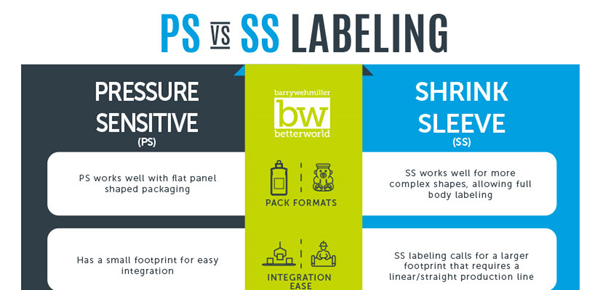 Pressure Sensitive vs. Shrink Sleeve Label Application
January 11, 2024
<p>There is an ongoing and rigorous debate about which label technology is best. Both Pressure Sensitive and Shrink Sleeve label applications have their place. The choice between the two really depends on your needs and how each piece of machinery aligns with your company’s brand and brand packaging strategy. This article highlights some of the main differences between the two label applications. You can also download the <a href="https://bwpackaging.showpad.com/share/75MfrRJZEaMqerTT5fgTJ" data-sf-ec-immutable="">infographic</a> for quick reference. </p><h2>Pack Formats</h2><p>Packaging formats play a big role in determining which label technology will work best for your needs. Pressure Sensitive Labeling works only with flat panel shaped packaging, while Shrink Sleeves work well for more complex shapes, allowing for full body decoration on curved items.</p><h2>Integration Ease</h2><p>Floor space and ease of integration are also key considerations in labeling application decisions. Pressure Sensitive labeling machines utilize a smaller footprint-- they take up less space-- and are easy to integrate into existing packaging lines. Shrink Sleeve labeling machines require a larger operating space, to accommodate the shrink tunnel requirements.</p><h2>Shelf Appeal</h2><p>Both shrink sleeve and pressure sensitive labels provide strong shelf appeal for your products. Shrink sleeve application enables full-body decoration, giving brand owners the best opportunity to utilize color and shape to make their products stand out from any angle on shelf. Pressure Sensitive labels utilize embossing, high resolution printing, and 3D graphics to help products stand out in unique ways.</p><h2>Capital Expenses</h2><p>While there are different ranges of expense for each application based on quality, speed, and durability, on average Pressure Sensitive labeling machines cost less than their shrink sleeve counterparts. This is due to the two-stage process required to apply and shrink a shrink sleeve label. In general pressure sensitive labels cost less per label than shrink sleeves. It is important to evaluate the Total Cost of Ownership (TCO) to help determine which labeling option works best for your organization.</p><h2>Tamper Evident/Security </h2><p>If your packaging requires tamper evident or security labeling, both Pressure Sensitive and Shrink Sleeve label applications can create a tamper evident seal. The Shrink Sleeve label application is the easier method to integrate tamper evident labeling. You can have a small machine dedicated to tamper evident labeling added to a production line. While for Pressure Sensitive applications, it needs to be integrated within the PS labeler and would need to be planned from the initial purchase of the labeler.</p><h2>Operational Requirements</h2><p>Another consideration when choosing between Pressure Sensitive and Shrink Sleeve label applications is the type of production line you are running. Shrink Sleeve applicators require accumulation handling for intermittent (start/stop) production lines. This requirement is driven specifically by the need for a steady state of product flow into and out of the shrink tunnel to maintain a high-quality product presentation.</p><h2>Temperature Sensitivity</h2><p>Depending on your manufacturing environment, Pressure Sensitive labeling may be the most effective labeling solution for you. Pressure Sensitive labeling applicators can perform in a variety of different temperature states. An environment where condensation occurs may require some additional equipment to dry the container prior to Shrink Sleeve product decoration.</p><h2>Sustainability</h2><p>Your company’s sustainability strategy may also impact your choice of label and labeler. Pressure Sensitive Machines can accommodate all preformed materials (PP, PET, glass, cardboard, etc.) offering numerous labeling options that impact sustainability in various ways. Shrink Sleeve labels, on the other hand, can be easily removed by the consumer and discarded to allow for container recycling without concern for label recyclability.</p><h2>In Conclusion</h2><p>In the end, there are numerous considerations to keep in mind when choosing between Shrink Sleeve and Pressure Sensitive Labels/labelers. The choice often comes down to your company’s specific needs. BW Integrated Systems has put together a quick reference infographic for you. If you need assistance in choosing what application works best for you, contact us. </p>
 Postres Romar Strengthens its Productivity with BW Filling & Closing Form-Fill-Seal Machines
January 8, 2024
<p>Postres Romar is a co-packing company located in Spain, working with well-known distributors on multiple products. BW Filling & Closing (BWFC) has been contacted to increase their capabilities on the yogurt and dessert market.</p><p>Initiating a project with a major player in supermarket distribution demanded the identification of a supplier for an efficient machine with a favorable value proposition, leading to BWFC. The acquisition of a jelly machine marked the beginning of a collaboration significantly influencing production capabilities.</p><p><br></p><h2><span style="background-color: rgba(0, 0, 0, 0); color: var(--color-h2); font-family: inherit; font-size: var(--font-size-h2); text-align: inherit; text-transform: inherit; word-spacing: normal; caret-color: auto; white-space: inherit">Seamless Integration and Exemplary Start-Up</span><br></h2><p>BWFC's performance has been remarkable. Delivery timelines were respected, and the machine ramp up process exceeded expectations. It was delivered within the specified lead time, with regular visits to BWFC's Logroño plant to follow the project's evolution and incorporate requested modifications in a transparent way.</p><h3><strong><em>Fast and steady lead time and ramp up</em> </strong></h3><p> </p><h2>Expansion of BWFC Machines</h2><p>After this first success, the partnership was broadened, with the acquisition of a total of five machines. These machines play an important role in the distributor’s production chain, making high-performance dairy products such as panacotta and custard, as well as other products such as jellies.</p><h3><em><strong>5 machines to fill the supermarket shelves</strong></em></h3><p> </p><h2>Operational Excellence and User-Friendly Design</h2><p>Operational experience with BWFC machines has been excellent. The intuitive interface, easy-to-read presentation of screens, alarms, and ease of troubleshooting have all been appreciated. Maintenance feedback emphasizes the accessibility and user-friendliness of these machines, which make problem-solving much easier.</p><h3><strong><em>Enhanced user-friendliness</em></strong></h3><p> </p><h2>Training and Autonomy</h2><p>BWFC's training programs have played a capital role in achieving elevated operational efficiencies. The brief training period required for operators and drivers reflects the ease-of-use nature of these machines. Additionally, the technical training has empowered teams to independently address breakdowns, contributing to a high degree of self-sufficiency in overall machine maintenance.</p><h3><strong><em>Comprehensive training program</em></strong><em> </em></h3><p> </p><h2>Exceptional Service and Support</h2><p>In the face of breakdowns, BWFC's responsiveness has been commendable. Collaboration between teams has resulted in an excellent relationship, with BWFC providing absolute service when needed. Continuous support, combined with effective training, has propelled teams towards achieving almost complete autonomy in machine maintenance.</p><h3><strong><em>Excellence of </em></strong><strong><em>Aftermarket</em></strong><strong></strong></h3><p>The continued relationship between Postres Romar and BWFC has been characterized by efficiency, reliability, and unwavering support. The synergy between teams has not only elevated production capabilitiesbut it also higlighted the fact that finding a partner who can support you technically, understand your needs and respond to your specific request is the key to success.</p>
 4 Trends that are Challenging the Shrink Sleeve Label Format
January 8, 2024
<p>The global shrink sleeve label market has witnessed significant growth over the years and gone from a fringe label format to the mainstream. In order to continue its growth trajectory, it is crucial for the shrink sleeve segment to adapt and innovate. In this updated blog post, we will explore four key challenges that are currently impacting the global shrink sleeve market.</p><ol><li><strong>Growing Sustainability & Environmental Concerns:<br></strong><p>In recent years, there has been an increasing focus on sustainability and environmental impact. The shrink sleeve industry is actively addressing sustainability and environmental concerns by developing advanced functional coatings, inks, and materials. The right combination of technologies allows for the bottle and sleeve to be recycled together, increasing the potential for 100% recyclability. Manufacturers are also focusing on PET and HDPE clear plastic bottles to enhance recyclability and minimize the use of colored bottles, which are harder to recycle.</p><p>The entire shrink sleeve value chain will need to be committed to sustainability and to embracing all technologies and approaches that are compatible with the recycling process, including the use of perforations designed to encourage the consumer to remove the sleeve from the container prior to putting in the recycling bin.</p></li><li><strong>Competitive Technologies are On the Rise:</strong><br><p>Two emerging technologies pose a challenge to the traditional shrink sleeve label format. First, direct-to-container printing eliminates the need for labels entirely, offering sustainability advantages and personalized packaging options. Second, stand-up pouches have gained popularity due to their reduced plastic usage compared to rigid containers. However, the recyclability of stand-up pouches remains a point of contention. The industry is grappling with the choice between fully recyclable rigid containers and film combinations or stand-up pouches that use less plastic but are not recyclable.</p></li><li><strong>Impact of e-Commerce:</strong><br><p>The rise of e-commerce has transformed the retail landscape and presents new considerations for shrink sleeve labels. While the effectiveness of shrink sleeves in grabbing shoppers' attention in physical stores is well-established, their role in the world of virtual shopping is less clear. In general, packaging now plays a critical role in the ‘unboxing experience’ as products are delivered directly to consumers' homes. Package designers and brand owners may need to adapt their strategies to consider the impact at the point of unboxing on your kitchen table – a new frontier for the shrink sleeve label to make its mark!</p></li><li><strong>Addressing Quality Issues:</strong><br><p>Despite decades of advancement, the shrink sleeve label format still faces quality issues. Challenges such as seaming problems, pre-press and distortion issues, fold lines, and application and shrinking problems persist. Though six decades in existence, the shrink sleeve label is still evolving, developing, and challenging us. Each new film, new ink, and new coating requires us to refine and recalibrate our processes to ensure that we reach and maintain the level of excellence this impressive and versatile label format demands.</p></li></ol><p>Sustainability, competitive technologies, the impact of e-commerce, and quality challenges are among the key factors influencing the future of shrink sleeves. By embracing innovation, addressing environmental concerns, adapting to changing consumer behaviors, and maintaining a focus on quality, the shrink sleeve industry can continue to thrive in the dynamic landscape of packaging solutions. </p><p>The response of the value chain in innovating for sustainability, and the continuing pursuit of excellence – be it on the supermarket shelf, or on your kitchen table – leads us to believe that the growth curve for shrink sleeve labels has not yet peaked!</p>
 Sustainability Awards Winning project - PS Cup Project was recognized for its impact on recyclability
November 15, 2023
<p><em><strong>The following content contains excerpts from the interview BW Filling & Closing’s R&D manager, Dominique Cossais has given to Packaging Europe with Plastiques Venthenat, Amcor, Olga, Cedap and Citeo on the fully recyclable thermoformed PS cup which originally appeared on <a href="https://packagingeurope.com/news/form-fill-seal-yoghurt-pot-made-from-985-ps-produced-in-cross-industrial-collaboration/10083.article?" target="_blank" data-sf-ec-immutable="">packagingeurope.com</a> on July 2023.</strong></em></p><p><em></em><em><strong>BW Filling & Closing (B</strong></em><em style="background-color: rgba(0, 0, 0, 0); color: inherit; font-family: inherit; text-align: inherit; text-transform: inherit; word-spacing: normal; caret-color: auto; white-space: inherit; font-size: inherit"><strong>WFC) and a consortium of companies have been working for several months on a solution to create a fully recyclable FFS yogurt cup, this project won the Award for “Recyclable Packaging (Pre-commercialized)” on the 14<sup>th</sup> of November 2023</strong></em></p><p><em style="background-color: rgba(0, 0, 0, 0); color: inherit; font-family: inherit; text-align: inherit; text-transform: inherit; word-spacing: normal; caret-color: auto; white-space: inherit; font-size: inherit"></em><span style="background-color: rgba(0, 0, 0, 0); color: inherit; font-family: inherit; text-align: inherit; text-transform: inherit; word-spacing: normal; caret-color: auto; white-space: inherit; font-size: inherit">In a recent interview with Packaging Europe, Dominique Cossais, R&D Manager at BWFC, shared insights about the fully recyclable thermoformed PS cup project, which was nominated among the finalists of the Sustainability Awards and won on the 14 of November for its role in promoting sustainability.</span></p><p>The project, a collaborative effort among <a href="https://www.plastiques-venthenat.fr/" target="_blank" data-sf-ec-immutable="">Plastiques Venthenat</a>, Amcor, <a href="https://www.citeo.com/" data-sf-ec-immutable="">Citeo</a>, <a href="https://olga.fr/" target="_blank" data-sf-ec-immutable="">Olga</a>, <a href="https://www.cedap.mc/en/home/" target="_blank" data-sf-ec-immutable="">Cedap </a>and BWFC caims to promote sustainability within the food packaging in France and across Europe, benefiting food producers, consumers, and regulators alike.</p><p> </p><h2><strong>The innovation: A fully recyclable PS cup</strong></h2><p>Dominique Cossais expressed excitement about joining the project, recognizing its immense potential to benefit the food industry. The innovation centers on a form-fill-seal cup composed of 98.5% polystyrene content, making it fully recyclable. </p><p>All around Europe there are lots of FFS machines thermoforming polystyrene in dairy producers’ plants. However, the PS packaging on the market is not recyclable-ready since the banderole around the cup is made of paper, ink and hot melt wax and the lid is also multi-material (ink, paper, glue, polyester and heat seal varnish and/or aluminum).</p><p>The new cups are going to be made almost exclusively out of PS plastic: the cup, the lid and the banderole will be composed of polystyrene at more than 98%.</p><p> </p><h2><strong>Sustainability benefits: Enhanced recycling and reduced waste</strong></h2><p>One of the key sustainability benefits of the fully-PS cup lies in its improved sorting efficiency for recycling by improving capture by 20%. Testing of the packaging's recyclability has shown good results, simplifying the sorting process for PS plastics and encouraging the development of a more sustainable packaging ecosystem.</p><p>Moreover, the project offers a practical advantage for food producers. By enabling them to upgrade their existing FFS machines to accommodate the new lids and banderoles, the need to invest in new, resource-intensive equipment is minimized. </p><p>This project is part of BWFC’s efforts in innovation and R&D to promote recyclable materials and increase sustainability in the packaging industry, such as last year finalist for the machinery category sustainability awards <a href="https://www.synerlink.com/about-us/blog/blog/2022/11/24/synerlink-s-snapcut-technology-recognized-for-its-role-in-sustainability" data-sf-ec-immutable="">Snapcut tool</a> that allows producers to switch to PET plastics for thermoforming multipacks on new and existing machines.</p><p>Until now, food producers that wanted to switch to recyclable materials for thermoformed packaging, could either invest in new machineries or could adapt existing machines to transform to PET packaging. This approach not only reduces waste associated with building new machinery but also allows producers to continue using PS while enjoying the environmental benefits of recyclable packaging materials.</p><p> </p><h2><strong>When did it all start?</strong></h2><p>Citeo called for an eco-design project back in April 2019 leading Plastique Venthenat, Amcor, Olga and Cepad to collaborate together to propose a standard PS cup for yogurt and desert products to be produced on Form-Fill-Seal machines. This is when BWFC has joined the group of partners to test the final product on the FFS machines.</p><p>In conclusion, the fully recyclable PS cup project spearheaded by BWFC and its partners represents a significant leap forward in sustainability for food packaging. By embracing this innovative approach, the industry can make strides towards a more eco-friendly future, benefiting both the environment and all stakeholders involved.</p><p><img style="background-color: initial; font-family: inherit; font-size: inherit; text-align: inherit; text-transform: inherit; word-spacing: normal; caret-color: auto; white-space: inherit" width="430" height="286" src="/images/default-source/blog/fully-recyclable-ps-cups.jpg?sfvrsn=2c62485f_0" sf-size="100" alt=""></p>
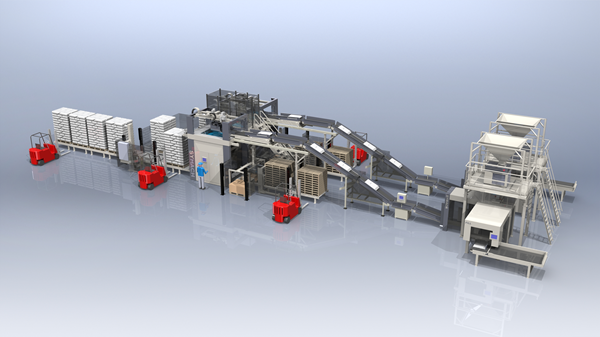 Packaging in Bags - How Symach's Solutions Redefine the Palletizing Industry
November 3, 2023
<p>Depending on the product, the market and the transport distance, there is an infinite variety and complexity of bags in terms of size, material, shape and closing system. Bag packaging line manufacturers have adapted to their customers' demands by responding to this variety with flexibility.</p><p>Today the packaging machines, for most manufacturers, have reached a high level of maturity. By maturity we mean reliability, low maintenance, productivity without stoppages, optimal ergonomics for operators, precision of the dosing machines, quality of the bag closures, pallets and filming, with minimal changeover times for recipes and formats, all at speeds close to those of the product flow. In addition, data can be exported and integrated into company systems for production control and traceability purposes.</p><p>Symach BV, based in the Netherlands, has been manufacturing palletizers for some 30 years. After the acquisition of the Dutch company by the Barry Wehmiller Group in 2015 Symach manufactures complete packaging lines, including fillers, baggers, weight control and metal detection systems, palletizers and filmers.</p><p><strong>Symach's weighers are all about accuracy and speed</strong></p><p>When the product has an easy flow, such as seeds, pet food, sugar, rice, the feeder can be fed by gravity. The continuity of the flow is such that no error will be detected during weighing. On the other hand, when the product has a difficult flow, such as horse feed, products that agglomerate, where the continuity of the flow is not obvious, it will be necessary to equalize the product. Product levelling is generally carried out by a belt that collects the product in a constrained manner under the hopper and sends it to the dosing machine after levelling it under a blade. The product flow is then constant without agglomeration or clumps. The weighing is then made precise.</p><p>Symach manufactures these two types of gravity and belt dosing machines with display of the rates (about twenty doses per minute) with an average of 0g compared to the set point and a standard deviation of 15g on doses of 25 kg. Symach dosing machines can be certified by the legal metrology services. The weighing data can be exported to an ERP system or printed on labels at the palletizer outlet, by batch.</p><p><strong>Bagging and diversity</strong></p><p>Bagging is certainly the most complex part of the packaging process as it has to take into account the diversity of the bags and their closing and identification system.</p><p>The size of the bags is one of the first criteria of flexibility that we can attribute to the Symach bagging machine. The bagging mouth is designed to handle both small and large bags; in fact, with a density of 0.5kg/l, the Fillstar bagger can bag contents from 2.5kg to 50kg. The format changeover is done via the control screen in a matter of seconds and without having to change the mouth.</p><p>The Symach bagging machines can work with preformed open mouth bags and from rolls of tubes.</p><p>Before closing, the bag will go through different stages, it can be printed flat before being filled or it can receive one or more labels.</p><p>Symach integrates its own labelling machines or those of the customer. As the bags move flat on a belt, an X axis, the printers or label applicators move on a Y axis, the labels are stuck on in a very precise way. The identification systems placed in this module can be an inkjet printing solution, a laser marking, a lick printing or a straight applicator.</p><p>The bag received under the mouth will be checked for horizontality. This is important in order to achieve a perfectly horizontal closure, whether it is sealing or sewing, or even more so when a fold has to be made. If a bag is not considered horizontal, it will be ejected before being filled.</p><p>The bags, especially plastic, PE and PE/PET bags, can be equipped with slider, zipper, Velcro, depending on the marketing and market trends. These bags will also be checked before filling. If a bag is not correctly opened after a few attempts it will also be ejected;</p><p>During filling and in order to optimize speed, the bagging mouth includes an internal mouth at mid-height which allows product to be retained if the bag is not ready, or allows product to be sent from a limited height to avoid tearing a bag when it is made of paper. This fore-mouth also increases the level of nitrogen and expels oxygen from the core when the bags need to be inerted.</p><p>Symach bagging machines are designed in modules. After filling, the bag will go through different stages in the bagger depending on its characteristics or those required by the customer, such as de-aeration of the bag to give it a better shape or fine nitrogen adjustment, a sealing module which can be single or double, a handle cutting module, a folding module before sewing, a sewing module, a pinch top closing module, and often a bag turner or pusher depending on the line layout. The modular design allows the bagging machine to be upgraded with a later module if the customer wishes to add a sealing or inerting function not initially planned.</p><p>The Symach bagging machines are controlled from two different locations to limit the need for operators to travel and can be remotely controlled via a tablet. The maintenance manager is assisted in his duties by the display of maintenance alarms.</p><p> <strong>Symach </strong><strong>palletizers</strong></p><p>Symach palletizers are all Cartesian in operation. The bags are placed on the pallet on a plane established by the operator in X and Y. This solution allows the bags to overlap and therefore improve the load. Overlapping also allows the space taken up on the pallet to be optimized and therefore the overflow of bags to be controlled.</p><p>In addition to this classic operating solution, Symach forces the bags, during palletization, to remain within a template throughout the stacking process. The result is perfect, the bags are stacked flush with the pallet. The pallets leave the palletizer perfectly rectangular.</p><p>In terms of output, the solution is applied in different motorizations, ranging from 15 bags per minute to 46 bags per minute.</p><p>The palletizers can be supplemented with options such as film or cardboard protective film dispensers, layer pads, pallet bottom trays, the possibility of palletizing bundles, pallet weighing, etc.</p><p> <strong>Wrapping, the guarantee of load stability.</strong></p><p>The complete line ends with a pallet wrapping solution to guarantee load stability.</p><p>On leaving the palletizer, the pallet can be fitted with a protective cover or a real rainproof solution. Once the cover is removed, the pallet is wrapped in stretch film or net depending on the product. Symach stretch wrapping machines are either rotary table or rotary arm machines. The programs are flexible, it is possible to set different numbers of turns, at the top of the pallet, but also at the bottom, with an overlapping of film also customizable. The choice will be made according to the layout, speed and stability to be achieved.</p><p> <strong>Intelligent packing lines, preventive maintenance, traceability, ERP</strong></p><p>Maintenance, traceability, statistics, all Symach equipment is connected and can communicate intelligently with other equipment or servers.</p><p>In terms of maintenance, all the machines are equipped with movement counters and can therefore offer preventive maintenance by sending alarms, such as changing a cylinder, belt, etc. These alarms can only be acknowledged by the maintenance manager. They allow intervention before any breakdown and therefore blockage of the packaging.</p><p>In addition to the screens, the machines can be remotely controlled via tablet or computer, provided that safety conditions are met. The screen of the bagging machine or palletizer is displayed on a remote screen.</p><p>In this way, Symach can take control of the equipment remotely on request of the personnel, 24 hours a day, and carry out the first diagnostics and solve breakdowns.</p><p>In the context of a constant demand for traceability, from the labelling, filling, sealing and weight control stages to the metal detector, the bags can be tracked and identified with the information received at each stage and transmitted to the ERP, pallet printer or other traceability server.</p>
 Surgital's IQF Pasta Packaging Success Story
June 26, 2023
<p>When Covid-19 shut down the restaurant industry globally, Surgital, an artisanal fresh pasta manufacturer from Emilia-Romagna – a land of great gastronomic culture and tradition in making fresh pasta by hand – was facing a tremendous challenge for its business: over 90% of their production was delivered directly to restaurants.</p><p>Knowing the company couldn’t survive this shutdown for very long, Edoardo Bacchini, managing director at Surgital, knew he and his family-operated business needed to act fast.</p><p>Today Surgital produces IQF fresh pasta on a large scale, bringing fresh pasta to the world, thanks to the support of BW Simionato, a BW Flexible Systems brand.</p><p>To overcome the shutdown, Surgital needed to invest in the appropriate technology to make this transition, and BW Simionato helped every step along the way.</p><p>“We explained our needs, defined our project: fragility of the product, need to increase productivity, and high sanitation requirements. And they said, ‘let’s do this!’” said Bacchini.</p><p>Besides time being of the essence, the highest priority of the project was the gentle handling and preservation of the delicate and fragile pasta. BW Simionato needed to incorporate a way to weigh the pasta with a scale designed specifically for the handling of fragile products, concurrently weighing the IQF sauce as well as any other ingredients that were mixed on the scale. This was accomplished by splitting the scale into several parts and, in addition to protecting the pasta, ensured high productivity and met the stringent hygiene requirements.</p><p>With the solution that BW Simionato found, when the recipe is changed, the customer can use a different part of the scale immediately to continue production without needing to clean the used parts of the scale first.</p><p>“I am happy I chose BW Simionato for the cooperation and support, in such a short time they helped transform our business,” said Bacchini. “In fact, there are 2 stir-fry packaging lines running now, which has become a huge success for us.”</p><p>This transition has opened a lot of doors for Surgital.</p><p>“One container full of stir-fry product leaves our factory every single day in the United States,” said Bacchini. In total, Surgital now ships product to over 60 countries.</p><p>BW Simionato’s company culture played a key role in this relationship, both from a technical as well as a negotiation perspective. Surgital, as an Italian company that puts the safety of its employees, sustainable production, and investment in the local area and charitable initiatives first, working with BW Simionato seemed like a natural choice. By exporting their fresh pasta to the world, they are spreading their culture and values of a healthy business with certified quality products, plants and procedures. </p><p>“We made the customer’s problem ours, and the solution was found thanks to great cooperation between our teams,” said Filippo Zatti, IQF Business Development Manager at BW Flexible Systems.</p><p>The success of this challenging project with Surgital underlines the technical expertise of the BW Team and shows that BW Simionato can solve any integrated packaging challenge.</p><p>With the addition of two full BW lines with a 16-heads RCW scale and a 10-heads RCW scale with 2 inclined Logic 35 VFFS underneath, Surgital now operates a total of 34 production lines in its headquarters in Lavezzola, located in the province of Ravenna.</p><p>“Any time we call BW Simionato and ask for support, they are there for us and they respond quickly,” said Bacchini. “Our machines run 24 hours a day and this success is thanks to our cooperation with BW Simionato.<strong></strong></p><p><strong>LEARN MORE</strong></p><p>Learn more about Surgital: <a target="_blank" data-sf-ec-immutable="" href="http://www.surgital.it/">www.surgital.it/</a><br>Learn more about BW Flexible Systems: <a data-sf-ec-immutable="" sfref="[e74c2e51-76a6-674e-8383-ff0300805640]5FB52E51-76A6-674E-8383-FF0300805640">www.bwflexiblesystems.com/our-company</a></p>
 Building a Successful Co-Op Program: It's More Than Just Finding Talent... It's Nurturing It!
June 8, 2023
<p>Everyone knows that hiring is difficult in these times, in a job market where candidates are scarce and competition for them is fierce. Some would argue that finding “good” talent has always been hard. But what if we’ve been going about it all wrong? What if forming teams that thrive is actually a <em>process</em>, not an event?</p><p>At BW Filling & Closing's Pneumatic Scale, we’re proud of our long-standing Engineering Co-op Program: a 2-year rotational program designed to expose two mechanical and two electrical engineering students to the practicalities of a career as an engineer. The program is founded on mentorship, with a purposeful growth plan, supported by meaningful work.</p><p>Surprisingly, the ideal Co-op candidate is not necessarily or automatically the student with the 4.0 GPA. When evaluating potential candidates for the program, we look for students who communicate well, who have a diverse background, and who are intrigued by the work we do. When we give them their first tour of our facilities, we consider how interested they are, the types of questions they ask, and how curious they seem. We want a Co-op with a desire to work with everyone, in a team environment, and across multiple departments.</p><p>Communication is an especially important – and often overlooked – aspect of engineering excellence. At Pneumatic Scale, our engineers play a critical role in turning what begins with a simple evaluation of our customers’ products into sophisticated and innovative equipment solutions, custom built to serve the unique requirements of their applications. Getting that right requires not only careful analysis of the project’s goals, but thoughtful listening, coupled with insightful questions, as the customer and the Pneumatic Scale team discuss key elements of the build. </p><p>The diversity of BW Filling & Closing’s business is as much a benefit for Co-ops as it is for our customers. Because our business encompasses wet and dry filling, capping, can seaming, and labeling, our engineers develop expertise not just in a single type of machine, but in many of the most critical components that make up the heart of the overall production line. The opportunity to work on many types of packaging equipment is an essential element in the overall Co-op experience. </p><p>“We treat our co-ops like members of our engineering team, giving them responsible freedom,” explained Dave Christman, Innovation Leader for Industrial Automation at BW Filling & Closing. “As they go through the program, they get progressively more complex tasks. They will be doing true engineering work by the time they graduate. And they work on a diversity of tasks, doing parts of different jobs. They grow their skill sets and we get a feel for their potential for long-term success on our team.” </p><p>Co-ops’ work on projects is closely guided by members of Pneumatic Scale’s engineering team. These mentors do more than monitor work product for accuracy and evaluate a Co-op’s progress. They model the focus, attention to detail, and positive, open-minded approach to solutions that Pneumatic Scale is well known for, which drives success in innovation and builds enduring customer relationships. Augmenting our team with Co-op students means that while they learn, projects are also carried out more quickly, and lead engineers have additional capacity to handle even more complex tasks. The result is a robust team of engineers, experienced in working collaboratively to solve complex problems. </p><p>In addition to building versatile engineers, Pneumatic Scale’s Co-op program builds engineering leaders. Those team members who serve as mentors and provide guidance for our Co-ops simultaneously develop the leadership skills needed to bring complex customer projects to successful conclusions. And, since more than 50% of Pneumatic Scale’s engineers went through the company’s Co-op program themselves, they take pride in sharing their experience to grow the next generation of leaders in our organization.</p><p>This last point is especially important in these times when so many companies struggle to attract and hire qualified candidates, especially those with the specialized knowledge and skill of an engineer. The Co-op program is a valuable source of experienced, enthusiastic employees, who are ready to roll up their sleeves and jump in as productive and fully contributing members of the team upon graduation, with no need to acclimate to the company culture or figure out how they fit. They already know they enjoy being an engineer, are confident in their abilities, and are proud to join an industry leader.</p><p>When asked what he thinks makes the program a success, Christman’s reply is both personal and practical. “The Co-op program helps us work with students, to see them grow. It’s a great source of talent, and it also helps the students to decide if engineering is truly a career they want to pursue.”</p><p>Christman goes on to say, “From the company’s perspective, it’s an opportunity to assess an engineer’s probability of success in our organization and their fit with our culture, which is very important to the Pneumatic Scale brand. We don’t hire every individual who goes through our program. But when we do, we have a high degree of confidence in the contributions they will bring to our team. These students bring fresh ideas, a good attitude, and they help us complete the work. The classroom provides the foundation for problem solving, and how to think, but being a Co-op provides true practical experience and there’s just no substitute for that.” </p><p>Having a Co-op program is just one component that has enabled Pneumatic Scale to excel and thrive, even in challenging times. If you would like to learn more about our program or about creating a Co-op program at your company, please contact a member of our team at sales@psangelus.com</p><p><strong>Dave Christman</strong> is BW Filling & Closing’s Innovation Leader - Industrial Automation. Dave helped to create the company’s Co-op program in the late 1990’s, leveraging his experience as a Co-op in the 1980’s with Diebold (now Diebold Nixdorf). Having had that experience helped him to translate the theory behind what he learned in the classroom into real, practical experience and a deeper understanding of what it means to be an engineer. Dave expanded on that knowledge to craft the program that has been a successful pipeline for talented and versatile engineers for more than 20 years. </p><p><strong>Mike Mihalik</strong> recently retired from 27 years of service with BW Filling & Closing. During his tenure, he served in many critical roles, including Vice President of Engineering and Vice President of Global Technology. Driven by his passion for engineering and innovation, Mike was instrumental in launching PS’s Engineering Co-op Program and ensuring its continued success.</p>
 Remembering Richard Howlett
June 7, 2023
<p>On February 24, during a quarterly town hall meeting, BW Packaging President Carol O’Neill informed our organization that Richard Howlett had passed away while attending a Manchester United game the night before. Richard was Accraply’s Global Product Line Leader for shrink sleeve applications, but to those who knew him, he was so much more. A teacher, student, advocate, leader and friend; these are just a few of the many roles Richard played throughout 20+ years with Graham Engineering and Accraply. </p><p>While I only had a handful of interactions with him myself, Richard made a positive impression on me, and as I’ve recently learned, on many others. In the days since he passed, I’ve had an opportunity to interview several of Richard’s closest work friends and team members. Today, we’ll step away from our regularly scheduled content to recognize a man who meant so much to so many and who exemplified what we mean by, “we measure success by the way we touch the lives of people.”</p><h2>The Energizer</h2><p>Without exception, every person I interviewed mentioned Richard’s uplifting energy. Mike Burns, Richard’s leader and VP of Strategic Marketing & Innovation for Accraply, described Richard as a flash of color in what some might expect to be a dull manufacturing environment. </p><p>“He was somebody that I really bonded with on a personal level because of his enthusiasm, his zest for life, his never-ending optimism,” Mike said. “There were times when talking to Richard was the best part of my workday. He would energize me and would always be good for a smile.” </p><p>Richard was known across Accraply for his personality and approach. Although he worked remotely from his home in Essex, he’d often make the 6-hour drive to Accraply’s Manchester facility. Whether it was his cheery spirit or his jazzy shirts, you couldn’t help but smile when Richard was in the building. Andrew Metcalfe, People Leader for Accraply UK, recalls his first impressions of Richard who welcomed Andrew to the Barry-Wehmiller company four years ago. </p><p>“When he walked in, people responded,” Andrew said. "It’s one thing to enjoy your job, but it's another thing to come in – and even when people are having a bad day – to noticeably have an impact on people. It gave me comfort and confidence that the people who work here are what they say they are. He was living what we say we live day-to-day.”</p><p>Over the course of two decades, Richard held many different titles and positions in the Graham and Accraply businesses. According to Simon Lunn, Managing Director for Accraply Europe, Richard’s energy reached an all-time high when he accepted a new role as Accraply’s shrink sleeve product line leader.</p><p>“It was almost like he’d been freed,” Simon said. “I think in previous roles, he’d been a person in a process. As product line leader, he embraced taking it outside of just the machines. He started bringing in material suppliers and suppliers of third-party machinery and visiting them to see if they could work with us to develop the next best thing. In his later years, he was very proud of what he was pushing through the business.”</p><p>In the beginning, however, Richard was resistant to the idea of becoming a product line leader.</p><h2>The Reluctant Leader</h2><p>In Accraply folklore, a story exists about an impassioned sales executive who went toe-to-toe with the president of the company, Seamus Lafferty. As Seamus tells the story, he and Richard had a conversation in a pub somewhere in the South of England.</p><p>“It was a screaming session,” Seamus said. “I was asking him to become a product line leader and step away from being a salesperson. His perspective was that I was asking him to step away from a job that he could really do well and step into this unknown world of product line leadership, which at the time was not very well understood or even defined in Barry-Wehmiller, let alone in Accraply. As we were beginning to understand it and as it was becoming a requirement to appoint somebody to be a product line leader for each product line, he was the obvious choice.”</p><p>Despite his initial objections, Richard accepted the responsibility of this new and uncertain role. In Richard Howlett fashion, once he was in, he was all in. During his time as a product line leader, Richard was instrumental in refreshing Accraply’s shrink sleeve machinery product line offering. </p><p>“He knew he was volunteering to be the guinea pig for this new process,” Simon said. “It was lumpy and it took forever, but we’ve actually got two world-class machines from it. He was very proud of the machines that came out at the end.” </p><p>Simon recently met Richard’s family at the Manchester factory. </p><p>“When his family came up, they didn’t really know what he did,” Simon said. “All they knew was it had something to do with sleeves. I asked Richard’s family, ‘do you want to come and see the two machines that he’s just helped develop?’ And they said, ‘wow!’ Because I don’t think he took it home. When he worked, he worked and when he was at home it was his family. Richard had that knack of balancing both. He lived two different lives, Rich at work, and unbeknown to all of us, Dickie at home”</p><p>Although shrink sleeve technology might not have been the hottest topic of conversation at the Howlett family dinner table, it certainly was a topic of passionate debate for Richard and his colleagues. One night, at a bar in Minneapolis, Richard and Shrink Sleeve & Converting Specialist Ben Ritter had a debate.</p><p>“Rich pulled some sleeve material from thin air and said he could probably shrink it in the washer,” Simon recalls. “With the help of the bar staff, they set up the experiment. All the people in the bar were supporting Ben or Rich with a huge cheer of anticipation as the washer door opened. Needless to say, it did NOT shrink. Richard was constantly reminded about that experiment at every opportunity.”</p><h2>The People Person</h2><p>During my conversation with Seamus, I asked, why was Richard so passionate about shrink sleeves? </p><p>“For starters, he believed in the technology,” Seamus said. “He got deep enough in it that he had it figured out. And then it all became about the people and helping people and solving problems. I think his passion was less the sleeves and more the opportunity that it gave him to help people, and excite people, and solve problems for people. He truly was a servant of others. Nothing was ever too much trouble for him. He seemed to have an endless willingness to help no matter what.”</p><p>The week before he passed, Richard expressed to friends and colleagues just how excited he was about the future. He had recently embraced another new challenge. Although it wasn’t yet announced, Richard had accepted a role as Accraply’s sustainability champion. This meant, on top of his product line leader responsibilities, Richard had also committed to drive sustainable initiatives throughout Accraply. </p><p>“He was so excited about that – on fire really,” said Michelle Bryson, Global Sustainable Packaging Leader for all of BW Packaging. “Each time we met, he would say, let’s set up another meeting for next week! He had so much to offer, so much insight.”</p><p>In addition to his passion for sustainability, Michelle said that she would remember Richard for his kind heart and patience.</p><p>“When we were at Pack Expo, I parked my car in a spot I couldn’t easily find again, but he was so kind. When I drove the team to dinner, he stayed with me while I went to park my car, and even noted that his wife had recently had a little bang up with her car. His love for her was apparent.”</p><p>Many of Richard’s work friends mentioned his dedication as a husband, father, and grandfather. </p><p>“I don’t think in all that time on the road that there was ever a day that went by that I didn’t hear about Sharon,” Seamus said. “Because as committed as Richard was to anything that was happening in his work world, he was as committed and more to his family. He was proud as could be of how his two kids – Reece and Alicia – were doing and they were doing really well.”</p><p>The time that Richard shared with his family, colleagues and customers has had a profound impact in the lives of many. It’s impossible to know precisely how many lives he touched, but in speaking with a small sampling of his colleagues, it’s clear that the number isn’t small. For those of us who knew Richard, we’ll cherish these memories forever. </p><h2>Memories of Richard</h2><ul><li>“Richard was energy. He had such a passion for his work, and it was infectious for all who had the opportunity to work with him.<p>Richard was a sponge. Richard came into the role of product line leader with such enthusiasm. He just wanted to learn. We introduced him to tools and processes, and he just soaked them up. He embraced learning and was genuinely excited about he could use them to create a better future for shrink at Accraply. His enthusiasm to learn and embrace change energized me… made me want to do better to be better!</p><p>Richard was a pioneer. We had an idea one day… could we partner our team in India with a product line leader and do a better job understanding how our products were positioned in the market relative to our competitors? It was something we had never tried before and really didn’t know if it would add value. Richard took the challenge on. He and his colleague, Raghunath Kasinathan in Chennai, took it to levels none of us fathomed we could take it too. His work paved the way for others and will stand as <strong><em>the</em></strong> reference of what good looks like for years to come.</p><p>Richard was a friend. He was so unpretentious and easy to talk to. You couldn’t help but like him. He was quite literally a pleasure to work with! He was one of those appointments that would come up in your calendar and your stress just dropped… “Oh nice, I have a meeting with Richard today!” Richard was more than a colleague to so many of us. To his family and loved ones… I would want you to know, you do not grieve alone… He is dearly missed here!” - John Koke, Vice President, Technical and Strategic Innovation for Barry-Wehmiller</p></li><li>“When I think of Richard, I remember our trip to Italy to finalize an OEM agreement in Parma, so after a great meeting we decided to celebrate, we picked a small and simple local restaurant on the street, we shared a wine bottle with some local cheese and ham and we spent the night talking about life, shrink sleeve and dreaming big. I think today with his great contribution we are closer than ever to make this shrink sleeve dream a reality!” – Majid Akiki, Director of Sales at Accraply</li><li>“Every interaction with Richard made me feel more knowledgeable and genuinely cared for. Being new to the packaging industry, I didn't have a strong knowledge base in shrink sleeving. There were numerous times where Richard would be sharing a specific process or concept. He would always pull out a product and a sleeve to demonstrate what he was talking about. Making it easier for me to understand, giving me the confidence to be able to explain it to others. He was always teaching. Before we’d start each of our meetings, he would always ask about the family and see how I was doing, and he would listen. He always made me feel cared for and heard. Sitting on a bus together, we had this conversation about how important it was to care about the team and to see how people were doing.” – Casey Jeremiason, Senior Marketing Communications Leader at Accraply</li><li>What I appreciate most about Richard is his positive attitude, his willingness and ability to learn new things, and his enthusiasm for life, the business and the team. In the time that I knew him, Accraply and BW Packaging more broadly went through a lot of changes. In the UK, we consolidated most of the operations and the team members into Manchester…hardly around the corner from Richard’s home in Essex. We also introduced the concept of product line leadership and asked Richard to step into a role that all of us were still trying to figure out…yet whether it was a new role for himself, being part of a platform innovation journey or realignment and relocation, you could count on Richard to go after it with a “can-do” spirit….to learn…. get feedback and grow! People talk a lot these days about having a “growth mindset”. To me, Richard was a poster child for such a mindset. In addition to being an awesome guy to be around, he set a great example for all of us!” – Carol O’Neill, President of BW Packaging</li><li>“Richard will always be remembered as a highly enthusiastic person with a great sense of humour. He would encourage me by stating ‘Welcome to the world of shrink sleeve’ whenever I shared my findings from the benchmarking project with him. He is always the first to provide answers if I become stuck or anxious about project circumstances. ‘Meet again, Raghu,’ he would always remark with a smile when our call came to a close.” – Raghunath Kasinathan, Project Manager, EDS</li><li>“I will remember Richard for the positive energy that he brought to the business. His passion for his product line was clear to see and I really enjoyed working with him on all things shrink sleeve. He had a vast amount of knowledge that he was only too happy to share with anyone who had a question.” – James Alexander, Project & Applications Engineer</li><li>“I will remember Richard as someone who was always upbeat, caring, knowledgeable and very personable. I worked with Richard during the early days of the Graham acquisition and enjoyed many ‘cuppa’s’ to keep ourselves warm in the barn-like offices of Graham.” – Mike Columbus, Managing Director, Accraply Canada</li></ul>
 We are BW Packaging
January 4, 2023
<p>As 2023 begins, I’d like to take a moment to share some exciting news. Effective today, Barry-Wehmiller’s global team of packaging professionals will go by BW Packaging, officially dropping the “Systems” from our name. </p><p>Don’t worry, we’re still committed to delivering high-performance packaging systems and backing them with a lifetime of customer support. Shortening our name is just one of many ways we are simplifying our customers’ experience. </p><p>In this post, I’ll provide a brief recap of how BW Packaging came together, explain our reasoning for this rebrand, and share some of our aspirations for the future. </p><h2>How did we get here? An abridged history of BW Packaging</h2><p>After an extensive history of acquisitions by Barry-Wehmiller, in late 2016, our teams came together with a mission to be the best packaging solutions provider in <a sfref="[f669d9a7-009d-4d83-ddaa-000000000002]ED76E9A9-DB6A-6284-9A33-FF03007E5420" data-sf-ec-immutable="">the markets we serve</a>.</p><p>In 2018, we adopted the BW Packaging Systems name to convey that, by collaborating and applying our broad expertise, we could solve our customers’ challenges more efficiently and optimize their packaging processes more effectively. The leadership team of the newly formed BW Packaging Systems established a shared vision of the type of partner we were committed to being for our customer, and for the competence that we would consistently deliver not only in individual machines but in complete, integrated lines.</p><p>By 2020, BW Packaging Systems had been recognized as a <a href="https://www.packaging-gateway.com/features/top-ten-packaging-equipment-manufacturing-companies" data-sf-ec-immutable="" target="_blank">top 10 packaging equipment manufacturing company</a>, based on our innovations, technology, and product lines. Though our initial goal was achieved, our work was not done. We knew we needed to continue investing in our people and innovation to continue to be the first call our customers make when they have a need. We could not rest on our laurels but instead needed to develop broader and deeper capabilities…in things like digital innovation, additive manufacturing, sustainability, and aftermarket excellence as well as new product development.</p><h2>What’s changing? Looking to 2023 and beyond</h2><p>Changing our name to BW Packaging has one major goal: simplicity. It is shorter (which is always nice!) and with our new logo, ties more clearly to our Barry-Wehmiller roots. These roots and the values that they represent are important to us and to our customers and we wanted to strengthen and clarify that link. </p><h3>The Rebrand</h3><p><img sf-custom-thumbnail="true" style="float: right; margin-bottom: 10px; margin-left: 10px" sf-constrain-proportions="true" class="-align-right" width="300" alt="" sf-size="885532" sfref="[images%7COpenAccessDataProvider]9488eea9-db6a-6284-9a33-ff03007e5420" data-sf-ec-immutable="">Today, we’ve updated the BW Packaging website to reflect the recent changes, and in the coming months, you’ll notice that our email addresses, directory listings, and all other channels will follow suit. So, if you see an email coming from a @bwpackaging.com address, for example, it isn’t spam.</p><h3>A New Vision</h3><p>More than a name, BW Packaging means something specific to our team members today, and we hope it means the same to you. Here is what BW Packaging means to us:</p><p><strong><em>People Who Care, Solutions That Perform</em></strong></p><p><em>BW Packaging is a global team of packaging professionals who genuinely care about people. We show our customers that they matter by learning about their challenges and embracing them as our own. Through these partnerships, we develop purposeful packaging solutions to optimize our customers' processes and back them with a lifetime of customer support.</em></p><p>This vision statement is true to the Barry-Wehmiller promise that “we measure success by the way we touch people’s lives.” In addition, it clarifies the kind of partner we are for our customers. As we continue to pursue our mission of building a better world through business, we will ensure the “People Who Care, Solutions That Perform” is a message that our customers feel, not just read about.</p><h3>Getting Focused</h3><p>Every OEM claims to be the leader in their respective industries, but what sets us apart is <em>how </em>we go about our business. Through collaboration, innovation, and application of our broad packaging expertise, BW Packaging and our customers are solving the packaging industry's greatest challenges together. In 2023, we’re focused on addressing four key topics:</p><ul><li>Sustainability – Infusing sustainable thinking into our business culture and practices.</li><li>Integration – Building robust connections through expertise and IIoT solutions.</li><li>Automation – Prioritizing people and safety while streamlining production.</li><li>Performance – Improving OEE with reliable solutions and lifetime customer support.</li></ul><p>What is the best way to engage with your OEM on sustainability initiatives? How can IIoT solutions improve operational efficiency, not only for one machine but your entire packaging ecosystem? In the coming months, we will work with our customers and trusted industry partners to answer these questions and others. We look forward to facing whatever new challenges 2023 brings together.</p>
 Packaging World Highlights Maximus, BW Integrated Systems' All-Electric Palletizer
December 22, 2022
<p><strong>Earl Wohlrab is the Director of Product Strategy and Innovation for <a href="http://bwintegratedsystems.com" target="_blank" data-sf-ec-immutable="">BW Integrated Systems</a>. The following content contains excerpts from his interview with <a href="https://www.packworld.com/PACKEXPO/article/22512032/bw-integrated-systems-maximus-case-palletizer" target="_blank" data-sf-ec-immutable="">Packaging World</a>, originally published on October 24, 2022.</strong><strong></strong></p><p>In October, the BW Integrated Systems team debuted our new mid-speed case palletizer <a href="https://www.bwintegratedsystems.com/machine/maximus-case-palletizer" target="_blank" data-sf-ec-immutable="">Maximus </a>for the first time in person at PACK EXPO International in Chicago. Maximus was engineered to meet the changing market needs for a small-footprint, flexible high-level palletizer. Utilizing layer-forming technology and featuring an interactive operator interface, Maximus allows for easier collection of information. Maximus primarily serves the food, household, chemical, personal care, and specific beverage industries, but can serve many other markets in the mid-speed palletizing arena.</p><p>When Packaging World Senior Editor Anne Marie Mohan asked to learn more about Maximus, I was happy to answer her questions. Here are some of the key takeaways from our interview.</p><h2>Maximus Meets Changing Needs for Smaller Case Sizes</h2><div data-gam-path="/152023730/pw/rotation" data-gam-size="[300,250]" data-gam-size-mapping="[{" data-gam-targeting="{" data-gam-template-name="INLINE-CONTENT-DESKTOP" data-gam-collapse="true" data-gam-collapse-before-ad-fetch="true"><div id="div-gpt-ad-1671120765880-941" data-google-query-id="CNH5vv2B_PsCFRWVAAAd6MMBzA"><div id="google_ads_iframe_/152023730/pw/rotation_1__container__"><p><span style="background-color: initial; font-family: inherit; font-size: inherit; text-align: inherit; text-transform: inherit; white-space: inherit; word-spacing: normal; caret-color: auto">Today, we’re seeing footprints that are down in the four- or five-inch range, something we would have typically shied away from in the past for a case palletizer. For example, the explosion of the pet food market in the last couple of years has given rise to trays of can sizes that can be five ounces. That whole tray, with the can, is only about an inch-and-a-half tall. We've done some things with this palletizer to allow for special handling of these types of cases.</span></p><h2><span style="background-color: initial; font-family: inherit; font-size: inherit; text-align: inherit; text-transform: inherit; white-space: inherit; word-spacing: normal; caret-color: auto">The First Truly All-Electric Palletizer of its Kind</span></h2></div></div></div><p>Maximus is probably the first 100% electric palletizing machine, including the options that we’ve added. In the past, some companies have said that their machines were all-electric, but they still needed air for case stops or other functions. We don’t have that now. We use electric actuation for everything. An all-electric system brings several advantages to our customers. For example, it eliminates the inefficiency of air that you'd get when leaks occur in a compressed air system. With compressed air, the system has to be running constantly to be ready to actuate. With Maximus' all-electric system, energy is "on demand" or idle until you need it.</p><h2>Labor Shortages Addressed with UX/UI Optimization</h2><p>As we're all aware, high levels of operator turnover have created a skills gap in modern machine operation. To make training and startup easier for our customers, Maximus was designed with simple UX in mind. It has pattern-forming software incorporated into the machine and a new vision-guided error recovery system that directs operators to the source of a fault via images of componentry. <span style="background-color: rgba(0, 0, 0, 0); color: inherit; font-family: inherit; font-size: inherit; text-align: inherit; text-transform: inherit; white-space: inherit; word-spacing: normal; caret-color: auto">For the longest time, operators would just get an error code, and they had to figure out exactly where the problem was. Now we’re visually guiding them.</span></p><p>For Maximus, we've adopted a quick vertical start-up philosophy whereby the machine splits for shipment to get through most doorways quickly. Once on the production floor, BW sets the top frame back onto the base frame with a bolt-together construction and quick disconnect controls.</p><p>You can <a href="https://www.bwintegratedsystems.com/machine/maximus-case-palletizer" target="_blank" data-sf-ec-immutable="">learn more about Maximus</a> by visiting the BW Integrated Systems website.</p>
 New Standard in 6-Lane Aluminum Can End Manufacturing
November 7, 2022
<p>For years, aluminum can manufacturers have considered 4-lane can end systems to be the most effective solution for high-volume aluminum can manufacturing. However, with the advent of the Stolle E06 Conversion System and the Fleetwood Automatic Counter Bagger Palletizer 6110, today’s can manufacturers have several performance and efficiency-driven upgrades at their fingertips. In this post, I’ll offer an abridged history of can end manufacturing systems, an introduction to the new 6-lane format, and highlight the latest can end innovations available to can making machine suppliers today.</p><h2>A Brief History of Can End Handling Systems</h2><p>In 1997, Stolle Machinery – known throughout the beverage industry for their Easy-Open End Conversion Systems – introduced its first Tetrad (4-lane) can end conversion system. At the time, 3-lane systems were standard, and this innovation allowed can manufacturers to increase their throughput from 2,100 can ends per minute (EPM) to 3,000 EPM. With most new lines running three Tetrad systems together, this allowed can manufacturers to increase their total throughput to 9,000 EPM.</p><p>Over the past 25 years, Stolle’s Tetrad systems have become the backbone of can-making operations due to their proven productivity, reduced energy, and metal consumption savings. In fact, in 2022 Stolle sold its 200<sup>th</sup> Tetrad system. Then, in 2020, Stolle made history again when it introduced the <a href="https://www.stollemachinery.com/sites/default/files/uploads/sales-sheets/Stolle_EO6.pdf" target="_blank" data-sf-ec-immutable="" data-sf-marked="">E06 Conversion System</a>. With six lanes of conversion and tab tooling, this beverage end converting innovation provided early adopters with several productivity and efficiency advantages. For example, the high-speed E06 system can produce 5,100 EPM, which is a 70% increase in volume over the industry-leading 4-lane Tetrad System.</p><p>One of the first solutions of its kind, the Stolle E06 Conversion System offers can manufacturers significant improvements over industry-standard 4-lane systems including:</p><h3>Increased Throughput</h3><p>In an end module with a 24-out shell system and 6 liners, increased throughput will allow three Tetrads to be replaced with two EO6 machines while increasing end production from 9,000 EPM up to 10,200 EPM. Featuring a completely new Minster ECH-140 press that’s specifically designed for high-speed EOE production, the E06 system can achieve speeds up to an unprecedented 850 strokes-per-minute (SPM).</p><h3>Metal Savings</h3><p>The 6-out tab die has several improved design features and can produce the latest generation X3 metal-saving tab design. Specifically, it offers a 3.4% better metal efficiency ($.04/1,000 metal savings). The additional lift springs provide better lift and control of tab the strip and the mechanical push feeder, with re-designed tab feed linkage, offers improved life and precision operation.</p><h2>Fleetwood Responds with 6-Lane Automatic Counter Bagger Palletizer</h2><p>In 2021, amidst <a href="https://youtu.be/QFH1UUQx0WE" target="_blank" data-sf-ec-immutable="" data-sf-marked="">Fleetwood’s 65<sup>th</sup> anniversary</a>, BW Integrated Systems introduced the first ever 6-lane automatic counter bagger and palletizer for can ends. The <a href="https://youtu.be/Fyw7s0Aucm4" target="_blank" data-sf-ec-immutable="" data-sf-marked="">Fleetwood ACBP 6110 Automatic Counter Bagger Palletizer</a> is a single machine solution for high-speed 6-lane conversion presses. It is easily integrated with the Stolle E06 press. Because Fleetwood’s solution was designed specifically for the 6-lane format, it includes greater efficiency and compatibility benefits than any other solution.</p><h3>6-Lane Compatibility</h3><p>Though other can end bagger palletizer and suppliers can cobble together two 3-lane solutions, Fleetwood’s ACBP 6110 is the <em>only </em>single machine solution available on the market today. The result is a smoother integration from the press to the bagger and palletizer. A single machine also means reduced risk for the can manufacturer because there are few machines to operate, maintain and troubleshoot.</p><h3>Performance Efficiency</h3><p>The Fleetwood ACBP 6110 also features inherent performance improvements. For example, the 6-lane infeed with 12 accumulation lanes provides higher performance and efficiency. These features enable the solution to meet speeds up to 10 bags-per-minute (bpm).</p><h2>How to Get Started</h2><p>Interested in learning more about 6-lane can end manufacturing systems? <a target="_blank" sfref="[e09a3251-76a6-674e-8383-ff0300805640]40E33251-76A6-674E-8383-FF0300805640" data-sf-ec-immutable="">Contact our sales team</a> to learn more about Fleetwood ACBP 6110 Automatic Counter Bagger Palletizer and other solutions for can making machine suppliers.</p>
 Packaging machines – Continuous and Indexed
October 27, 2022
<div><p><span style="background-color: rgba(0, 0, 0, 0); color: inherit; font-family: inherit; font-size: inherit; text-align: inherit; text-transform: inherit; white-space: inherit; word-spacing: normal; caret-color: auto"><strong>There are several specifications to consider when it comes to choosing the right packaging equipment for food, dairy and home & personal care (HPC) processors. BW Filling & Closing</strong></span><span style="background-color: rgba(0, 0, 0, 0); color: inherit; font-family: inherit; font-size: inherit; text-align: inherit; text-transform: inherit; white-space: inherit; word-spacing: normal; caret-color: auto"><strong>’s product offerings and the technical capabilities have grown in these markets. Today’s portfolio includes a variety of indexed and continuous machines.</strong></span> </p><p><span style="background-color: rgba(0, 0, 0, 0); color: inherit; font-family: inherit; font-size: inherit; text-align: inherit; text-transform: inherit; white-space: inherit; word-spacing: normal; caret-color: auto"><strong></strong></span><br></p></div><div><h2>Which technology should you choose? </h2></div><div><p>It all depends on your needs. Before making any decisions, you should consult with a trusted packaging solution provider. To give you an overview of the main differences between indexed and continuous machines in BWFC’s portfolio, we’ve summarized the most important points below.</p><a target="_blank" href="/docs/default-source/default-document-library/indexed_vs_continuous_infographie_english.pdf?sfvrsn=d162485f_0"><img src="/images/default-source/blog/indexed_vs_continuous_infographie_english.jpg?sfvrsn=b462485f_0" width="585" height="896" sf-size="100" alt="Indexed_VS_Continuous_Infographie_English"></a> </div><div><p><span style="background-color: rgba(0, 0, 0, 0); color: inherit; font-family: "Open Sans Condensed", sans-serif; font-size: var(--font-size-h3); font-weight: bold; text-align: inherit; text-transform: inherit; word-spacing: normal; caret-color: auto; white-space: inherit">Packaging styles </span></p></div><div><p>Both the indexed machines and the continuous machines in BWFC portfolio have been thought for different types of packaging styles. There are both indexed and continuous machines that deal with bottles, single cups, cans, and jars. Although there are styles of packaging, like multi-cups, twin cups, mini-cups and trays that are more indicated for indexed machines. In the same way, mini-jars are more indicated for continuous machines. </p></div><div><h3>Packaging forming </h3></div><div><p>Besides filling pre-formed packaging, whether it is indexed machines or continuous machines, the BWFC portfolio also offer the possibility to add a bottle blowing module to produce your bottle packaging on site. In order to produce your cup packaging on site from reel of plastic, our indexed machines also offer the possibility to thermoform packaging. </p></div><div><h3>Floorplan optimization </h3></div><div><p>While indexed linear machines tend to develop in length, continuous (rotary) machines tend to be more compact at higher speeds for bottle, can and jar packaging. Although, both indexed and continuous machines increase in size under certain circumstances. For example, linear machines increase in width when speed increases or as ergonomics increase. While rotary machines increase in size with the increase in speed, packaging size or for specific filling needs. </p></div><div><h3>Dosing module </h3></div><div><p>On one indexed linear machine, it is possible to have several dosing modules, placed one next to the other to satisfy specific filling needs of the products. On the same way, it is possible to place multiple dosing modules on rotary machines provided that there is a turret for each. </p></div><div><h3>Product packaged </h3></div><div><p>Indexed machines are especially indicated for products that go from liquid to non-viscous. The products can either be pre-mixed or mixed directly at the filling stage of the packaging process on indexed machines and they are also indicated for multilayer products, for example with fruits or Chantilly cream on the bottom or at the top. On the contrary, continuous machines are especially indicated for products that go from liquid to viscous products that are pre-mixed. Continuous machines are also indicated for products that contain pieces. Moreover, product filling from 5 to 90 degrees is also possible on continuous machines. </p></div><div><h3>Closure </h3></div><div><p>For both indexed and continuous machines, the closure module(s) depend on the type and material of the packaging. There are several possibilities allowed, whether it is flat lid sealing, capping, lid placement or seaming. For both indexed machines and continuous machines screw capping technology is a possibility, where this technology is helped in rotary by the inertia of the motion of the machine. </p></div><div><h3>Packaging formats </h3></div><div><p>Both indexed and continuous machines are indicated for single portions. Moreover, indexed machines are also indicated for multipacks and multiflavour multipacks. On linear machines, when it is conceived, you can change the format of your packaging without needing to change the slats. On continuous machines, the change of format is also possible when compatible. </p></div><div><h3>Sustainability </h3></div><div><p>The sustainability benefits are the most interesting for bottle blowing machines, whether they are indexed or continuous and for thermoforming, filling and sealing indexed machines. </p></div><div><p> </p></div><div><p>Are you interested in learning more about indexed cups machines? Check out this infographic that highlights <a href="https://www.synerlink.com/about-us/blog/blog/2021/05/11/yogurt-packaging-machines-ffs-vs-fs" target="_blank" rel="noreferrer noopener" data-sf-ec-immutable="">differences between FFS and FS filling machines</a>. </p></div><div><p>Interest in learning how BWFC’s bottle blowing and filling machines can help your sustainability ambitions? <a href="https://www.synerlink.com/about-us/blog/blog/2021/12/09/automatic-pet-bottle-blowing-filling-and-capping-machines" target="_blank" rel="noreferrer noopener" data-sf-ec-immutable="">Read more about it here</a>. </p></div><div><p>Don’t hesitate to contact our experts to investigate what actually works best for your needs and products. </p></div><div><p> </p></div>
 3 Ways We Support Your Sustainable Packaging Initiatives
September 5, 2022
<h2>Choose Your Own Packaging Material</h2><p>Today’s dairy processors have several materials to choose from. However, one of the greatest challenges in embracing new materials is identifying equipment that can support them. BW Packaging’s machinery allows dairy manufacturers to package their products with the materials that best suit their environmental strategy, including:</p><ul><li><strong>PET:</strong> 100% recyclable and recycled in a circular economy approach</li><li><strong>PP:</strong> 100% recyclable for special applications like hot filling or microwavable products</li><li><strong>Bio-sourced materials (such as PLA):</strong> for packaging produced from renewable raw materials</li><li><strong>Cardboard and glass:</strong> to reduce the quantity of plastic packaging</li></ul><p>To increase degrees of freedom, BW Packaging relies on both the versatility of its <a href="/products/rigid-filling/form-fill-seal">Form-Fill-Seal machines (FFS)</a>, which can process PLA, PET, PP, and PS, and its <a href="/products/rigid-filling/fill-seal">Fill-Seal machines (FS)</a>, which are compatible with most sustainable materials. We also offer technical support for material research to ensure feasibility before customers invest in a particular material for their product.</p><h2>Design a Sustainable Product Package</h2><p>While BW Packaging’s industrial packaging design team is widely known for its container designs with great shelf appeal, this service also offers inherent, powerful sustainability benefits.</p><p>When BW Packaging designs a package, we partner with the customer to optimize the container, carton, overwrap, and pallet patterns to use the least amount of space and material possible, while still maintaining the integrity of the pack. For example, we have tested and validated the integrity of thermoformed PET cups that are 0.7mm thick.</p><p>Whether your material of choice is PET, PP, or another material, our designers can consider your preference and create a package that is sustainable, reliable, and highly appealing to your customers.</p><h2>Reduce Your Carbon Footprint</h2><p>BW Packaging helps factories reduce their carbon footprint by offering continuous improvement at every stage of the packaging process, including:</p><ul><li><strong>Manufacturing the package:</strong> with the Combi for PET bottle blowing, filling, and capping. On-site blowing reduces CO2 emissions coming from the transport of empty, already-blown bottles. Additionally, storing preformed bottles occupies significantly less warehouse and inventory space than empty bottles that are already blown to shape. The same is true with the FFS technology, which reduces material transport by more than 10x when compared to preformed cups.</li><li><strong>Decontamination:</strong> for bottles and cups with decontamination technologies such as UV and pulsed light, which require neither water nor chemicals. This reduces effluents and conserves your resources. </li><li><strong>Filling: </strong>for bottles and cups with cutting-edge dosing solutions. We rely on state-of-the-art dosing technology to minimize product waste, while offering you maximum freedom in terms of design and quality. For example, we use just-in-time blending to protect fragile ingredients and optimize fruit piece distribution.</li></ul><p>Do you need support with sustainable dairy packaging solutions? Contact us today.</p>
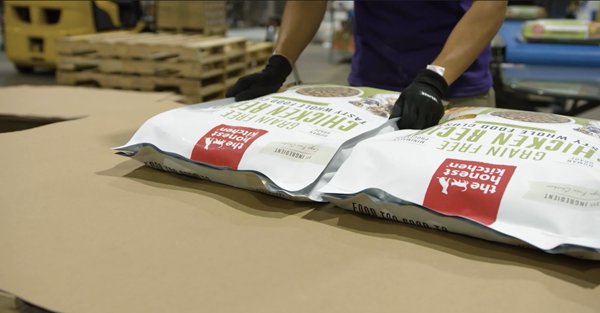 Customer Testimonial: Pet Food Success Through Speed and Reliability with The Honest Kitchen
September 1, 2022
<p>A loyal following and a surge in production demand is <a href="https://www.thehonestkitchen.com/" data-sf-ec-immutable="">The Honest Kitchen</a> story. Their high standards in quality for pet food have set them up for rapid growth and long-term success.<br><br>We partnered with THK to deliver an end-to-end solution that met their growing production needs and helped alleviate the workload of optimizing a new facility.</p><p>Since 2002, The Honest Kitchen evolved into a team of incredibly passionate animal-loving foodies that never stops striving for better, more creative, and tastier solutions. THK operates under a strict set of standards that Lucy Postins, THK Founder and Chief Integrity Officer, created on day one. THK works hard to keep raising the bar on quality and integrity with their human-grade pet food products that continue to cause a stir across the pet food industry.</p><p>High Demand in Product Required One-Stop Solution</p><p>Almost immediately after opening the factory in Los Angeles, THK realized quickly that the company had outgrown its facility and needed to expand to meet its customers’ demands, creating a project scope with stringent deadlines, high expectations, and the need for a vendor who could supply an end-to-end solution.</p><p>“The product that we make here in Topeka is called Whole Food Clusters. We can’t make enough of it. It is flying off the shelves,” said Stuart Harness, Director of Product at THK. “The timelines to open this plant were extremely aggressive. I also had twenty- to thirty-year-old equipment before, and that was a very manual changeover process.” </p><p>Finding the Ideal Packaging Machine Vendor</p><p>According to the American Pet Products Association, U.S. consumers<a href="https://www.americanpetproducts.org/press_industrytrends.asp" data-sf-ec-immutable=""> spent $123.6 billion on their pets</a> in 2021 — up nearly 15 percent over pre-pandemic pet spending in 2019. This noticeable surge in demand is explained by pet owners having become increasingly aware of their pets’ health: Chronic health conditions like itchy skin, digestive upset, and ear problems have been tangibly linked to poor pet food quality.</p><p>In early 2020, THK started a brownfield project with BSM Partners to open a dry pet food manufacturing facility in Topeka, KS. BSM Partners – an engineering firm that traditionally works with pet food companies to invent ingredients and specifications for pet food products – was seeking a packaging equipment partner with knowledge and a lot of experience in the pet food industry. Having worked with every major pet food manufacturer globally, BW Flexible Systems was a natural<a href="https://www.bwflexiblesystems.com/market/pet-animal-food-care" data-sf-ec-immutable=""> fit for the job</a>.</p><p>“Any time you start up a factory, there’s always challenges. The one thing I’ve never worried about is that packaging machinery line,” said Harness. “From day one BW Flexible Systems’ employees were very responsive to our concerns. They listened to exactly what we were trying to accomplish, what we needed in a large packaging line.”</p><p><a href="https://www.bwflexiblesystems.com/products" data-sf-ec-immutable="">Packaging lines,</a> especially in the pet food industry, are not a one size fits all and THK required a highly efficient solution that kept its operators safe. “All the recommendations were spot on,” said Harness.</p><p>Modular Solutions and Peace of Mind</p><p>BW Flexible Systems’ innovation was broad-based, with options for automatic changeover and a highly interactive HMI operator control system to establish ideal settings. The modularity of the equipment, ranging from the scales to the baggers, the conveyers, palletizing, and even stretch wrapping, helped optimize the application for THK.</p><p>“BWFS even got simple things like the interior lighting correct,” said Harness. “The bucket scales that came with the line, they hit the set point target almost perfectly every time.”</p><p>Best weight accuracy and best production rates were two of the top needs that THK requested, which BW Flexible Systems was able to offer by integrating quad scales instead of duplex scales above the UltraStar bagger.</p><p>The UltraStar bagger solution also included:</p><p>-A servo bag picker in place of the standard air cylinder driven bag picker for smoother operation and easier adjustment</p><p>-A servo driven actuator to raise and lower the spouts in place of the standard air cylinder. (smoother operation and easier adjustment)</p><p>-Air deflation in the bag fill area which removes excess air from the bags, thus preventing the hermetically sealed bags from becoming balloon-like and difficult to palletize</p><p>-Ports in the hopper between scales and bagger to allow the future addition of coupons into the bags</p><p>-An integral sealer to seal their plastic bags. The seal bars have a Teflon cloth over them which reduces maintenance and the need to clean the bars</p><p>-LED interior lighting that is white (normal operation), yellow (minor issue), or red (show-stopper issue). This helps operators identify and correct any faults more efficiently</p><p>-Centralized lubrication that allows the bearings in the bagger to be greased from the outside of the machine without stopping production</p><p>Additionally, BW Flexible Systems supplied an X-Ray machine to check filled bags for a wider range of contaminants than a metal detector, which would only detect metal contaminants.</p><p>Thinking of Future Generations</p><p>THK had a vision for the direction in which they wanted to develop: what their needs were from a technical standpoint but also from a future-oriented growth perspective.</p><p>“Barry-Wehmiller has been around for a very long time, and we know for at least twenty or thirty years, we’re going to be able to rely on BW Flexible Systems. Having an end-to-end solution from one vendor is a huge advantage. From an engineering perspective, from an integration perspective - everything just flows.”</p><p>Currently, the bag palletizing is manual and the system is designed to easily enable the integration of an automatic palletizer with minimum redundancy of existing equipment. </p><p>Looking for support in updating and optimizing your old or new facility? Our engineering expertise and customization capabilities position BW Flexible Systems as an ideal partner to deliver solutions suited for pet food and other manufacturers who value reliability, high operational efficiency, as well as sustainable and sanitary solutions. Explore our <a href="https://www.bwflexiblesystems.com/brands" data-sf-ec-immutable="">synergy of brands</a> with a huge portfolio offering or <a href="https://www.bwflexiblesystems.com/contact-us" data-sf-ec-immutable="">reach out to us </a>directly to discuss your needs and how we can help!</p>
 Italian Facilities Reduced Our Carbon Emissions by 92%
July 28, 2022
<p>Earlier this year, we reduced carbon emissions at our <a title="Our Locations | BW Flexible Systems" href="https://www.bwflexiblesystems.com/contact-us#Mestrino-IT" data-sf-ec-immutable="">Italian</a> facilities by 92% via a partnership with E.ON, one of Europe's largest operators of energy networks. As of January 1, 2022, our two Italian manufacturing plants—located in Mestrino and Monte di Malo—are now powered by 100% renewable energy, as certified by E.ON.</p><p>“Our partnership with E.ON is one of many sustainability improvements we will be making to support a greener manufacturing industry moving forward," said Michele Allamprese, Vice President, Europe, for BW Flexible Systems. “In addition to reducing our own CO2 footprint, these sustainability improvements will allow our customers to reduce the environmental impact of their supply chains throughout 2022 and beyond."</p><p>Previously, our Italian facilities were powered by a mix of brown and green energy sources. Based on data certified by the Italian Ministry of Ecological Transition and the Italian National Institute for Environmental Protection and Research, we estimate that changing our energy in Italy to 100% renewable sources will reduce carbon emissions by 252.61 tons in the first year.</p><p>“We are extremely pleased with the leadership demonstrated by our team members and supply chain partners in Italy," said Michelle Bryson, Global Sustainable Packaging Leader for all BW Packaging Systems companies. “This is precisely the kind of initiative we will look to emulate across the broader BW Packaging Systems organization as we continue to develop our sustainability programs."</p><p>In addition to this carbon footprint reduction effort, we also recently announced a <a href="https://www.barrywehmiller.com/news/company-news/release/michelle-bryson-named-global-sustainable-packaging-leader-for-bw-packaging-systems" title="Michelle Bryson Named Global Sustainable Packaging Leader for BW Packaging Systems" data-sf-ec-immutable="">broader sustainability roadmap</a>, which includes better usage of responsible materials, recyclability, efficient packaging design, waste reduction and more. Developing the path to execute some of these plans could take place at BW Flexible Systems' <a href="https://www.barrywehmiller.com/news/company-news/release/bw-flexible-systems-to-open-technical-centre-of-excellence-to-better-serve-emea" title="BW Flexible Systems to Open Technical Centre of Excellence to Better Serve EMEA" data-sf-ec-immutable="">Technical Centre of Excellence</a> in the U.K., among other BW Packaging Systems locations that have the space to collaborate with customers and suppliers on more sustainable solutions.</p>
 How to Choose an Automatic Bottle Labeling Machine [Infographic]
May 26, 2022
<h2>Shrink Sleeve vs Pressure-Sensitive Label Application</h2><p>There is an ongoing and rigorous debate about which label technology is best. Both pressure-sensitive and shrink sleeve label applications have their place. The choice between the two really depends on your needs and how each piece of machinery aligns with your company’s brand and brand packaging strategy. This article highlights some of the main differences between the two label applications. You can also download the <a href="https://5605328.fs1.hubspotusercontent-na1.net/hubfs/5605328/Accraply/PS%20vs%20SS%20Infographic%202.pdf" data-sf-ec-immutable="" data-sf-marked="" target="_blank">infographic</a> for quick reference. </p><h3>Pack Formats</h3><p>Packaging formats play a big role in determining which label technology will work best for your needs. pressure-sensitive Labeling works only with flat or panel-shaped packaging, while shrink sleeves work well for more complex shapes, allowing for full body decoration on curved items.</p><h3>Integration Ease</h3><p>Floor space and ease of integration are also key considerations in labeling application decisions. Pressure-sensitive labeling machines utilize a smaller footprint and are easy to integrate into existing packaging lines. Shrink sleeve labeling machines require a larger operating space, to accommodate the shrink tunnel requirements.</p><h3>Shelf Appeal</h3><p>Both shrink sleeve and pressure sensitive labels provide strong shelf appeal for your products. Shrink sleeve application enables full-body decoration, giving brand owners the best opportunity to utilize color and shape to make their products stand out from any angle on the shelf. Pressure-sensitive labels utilize embossing, high-resolution printing, and 3D graphics to help products stand out in unique ways.</p><h3>Capital Expenses</h3><p>While there are different ranges of expense for each application based on quality, speed, and durability, on average pressure sensitive labeling machines cost less than their shrink sleeve counterparts. This is due to the two-stage process required to apply and shrink a shrink sleeve label. In general, pressure-sensitive labels cost less per label than shrink sleeves. It is important to evaluate the Total Cost of Ownership (TCO) to help determine which labeling option works best for your organization.</p><h3>Tamper Evident/Security </h3><p>If your packaging requires tamper-evident or security labeling, both pressure sensitive and shrink sleeve label applications can create a tamper-evident seal. The shrink sleeve label application is an easier method to integrate tamper-evident labeling. You can have a small machine dedicated to tamper-evident labeling added to a production line. While for pressure-sensitive applications, it needs to be integrated within the pressure-sensitive labeler and would need to be planned from the initial purchase of the labeler.</p><h3>Operational Requirements</h3><p>Another consideration when choosing between pressure-sensitive and shrink sleeve label applications is the type of production line you are running. Shrink Sleeve applicators require accumulation handling for intermittent (start/stop) production lines. This requirement is driven specifically by the need for a steady state of product flow into and out of the shrink tunnel to maintain a high-quality product presentation.</p><h3>Temperature Sensitivity</h3><p>Depending on your manufacturing environment, pressure-sensitive labeling may be the most effective labeling solution for you. Pressure-sensitive labeling applicators can perform in a variety of different temperature states. An environment where condensation occurs may require some additional equipment to dry the container prior to shrink sleeve product decoration.</p><h3>Sustainability</h3><p>Your company’s sustainability strategy may also impact your choice of label and labeler. Pressure-sensitive labeling machines can accommodate all preformed materials (PP, PET, glass, cardboard, etc.), offering numerous labeling options that impact sustainability in various ways. Shrink sleeve labels, on the other hand, can be easily removed by the consumer and discarded to allow for container recycling without concern for label recyclability.</p><h3>In Conclusion</h3><p>In the end, there are numerous considerations to keep in mind when choosing between shrink sleeves and pressure-sensitive labels. The choice often comes down to your company’s specific needs. Accraply has put together a quick reference infographic for you. <span style="background-color: initial; font-family: inherit; font-size: inherit; text-align: inherit; text-transform: inherit; white-space: inherit; word-spacing: normal; caret-color: auto">If you need assistance in choosing what application works best for you, </span> <a href="https://www.accraply.com/contact-us" data-sf-ec-immutable="" style="font-family: inherit; font-size: inherit; text-align: inherit; text-transform: inherit; white-space: inherit; word-spacing: normal" data-sf-marked="" target="_blank">Contact Accraply</a>.</p><p> </p>
 How Packaging Innovation can Address Global Dairy Packaging Trends
May 10, 2022
<p><strong>Fabien </strong><strong>Jégo is the Design Leader and Produce Marketing Leader for BW Filling & Closing (BWFC). The following content originally appeared in <a data-sf-ec-immutable="" href="https://www.packagingstrategies.com/articles/96721-why-packaging-innovation-is-essential-in-todays-global-dairy-markets">Packaging Strategies</a> on March 10, 2022.</strong></p><h2>Introduction</h2><p>From improving food safety to reducing employee turnover, from launching new products to embracing sustainable packaging, dairy processors are expected to grow in several ways this year. Add to this the plethora of dynamic industry trends you read about each week, and you have a recipe for anxiety. The stakeholders are numerous and so are the challenges to appease them. The good news? I believe there are innovative packaging solutions on the horizon that will help solve each of these problems.</p><p><span style="background-color: rgba(0, 0, 0, 0); color: inherit; font-family: inherit; font-size: inherit; text-align: inherit; text-transform: inherit; white-space: inherit; word-spacing: normal; caret-color: auto">In this article, I’ll share some of the top trends we’re seeing across the global dairy market, explain how they impact dairy processor profitability, and make predictions about the types of dairy filling innovations we will see in the future.</span></p><p><span style="background-color: rgba(0, 0, 0, 0); color: inherit; font-family: inherit; font-size: inherit; text-align: inherit; text-transform: inherit; white-space: inherit; word-spacing: normal; caret-color: auto"></span><br></p><h2>3 Dairy Packaging Trends That Are Driving Innovation</h2><p> </p><h3>Consumers Want More Options</h3><p>The product proliferation we’re seeing in today’s supermarkets didn’t happen by accident, it’s the result of food and beverage manufacturers’ efforts to meet consumer demand for more options. Take a stroll down the yogurt aisle. You’ll find a wide variety of products to choose from, each with their own unique recipes, brand messaging, and packaging characteristics. This is because yogurt processors, both big and small, are desperately trying to connect with their consumers on a personal level. While their paths to achieving that goal may differ, both groups are dealing with challenges that stem back to production versatility.<br></p><p>With modest budgets and less floorspace for equipment, smaller yogurt processors (6,000-10,000 cups/hour) tend to seek filling solutions that are small and cheap upfront. The problem with this approach is that when the company is ready to increase their output (or incorporate new functions like the latest decontamination applications, additional fillers, snap-on lid applicators, etc.) they are unable to do so without incurring considerable fees for upgrades and service from the OEM. Sometimes, this even results in the processor having to scrap or sell the original system to make room for an entirely new filling solution.<br></p><p>Larger manufacturers deal with this too. While processors like Danone and Chobani have well-established product lines, they too are interested in testing new products and markets to make new connections with consumers they weren’t previously able to reach. For example, Danone has created positive connections with French customers who care deeply about organically sourced foods via their <a data-sf-ec-immutable="" href="https://www.les2vaches.com/">Les 2 Vaches</a> brand. However, helping customers in Spain connect with this same product may require changes to the product’s packing appearance or format.<br></p><p>In both scenarios, dairy processors should be researching filling solutions that can help them achieve their short-term goals without stifling the potential for future opportunities.</p><p> </p><h3>Market Uncertainties Hinder Progress</h3><p>In the same vein, there are several dynamic factors influencing today’s global dairy markets. Take sustainability for example. To accurately label a product as “sustainable” you must take into consideration local infrastructure (i.e., composting and recycling streams), government regulations, and the biggest moving target of all – consumer demand. As Michael Dann puts it in his recent column on <a data-sf-ec-immutable="" href="https://www.bwpackagingsystems.com/blog/post/sustainability-in-packaged-foods">sustainable food packaging</a>, “how can we as an industry satisfy consumer demand for ‘sustainable packaging’ when the term is still being defined?” <br></p><p>Consumer sentiment can change quickly. Today customers may prefer products packaged in paper for its recyclable and compostable qualities. Tomorrow, they may demonize the role it plays in deforestation. This is why it’s so risky to tie yourself to specific packaging formats and materials long-term.<br></p><p>Similarly, hygiene standards and technology are evolving every year. For example, as calls for sustainable business practices grow louder, one area of opportunity is reducing energy consumption while maintaining consistent hygiene standards. While today pulsed light is viewed as a more energy-efficient alternative to hydrogen peroxide, tomorrow is likely to bring an even better solution. Are you investing in filling equipment and other capital assets that will enable or prevent you from evolving with these changes? Again, this is why machine versatility is so essential in today’s global dairy markets.</p><p> </p><h3>Employee Turnover Diminishes ROI</h3><p>Today’s dairy processors are finding it increasingly difficult to recruit, hire, and maintain qualified team members for their manufacturing facilities. While <a data-sf-ec-immutable="" href="https://hbr.org/2021/09/who-is-driving-the-great-resignation">employee burnout and resignation</a> have recently become prevalent across several segments of the workforce, this has been a problem among operators and maintenance professionals for years. A major driver behind this turnover is the ergonomic strain those employees must undergo during manual changeovers (i.e., heavy lifting, crouching down, bending over). Tasks like these can quickly lead to employee resignation.<br></p><p>This problem is exacerbated when it comes time to train new employees. With so much time and energy being poured into constant training, fewer resources are available to invest in product innovation, marketing, and other important functions that make today’s dairy processors competitive. Breaking this vicious cycle (recruit, hire, train, recruit again) will require innovative solutions that improve how dairy processors approach changeovers and training. </p><h2>Packaging Innovation for Dairy Filling Solutions</h2><p>Given the global market trends I’ve discussed, I expect that we’ll see several technological improvements for dairy filling solutions in the near future. While some of these predictions may seem more likely than others – as someone who is very familiar with the state of today’s packaging R&D – I am very comfortable predicting that each of these will come to fruition in the months and years ahead.</p><p> </p><h3>Versatile Filling Equipment Will Create Greater Product Variety</h3><p>With consumer demands that change so quickly, dairy processors need filling solutions that can change quickly too. Of course, most OEMs claim their solutions have “quick and easy changeovers” but do those changeovers include the ability to change from one format to another (e.g., pivoting from a Ø75 fruit yogurt cup to a Ø95 greek yogurt cup)? Dairy processors need solutions that are truly reconfigurable to allow them to pilot different packaging styles, formats, and several other considerations that consumers care about. This is the type of versatility that today’s dairy markets require, so this is the type of innovation we will see.</p><p> </p><h3>Modularity Will Enable Sustainable Packaging Development</h3><p>Versatility will come in many forms, but one that is particularly promising is the exploration of mechanical and electrical modularity. While modular design principles have been leveraged in fields like commercial building construction for years, they haven’t yet been fully realized in the packaging industry. By designing a system that can integrate every relevant application (e.g., fillers, hygiene stations, overcap applicators) with standard module sizes (i.e., increments of 440 mm), OEMs can provide plug-and-play system that is quickly operational but also customizable for the future. <br></p><p>Unequivocally, this type of filling solution would be sustainable in many ways. For one, modules could be easily replaced to accommodate the latest sustainable package formats and hygienic dairy filling standards. Technology that doesn’t even exist yet could be integrated with the system with ease due to its modular nature. This “future-proof” design would also support dairy processors well beyond the 20–30-year lifecycle of an average filling machine. Because these solutions will be nimble enough to evolve with the new technology, they will not have to be scrapped or sold to make room for a newer solution.</p><p> </p><h3>Intelligent Machine Design Will Improve Operational Efficiency</h3><p>For these newer solutions to have true long-term success, they cannot be designed without people in mind. In the age of <em>the Great Resignation</em>, dairy processors must add ease-of-operation and ergonomic sufficiency to their list of system requirements. Features such as automatic reloading, toolless changeovers, and overall easier maintenance will combat the costly issue of employee burnout. I also believe that we will discover new ways for <a data-sf-ec-immutable="" href="https://www.accraply.com/about-us/blog/accraply-blog/2021/04/07/automatic-labeling-machines-hmi">HMI technology to improve OEE</a>. Features like on-screen tutorials, preventative maintenance reminders, and remote OEM support will limit dairy processors’ reliance on exhaustive, repetitive operator training programs.<br></p><h2><span style="background-color: rgba(0, 0, 0, 0); color: var(--color-h2); font-family: inherit; font-size: var(--font-size-h2); text-align: inherit; text-transform: inherit; word-spacing: normal; caret-color: auto; white-space: inherit"></span></h2>
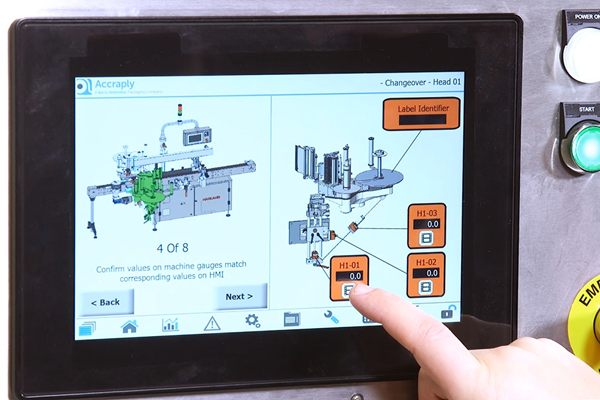 Open-Source HMIs for Packaging Machines
April 25, 2022
<p><strong>Joe Ambrose is the <a name="_Hlk101431123" data-sf-ec-immutable="">Digital Innovation Program Manager for BW Packaging Systems. </a>The following content contains excerpts from his interview with </strong><a href="https://www.controldesign.com/articles/2022/is-open-source-hmi-software-the-way" data-sf-ec-immutable=""><strong>Control Design</strong></a><strong>, which originally appeared on controldesign.com on February 25, 2022. </strong></p><p>Earlier this year, Control Design invited me to answer a reader's question about open-source HMI software. The reader asked, “What are the advantages and drawbacks of open-source HMI software? And what sorts of additional hardware might be necessary?” After conferring with our larger digital innovation team, we shared the following insights with Control Design’s readers.<br></p><h2>How Familiarity Impacts HMI Selection</h2><p>One of the key design elements is knowing what the end-users are comfortable with. In many cases, our organizations want a particular <span style="text-decoration: underline">HMI<sup>A human-machine interface (HMI) is the dashboard through which an operator interacts with packaging systems or equipment. Modern HMIs can offer operator training resources, provide preventative maintenance reminders, assist in troubleshooting machine malfunctions, and much more.</sup></span> based on previously installed equipment or familiarity. This can limit the available options when considering open-source development platforms as most HMIs are purpose-built and require a specific, commercially available development platform. When there is flexibility or requirements to use open-source development platforms there are 2 key advantages: Flexibility and Licensing costs. Full control and configuration of the software is possible as the source code of the development software is available. A sufficiently skilled engineer would be able to create software tailored to a much more unique end-user experience, or bespoke solutions for a customer request. Open-source software usually means no licensing costs for development software. This may be an advantage but would be dependent on the implementation. Most open-source solutions will require an IPC-centric solution, which may require additional equipment (UPS, data concentrator, hosts, screens, etc.) that would offset the savings. </p><h2>Considering HMI Total Cost of Ownership (TCO)</h2><p>For the developers and the end-user, <span style="text-decoration: underline">total cost of ownership (TCO)<sup>Total cost of ownership (TCO) refers to the long-term costs associated with owning and maintaining a packaging line or machine throughout its entire lifecycle. TCO includes costs associated with the purchasing process, plant operation, machine maintenance, and technical support.</sup></span> is always important to balance when considering open-source platforms. As with any open-source community development, there is a nice starting point to build upon new functionality and capabilities into the code for the specific application or use case. However, unless contributions are made back to the community, there is a risk of compatibility issues with updates to the open-source environment. Furthermore, forking from the community puts a larger burden on the adopter to maintain and address issues with the starting point. There is a need to consider whether an organization has the right blend of software and controls engineers to support the development and maintenance of a system, which can add up to a big expense in the long term. Getting a team trained and then appropriately staffed can take a lot of resources away from the development of the solution.<br></p><h2>PLC Integration and Other Technical Considerations</h2><p>In addition to cost, there are a few other technical considerations including <span style="text-decoration: underline">fault tolerance<sup>Fault tolerance refers to the ability of a piece of equipment (or of a system) to continue to operate even if one (or more) of its components has failed.</sup></span>, security, and additional software. Controls systems tend to have high fault tolerance with the ability to quickly replace hardware and redeploy applications where PC-based solutions are not so friendly. Most commercially available solutions come with cyber security certifications that open-source solutions cannot offer or may not maintain. This is particularly worth evaluating when handling data. Open-source software may not natively support required <span style="text-decoration: underline">PLC<sup>A programmable logic controller (PLC) is a hardened controller engineered to control manufacturing equipment and processes.</sup></span> communication protocols, necessitating additional software to translate this into a format that is supported. Generally, there is a cost associated with this software which would be a per-unit cost.</p><p><br></p>
 Multinational Confectionery Manufacturer Converts VFFS Baggers for Paper Material
March 24, 2022
<h2>Partnering to Provide Safe, Sustainable Candy Packaging</h2><p>One of the world’s largest manufacturers and distributors of confectionery needed to develop a packaging solution for their lozenge candy that would provide optimal product protection with the lowest environmental impact possible. To align their packaging process with the company’s environmental protection commitment, this confectionery manufacturer partnered with BW Flexible Systems to modify their vertical form-fill-seal (VFFS) machines to run a recyclable paper film. The result was an attractive, recyclable paper package that reduces material use without compromising food protection.</p><h2>The Challenge</h2><p>Keeping with their commitment to sustainable product packaging, the confectionery manufacturer opted to replace the traditional bag-in-box packaging format with a standalone paper bag for their lozenge candy product. Because this was a shelf-stable product, the moisture barrier benefits provided by the plastic bag-in-box format were dispensable. This created an opportunity for the confectionery manufacturer to change to a recyclable paper-based package and reduce the total amount of packaging being used.<br></p><p>During the early stages of this project, the confectionery manufacturer established several key requirements for the new package. It needed to have an excellent appearance, proper product protection throughout the distribution cycle, and a Euro-hole with the proper hanging resistance. Also, the packaging process needed to be as efficient – or more efficient – than that of the previous package. To achieve this, the confectionery manufacturer relied on BW Flexible Systems to develop an innovative technical solution.</p><h2>The Solution</h2><p>To meet the confectionery manufacturer’s requirements, BW Flexible Systems made modifications to its Simionato® Logic VFFS Bagger, which allowed the confectionery manufacturer to efficiently handle, seal, and cut a Euro-hole into their preferred film. Achieving a top-quality recyclable paper bag is just one of many accomplishments these two companies have achieved together, according to Commercial Director of BW Flexible Systems Larry Norpoth.<br></p><p>“We’ve worked with [this customer] to develop innovative, reliable packaging solutions for the candy and confectionery industry for years,” said Norpoth. “The relationship began in the ‘90s when [the customer] hired us to provide high-speed candy wrappers. Since then, we’ve sold between 180 and 200 horizontal wrapper units to them, as well as a number of vertical bag-making units. They like working with us because we're an international partner that can provide innovative solutions and superior service to their global install base.”</p><h2>The Results</h2><p>As a result of their collaboration with BW Flexible Systems, this confectionery manufacturer was able to introduce a stunning new package for their lozenge product and reduce the environmental impact of their packaging without compromising production efficiency. As per the requirements of this project, the new lozenge package has excellent shelf appeal, offers proper product protection, and includes the proper hanging resistance for a Euro-hole. Following the launch, the confectionery manufacturer achieved the following:</p><ul><li>Reduced the lozenge product’s plastic consumption by converting to a recyclable paper alternative.</li><li>Maintained production efficiency that was consistent with the previous bag-in-box format, despite the challenges presented by the recyclable paper bag format.</li></ul><p>By all accounts, this collaboration drove positive change for the brand, its consumers, and our planet. Today, this particular confectionery manufacturer and BW Flexible Systems continue to develop new packaging solutions that will expand the use of recyclable paper packaging in the candy and confectionery industry.</p>
-for-packaging-lines-and-machinery.tmb-webp-md.webp?Culture=en&sfvrsn=e11c4d5f_1) How to Calculate the Total Cost of Ownership (TCO) for Packaging Lines and Machinery
How to Calculate the Total Cost of Ownership (TCO) for Packaging Lines and Machinery
December 30, 2021
<p>Cost calculation is an important early step to determining potential <span style="text-decoration: underline">return on investment (ROI)<sup>Return on investment (ROI) is the ratio of the profit of an investment to the cost of that investment.</sup></span>. When investing in packaging machinery, however, calculating the initial purchase price alone is not enough. To properly inform your investment decisions, it’s important to understand the total cost of ownership (TCO). In this post, we’ll define TCO for packaging equipment, provide a list of factors you should consider during cost calculation, and share tips for how you can keep costs low.</p><h2>What is TCO and why does it matter?</h2><p>Total cost of ownership (TCO) refers to the long-term costs associated with owning and maintaining a packaging line or machine throughout its entire lifecycle. In addition to your initial capital investment, you will incur costs associated with the purchasing process, plant operations, machine maintenance, technical support, and more. By accounting for all these costs, you can accurately calculate the total cost of owning the equipment and subsequently, better predict your ROI.</p><h3>Common Packaging Equipment Cost Factors</h3><p>When you’re purchasing new packaging equipment, there are several project-specific factors to consider. Maybe you’re relaunching your product with a more sustainable package, and you need to account for a longer testing period to ensure the equipment is compatible with the package. Or maybe you're opening a new production plant and you need to assess your requirements for on-site utilities. While every project comes with its own unique cost factors, most costs can be simplified into three categories – capital costs, operational costs, and maintenance costs. We'll summarize each category below, but for a more comprehensive explanation <a href="https://go.bwpackagingsystems.com/tco-calculation-guide" target="_blank" data-sf-ec-immutable="">download the free TCO calculation guide</a>. </p><p><a href="https://go.bwpackagingsystems.com/tco-calculation-guide" target="_blank" data-sf-ec-immutable="" class="button green">Download the Guide</a></p><h2>What are capital costs?</h2><p>Capital costs are the initial expenses that you will incur upfront with the purchase of your packaging equipment. These costs are typically one-time expenses that can be calculated by considering factors such as:</p><ul><li>Equipment design</li><li>Permits, certifications, acceptance testing</li><li>Shipping and installation</li><li><span style="text-decoration: underline">Equipment validation<sup>Equipment validation encompasses the final tasks that are required for an original equipment manufacturer (OEM) to hand off newly purchased equipment to a consumer packaged goods (CPG) company. Equipment validation tasks include, for example, ensuring ensuring installed equipment meets quality and throughput requirements.</sup></span></li></ul><h3>2 Ways to Lower Capital Costs</h3><h4>Take a consultative approach during contract negotiations</h4><p>Imposing too many strict demands (i.e., tight time constraints, total control over <span style="text-decoration: underline">OEM<sup>In the packaging industry, an original equipment manufacturer (OEM) is the company which manufactures the machinery used to facilitate the packaging process.</sup></span> selection, etc.) will drive up the purchase price. On the other hand, taking on responsibility in-house for tasks you’re not set up to handle can also put the project at risk. The best way to navigate this conundrum is finding your ideal balance between cost and risk. This requires looking inward at the depth and strengths of your in-house resources and asking yourself a series of questions.</p><ul><li>Who should be responsible for each task?</li><li>What risks are associated with owning those tasks in-house?</li><li>What assurances are granted by contracting the integrator to do them?</li></ul><p>These questions will help you make cost-effective decisions during contract negotiations.</p><h4>Maximize SKU variability with flexible packaging solutions</h4><p>Sometimes, considering equipment speed and capability alone is not enough. It’s also important to evaluate the need to interchange between these factors, especially if you are a <span style="text-decoration: underline">co-packer<sup>A co-packer (or contract packager) is a company that packages and/or labels goods for another company or brand owner.</sup></span>. Investing in a flexible packaging solution that is easily configurable and designed for quick <span style="text-decoration: underline">changeovers<sup>A changeover is the transition time from running one item (or SKU) in a manufacturing process to another. Some machines change over using the “recipe” system, where the parameters for different products are stored and then drawn into the machine parameter database. This allows a packaging machine to run different weights, sizes, and volumes with precision.</sup></span> will allow you to produce multiple SKUs as quickly as possible on the same machine. By evaluating the need for flexibility during the equipment design phase, you’ll reduce your need for future capital investments.</p><h2>What are operational costs?</h2><p>Operational costs are the ongoing expenses that you will incur to run your packaging equipment. These costs recur throughout the life of the equipment and are calculated by considering factors including:</p><ul><li>Staff training</li><li>Automation and labor requirements</li><li>Utilities</li></ul><h3>2 Ways to Lower Operational Costs</h3><h4>Keep superb training and troubleshooting resources</h4><p>Your packaging equipment supplier should provide you with an operator manual and step-by-step training documents for future employee onboarding. This will mitigate some of the recurring costs of training. Some OEMs also include operator training resources via the <span style="text-decoration: underline">human-machine interface (HMI)<sup>A human-machine interface (HMI) is the dashboard through which an operator interacts with packaging systems or equipment. Modern HMIs can offer operator training resources, provide preventative maintenance reminders, assist in troubleshooting machine malfunctions, and much more.</sup></span>. This can include video tutorials and on-demand training guides to make setup and operations simple. Including these training resources directly within your packaging solution allows your operators to always have access to the most up-to-date training and troubleshooting resources available.</p><h4>Create efficient changeovers with packaging automation</h4><p>Whether you’re a private label manufacturer or a co-packer, maximizing your production time is a priority. As you evaluate machines for your packaging line, look for options that will automate processes that would otherwise require a hefty investment in manual changeovers. Automated changeovers are popular because they’re easy and cost-efficient. Once you program the recipe, there isn’t much more to the changeover than selecting the right recipe – the automated system does the rest of the changeover for you, reducing operator overhead and the opportunity for errors to occur.</p><h2>What are maintenance and support costs?</h2><p>Maintenance and support costs are the ongoing expenses associated with keeping machinery in working order, troubleshooting, and resolving unexpected disruptions. These costs can be trickier to manage than capital and operational costs because it’s not always clear when maintenance and support will be required. However, you can mitigate unexpected costs through careful consideration of:</p><ul><li>Documentation</li><li>Parts Lists (Spare and Wear)</li><li>Aftermarket Support</li></ul><h3>2 Ways to Lower Maintenance and Support Costs</h3><h4>Stick to the maintenance schedule</h4><p>Abiding by the supplier-recommended maintenance schedule is the easiest (but most important) way to keep your maintenance costs low. Completing tasks such as cleaning, lubricating, and replacing worn out parts within the recommended time frame results in fewer breakdowns, less downtime and lower emergency maintenance costs, as well as increased safety for your machine operators.</p><h4>Include a parts and service agreement in your contract</h4><p>Parts and service agreements can reduce your maintenance costs by giving you fast access to wear parts and ensuring OEM availability when you need emergency technical support. By working with your supplier to create a package that supports your long-term maintenance needs and your overall investment and production strategy, you can better plan for the costs ahead and mitigate any unplanned expenses.</p><h2>The Comprehensive Guide to Calculating Packaging Equipment TCO</h2><p>Did you find this content useful? If so, check out our comprehensive guide to calculating packaging equipment TCO. It provides breakdowns for each of the cost factors mentioned above, additional tips for keeping costs low, and a list of proven packaging solutions to consider for your next project.</p><p><a href="https://go.bwpackagingsystems.com/tco-calculation-guide" target="_blank" data-sf-ec-immutable="" class="button green">Download the Guide</a></p>
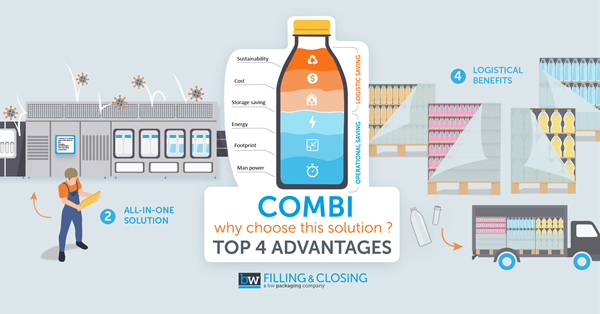 Automatic PET Bottle Blowing, Filling, and Capping Machines
December 8, 2021
<p style="text-align: left"><strong>When purchasing bottling equipment, today’s dairy and beverage manufacturers need solutions that are flexible, simple to use, and cost and space efficient. These characteristics are especially important for low-volume production scenarios (i.e., 8,000 bottles-per-hour of fewer) when labor, floorspace and capital equipment budgets tend to be in short supply. For this reason, BW Filling & Closing has developed the COMBI, an all-in-one bottling solution for blowing, filling, and capping PET bottles. </strong></p><p style="text-align: left"><strong>In this post, you will learn some of the top advantages that make DAIRY PACK COMBI an ideal solution for low-volume dairy and beverage products in bottles.<br></strong></p><a target="_blank" href="/docs/default-source/default-document-library/infographie-combi.pdf?sfvrsn=d375485f_0"><img src="/images/default-source/blog/infographie-combic0fbb711-8f31-4745-b74a-cc436b0f9edb.jpg?sfvrsn=cb75485f_0" width="654" height="654" sf-size="100" alt=""></a><p><br></p><h2 style="text-align: left">Top 4 Advantages of DAIRY PACK’s COMBI 2.0 Solution</h2><ol><li style="text-align: left"><h3 style="text-align: left"><strong>SAVING SPACE WITH PREFORMS</strong></h3><p>Storing empty bottles is a logistical challenge for dairy and beverage processors because they eat up space and drive higher storage expenses as a result. Preforms, on the other hand, use 10x less space than formed bottles. In fact, a single pallet can hold up to 10,000 preforms. For this reason, we’ve designed the DAIRY PACK COMBI 2.0 solution to blow preforms, allowing you to save on space and expenses before you even start the production process.</p></li><li style="text-align: left"><h3 style="text-align: left"><strong>ALL-IN-ONE SOLUTION REDUCES TROUBLESHOOTING</strong></h3><p>Manufacturers who purchase separate machines for blowing, filling, and capping bottles tend to spend more time troubleshooting because different OEMs use different interfaces. However, the COMBI 2.0 complete line solution can be operated by a single person via BWFC’s Efidrive HMI. This ultra clean filling solution has been tested and refined to guarantee smoother operation.</p></li><li style="text-align: left"><h3><strong style="background-color: rgba(0, 0, 0, 0); color: inherit; text-transform: inherit; word-spacing: normal; caret-color: auto; white-space: inherit; font-size: var(--font-size-h3)">FLEXIBILITY ENSURES VERSATILE PRODUCTION</strong></h3><p><span style="background-color: rgba(0, 0, 0, 0); color: inherit; font-family: inherit; font-size: inherit; text-align: inherit; text-transform: inherit; word-spacing: normal; caret-color: auto; white-space: inherit">The COMBI 2.0 solution can accommodate a wide range of formats from 150ml to 1.5l bottles with 2 necks options. This complete line solution also includes quick and easy changeovers, allowing dairy and beverage processors to bottle a wide range of products on the same machine including dairy products, fruit juices, soups, smoothies, nutritional drinks, coffees, teas, fermented products, and many more.</span></p></li><li style="text-align: left"><p><span style="background-color: rgba(0, 0, 0, 0); color: inherit; font-family: inherit; font-size: inherit; text-align: inherit; text-transform: inherit; word-spacing: normal; caret-color: auto; white-space: inherit"></span><strong style="background-color: rgba(0, 0, 0, 0); color: inherit; font-size: var(--font-size-h3); text-align: inherit; text-transform: inherit; word-spacing: normal; caret-color: auto; white-space: inherit">LOGISTICAL BENEFITS</strong></p><span style="background-color: rgba(0, 0, 0, 0); color: inherit; font-family: inherit; text-transform: inherit; word-spacing: normal; caret-color: auto; white-space: inherit; font-size: inherit">In addition to reduced troubleshooting, the all-in-one solution is compact and occupies a smaller footprint in your plant. Additionally, while preforms do not occupy a large amount of space in your facility, they allow dairy and beverage processors to have impressive outputs. For every preform truckload that comes in, up to eight filled bottle truckload go out.</span> </li></ol><p style="text-align: left">Interested in learning more about BWFC’s COMBI 2.0? <a data-sf-ec-immutable="" sfref="[f669d9a7-009d-4d83-ddaa-000000000002]91c52a3f-1853-49f3-b5d0-6b67b99f751d">Contact us</a>.</p>
 Paper or Plastic - You Can Run Both
November 24, 2021
<div><div><p>As food manufacturers and brand owners double down on their 2025 sustainability commitments, BW Flexible Systems has received an influx of inquiries about the versatility of our flexible bagger machines. In particular, these companies are seeking to upgrade and purchase <a data-sf-ec-immutable="" title="Vertical Form Fill Seal (VFFS)" target="_blank" href="https://www.bwflexiblesystems.com/machine-type/vertical-form-fill-seal">vertical-form-fill-seal (VFFS) baggers</a> that can run paper and other eco-friendly materials. Our engineers have modified baggers for several clients to allow them to change from plastic to paper packaging for their products.</p><p>One of the greatest challenges that we’ve encountered while modifying these VFFS machines is ensuring that the paper material can run as quickly as the plastic material. By comparison, paper requires gentler handling than plastic. To address this, we’ve studied, tested and answered a handful of underlying technical challenges.</p><p>First, how can we align the sealing force requirements with the customer’s paper material? With continuous VFFS, it is much more difficult to create a sound seal while the film is running continuously. To solve this, we partner with innovative sealant manufacturers and make modifications to the forming tube assembly (FTA), specifically accounting for the time and temperature required to properly seal bags using the customer’s chosen material.</p><p>Similarly, configuring the “jaws” to punch peg holes in paper, rather than plastic, requires a re-imagining of the tool. For plastic, it’s common to punch holes by melting them into the plastic. For obvious reasons, this does not work for paper. Instead, we have adopted a cold punch system that is used across other packaging systems that handle paper.</p><p>Through modifications like this, we’ve witnessed food manufacturers and brand owners create sustainable change quickly and cost-effectively. We’re also seeing huge strides in sustainable packaging solutions for <a data-sf-ec-immutable="" title="Horizontal Flow Wrappers" target="_blank" href="https://www.bwflexiblesystems.com/machine-type/horizontal-flow-wrappers">horizontal flow wrappers</a> and, at our sister company BW Integrated Systems, automating <a data-sf-ec-immutable="" title="Placers and Denesters" target="_blank" href="https://www.bwintegratedsystems.com/sub-group/streamfeeder/placer-and-denester-systems">placer and denester systems</a> to quickly integrate fiber material bowls into food production plants.</p><div><br></div></div></div>
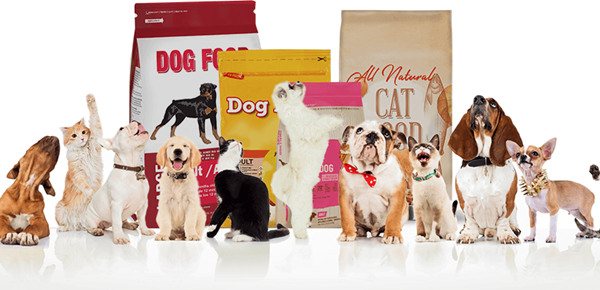 Customer Testimonial: Goal Achieved for Need for Improved Accuracy in Bag Filling of Pet Food
November 10, 2021
<h2 id="headline"><span style="background-color: rgba(0, 0, 0, 0); color: var(--color-h2); font-family: inherit; font-size: var(--font-size-h2); text-align: inherit; text-transform: inherit; word-spacing: normal; caret-color: auto; white-space: inherit">Equipment Upgrades Improve Production Efficiency</span></h2><div><p>One of America's top pet food companies needed to improve the accuracy of the amount of freeze-dried meat additions included in their primary kibble products on two production lines. BW Flexible Systems (BWFS) – the pet food company's provider of bag filling equipment – helped them reach this goal by providing upgrades to several components of their <a href="https://www.bwflexiblesystems.com/machine/bag-filling-equipment/omnistar-bag-filling-system" target="_blank" title="Thiele OmniStar | Bag Filling" data-sf-ec-immutable="">OmniStar baggers</a> including the ingredient inclusion scales, hoppers, PLCs and HMIs. As a result, they were able to increase production rates, optimize product-mix accuracy, shorten changeover times, and improve product distribution.</p><h3 id="Challenge">The Challenge</h3><p>In 2019, the pet food company discovered that there was an improper mix of freeze-dried meat within their 10-20 lb. dry pet food bags. While the freeze-dried inclusion product was aimed at 4%, the actual average inclusion ended up being between 3-7%. They needed this range to be narrowed down with a 4% target amount.</p><p>The bottleneck resided in the company's inclusion delivery system, which timed product inclusion rather than weighing the product to be included. This hindered their ability to properly control and distribute the bag filling process because the bulk density of the kibble product (27 lbs/ft³) was vastly different from the density of the freeze-dried meat product (9 lbs/ft³).</p><p>During a visit to the pet food packaging facilities, BW Flexible Systems observed the underlying issue with the existing inclusion system and suggested an alternate solution that would improve inclusion accuracy and production efficiency. Given that the company's specialty freeze-dried product was very expensive, the company accepted BW Flexible Systems' proposal.</p><h3 id="Solution">The Solution</h3><p>The BW Flexible Systems solution was to create custom-designed inclusion delivery scales, to be positioned above existing OmniStar baggers. Unlike the original inclusion systems, the BW Flexible Systems inclusion scale weighed product before adding it to the bag. The BWFS design did not match the existing configuration, so they customized the delivery system to avoid having to modify the main feed hopper. This resulted in a faster and more cost-effective installation.</p><p>The inclusion system upgrade included:</p><div><ul><li>A new Compact Logix processor with CIP motion</li><li>All necessary I/O modules</li><li>New hoppers for the Inclusion system</li><li>All required hardware</li><li>PLC and HMI program changes, including new buttons placed on the HMI screens to set up and operate the inclusion system</li></ul></div><h3 id="Results">The Results</h3><p>The success of this project was measured against four predetermined goals to increase production, improve weight accuracies, reduce maintenance downtime, and improve product distribution in the bag. The project succeeded in all four categories:</p><div><ul><li>Increased production by 70% when combining the inclusion product to the primary kibbles.</li><li>Weight accuracies improved by 300%. The pet food company calculates that average giveaway improved from 2.5% to .5% after the installation of the BW Flexible Systems solution.</li><li>Changeover times and downtime improved. The company said there were clear improvements to changeover times and downtime in general.</li><li>Product distribution improved. Following this project, the company said they have been getting better product distribution in the bag itself.</li></ul></div><p>Do you need to add or improve upon your product offering, or have a challenging packaging application? <a data-sf-ec-immutable="" href="https://www.bwflexiblesystems.com/contact-us">Connect with our sales team today</a>.</p><p> </p></div>
 Sustainability in the Packaging Industry
October 28, 2021
<p><strong>Carol O'Neill, Group President of Packaging for Barry-Wehmiller, leads efforts to enhance the alignment and capabilities of the five divisions that make up the BW Packaging Systems platform. This content contains excerpts from her interview with Jennifer Mackey, guest host of the </strong><a href="https://www.slu.edu/business/centers/boeing-institute/podcast/index.php" data-sf-ec-immutable=""><strong>SLU International Business Now podcast</strong></a><strong> on October 4, 2021.</strong></p><p>As you may know, sustainability is a topic that is very near and dear to my heart. So, when I was asked to speak about sustainability efforts in global business on the SLU International Business Now podcast, I welcomed the opportunity to share some learnings and perspectives I’ve gained over the years.</p><p>I can remember 20 years ago working in the packaging industry and even then, saying “we need to have an eco-friendly packaging strategy.” People said “eh, you know this is a fad. Environmental consciousness comes and goes.” I remember saying, “Maybe it’s a fad, but wouldn’t we want to be part of coming up with a solution so that it didn’t have to be a fad?”</p><p>Today, sustainability is here to stay. It is not a fad. The world has become much more aware of humans’ impact on our environment. As we look ahead, I think we will be – and frankly should be – challenged to use our creativity and our innovation capabilities to work in a way that conserves our precious resources and that minimizes our impact on the world.</p><h2>BW Packaging Systems’ Role in Sustainability</h2><p>BW Packaging Systems plays a critical role in the supply chain for our customers, which include large and small brand owners that package anything found in a grocery store. These customers are trying to run their businesses more sustainably and to provide more sustainable packagings for consumers. They rely upon us to provide the equipment that will enable them to do that.</p><p>This means we need to provide equipment that is efficient to operate, minimizes waste, and provides them with the ability to package products in more sustainable packaging. Because as materials and packaging companies come up with new solutions that are more sustainable, our customers need to be able to run those materials on our equipment even if our equipment was installed before those materials were invented.</p><p>Our role and responsibility in this whole process is to partner with the materials companies to know what’s coming and to really understand our customers’ needs. This way, we can design equipment that’s not just energy-efficient, but really that’s adaptable, flexible, and can be easily modified to meet new sustainable packaging solutions as the world comes up with them.</p><h2>Guiding Customers Through Their Sustainability Journeys</h2><p>When you’re trying to provide customers with a solution, not just equipment, what’s helpful to them is if you’ve already figured out how to navigate this landscape. Larger companies like Nestlé or Unilever have armies of people who understand the legislation. But smaller companies really value a supplier that understands the complexity of the space that they operate in. Our ability to understand our customers’ journey to finding the right solution is why they trust us.</p><p>For example, we certainly see in Europe a much greater level of attention, focus, and frankly cost benefit with sustainable packaging solutions. The cost of having a non-sustainable packaging solution for a European company tends to be much higher than it is for a U.S. based company due to legislative differences. But since U.S. companies are selling into Europe, they need to understand the local legislation. As an international packaging solution provider, we can help with that.</p><p>This extends to infrastructure too. For example, most yogurt cups are made from polystyrene (PS) – and while PS is recyclable – it’s a material that isn’t generally recycled. When customers want to move from polystyrene, they come to us and ask for alternatives. If you’re operating in Denmark or another country where there’s a very robust industrial composting network, we might say let’s look at PLA because, as a compostable corn-derived bioplastic, PLA might have all those attributes we’re looking for. If you’re operating elsewhere, we might recommend PET because, like PS, it’s a petroleum-derived plastics, except it is highly recycled.</p><p>So, what is the right evolution when you’re coming from a non-sustainable packaging solution? It really depends on your region’s infrastructure, legislation, and several other factors. How do our customers navigate that? That’s part of what we do as a solution provider. We bring that expertise to help them make the right decision about what their packaging solution should be.</p><h2>Systemic Organizational Change</h2><p>As leaders in global business, we need to find new ways to build the organizational competency that will truly drive innovation in this area of sustainability. To me, that’s a multi-faceted challenge. It requires broad expertise and cooperation because sustainability is so complex.</p><p>For BW Packaging Systems, this means having people on our team who bring expertise and knowledge in a wide array of different packaging solutions. It also requires strong industry relations and alignment with materials and packaging suppliers because we don’t want to sell our customers a piece of equipment that is going to be obsolete in two years.</p><p>As my team is spread across the world in all our 28 manufacturing facilities, process becomes essential. We are constantly collecting customer feedback, testing new materials, and sharing our findings across the organization to create the sustainable change our customers and the planet. As the leaders and organizations of the future, this is the systemic change that we need to embed in our organizations.<span style="font-size: small"><strong><span style="font-family: Arial, sans-serif"></span></strong></span></p>
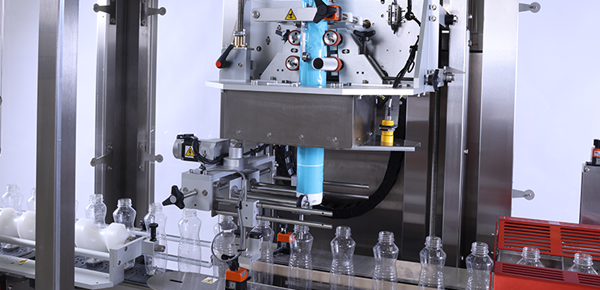 How Downgauging is Changing Shrink Sleeve Technology
October 14, 2021
<p>Spurred by the sustainability movement and the rise of SMART technology, downgauging has become a popular trend in shrink sleeve films. This has created a significant impact on shrink sleeve equipment and technology, as equipment providers have been challenged to modify their shrink-sleeve cutting machines to cut thinner films and upgrade their software to increase end user accessibility. Companies like Accraply are making advancements to stay ahead of customer demands while maintaining OEE.</p><p>Richard Howlett, Accraply’s Global Product Line Leader, was recently <a href="https://www.packagingdigest.com/labeling/shrink-label-applicators-whats-new-and-whats-next" data-sf-ec-immutable="">interviewed by Packaging Digest</a>, to share his insights on how shrink sleeve applicators are evolving to meet these challenges. The following is an excerpt from his interview.</p><p><strong>What recent advancements have you seen in shrink-label applicators?</strong></p><p>The shrink-sleeve film market is very dynamic with new and more advanced shrink films being developed continuously. These advancements are certainly having an impact on shrink-label application machines. The most significant trend that we see is the downgauging of shrink films. This has an impact on the design of shrink-sleeve application machine cutting system. The cutting systems are now required to cut thinner, softer films at higher speeds.</p><p><strong>How do these advanced systems compare to the existing standard equipment?</strong></p><p>With the trend to cut thinner, softer films at higher speeds, control of the shrink-sleeve during the cutting cycle is critical. These systems generally use the most advanced controls to allow maximum control of the sleeve during the cutting process. With the need for control being paramount, we see the need to monitor OEE in the form of advanced data-gathering and diagnostics. To achieve this, SMART human-machine interface (HMI) technology is used in many shrink-sleeve application machines, giving the end user full transparency and understanding of how their shrink-sleeve system is performing.</p><p><strong>What are the benefits of these advancements for packaging machinery buyers/users?</strong></p><p>The benefit for the buyers/users is that if the correct sleeve-application machinery is selected, then the machinery will be advanced enough to cope with the trend of cutting thinner, softer films at higher speeds, thus opening up the market for the user to use a wider range of shrink films and offering more options to brand owners, with thinner films reducing weight and volume for logistics, and reducing CO2 emissions.</p><p><strong>What areas in shrink-label applicators still need work and why?</strong></p><p>The areas of a shrink-label system that are being worked on are that part of the system that can be deemed the most challenging, which are the shrink tunnels. With the continued advancement in shrink film, shrink tunnels are equally important parts of the process and are being advanced in technology in the pursuit of providing the perfectly finished shrink-sleeve labels. Selecting the correct tunnel is critical to produce the best possible final appearance of the product.</p><p><strong>What’s next and when might we see further improvements in shrink-label applicator machinery?</strong></p><p>As the industry continues to keep a watchful eye on sustainability and the carbon footprint, the industry may make improvements in ways to shrink the sleeves using less energy and with more use of renewable energy.</p><p>For more information, contact Accraply to learn more about their shrink sleeve solutions. <strong></strong></p>
 Automating Fiber Bowls for Frozen and Refrigerated Food Packaging
August 24, 2021
<h2>Introduction</h2><p>According to a 2020 McKinsey & Company <a href="https://www.mckinsey.com/industries/paper-forest-products-and-packaging/our-insights/sustainability-in-packaging-inside-the-minds-of-us-consumers" data-sf-ec-immutable="">survey about sustainability in packaging</a>, 55% of U.S respondents said that they are extremely or very concerned about the environmental impact of product packaging and 60-70 percent of consumers said they would pay more for sustainable packaging. With a market that is ready for change, America's largest packaged foods companies have announced ambitious commitments to make 100% of their packaging recyclable or reusable by 2025.</p><p>While these commitments are progress toward a more sustainable packaged foods market, early adopters like <a href="https://www.conagrabrands.com/news-room/news-conagra-brands-announces-sustainable-packaging-goal-prn-122718" data-sf-ec-immutable="">ConAgra</a> and <a href="https://www.nestle.com/ask-nestle/environment/answers/tackling-packaging-waste-plastic-bottles" data-sf-ec-immutable="">Nestlé</a> have had to overcome several underlying obstacles of <em>how</em> they will make good on their promises. Identifying packaging equipment that operates efficiently at current production rates without compromising the integrity of new, eco-friendly packages can be a challenge.</p><p>In this post, we'll take a closer look at what's driving demand for sustainable packaging solutions and examine how some CPGs, material suppliers, and equipment manufacturers are partnering to bring fiber-based bowls to market at scale.</p><h2>Millennials Demand Change</h2><p>Among the growing number of consumers who are pushing CPGs for sustainable change, millennials have been the most adamant. In a recent <a href="https://youtu.be/x5sNyF1hyVU" data-sf-ec-immutable="">interview with ConAgra CEO Sean Connolly</a>, Mad Money host Jim Cramer asked Connolly about the decision to change ConAgra's entire <a href="https://www.healthychoice.com/power-bowls" data-sf-ec-immutable="">Healthy Choice Power Bowls®</a> product line to satisfy what Cramer called a huge, cash-strapped group of consumers.</p><p>"It's the first generation that is making less money than their parents, so we've got to give them a super convenient solution, but we can't compromise on the quality of the food," Connolly said. "So, we've taken a dusty old frozen business, we've infused it with modern attributes, and we've got it growing again, driven by millennials."</p><p>An early milestone on ConAgra’s 2025 sustainability journey, the conversion of the Healthy Choice Power Bowls® line from plastic bowls to biodegradable fiber-based bowls has debunked an industry misconception that fiber-based packaging is not automation friendly.</p><h2>The Switch from Plastic to Fiber</h2><p>While the food industry continues to debate the merits PET, PP and other recyclable plastics; consumers have welcomed plant-based fiber bowls as an improvement over single-use plastic bowls. Companies like <a href="https://footprintus.com/solutions/" data-sf-ec-immutable="">Footprint</a>, an American material science company, are partnering with BW Integrated Systems' Streamfeeder team to make it possible for food manufacturers to use plant-based fiber bowls in their high-volume product lines.</p><p>"Footprint is a material science company focused on making a healthier planet and healthier people through the elimination of single-use and short-term plastics in our first phase," said Footprint co-founder and CEO Troy Swope. "By offering solutions that perform like plastic without the harmful ingredients in plastic, we make it easy for food companies to adopt plant-based solutions and help to preserve our future."</p><p>But implementing these natural packaging solutions into established, high-volume product lines cannot happen instantaneously. It requires working with both the container and the packaging machinery supplier to fine-tune the settings. However, once the equipment has been tuned to run the new containers, packers can achieve the same throughput speeds, according to Footprint VP of Sales Jeff Bassett.</p><p>"Since it's a natural product, it's inherently different from plastics," Bassett said. "As we design the plant-based fiber part, Footprint has to pay more attention to what the atmosphere is in the production facility that could impact production speed or quality." Footprint then engineers a solution for the environment, product success criteria and equipment processing requirements.</p><p>Furthermore, validating this solution at scale requires a complete understanding of, not only the specific product and package, but also the packaging equipment. For Footprint, this meant partnering with the Streamfeeder, which specializes in the design and manufacture of innovative automation solutions.</p><p>"The modifications that needed to be made to the equipment were a challenge," Bassett said. "By partnering with Streamfeeder, Footprint has gained the necessary insights to build materials that work with existing machines at the correct production rates that food manufacturers look for."</p><h2>How to Automate Denesting of Fiber Bowls</h2><p>From an equipment standpoint, screw denester machines are widely used to separate plastic trays and bowls in the frozen food market. However, fiber bowls don't fare well with these machines. This is partially because, while the spacing between plastic bowls in a stack is consistent and predictable, the spacing between fiber bowls is less predictable. This can cause inaccurate bowl denesting, damaged bowls, and ultimately delays to production for food manufacturers.</p><p>With <a href="/brands/streamfeeder/" data-sf-ec-immutable="">pick-and-place denesters</a>, this is not an issue. Streamfeeder, a <a href="https://www.bwpackaging.com/" data-sf-ec-immutable="">BW Packaging </a> brand, has a deep history and knowledge of pick-and-place technology. This is what makes their product advantageous over other similar products, according to Streamfeeder's National Sales Manager Doug Schulz.</p><p>"Ed Thiele, founder of Thiele Technologies, which was acquired by BW Packaging Systems, was the grandfather of pick-and-place technology," Schulz said. "At one time, he held virtually every patent on it. Because Streamfeeder has such a diverse background of experience on this topic, we can match the customer’s product to an existing solution and make modifications so that they truly can automate the process for that product."</p><p>Streamfeeder has drawn on its years of experience to develop material controls specifically designed to work with difficult products such as paper pulp products. This technology makes it possible for food packaging companies, that have traditionally used plastics, to transition to the new environmentally friendly products.</p><h2>Final Words</h2><p>As consumer appetite for eco-friendly products grows across the US, environmentally conscious brands will continue to claim more shelf space at the supermarket. Brand owners who hope to be a part of this trend need to strike partnerships with suppliers that are committed to innovating, testing, and scaling sustainable packaging solutions, like the one above by Streamfeeder and Footprint.</p><h2>Related Links</h2><ul><li><a href="/brands/streamfeeder">Streamfeeder</a> (Automated Placer and Denester Systems)</li><li><a href="https://www.footprintus.com/solutions/" data-sf-ec-immutable="">Plant-Based Fiber Bowls</a> (Footprint)</li></ul>
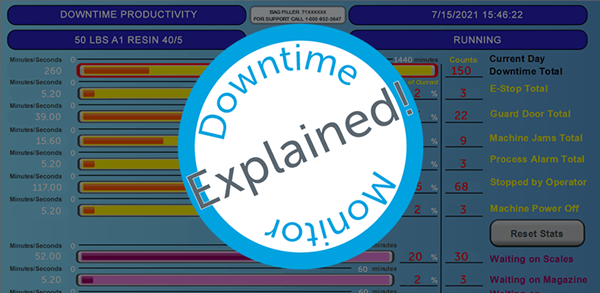 Thiele's Downtime Monitor Makes Diagnosing Downtime EASY
July 20, 2021
<p><img src="/images/default-source/blog/downtime_monitor_img_8eafaaa3-9d4d-48ea-8fb1-e20bb0ffb03c-tmb-esize-350-.png?sfvrsn=1e5b495f_0" style="float: right" alt="" class="-align-right"></p><p>Imagine that you are at a doctor's office. Something has been bothering you, preventing you from going about your daily life normally. The doctor needs some information in order to know how best to treat you, <em>BUT</em> you are unable to tell them what is going on. Instead your doctor must attempt to parse out your issue from tests, observation, and some complicated data. It'll take time to get the diagnosis, and thus the cure, right.</p><p>Wouldn't it be easier if you could simply <em>tell</em> the doctor what is wrong?</p><p>This is why Thiele has implemented their Downtime Monitor—to give your machine a voice.</p><p>Thiele's Downtime Monitor provides an overview of all the conditions that have prevented the system from running in Automatic mode throughout the day, as well as the amount of time each condition accumulated.</p><p>What sets the downtime monitor apart, is that Thiele has taken the time to finetune its presentation. The downtime monitor provides you detailed information about your system in both graphical and numerical form - giving you <em>at a glance</em> ability to quickly parse the data and determine what, if anything, needs to be addressed.</p><p>Let's take a closer look at the Downtime Monitor's screen to see what is going on in this example.</p><h2>Reading the Downtime Monitor</h2><p>As you'll see (and you might have already noticed), reading the downtime monitor is quick and easy, but let's dive in to understand it. Below, we examine one row of data being provided.</p><h3>Top Row: Current Day Downtime Total</h3><p><img src="/images/default-source/blog/total_downtime_rowslice.png?sfvrsn=265b495f_0" style="display: block; margin-left: auto; margin-right: auto" alt="" width="800" class="-align-center"></p><div style="margin: 0 1.5em"><table class="w3-table w3-striped k-table"><tbody><tr><th><strong>Section</strong></th><th><strong> Explanation</strong></th></tr><tr><td> A</td><td>Total event time accumulated (minutes/seconds)</td></tr><tr><td> B</td><td>A bar graph of total time, scaled to 180 minutes. (short term) or 1440 minutes (long term)</td></tr><tr><td> C</td><td>Counts - the number of times that this event has occurred.</td></tr><tr><td> D</td><td>Event name - a human-readable name for each event</td></tr></tbody></table><p> </p><div><p>The top bar on the Downtime Monitor displays the <strong>Current Day's Total Downtime</strong> for this machine. Unlike the rows below it, which will break out the individual events that make up this total, there is on percentage listed, since it's the daily total (hence, always 100%).</p><p>Like all rows, the graph has two scales:</p><ol><li> <strong>0-180 minutes</strong> - For shorter time totals.</li><li> <strong>0-1140 minutes</strong> - For downtime totals exceeding 180 minutes.</li></ol><p>At a glance, we can see that there have been <strong>150 Events</strong> accounting for <strong>260 Minutes </strong>of total downtime. Because the total downtime has exceeded 180 minutes, the scale of the graph has increased to 1440 minutes.</p><p>Now, let's dig in to the real power of the Downtime Monitor - it's easy <em>at a glance</em> downtime breakdown!</p></div><h3>Downtime Event Rows</h3><img src="/images/default-source/blog/component_downtime_rowslice.png?sfvrsn=4e5b495f_0" width="800" alt=""><p> </p><p>As you can see, each row contains the following information for each entry:</p><div style="margin: 0 1.5em"><table class="w3-table w3-striped k-table"><tbody><tr><th><strong>Section</strong></th><th><strong> Explanation</strong></th></tr><tr><td> A</td><td>Total event time accumulated (minutes/seconds)</td></tr><tr><td> B</td><td>A bar graph of total time, scaled to 180 minutes. (short term) or 1440 minutes (long term)</td></tr><tr><td> C</td><td>Percentage of current <em>total machine downtime</em> that this event represents</td></tr><tr><td> D</td><td>Counts - the number of times that this event has occurred.</td></tr><tr><td> E</td><td>Event name - a human-readable name for each event</td></tr></tbody></table></div><p> </p><p>Digging in to the above example, we quickly see that the machine's <strong>Guard Door</strong> has stopped the machine <strong>22 times</strong> and accounts for <strong>39 minutes</strong> of downtime.</p><p>Interesting, yes? BUT, we can also see that this event is responsible for <strong>15% of current downtime</strong> on the machine. So we are now getting an idea of how serious a problem this event is.</p><p>But what about that bar graph? To understand how powerful this feature can be, let's pull back out to the full screen example.</p><img src="/images/default-source/blog/downtime_monitor_img.png?sfvrsn=565b495f_0" width="800" alt=""><p> </p><p>Look again at that graph. Now we know, at a glance, how this issue compares to other stoppages that have occurred. The bar graph can quickly draw your attention to the events that are impacting normal machine operation the most.</p><p>So in our example image, we can see that the the guard door is being opened pretty frequently, but that it's only the third highest factor to downtime on our theoretical machine. We see that the operator has been frequently stopping the machine, accounting for 45% of this machine's total downtime that day.</p><p>Then there's the <strong>Waiting on Scales</strong> row. And now it's time to talk about why some of these rows are Purple 1.</p><p><strong>Purple rows</strong> indicate downtime that <em>is not</em> the fault of the machine. These events have occurred up or down stream from the machine, causing it to wait.</p><p>In our example above, we see that 20% (52 minutes) of our total downtime can be attributed to the machine "Waiting on Scales" and that this has happened 30 times throughout the course of the day.</p><h4>Putting It All Together</h4><p>Thiele's downtime monitor makes parsing collected machine downtime information easier by presenting that data in one quickly digestible screen. In our example, we know that our major factors of downtime for the day breakdown like this:</p><blockquote><blockquote>The operator is stopping the machine frequently and opening the guard doors often. There also appears to be a slow-down affecting the scales, which is trickling down to the bagger.<br></blockquote></blockquote><p> </p><p>And there you have it. Your three biggest issues identified in three seconds flat. No parsing through complicated data looking for patterns, Thiele's Downtime Monitor takes the guesswork out of downtime analysis to show you what is happening and help you be more productive by quickly sorting out issues.</p><hr><h4>Footnotes</h4><p><strong>1</strong>: Screen color implementations can vary from machine to machine. Downtime event reporting for events that are <em>not</em> the fault of the machine will be offset and in a different color from other machine-related downtime events.</p><p> </p></div>
-vs-fill-seal-(fs)-machines.tmb-webp-md.webp?Culture=en&sfvrsn=ab9096f2_1) Form-Fill-Seal (FFS) vs Fill-Seal (FS) Machines [Infographic]
Form-Fill-Seal (FFS) vs Fill-Seal (FS) Machines [Infographic]
May 18, 2021
<p>When it comes to choosing the right dairy packaging equipment, there are several options to choose from. For yogurt packaging machines, however, there are just two machine classifications that dairy processors commonly choose between – form-fill-seal (FFS) and fill-seal (FS) machines. Choosing the most suitable and cost-efficient machine type for your business largely depends on a handful of operational and business-specific factors. In this post, we will compare the pros and cons of both FFS and FS yogurt cup machines and offer advice on when you might choose one option over the other.</p><p>Before we delve into the pros and cons, let’s set the stage with the basic definitions of FFS and FS machines and why a yogurt or dairy processor might choose one over the other.</p><h2>WHAT IS FFS?</h2><p><a href="https://www.synerlink.com/product-line/inline-form-fill-seal-machines" data-sf-ec-immutable="">Form-fill-seal (FFS) machines</a> use heat and air pressure to convert a plastic film into custom-formed cups that are then filled, sealed, and cut. Versatility, sanitation, and lower labor costs are among the top benefits that make FFS machines attractive to yogurt and dairy processors.</p><h2>WHAT IS FS?</h2><p><a href="https://www.synerlink.com/product-line/inline-cup-fillers" data-sf-ec-immutable="">Fill-seal (FS) machines</a> are used to fill and seal preformed cups. Low-volume cost efficiency, smaller footprints, and end-of-line SKU flexibility are among the top reasons why a yogurt or dairy processor might choose a FS machine.</p><h2>FFS VS FS: YOGURT PACKAGING MACHINES [INFOGRAPHIC]</h2><a target="_blank" href="09fdeaa9-db6a-6284-9a33-ff03007e5420"><img src="f3fceaa9-db6a-6284-9a33-ff03007e5420" alt="Yogurt Packaging Machine - FFS vs FS for dairy"></a> <h2>WHAT THIS MEANS FOR DAIRY PROCESSORS</h2><h3>Operational Expenses (OPEX)</h3><p>The <span style="text-decoration: underline">OPEX<sup>Operational expenses (OPEX) consist of the ongoing costs associated with running and maintaining a machine or system.</sup></span> advantage between FS and FFS is largely dependent on production volumes. FS offers favorable OPEX for volumes lower than 12,000, whereas FFS is preferable for volumes greater than 12,000. By design, FFS machines can achieve higher <span style="text-decoration: underline">throughput<sup>Throughput refers to the amount of goods and/or products that pass through a packaging machine or system at a given rate.</sup></span> rates than FS machines and allow for more complex automation needs. Some FFS machines can have up to 3 fillers included. FS machines are commonly used for changing over between multiple products run in smaller batches, and thus are designed with operator ergonomics and <span style="text-decoration: underline">changeover<sup>A changeover is the transition time from running one item (or SKU) in a manufacturing process to another. Some machines change over using the “recipe” system, where the parameters for different products are stored and then drawn into the machine parameter database. This allows a packaging machine to run different weights, sizes, and volumes with precision.</sup></span> flexibility in mind.</p><h3>Operational Requirements</h3><p>You can expect lower labor costs with an FFS dairy machine because a single operator can run 2 FFS machines at once. FS machines, on the other hand, often require 2-3 operators for one machine. Because operation of FS machines requires more manual labor, dairy processors who use it are likely to see higher employee turnover rates than processors who use FFS machines.</p><p>You can expect lower labor costs with an FFS dairy machine because a single operator can run 2 FFS machines at once. FS machines, on the other hand, often require 2-3 operators for one machine. Because operation of FS machines requires more manual labor, dairy processors who use it are likely to see higher employee turnover rates than processors who use FFS machines.</p><p>On the other hand, FS machines require fewer maintenance operations, resulting in lower labor costs for maintenance. FS machines also typically have a smaller footprint than FFS machines, giving them an advantage for dairy processors working with strict space requirements.</p><h3>Sustainability</h3><p>FFS can claim a lower <span style="text-decoration: underline">carbon footprint<sup>Carbon footprint is the total amount of carbon-based greenhouse gas emissions caused by the consumption of fossil fuels by a particular person, product, service, or manufacturer.</sup></span> than FS because it requires lower utility usage. It can also claim lower transportation costs and emissions because film weighs less and requires less space than preformed cups to transport. Additionally, FFS also allows operators to reduce plastic thickness and, as a result, reduce plastic consumption.</p><p>While Synerlink’s innovative <a href="https://www.synerlink.com/engineering/cutting-tool-technologies" data-sf-ec-immutable="">SNAPCUT cutting tool</a> makes it possible to it possible to run PET, PP, and other recyclable plastics on FFS machines, FS has historically been able to claim the advantage of being more flexible for all preformed cups including recyclable packaging materials such as PP, PET, glass, and cardboard.</p><h3>Shelf Appeal</h3><p>Because FFS utilizes film, rather than preformed cups, it offers dairy processors greater flexibility in choosing their own cup shapes for high-volume production. This gives dairy processors an added advantage over competitors who are limited to the shapes of preformed cups. Most of the time, FS cups require stackability that limits the design possibilities. However, for small production batches, FS allows dairy processors to handle a large variety of cup formats with different diameters, with or without snap on lid. In tandem with their FFS machines, Synerlink offers <a href="https://www.synerlink.com/engineering/industrial-packaging-design" data-sf-ec-immutable="">industrial packaging design support</a> to help dairy processors differentiate their packaging design to stand out from their competitors on store shelves.</p><h3>Cup Quality</h3><p>Dairy processors that use FFS machines also maintain greater control over the quality specifications of their cups for higher-volume production. They can define and verify the quality of material that is used to form their cups and be certain that when they stack cups on a pallet, those cups won’t break down under the pressure. High quality pre-formed cups for FS machines can also be acquired, however, they come at a higher price per cup. For this reason, higher quality preformed cups are more likely to be chosen when production volume is lower.</p><h3>Hygiene Requirements</h3><p>FFS has great ultra-clean capabilities for dairy products sold in chilled environments. For example, Synerlink FFS machines ensure proper decontamination (ultra clean) of the inside of the cup prior to the “fill” and “seal” stages of the FFS process. FS gives dairy processors greater access to higher log decontamination of their packaging materials.</p><h3>Pack Formats</h3><p>FFS machines allow dairy processors to produce yogurt multipacks without having to pay for additional stretch plastic or <span style="text-decoration: underline">secondary cardboard packaging<sup>Secondary packaging serves to hold together units of primary packaging, usually to ease the transportation of goods. For example, whereas the box that individual beer cans come in acts as secondary packaging, the cans themselves act as primary packaging.</sup></span>. This is because, by its nature, an FFS machine allows dairy processors to define their own parameters for pack shapes, sizes and such.</p><h3>Capital Expenses (CAPEX)</h3><p>When choosing between an FS and FFS yogurt packaging machine, <span style="text-decoration: underline">capital expenses<sup>Capital expenses (CAPEX) are the initial expenses incurred up front with the purchase of equipment. These costs are typically one-time expenses for factors such as equipment design, permits, installation, etc.</sup></span> are comparable. Neither FS nor FFS have an advantage over the other in this regard.</p><h2>CHOOSING A YOGURT PACKAGING MACHINE</h2><p>Choosing between <a href="https://www.synerlink.com/product-line/inline-form-fill-seal-machines" data-sf-ec-immutable="">FFS</a> and <a href="https://www.synerlink.com/product-line/inline-cup-fillers" data-sf-ec-immutable="">FS</a> is just the first of many decisions you will need to make when selecting new yogurt packaging machine. Beneath both classifications, there are several factors that will inform which specific machine is right for you. For help finding a yogurt packaging machine that is right for your business, contact Synerlink today. <br><a href="https://www.synerlink.com/contact-us" data-sf-ec-immutable="">Contact Us</a></p><p> </p><p> </p><h2>RELATED RESOURCES</h2><ul><li><a href="https://www.synerlink.com/market/dairy" data-sf-ec-immutable="">Dairy Packaging Machines (Synerlink)</a></li><li><a href="https://www.bid-on-equipment.com/blog/post/ffs-101-how-a-form-fill-and-seal-machine-works" data-sf-ec-immutable="">FFS 101: How a Form, Fill and Seal Machine Works (BoI)</a></li><li><a href="https://www.packagingdigest.com/form-fill-seal" data-sf-ec-immutable="">Form Fill Seal Machines (Packaging Digest)</a></li></ul>
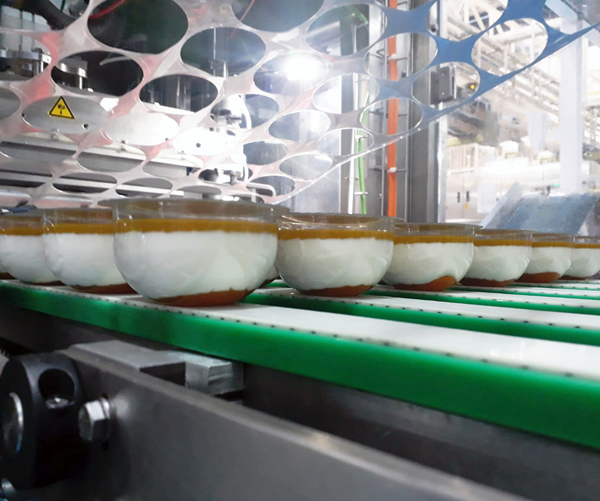 Yogurt Packaging Machines – FFS vs FS
May 11, 2021
<p>When it comes to choosing the right dairy packaging equipment, there are several options to choose from. For yogurt packaging machines, however, there are just two machine classifications that dairy processors commonly choose between – form-fill-seal (FFS) and fill-seal (FS) machines. Choosing the most suitable and cost-efficient machine type for your business largely depends on a handful of operational and business-specific factors. In this post, we will compare the pros and cons of both FFS and FS yogurt cup machines and offer advice on when you might choose one option over the other.</p><p>Before we delve into the pros and cons, let’s set the stage with the basic definitions of FFS and FS machines and why a yogurt or dairy processor might choose one over the other.</p><h2>What is FFS?</h2><p><a href="/products/rigid-filling/form-fill-seal">Form-fill-seal (FFS) machines</a> use heat and air pressure to convert a plastic film into custom-formed cups that are then filled, sealed, and cut. Versatility, sanitation, and lower labor costs are among the top benefits that make FFS machines attractive to yogurt and dairy processors.</p><h2>What is FS?</h2><p><a href="/products/rigid-filling/fill-seal">Fill-seal (FS) machines</a> are used to fill and seal preformed cups. Low-volume cost efficiency, smaller footprints, and end-of-line SKU flexibility are among the top reasons why a yogurt or dairy processor might choose an FS machine.</p><h2>What This Means for Dairy Processors</h2><h3>Operational Expenses (OPEX)</h3><p>The OPEX advantage between FS and FFS is largely dependent on production volumes. FS offers favorable OPEX for volumes lower than 12,000, whereas FFS is preferable for volumes greater than 12,000. By design, FFS machines can achieve higher throughput rates than FS machines and allow for more complex automation needs. Some FFS machines can have up to 3 fillers included. FS machines are commonly used for changing over between multiple products run in smaller batches, and thus are designed with operator ergonomics and changeover flexibility in mind.</p><h3>Operational Requirements</h3><p>You can expect lower labor costs with an FFS dairy machine because a single operator can run 2 FFS machines at once. FS machines, on the other hand, often require 2-3 operators for one machine. Because the operation of FS machines requires more manual labor, dairy processors who use them are likely to see higher employee turnover rates than processors who use FFS machines.</p><p>On the other hand, FS machines require fewer maintenance operations, resulting in lower labor costs for maintenance. FS machines also typically have a smaller footprint than FFS machines, giving them an advantage for dairy processors working with strict space requirements.</p><h3>Sustainability</h3><p>FFS can claim a lower carbon footprint than FS because it requires lower utility usage. It can also claim lower transportation costs and emissions because film weighs less and requires less space than preformed cups to transport. Additionally, FFS also allows operators to reduce plastic thickness and, as a result, reduce plastic consumption.</p><p>While BW Packaging's innovative SNAPCUT cutting tool makes it possible to run PET, PP, and other recyclable plastics on FFS machines, FS has historically been able to claim the advantage of being more flexible for all preformed cups, including recyclable packaging materials such as PP, PET, glass, and cardboard.</p><h3>Shelf Appeal</h3><p>Because FFS utilizes film, rather than preformed cups, it offers dairy processors greater flexibility in choosing their own cup shapes for high-volume production. This gives dairy processors an added advantage over competitors who are limited to the shapes of preformed cups. Most of the time, FS cups require stackability that limits the design possibilities. However, for small production batches, FS allows dairy processors to handle a large variety of cup formats with different diameters, with or without a snap-on lid. In tandem with their FFS machines, BW Packaging offers industrial packaging design support to help dairy processors differentiate their packaging design to stand out from their competitors on store shelves.</p><h3>Cup Quality</h3><p>Dairy processors that use FFS machines also maintain greater control over the quality specifications of their cups for higher-volume production. They can define and verify the quality of material that is used to form their cups and be certain that when they stack cups on a pallet, those cups won’t break down under the pressure. High-quality pre-formed cups for FS machines can also be acquired; however, they come at a higher price per cup. For this reason, higher quality preformed cups are more likely to be chosen when production volume is lower.</p><h3>Hygiene Requirements</h3><p>FFS has great ultra-clean capabilities for dairy products sold in chilled environments. For example, BW Packaging FFS machines ensure proper decontamination (ultra clean) of the inside of the cup before the “fill” and “seal” stages of the FFS process. FS gives dairy processors greater access to higher log decontamination of their packaging materials.</p><h3>Pack Formats</h3><p>FFS machines allow dairy processors to produce yogurt multipacks without having to pay for additional stretch plastic or secondary cardboard packaging. This is because, by its nature, an FFS machine allows dairy processors to define their own parameters for pack shapes, sizes, and such.</p><h3>Capital Expenses (CAPEX)</h3><p>When choosing between an FS and FFS yogurt packaging machine, capital expenses are comparable. Neither FS nor FFS has an advantage over the other in this regard.</p><h2>Choosing a Yogurt Packaging Machine</h2><p>Choosing between FFS and FS is just the first of many decisions you will need to make when selecting a new yogurt packaging machine. Beneath both classifications, there are several factors that will inform which specific machine is right for you. For help finding a yogurt packaging machine that is right for your business, contact BW Packaging today.</p>
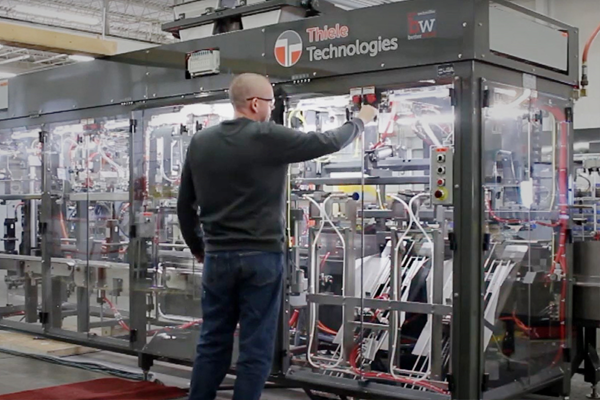 Maintenance Costs in Pet Food Packaging
April 30, 2021
<p>As Benjamin Franklin said, “By failing to prepare, you are preparing to fail.” This is true of packaging machine maintenance. When a motor fails or a machine breaks down, it results in unplanned downtime and, usually, the high cost of emergency maintenance support. If you’ve ever experienced this, you might have asked yourself “could I have prevented this from happening?” Often, the answer is yes. </p><p>Taking a proactive approach to maintenance can reduce unplanned downtime and the long-term expense of maintaining your packaging equipment. In today’s post, six packaging experts will explore several tactics that <span style="text-decoration: underline">co-packers<sup>A co-packer (or contract packager) is a company that packages and/or labels goods for another company or brand owner.</sup></span> can employ to better manage their machine maintenance costs including parts and service agreements, purposeful equipment design, and remote troubleshooting capabilities. For advice managing capital and production costs, visit the <a href="/blog/pet-food-blog" data-sf-ec-immutable="">BW Packaging Systems pet food blog</a>.</p><p>Today’s roundtable includes:</p><ul><li>William Graf, Managing Partner for Design Group</li><li>Jan-Pieter Grootendorst, Sales & Marketing Expert for BW Flexible Systems</li><li>Daniel LoRusso, Director of System Sales in North America for BW Integrated Systems</li><li>Robert Redman, Managing Partner of Food and Beverage for Design Group</li><li>Todd Sandell, Sales Executive for BW Flexible Systems</li><li>Jeremy Stith, Partner for Design Group</li></ul><p>Additional credentials for each of these experts are provided at the end of this post.<br><br><a href="https://go.bwpackagingsystems.com/pet-food-packaging-machine-cost" data-sf-ec-immutable="" target="_blank"><strong>Calculating pet food packaging machine costs? Download our FREE whitepaper.</strong></a></p><h2>How can co-packers keep machine maintenance costs low?</h2><p><strong>Grootendorst:</strong> Be proactive. Maintenance should be approached like a planned event unlike downtime, which often occurs without warning. For example, when we sell a machine to a customer, we provide a manual that defines the optimal process and schedule for maintenance tasks like cleaning, lubricating, and making other adjustments to the machine. Customers who complete these tasks within the recommended time frame experience less downtime and lower maintenance costs.</p><p><strong>Graf: </strong>Some of the manufacturers we work with are looking more into predictable maintenance and artificial intelligence tools. For example, your machine would be able to anticipate and warn you when a motor is going to fail. Or they might invest in tablets and <span style="text-decoration: underline">HMIs<sup>A human-machine interface (HMI) is the dashboard through which an operator interacts with packaging systems or equipment. Modern HMIs can offer operator training resources, provide preventative maintenance reminders, assist in troubleshooting machine malfunctions, and much more.</sup></span> that allow the operator to troubleshoot with the <span style="text-decoration: underline">OEM<sup>In the packaging industry, an original equipment manufacturer (OEM) is the company which manufactures the machinery used to facilitate the packaging process.</sup></span> remotely. It’s innovative, but is it worth the investment for a co-packer? Maybe or maybe not; if they can’t afford to hire people to do the maintenance, maybe it’s worth it. </p><p><strong>LoRusso:</strong> Preventative maintenance is all about selecting the right machine, comprised of the right components and finding a partner that understands the lifecycle of the machines. Each maintenance package should be specific to each co-packers’ needs.</p><h2>What should co-packers look for in parts and service agreements?</h2><p><strong>Sandell: </strong>It’s important to determine how available and accessible parts will be to a co-packer. Part of this is preventative; you want to keep enough wear parts on hand so you can replace parts quickly and continue operating with limited downtime. The other part is how quickly can you get technical support and parts from the OEM? Having the right agreement in place helps you resolve these situations faster.</p><p><strong>LoRusso:</strong> The customers we work with are often interested in lifecycle support. This essentially means we will provide them with the parts and services they’ll need throughout the life of the equipment. This includes maintaining spare parts lists, maintenance procedures, pre-scheduled audits, and so on. Co-packers should work with their supplier to come up with a package that supports their long-term maintenance needs, investment strategy and overall production needs.</p><h2>How does equipment design impact packaging machine maintenance costs?</h2><p><strong>LoRusso: </strong>Packaging line design is not just about the flow and placement of equipment, but the selection of the right equipment with the right design. Individual equipment designs should account for the frequency of specific maintenance tasks and provide efficient access for maintenance personnel. This will limit the time and duration required to perform frequent maintenance tasks. For example, we want to make lubrication or frequent wear part exchange easy to access. If you’re required to remove guards or major machine components for frequent maintenance, you may be lowering your entire line’s efficiency due to bad machine design.</p><p><strong>Sandell: </strong>The trend today is to reduce machinery components that need to be maintained and add features that operators can maintain without getting maintenance people involved. An example of this would be quick change and automation of equipment that does not require tools so that it can be done by an operator or a <span style="text-decoration: underline">changeover<sup>A changeover is the transition time from running one item (or SKU) in a manufacturing process to another. Some machines change over using the “recipe” system, where the parameters for different products are stored and then drawn into the machine parameter database. This allows a packaging machine to run different weights, sizes, and volumes with precision.</sup></span> person rather than bringing in a maintenance person who is usually more skilled than is necessary to change a machine over.</p><h2>How does remote support affect the costs associated with unplanned downtime?</h2><p><strong>Redman: </strong>When we consider unplanned downtime, we have to think about the skillsets of the available maintenance personnel. As equipment gets more technologically advanced, the required maintenance skillsets change and many facilities are located in rural areas where it may be difficult to draw these new skillsets into that geography.</p><p><strong>Stith:</strong> In addition to the predictive maintenance tools that were mentioned, another feature that is on the rise is OEM remote troubleshooting. By granting your OEM remote access to your facility and equipment, co-packers can have standby technical support to resolve downtime faster. Especially with COVID-19, more manufacturers are considering remote troubleshooting. It’s a cost that co-packers should consider – is there enough value in this service?</p><p><strong>Grootendorst: </strong>Troubleshooting with a support technician remotely via your machine’s HMI is something that has great value. It eliminates the downtime and costs associated with having to fly a technician out to your site. With remote support, you can have a technician dial in and solve the issue right away. Almost 90% of the issues we see from our customers can be solved this way.</p><p><strong>Did you find this content useful? Check out our first post on </strong><a href="/blog/post/pet-food-packaging-capital-costs" data-sf-ec-immutable=""><strong>planning & capital costs</strong></a><strong> or our second post on </strong> <a href="/blog/post/pet-food-packaging-operational-costs" data-sf-ec-immutable=""><strong>operational & production costs</strong></a>.</p><h2>About the Experts</h2><p>The BW Packaging Systems Pet Food Blog is built upon cooperation and sharing of information between experts across the pet food industry including equipment manufacturers, packaging line integrators, engineering consultants, private label brands, co-packers and more. This post includes insights from:</p><h3>Design Group</h3><p><a href="https://www.bwdesigngroup.com/our-solutions/packaging-systems" data-sf-ec-immutable="">Design Group</a> is a premier system integrator for a wide range of filling and packaging line solutions with extensive experience in material handling, printing, labeling, inspection systems, <span style="text-decoration: underline">secondary packaging<sup>Secondary packaging serves to hold together units of primary packaging, usually to ease the transportation of goods. For example, whereas the box that individual beer cans come in acts as secondary packaging, the cans themselves act as primary packaging.</sup></span> requirements and management information systems. They provide complete production systems, line upgrades and experienced professionals ready to complement their client’s project team. In this post, you heard from:</p><p><strong>Robert Redman<br></strong>Robert Redman is the Managing Partner of Food and Beverage market sector for Barry-Wehmiller Design Group. He brings 28 years of food and beverage experience to his company and its clients and is well-versed in packaging, process, controls and facility integration projects. Rob has provided oversight of multiple projects in the pet food industry including wet pet food, dry pet food, and treats production.</p><p><strong>William Graf<br></strong>William Graf is a Managing Partner for the Northeast Region at Barry-Wehmiller Design Group. He brings 20+ years of relevant experience and has in several capacities including project manager, engineering manager, director, partner and managing partner. </p><p><strong>Jeremy Stith<br></strong>Jeremy Stith is a Partner at Barry-Wehmiller Design Group. He brings 17 years of food and beverage experience to his company and its clients and is well-versed in packaging, process, controls and facility integration projects. Jeremy is especially familiar with pet food packaging solutions, as he has completed multiple projects in the pet food industry including wet pet food, dry pet food, and treats production.</p><h3>BW Flexible Systems</h3><p><a href="https://www.bwflexiblesystems.com/market/pet-animal-food-care" data-sf-ec-immutable="">BW Flexible Systems</a> is a leading producer of weighing and bag filling systems, SYMACH palletizers, conveying systems and wrapping machines for pet food and animal feed. They also have a wide range of vertical baggers and <span style="text-decoration: underline">horizontal flow wrappers<sup>Flow wrapping, also known as horizontal form fill sealing, is the process by which a consumer packaged good is placed on a conveyer belt, transported to the forming area, and wrapped in flexible packaging with a sealing material.</sup></span> to package treats, bones and other pet accessories, customized to meet each customer’s production, package style and economic requirements. In this post, you heard from:</p><p><strong>Jan-Pieter Grootendorst, M.Sc.<br></strong>Jan-Pieter Grootendorst is the Global Strategic Marketing and Innovation Leader of Bag Filling and Palletizing at BW Flexible Systems. Since 2018, he has been the EMEA APAC sales leader for BW Flexible Systems, SYMACH bag filling and palletizing. He brings multiple years of pet food packaging and palletizing experience to the global team.</p><p><strong>Todd Sandell<br></strong>Todd Sandell is a Sales Executive at BW Flexible Systems. He has nearly 40 years of experience in the petfood industry and packaging/palletizing systems through product development, product management, marketing, applications, business unit management and consultative sales.</p><h3>BW Integrated Systems</h3><p><a href="https://www.bwintegratedsystems.com/integrated-packaging-systems" data-sf-ec-immutable="">BW Integrated Systems</a> is an industry leader in the design and manufacture of end-of-line packaging equipment and robotic automation solutions, as well as the execution of integrated packaging systems. They provide several solutions to the pet food industry including material handling and palletizing, depalletizing, bliss and tray forming/erecting, cartoning and case packing, and systems integration services. In this post, you heard from:</p><strong>Daniel LoRusso</strong><br>Daniel LoRusso is the Director of System Sales, North America at BW Integrated Systems. He has over 15 years of industry experience and has led project management in both the US and EMEA. Previously, he was Director of Operations for our Loveland CO manufacturing facility for 7 years. His Primary role is to bring cohesion to commercial teams, alignment between sales executives, and aids in the collection and understanding of clients’ needs.
 BW Packaging Supports Tillamook® Creamery Collection Launch with Inline Cup Filling Machines
April 22, 2021
<p><a href="http://www.ssica.com/" target="_blank" data-sf-ec-immutable="">Super Store Industries</a>, a co-packer located in Northern California, was looking for a 2-flavor cup-filling solution for its client, Tillamook County Creamery Association (TCCA), which was developing a unique <a href="https://www.tillamook.com/news/introducing-tillamook-creamery-collection-yogurt" target="_blank" data-sf-ec-immutable="" data-sf-marked="">Tillamook® Creamery Collection product</a> that features two blended yogurts in every cup so people can create their perfect bite. The product allows for toppings like granola and fruit to be added directly to the unique reusable cup, which also has a snap-on lid. Having learned about BW Packaging's involvement in a project with another American yogurt processor, Super Store turned to a BW Packaging solution for filling pots with an <a href="/products/rigid-filling/fill-seal/dairy-pack-rm90c">RM90C machine </a>fitted with a modular duo-fill nozzle filler. </p><p>Throughout the course of the project, we were always available to support both SSI and TCCA’s teams in the design, development, testing, and installation of the filler. With very accelerated timelines and unforeseen difficulties, this project was challenging but rewarding. In fact, the spread of COVID-19 and associated travel restrictions and safety measures during the product testing phase did not prevent us from meeting the timeline or the high-quality filling requirements. </p><p>Despite these obstacles, we met our commitments and secured the client’s complete satisfaction. We've received messages of thanks from several members of the TCCA team, including Senior Product Development Scientist Anna Ku:</p><p>“I would like to thank the entire BWFC team for their attentiveness and dedication to ensuring the Tillamook® Creamery Collection launch went smoothly,” said Ku. “The product came out beautifully!”</p><p>The successful launch of the Tillamook® Creamery Collection cup marks a second major accomplishment in the American premium yogurt market, further solidifying BW Packaging's reputation for delivering quality packaging equipment around the world. </p><div><div><div id="_com_1"></div></div></div>
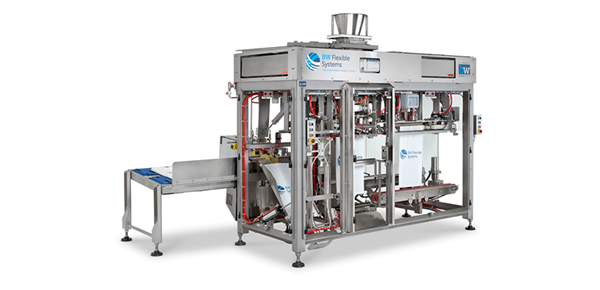 Get to Know: Thiele's Adjustable Spout Feature
April 15, 2021
<p>One of the best ways to maximize throughput and optimize packaging efficiencies with a bag filling machine is to ensure that the spout's <code>OPEN</code> position is maximized relative to the bag size.</p><p>The spout assembly has two basic positions which are <code>OPEN</code> and <code>CLOSED</code>. Various bag sizes being run in a production environment means that the <code>OPEN</code> position must be carefully determined such that the spout opens to the maximum position for each specific bag size.</p><p>The servo motor registers a value of "<code>O</code>" in the closed position and is incrementally adjustable for bag face width values larger than 11 inches. This allows the spout <code>OPEN</code> to adjust to virtually any size and fit perfectly.</p><p>If the bag filling spout opens to much, the bag will potentially tear. Not open enough, and the spout will restrict product flow and therefore increase the dump time slowing packaging rate unnecessarily.</p><p>Having the spout open to the ideal position also helps to reduce dust as the fitment forces the dust towards the dust evacuation system.</p><p>Having the spout <em>open position</em> adjustable via servo motor from the HMI is a vast improvement from the traditional mechanical <em>threaded rod with knob</em> style adjustment. The more bag sizes are changed, the more the servo adjustable spout makes sense.</p><p>Each SKU recipe includes the value for the spout open position. During a run, the spout open position can be adjusted if needed.</p><p>Thiele's Adjustable Spout feature allows for fast, accurate changeovers.</p><p>Ready to learn more? Contact your Thiele representative.</p>
 8 Must-have HMI Features When Comparing Automatic Labeling Machines
April 7, 2021
<h2>Improving OEE</h2><p>Consumer products manufacturers are always exploring ways to improve operational efficiency. Improving overall equipment effectiveness (OEE) requires procurement and engineering leaders to solve a handful of key challenges, which include improving operator training, quickly resolving unplanned downtime, and streamlining access to technical support services.</p><p>With consideration of these challenges, today’s manufacturers of automatic labeling machines have invested in developing human-machine interfaces (HMIs) that can significantly improve OEE. These HMIs can provide greater access to training resources, intuitive technical documentation, and technical support for on-the-spot troubleshooting.</p><p>In this post, I’ll explain how smart HMIs can improve operational efficiency for consumer products companies and provide a list of HMI features to consider when purchasing a new labeling machine.</p><h2>How Smart HMIs are Changing the Market</h2><p>HMI technology has improved rapidly over the past three years. Instead of the flashing warning light of years gone by, today’s HMIs can display an image of the machine, place an indicator where the exact fault is, and provide instructions for how to resolve the issue. They offer significant advances in user experience, including improved graphics, enhanced connectivity, larger screen sizes, and multi-touch functionality. They also provide greater access, not only to a machine in its current state but also to information that can be used to improve the machine’s performance throughout its lifecycle.</p><p>Advanced panel-based HMIs, such as BW Packaging's award-winning Opview™ HMI, are forecasted to achieve a high market growth rate due to the demand for mobile HMIs. The ability to connect with a machine remotely and to access all the information required to provide greater insight into labeling operations, and thereby increase the overall productivity of the plant, is more desirable than ever. COVID-19 has also reinforced the importance of remote connectivity and simplification of operations.</p><h2>Labeling HMI Checklist</h2><p>When choosing an automatic labeling machine, there are several HMI-related criteria that should be considered that can improve OEE. Below is a list of questions that can be used to evaluate labeling machine HMIs and compare options from various suppliers.</p><h3>1. Operator Training Resources</h3><p>How will this HMI improve operator training? Some HMIs include video tutorials and on-demand training guides to make setup and operations simple. They can also come with step-by-step onboarding for key functions, maintenance, and fault recovery processes, including how to maximize machine speed. They may even be available in multiple languages for today's multi-national workforce.</p><h3>2. Streamlined Troubleshooting</h3><p>Does the HMI provide links and instructional steps to help you clear faults? HMIs can walk operators through the steps to resolve the fault and reset the machine. Having this functionality as a part of the HMI means operators don’t have to consult manuals. They can address the issue on the spot, keeping downtime to a minimum.</p><h3>3. Preventive Maintenance Reminders</h3><p>Does it allow you to schedule preventive maintenance reminders? Reminders can appear as daily, weekly, and monthly tasks for your operator and maintenance team. By taking a proactive approach to machine maintenance, operators are better able to avoid unplanned downtime.</p><h3>4. User Levels</h3><p>Can you control access and accountability? To drive consistency of performance, some HMIs allow you to set different user levels, limiting access to parameters and/or range of adjustments, as you deem necessary.</p><h3>5. Offsite Connectivity</h3><p>Can the HMI connect remotely? For example, some HMIs allow operators to access machine configuration off-site and even allow them to set up audit trail information from a computer, tablet, or smartphone.</p><h3>6. Remote Support</h3><p>Does the labeling machine manufacturer provide remote support via the HMI? Having your OEM remote in the machine via the HMI can help operators resolve issues more quickly and cost-effectively.</p><h3>7. Rapid Changeovers</h3><p>Is the HMI designed to accommodate rapid changeovers? Some HMIs store recipes and provide video changeover guides to assist operators in reducing downtime between changeovers and to start up faster.</p><h3>8. Productivity Reporting</h3><p>Can the HMI show complex data, such as machine OEE, in real-time? This feature can show operators where a fault lies and offer remedies to fix that fault, which can help improve the long-term effectiveness of the machine. This feature can be accessed on-screen and in real-time via video assistance.</p><h2>BW Packaging's OpView™ HMI</h2><p>BW Packaging has designed an HMI that satisfies all of the criteria listed above. OpView™ HMI simplifies operation and training and provides greater access to an advanced analytics dashboard. In addition, because the OpView™ is now standard on BW Packaging equipment, operators transition easily from one machine to the next as they move through the guided onboarding, intuitive navigation, and clear functional parameters.</p><p>The OpView™ HMI was recognized for design excellence with its smart user interface (UI), earning two IF Design awards in the prestigious global design competition that evaluates design excellence across many industries. The award called out the Opview™ HMI for “an outstanding focus on the interlinked factors of human, task, process, and machine.” It provides one interface for all machine types, fast access to all information, and user-friendly navigation. Adding to the package the clear alarm system and easy-to-understand troubleshooting workflows, the Opview™ HMI makes a whole new level of operation easily accessible for customers.</p>
 Get to Know: Bag Air Deflation System for Thiele Star Series Baggers
March 31, 2021
<p><a data-sf-ec-immutable="" title="Thiele | BW Flexible Systems" href="/brand/thiele-technologies">Thiele</a> introduces a breakthrough in bag filling quality with the innovative <strong>bag deflation system</strong>. Because bag palletizing is critical to overall packaging quality, Thiele's engineers developed the bag deflation system to reliably remove air from the bag top prior to sealing. </p><p>This new system operates by pneumatically squeezing the top of the bag above the product level by using opposing guided cylinders directly below the top carrier belts (see images below). The position of the deflation system can be adjusted vertically through the Star Series HMI and will be stored in the recipe for fast future changeovers. Should the bulk density of the material change during a run, the deflation position can be adjusted manually for best quality and throughput. </p><p>If you run various bag sizes, there's no need to worry; the deflation paddles are customizable to the bag size, and the squeezing motion is extremely effective in reducing unwanted air in <em>all</em> types of bags. </p><p>Since the Star Bag Filling System reforms the bag after filling and deflation, the automatic presentation quality to the downstream internal sealing system is maximized, giving you a handsome, well-sealed bag that stacks well and keeps your product fresh.</p><p> </p>
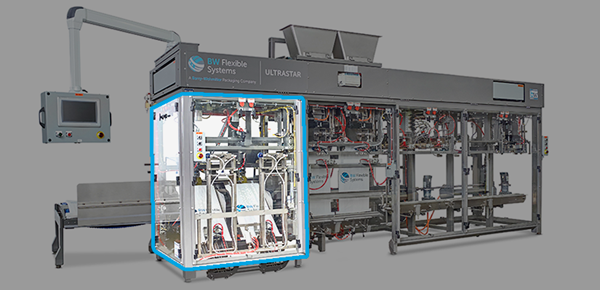 Get to Know Thiele's Bag Top Registration System
March 1, 2021
<p>The Bag Top Registration system, a feature of our Thiele Star bag filling system, maximizes bag quality and quantity by adjusting each bag’s position prior to placement in the transfer mechanism.</p><p>The target area for filled bag sealing is small and seal applications need to be neat and square. The bag top registration system ensures sealing in the <em>correct</em> place, time after time.</p><p>Our Bag top registration system <em>corrects</em> the position of the staged empty bags, making for very consistent filling, deflation and sealing. Once the empty bag is loaded into the first station, an integrated camera and backlight sense the bags' position and then a linear actuator compensates the position up or down, as needed. Empty bags that are out of tolerance will be rejected at the second station.</p>
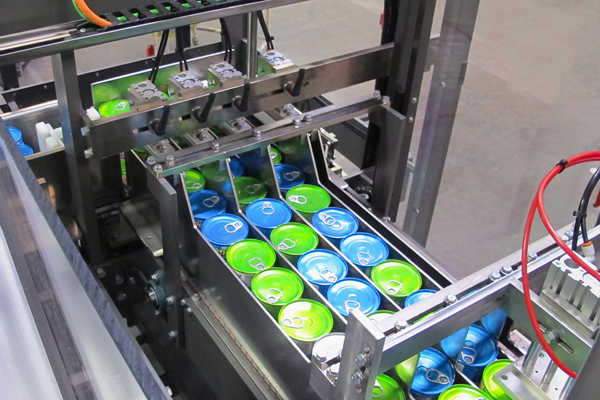 Operational Costs in Pet Food Packaging
February 25, 2021
<p>Packaging formats. Utility usage. Changeover efficiency. Labor requirements. For years, co-packers have considered these factors carefully to minimize their downtime and maximize their <span style="text-decoration: underline">return on investment<sup>Return on investment (ROI) is the ratio of the profit of an investment to the cost of that investment.</sup></span>. As we discussed in our <a href="/blog/post/pet-food-packaging-capital-costs" data-sf-ec-immutable="">planning and capital cost factors</a> post, addressing these factors upfront can help <span style="text-decoration: underline">co-packers<sup>A co-packer (or contract packager) is a company that packages and/or labels goods for another company or brand owner.</sup></span> manage their costs more efficiently, not just during project planning, but throughout the life of the equipment.</p><p>While some of these factors were already discussed in part one of this series, today, we’ll be sharing tips on how to manage operational cost factors including line flexibility, <span style="text-decoration: underline">changeover<sup>A changeover is the transition time from running one item (or SKU) in a manufacturing process to another. Some machines change over using the “recipe” system, where the parameters for different products are stored and then drawn into the machine parameter database. This allows a packaging machine to run different weights, sizes, and volumes with precision.</sup></span> efficiency, raw material movement, and balancing staff and automation requirements. Today’s roundtable includes:</p><ul><li>William Graf, Managing Partner for Design Group</li><li>Jan-Pieter Grootendorst, Sales & Marketing Expert for BW Flexible Systems</li><li>Daniel LoRusso, Director of System Sales in North America for BW Integrated Systems</li><li>Robert Redman, Managing Partner of Food and Beverage for Design Group</li><li>Todd Sandell, Sales Executive for BW Flexible Systems</li><li>Steve Shellenbaum, Product Manager for BW Flexible Systems</li></ul><p>Additional credentials for each of these experts are provided at the end of this post.</p><h3><a href="https://go.bwpackagingsystems.com/pet-food-packaging-machine-cost" target="_blank" data-sf-ec-immutable="">Calculating pet food packaging machine costs? Download our FREE whitepaper.</a></h3><h2>What are the primary operational cost factors co-packers should be aware of when purchasing new equipment?</h2><p><strong>LoRusso: </strong>When BW Integrated Systems designs a packaging line for a customer, we take into specific consideration raw material movement, the customer’s staffing and automation requirements, and their requirements for line flexibility.</p><h2>How can co-packers plan for optimal line flexibility during the sales processes?</h2><p><strong>LoRusso: </strong>Maximizing the number of SKUs they can run is the most important thing. One of the ways we help co-packers do this is by selecting machine-specific options that create quick and effective changeovers that are repeatable every single time. It’s also critical to think of changeover as part of the conveyance design. Quick, accurate, and repeatable changeover of the conveyance system can ensure an efficient start-up of the next SKU – this is what drives successful co-packing. </p><p><strong>Sandell: </strong>Often, the process for selecting the right options happens very early on as we begin looking at the family of products the customer wants to run. What are the different sizes of bags they want to run? What are the operational factors that would slow down changeovers? We try to identify those factors in our applications and sales process to ensure that these issues are mitigated early on.</p><p><strong>Grootendorst:</strong> Ensuring that your equipment is capable of quick changeovers is key. Every packaging equipment manufacturer says they have quick changeovers, but we can safely say that our changeovers are quick because they are all recipe-based and there’s little-to-no mechanical changeovers.</p><p><strong>Shellenbaum: </strong>This is true. Our machines changeover brilliantly. They’re automated and don’t require a maintenance guy to come in and adjust anything. Once you program in the recipe, there isn’t much more to the changeover besides selecting the right recipe – the automated system does the rest of the changeover for you.</p><h2>What do co-packers need to consider when automating their operations?</h2><p><strong>Redman: </strong>Obviously, automation drives out some labor costs, but it also changes the type of skillset you need in your facility to regularly maintain and troubleshoot your equipment. As we consider the environment that we’re in today with COVID-19, fewer operators are working shoulder-to-shoulder to case pack or to palletize or to do other manual operations. That’s better in the long view, but there are costs associated with implementing that automation.</p><p><strong>Graf: </strong>For example, if we’re working with a co-packer that has been around a while and we install a new machine that has the latest and greatest software, there may be a software cost and an integration cost that the plant will need to pay to upgrade the rest of their plant in order for the machine to talk to it.</p><p><strong>Grootendorst: </strong>At BW Flexible Systems, we have a tool we use to calculate return on investment and payback time for customers who are upgrading from a manual operation to an automated operation. It’s just one of the ways we aim to help our customers find the right balance between staffing and automation requirements.</p><h2>What role does raw packaging material play in driving operational costs?</h2><p><strong>LoRusso: </strong>With raw material movement, your goal should be to lower operational costs by mitigating complex distribution from the warehouse to point of use on the line. For example, one of our favorite strategies for aiding in operational efficiency is to centralize raw material supply locations. This helps optimize fork and hand truck movement and minimize empty trips – that is to say, trips where the fork truck has nothing on it. We also utilize visual, audible, and other cues to suggest when a machine center may be running low on a necessary material. The combination of these efforts creates an efficient supply of materials to keep the line running.</p><p><strong>Sandell: </strong>I think one thing that you’ll notice throughout this process is that there is a lot of overlap between each of these factors. <span style="text-decoration: underline">Upstream<sup>Upstream refers to all the parts of a manufacturing process that come before another specific manufacturing process further down the production line (e.g. raw material extraction is upstream from labeling).</sup></span> and <span style="text-decoration: underline">downstream<sup>Downstream refers to all the parts of a manufacturing process that come after another specific manufacturing process further up the production line (e.g. distribution is downstream from labeling).</sup></span> machinery affect your operational packaging costs as do the bags, packaging materials (for <span style="text-decoration: underline">FFS machines<sup>A form fill seal (FFS) machine commits three actions: it physically forms the packaging, it fills the packaging with product, and it seals the product inside the packaging.</sup></span>), product flow and availability of products.</p><p><strong>LoRusso: </strong>That’s a great point. For example, if you are switching to a more recyclable material to appeal to today’s sustainability initiatives, you’ll want to make sure that your packaging equipment is capable of running that new material without issue. At BW Packaging Systems, one of the things we really pride ourselves on is our ability to work cohesively and collaboratively with suppliers of all packaging materials – whether it’s cans, labels, cases, films, or another material.<br><br><strong>Did you find this content useful? Check out the second post in this series, which covers <a href="/blog/post/pet-food-packaging-capital-costs" data-sf-ec-immutable="">planning and capital cost factors</a>.</strong></p><h2>About the Experts</h2><p>The BW Packaging Systems Pet Food Blog is built upon cooperation and sharing of information between experts across the pet food industry including equipment manufacturers, packaging line integrators, engineering consultants, private label brands, co-packers and more. This post includes insights from:</p><h3>Design Group</h3><p><a href="https://www.bwdesigngroup.com/our-solutions/packaging-systems" target="_blank" data-sf-ec-immutable="">Design Group</a> is a premier system integrator for a wide range of filling and packaging line solutions with extensive experience in material handling, printing, labeling, inspection systems, <span style="text-decoration: underline">secondary packaging<sup>Secondary packaging serves to hold together units of primary packaging, usually to ease the transportation of goods. For example, whereas the box that individual beer cans come in acts as secondary packaging, the cans themselves act as primary packaging.</sup></span> requirements and management information systems. They provide complete production systems, line upgrades and experienced professionals ready to complement their client’s project team. In this post, you heard from:</p><p><strong>Robert Redman<br></strong>Robert Redman is the Managing Partner of Food and Beverage for Barry-Wehmiller Design Group. He brings 28 years of food and beverage experience to his company and its clients and is well-versed in packaging, process, controls and facility integration projects. Rob has provided oversight of multiple projects in the pet food industry including wet pet food, dry pet food, and treats production.</p><p><strong>William Graf<br></strong>William Graf is a Managing Partner for the Northeast Region at Barry-Wehmiller Design Group. He brings 20+ years of relevant experience and has been in several capacities including project manager, engineering manager, director, partner and managing partner.</p><h3>BW Flexible Systems</h3><p><a href="https://www.bwflexiblesystems.com/market/pet-animal-food-care" target="_blank" data-sf-ec-immutable="">BW Flexible Systems</a> is a leading producer of weighing and bag filling systems, SYMACH palletizers, conveying systems and wrapping machines for pet food and animal feed. They also have a wide range of vertical baggers and <span style="text-decoration: underline">horizontal flow wrappers<sup>Flow wrapping, also known as horizontal form fill sealing, is the process by which a consumer packaged good is placed on a conveyer belt, transported to the forming area, and wrapped in flexible packaging with a sealing material.</sup></span> to package treats, bones and other pet accessories, customized to meet each customer’s production, package style and economic requirements. In this post, you heard from:</p><p><strong>Stephen Shellenbaum</strong><br>Stephen Shellenbaum is a Product Manager at BW Flexible Systems. His keen knowledge of the pet food industry comes from decades of experience and dozens of relationships with pet food industry professionals. </p><p><strong>Jan-Pieter Grootendorst, M.Sc.<br></strong>Jan-Pieter Grootendorst is the Global Strategic Marketing and Innovation Leader of Bag Filling and Palletizing at BW Flexible Systems. Since 2018, he has been the EMEA APAC sales leader for BW Flexible Systems, SYMACH bag filling and palletizing. He brings multiple years of pet food packaging and palletizing experience to the global team.</p><p><strong>Todd Sandell<br></strong>Todd Sandell is a Sales Executive at BW Flexible Systems. He has nearly 40 years of experience in the petfood industry and packaging/palletizing systems through product development, product management, marketing, applications, business unit management and consultative sales.</p><h3>BW Integrated Systems</h3><p><a href="https://www.bwintegratedsystems.com/integrated-packaging-systems" target="_blank" data-sf-ec-immutable="">BW Integrated Systems</a> is an industry leader in the design and manufacture of end-of-line packaging equipment and robotic automation solutions, as well as the execution of integrated packaging systems. They provide several solutions to the pet food industry including material handling and palletizing, depalletizing, bliss and tray forming/erecting, cartoning and case packing, and systems integration services. In this post, you heard from:</p><p><strong>Daniel LoRusso</strong><br>Daniel LoRusso is the Director of System Sales, North America at BW Integrated Systems. He has over 15 years of industry experience and has led project management in both the US and EMEA. Previously, he was Director of Operations for our Loveland CO manufacturing facility for 7 years. His Primary role is to bring cohesion to commercial teams, alignment between sales executives, and aid in the collection and understanding of clients’ needs.</p>
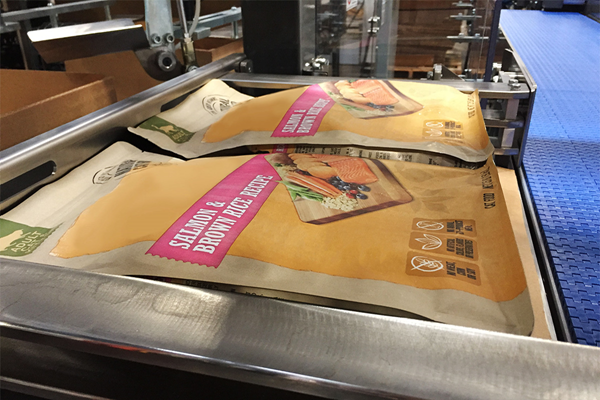 Planning & Capital Costs in Pet Food Packaging
January 28, 2021
<p>For co-packers, having flexible packaging equipment with quick, efficient changeovers is critical to running a successful business. It is the key to maximizing the production of multiple SKUs for a variety of clients. Today's top pet food co-packers know this. However, some co-packers underestimate the project planning and capital cost factors that lead to the successful purchase and installation of that equipment. </p><p><span style="text-decoration: underline">Co-packers<sup>A co-packer (or contract packager) is a company that packages and/or labels goods for another company or brand owner.</sup></span> who have the foresight to anticipate and address these factors up front will benefit by managing their costs more efficiently, not just during project planning, but throughout the life of their equipment. Those who fail to address these factors up front will likely experience unplanned downtime and incur additional costs as they try to achieve this after the fact.</p><p>In response to this issue, we’ve organized a virtual roundtable with a few experts from today's top pet food packaging equipment manufacturers. In this post, you’ll hear from six industry experts who are familiar with commonly overlooked cost factors, pitfalls to avoid, and how pet food co-packers can maximize production efficiency.</p><ul><li><strong>Jan-Pieter Grootendorst</strong>, Sales & Marketing Expert for BW Flexible Systems</li><li><strong>Daniel LoRusso</strong>, Director of System Sales in North America for BW Integrated Systems</li><li><strong>Robert Redman</strong>, Managing Partner of Food and Beverage for Design Group</li><li><strong>Todd Sandell</strong>, Sales Executive for BW Flexible Systems</li><li><strong>Steve Shellenbaum</strong>, Product Manager for BW Flexible Systems</li><li><strong>Jeremy Stith</strong>, Partner for Design Group</li></ul><p>Additional credentials for each of these experts are provided at the end of this post.</p><h2>What are some cost factors that co-packers commonly overlook when planning a project?</h2><p><strong>Sandell:</strong> Something that is often overlooked are the costs associated with the whole process of going out and looking at machinery before you ever submit an RFQ. It takes time and money to evaluate machine capabilities and compare them against production needs. This sometimes gets overlooked because the co-packer will have someone internal on their staff do this, but there is a cost associated with those tasks, whether you are handling them in-house or consulting with an engineering firm. Identifying the most effective way to manage the project planning costs will set the tone for how you manage all your subsequent costs.</p><p><strong>Stith:</strong> One of the first things that comes to mind is utilities. Traditionally, packaging equipment doesn’t have a significant utility demand. However, depending on the process equipment that goes along with it, you could be looking at significant utility usage., especially as co-packers start to specialize and create some of these custom packaging applications. They may not initially consider the complexity of what they’re adding.</p><h2>What utility requirements should co-packers consider when exploring new pet food contracts?</h2><p><strong>Stith:</strong> We always say that you have to look at the power, air, steam, and any pet food requirements for other utilities that go along with the equipment. In the treats market, we’re seeing increased interest in nitrogen flush to increase shelf life instead of putting oxygen absorbers in the packaging. It’s important for co-packers to make sure that they’re considering all of the utility requirements of whatever new process they implement. And in their existing systems, determining ‘do we [the co-packer] have the capacity for that or not? Is this an additional system that we have to add into the mix?’ They should consider what is the most cost-effective way to do that or is there an equipment option from our manufacturer that has a better utility set up for our process? How is the heat generated? Is it a natural gas operation? Electrical? As the equipment gets more sophisticated, these are things that the [co-packer] has to consider.</p><h2>What are some factors that influence the packaging equipment capabilities a pet food co-packer should look for to satisfy their contracts?</h2><p><strong>Grootendorst:</strong> For dry pet food, a lot of this will depend on the style of bag that they’re running for the customer and the type of seal they want on it. For example, in Europe, you have greater demand for different features including a handle cut, stitching, cosmetic seals, gas flushing (to accommodate for ingredients with fewer additives and stabilizers), and different types and quantities of labels. Each of these characteristics must be considered when choosing the packaging machinery and they each impact the capital costs differently.</p><p><strong>Shellenbaum:</strong> It also depends on how much automation they want. Typically, contract manufacturers and CPGs want as much automation as they can get, especially in the pet food markets. For example, our machines that include toolless <span style="text-decoration: underline">changeovers<sup>A changeover is the transition time from running one item (or SKU) in a manufacturing process to another. Some machines change over using the “recipe” system, where the parameters for different products are stored and then drawn into the machine parameter database. This allows a packaging machine to run different weights, sizes, and volumes with precision.</sup></span> are very popular because they’re easy and cost-efficient. Once you program in the recipe, there isn’t much more to the changeover besides selecting the right recipe – the automated system does the rest of the changeover for you.</p><p><strong>LoRusso:</strong> Initially, the cost of a new packaging line is largely dependent on the customer’s required production rate, product sizes and packaging formats. As a co-packer, it’s important to evaluate your need to interchange between each of these factors because what you are really selling is production time, not just product out the door. Co-packers want to changeover as much as possible, as quickly as possible, with as many different SKUs as possible. Maximizing their amount of production time is critical.</p><h2>What is a common pitfall that co-packers can avoid when designing a facility?</h2><p><strong>LoRusso:</strong> One of the pitfalls we commonly see in a wet food co-packing facility is not segregating wet and dry sides of the lines. There is a lot of liquid processing in a wet food plant, starting with the rinsing and filling of the cans. There’s also a lot of heat steam in the air, creating a very humid area. Proper line design and equipment ensure this wet and humid environment doesn’t wreak havoc on the labeling and packing sides of the line. So, when we talk about wet and dry, we need to distinguish between the parts of the process that utilize water and heat and those that don’t. The materials on the dry side of the line, whether it be labeling, or case packing or cartoning, tend to be paper, paper board, corrugate, or other materials that are susceptible to humid and wet environments. When we design lines, we take special care to create demarcations between these environments. We also take the time for specific equipment selection that helps dry and prepare cans for <span style="text-decoration: underline">secondary packing<sup>Secondary packaging serves to hold together units of primary packaging, usually to ease the transportation of goods. For example, whereas the box that individual beer cans come in acts as secondary packaging, the cans themselves act as primary packaging.</sup></span>. If there is too much overlap in these environments, you may be causing lower efficiencies in the dry side equipment.</p><h2>What are some factors that co-packers can consider to help them maximize production efficiency?</h2><p><strong>LoRusso:</strong> To maximize production, co-packers can have an integrator look at the task the line needs to perform (ex: can sizes, pack formats, labels, etc.). Most of an integrators’ up-front sales process (and the first part of this investment savings) is the time they spend to understand the customer’s business. This will give the integrator an understanding of the machine standards required as well as the speed and capability of those machines. But it’s not just enough for the integrator to understand speed and capability, they need to dive deeper with the co-packer to understand their intended operational philosophy. Everything from staffing, to changeover, to automation, to manual operations, product types and more.</p><p><strong>Redman:</strong> When a co-packer expands production, there is typically a process component to consider in addition to the packaging line. We try to look at the holistic view of this new operation, including the <span style="text-decoration: underline">upstream<sup>Upstream refers to all the parts of a manufacturing process that come before another specific manufacturing process further down the production line (e.g. raw material extraction is upstream from labeling).</sup></span> considerations. For example, you are going to add a new packaging line, but then you’ve got to add new process equipment to support the manufacture of the product. To put a new packaging line in and to put new process equipment, you’ll likely need more utilities and more space. When you start taking on more physical space inside the building, you impact the number of operators, which then impacts the number of employees in the facility, which impacts parking and so on. It just goes on and on as you keep pulling the thread. We like to look at all of those elements because they all have to work in harmony to provide an efficient operation for the co-packer.</p><h2>Did you find this content useful?</h2><p>Check out the second post in this series, which covers <a href="/blog/post/blog/2021/09/10/operational-costs-in-pet-food-packaging" data-sf-ec-immutable="">operational and production cost factors</a>.</p><h2>About the Experts</h2><p>The BW Packaging Systems Pet Food Blog is built upon cooperation and sharing of information between experts across the pet food industry including equipment manufacturers, packaging line integrators, engineering consultants, private label brands, co-packers and more. This post includes insights from:</p><h3>Design Group</h3><p><a href="https://www.bwdesigngroup.com/our-solutions/packaging-systems" target="_blank" data-sf-ec-immutable="">Design Group</a> is a premier system integrator for a wide range of filling and packaging line solutions with extensive experience in material handling, printing, labeling, inspection systems, secondary packaging requirements and management information systems. They provide complete production systems, line upgrades and experienced professionals ready to complement their client’s project team. In this post, you heard from:</p><p><strong>Robert Redman</strong> is the Managing Partner of Food and Beverage for Barry-Wehmiller Design Group. He brings 28 years of food and beverage experience to his company and its clients and is well-versed in packaging, process, controls and facility integration projects. Rob has provided oversight of multiple projects in the pet food industry including wet pet food, dry pet food, and treats production.</p><p><strong>Jeremy Stith</strong> is a Partner at Barry-Wehmiller Design Group. He brings 17 years of food and beverage experience to his company and its clients and is well-versed in packaging, process, controls and facility integration projects. Jeremy is especially familiar with pet food packaging solutions, as he has completed multiple projects in the pet food industry including wet pet food, dry pet food, and treats production.</p><h3>BW Flexible Systems</h3><p><a href="https://www.bwflexiblesystems.com/market/pet-animal-food-care" target="_blank" data-sf-ec-immutable="">BW Flexible Systems</a> is a leading producer of weighing and bag filling systems, SYMACH palletizers, conveying systems and wrapping machines for pet food and animal feed. They also have a wide range of vertical baggers and <span style="text-decoration: underline">horizontal flow wrappers<sup>Flow wrapping, also known as horizontal form fill sealing, is the process by which a consumer packaged good is placed on a conveyer belt, transported to the forming area, and wrapped in flexible packaging with a sealing material.</sup></span> to package treats, bones and other pet accessories, customized to meet each customer’s production, package style and economic requirements. In this post, you heard from:</p><p><strong>Stephen Shellenbaum</strong> is a Product Manager at BW Flexible Systems. His keen knowledge of the pet food industry comes from decades of experience and dozens of relationships with pet food industry professionals.</p><p><strong>Jan-Pieter Grootendorst</strong> is the Global Strategic Marketing and Innovation Leader of Bag Filling and Palletizing at BW Flexible Systems. Since 2018, he has been the EMEA APAC sales leader for BW Flexible Systems, SYMACH bag filling and palletizing. He brings multiple years of pet food packaging and palletizing experience to the global team.</p><p><strong>Todd Sandell</strong> is a Sales Executive at BW Flexible Systems. He has nearly 40 years of experience in the pet food industry and packaging/palletizing systems through product development, product management, marketing, applications, business unit management and consultative sales.</p><h3>BW Integrated Systems</h3><p><a href="https://www.bwintegratedsystems.com/integrated-packaging-systems" target="_blank" data-sf-ec-immutable="">BW Integrated Systems</a> is an industry leader in the design and manufacture of end-of-line packaging equipment and robotic automation solutions, as well as the execution of integrated packaging systems. They provide several solutions to the pet food industry including material handling and palletizing, depalletizing, bliss and tray forming/erecting, cartoning and case packing, and systems integration services. In this post, you heard from:</p><p><strong>Daniel LoRusso</strong> is the Director of System Sales, North America at BW Integrated Systems. He has over 15 years of industry experience and has led project management in both the US and EMEA. Previously, he was Director of Operations for our Loveland CO manufacturing facility for 7 years. His primary role is to bring cohesion to commercial teams, alignment between sales executives, and aids in the collection and understanding of client’s needs. </p><div> </div>
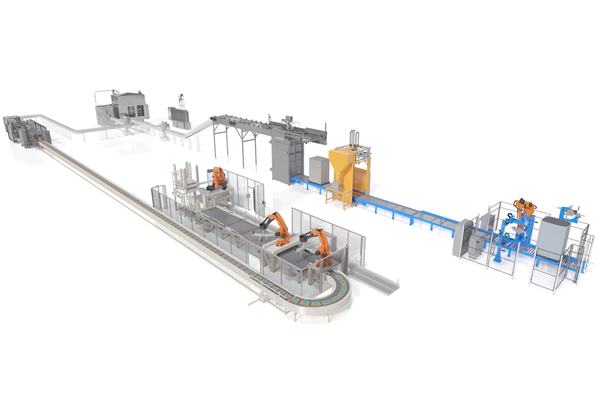 Topics for Selecting a Packaging Line Integrator
January 15, 2021
<h2>Introduction</h2><p>For many of today's top Consumer Packaged Goods companies (CPGs), packaging line integrations have become routine investments; necessary for meeting changing market demands and improving the overall efficiency of production lines. The relative success of a packaging line integration can be determined by answering "yes" to three questions:</p>1. Was the project completed on budget?2. Did the line start up on time?3. Does the line run at its committed efficiency? <p>To check all three of these boxes requires diligent project planning and total transparency between you and your integrator. In this post, we'll recommend five key topics you should discuss with your prospective packaging line integrator to ensure your integration gets completed on time and on budget.</p><p>Why is Transparency Important to Packaging Line Integrations?</p><p>Before we jump into the topics, let's address transparency. Transparency is an important component of any supplier/buyer relationship, regardless of the project's scale. It's important because when you spend company money with a supplier, you're not just purchasing equipment and services from that supplier; you're telling them "I trust you to deliver what you promised, to make me look good in front of my boss, and to make my job easier."</p><p>When you're responsible for overseeing a packaging line integration, which are often multimillion-dollar investments, the importance of that transparency is amplified with every dollar. The impact of the integrator you choose - good or bad - will be felt within your organization (and likely your career) for years to come. Having a candid, transparent conversation with your prospective packaging line integrator is the first step you should take to ensure you're making the right decisions throughout the course of your project.</p><h2>Top 5 Packaging Line Integrator Discussion Topics</h2><h3>Integrator Experience</h3><p>The quickest way to determine if your integrator is being transparent about their capabilities is to ask for proof of experience. Case studies are a great place to start. Ask your integrator for examples of similar packaging line integration projects they've completed so you can get an idea of how their solutions match up with your project.</p><p>You should also ask a prospective integrator for references. This can include past clients, OEMs, installers, or any other vendor that has worked closely with the integrator. Ask these references probing questions about their experiences with the integrator. What did they do well? Did everything go smoothly with the project? If not, how did the integrator respond to adversity?</p><h3>Financial Strength</h3><p>Working with a large, financially strong packaging line integrator can be useful in managing your own financial risk. Such integrators, including BW Integrated Systems, usually offer creative financing agreements that can help you comfortably manage your cash flow as you invest in new packaging infrastructure. This is especially useful when weathering unforeseeable market disruptions, like those created by the COVID-19 pandemic.</p><p>Additionally, these integrators can leverage their own financial experience to guide you through ROI calculation and other hurdles associated with financing. If they're already acting as your advisors and analyzing market trends as they pertain to your investment potential, they might also offer to present these findings to upper management on your behalf.</p><h3>OEM Management</h3><p>If you haven't built relationships with suitable OEMs for your integration, then this is another opportunity to lean on your integrator. They should be able to recommend suitable, credible OEMs for your project and, upon request, provide examples of how they have seen success on similar projects working with those OEMs.</p><p>Regardless of who picks the OEMs, it's best to take a consultative approach with your integrator. If you've already identified the OEMs you'd like to work with, that's okay too. However, if you force an integrator to work with vendors they don't know or trust, they're likely to increase their fees during contract negotiations or make changes to the contract itself in order to protect themselves from risk.</p><h3>Contract Negotiations</h3><p>Strict contract demands - including tight timeline constraints, total control over OEM selection, and asking the integrator to sign up for terms such as "liquidated damages" - will often drive up your cost. This is because experienced packaging line integrators know that agreeing to such demands puts them at greater risk. </p><p>Understanding your own "risk profile" is also vitally important when it comes to negotiating a contract with your integrator. Your goal should be to strike the right balance between cost and risk. This requires looking inward at the depth and quality of your in-house resources. Are you equipped to handle the installation yourself? Who will be responsible for shipping? What risks are associated with owning those steps in-house? What assurances are granted by contracting the integrator to do them?</p><h3>Packaging Line Design</h3><p>Finally, it's important to discuss the considerations that will inform your integrator on how to design a packaging line that is well-optimized for your particular plant environment. This will require a thorough review of several factors including your footprint, utilities, material flow, and more. Your goal should be to lay out a packaging line that is efficient in its use of space, optimizes labors, and most importantly, is operationally efficient.</p><p>For example, if you have a flow-through facility, meaning materials come through on one side of the plant and the product ships out on the other, you'll likely want an inline packaging line design. By contrast, if both in and out are on the same side of the building, you probably want a "u" shaped line.</p>
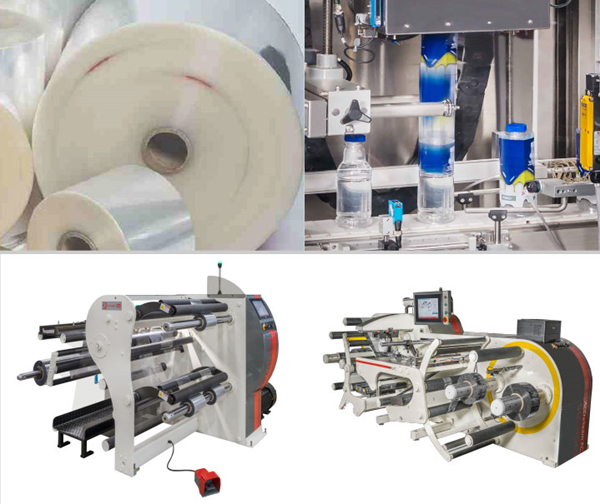 Shrink Sleeve Converting: The Critical Steps of Secondary Converting
December 18, 2020
<p><em>Ben Ritter is a shrink sleeve and converting specialist at BW Packaging. The following content is an excerpt from his article – Shrink Sleeves: Seaming, Converting and Application – which originally appeared in Labels & Labeling on October 23, 2020.</em></p><p>The secondary converting process is critical in converting a printed shrink sleeve stock onto the final product container. To achieve a best-in-class shrink sleeve application, the converting and the application processes need to be aligned and functioning in harmony.</p><p>This process includes the following steps:</p><ol><li><strong>Slitting</strong> is a critical first step as it directly influences the nature and quality of the slit edges. In shrink sleeve slitting applications, the slit edges of the rolls are solvent-welded, producing an overlapped seam that would ideally be invisible on the finished product.</li><li><strong>Seaming</strong> follows once clean slits have been achieved. The objective of seaming (or welding) is to transform the flat, printed film into a seamed tube. The end goal should be to achieve this with a seam that cannot be seen or felt, while at the same time, maximizing throughput and minimizing waste.</li><li><strong>Additional </strong><strong>finishing </strong>often follows the seaming process. In this step, a <a href="/brands/stanford">doctor machine</a> enables the converter, when necessary, to change the core size, application rewind direction, and remake splices as necessary to ensure that they will pass appropriately through high-speed automatic application equipment.</li></ol><p>While converters will be most interested in how to produce a high-value shrink sleeve label, it is also necessary that they understand that the application and shrinking process are equally important to producing a finished product that the brand owner – and ultimately, the consumer – will value.</p><p>For more information on shrink sleeve converting, <a href="https://www.labelsandlabeling.com/opinion/shrink-sleeves-seaming-converting-and-application" target="_blank" data-sf-ec-immutable="" data-sf-marked="">read the original article</a> on <em>Labels and Labeling's</em> website or contact us to connect with a shrink sleeve and converting specialist today.<strong></strong></p>
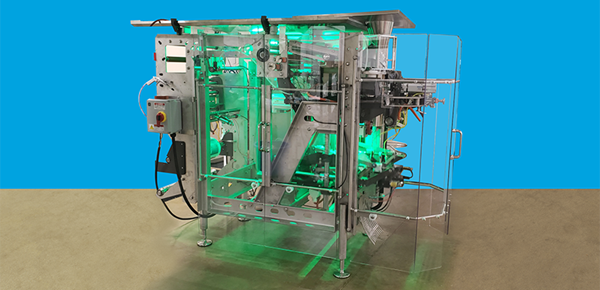 Hayssen ISB in the News
December 8, 2020
<div><p>Earlier this Fall, BWFS launched the new <a href="https://www.bwflexiblesystems.com/machine/vertical-form-fill-seal/hayssen-isb" data-sf-ec-immutable=""><span style="">Hayssen ISB vertical bagger</span></a>. The interest and excitement from the packaging industry has been strong! We've highlighted a few recent articles talking about the Hayssen ISB below, so grab a cup of coffee or tea and click through to learn more about our exciting new vertical bagger.</p><h3 id="news-round-up">News Round-up: Hayssen ISB</h3><p><strong>VF/F/S Machine Delivers Intelligent Sanitary Bagging</strong><br><em>Next-generation design developed from customer interviews and deep company expertise.</em><br><a href="https://www.packworld.com/machinery/bagging-wrapping/article/21201196/vertical-formfillseal-machine-delivers-intelligent-sanitary-bagging" data-sf-ec-immutable="">PACKAGING WORLD</a></p><blockquote>"BW Flexible Systems’ new Hayssen ISB (intelligent sanitary bagger) aims to provide best-in-class sanitary design, modern industrial machine intelligence and intuitive operation for vertical form-fill-seal packaging."</blockquote><p><a href="https://www.packworld.com/machinery/bagging-wrapping/article/21201196/vertical-formfillseal-machine-delivers-intelligent-sanitary-bagging" data-sf-ec-immutable="">Read the article</a></p><hr><p><strong>New Plant Products: Hayssen ISB vertical form fill seal machine</strong><br><a href="https://www.foodengineeringmag.com/articles/99229-vertical-fill-form-seal-machine" data-sf-ec-immutable="">FOOD ENGINEERING</a></p><blockquote>"Hayssen ISB is high-pressure washdown capable, including its human-machine interface (HMI), which would typically require protection due to its sensitive components."</blockquote><p><a href="https://www.foodengineeringmag.com/articles/99229-vertical-fill-form-seal-machine" data-sf-ec-immutable="">Read the article</a></p><hr><p><strong>BW Packaging Systems to Unveil Various Solutions</strong><br><a href="https://www.packagingstrategies.com/articles/95711-new-products-at-pack-expo-connects" data-sf-ec-immutable="">PACKAGING STRATEGIES</a></p><blockquote>"The ISB’s new innovative sanitary design is suitable for the most demanding applications and challenging environments. Discover the benefits of this vertical form fill seal bagger and explore the machine’s outstanding HMI and UX features."</blockquote><p><a href="https://www.packagingstrategies.com/articles/95711-new-products-at-pack-expo-connects" data-sf-ec-immutable="">Read the article</a></p><hr><p><strong>BW Flexible Systems’ new Hayssen ISB vertical form-fill-seal machine delivers intelligent sanitary bagging</strong><br><a href="https://www.provisioneronline.com/articles/110141-bw-flexible-systems-new-hayssen-isb-vertical-form-fill-seal-machine-delivers-intelligent-sanitary-bagging" data-sf-ec-immutable="">National Provisioner Online</a></p><blockquote>"The Hayssen ISB’s HMI can be equipped with cellular network capabilities to communicate with tablets for training opportunities without affecting production needs."</blockquote><p><a href="https://www.provisioneronline.com/articles/110141-bw-flexible-systems-new-hayssen-isb-vertical-form-fill-seal-machine-delivers-intelligent-sanitary-bagging" data-sf-ec-immutable="">Read the article</a></p></div><h3 id="teaser-trailer">View the Hayssen ISB Teaser Trailer</h3>
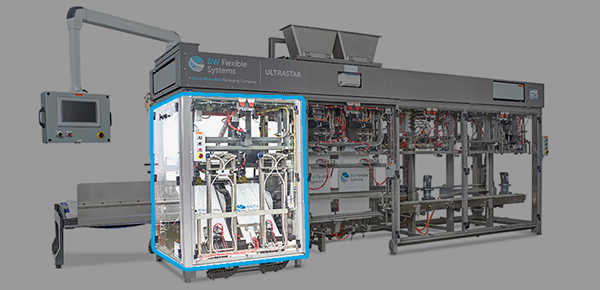 Get to Know Thiele's High Capacity Bag Magazine
December 2, 2020
<div><p>The Bag Top Registration system, a feature of our Thiele Star bag filling system, maximizes bag quality and quantity by adjusting each bag’s position prior to placement in the transfer mechanism.</p><p>The target area for filled bag sealing is small and seal applications need to be neat and square. The bag top registration system ensures sealing in the <em>correct</em> place, time after time.</p><p>Our Bag top registration system <em>corrects</em> the position of the staged empty bags, making for very consistent filling, deflation and sealing. Once the empty bag is loaded into the first station, an integrated camera and backlight sense the bags' position and then a linear actuator compensates the position up or down, as needed. Empty bags that are out of tolerance will be rejected at the second station.</p></div>
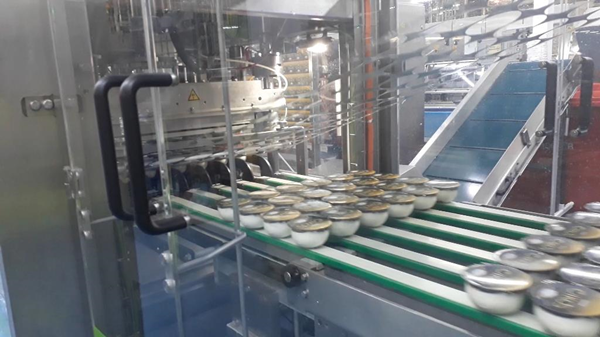 BW Filling & Closing announces the arrival of PET multipacks
June 30, 2020
<p><strong><em>With its reliable PET pre-cutting solution, BW Filling & Closing (BWFC) </em></strong><strong><em>offers an alternative to PS for all existing FFS machines as well as for future models.</em></strong></p><p>BWFC is already one of the few OEMs able to master PET cutting on FFS machines and offer separable multipacks of 2 units with a system where the attachment line is cut except in two points. This solution was hindering the change from PS to PET to premium segments and consumers would have to inconveniently twist the pack rather than bend it.</p><p>With its new pre-cutting tools, BWFC now offers agrifood manufacturers the possibility to use PET for their mid-range products as well, without changing consumer habits. The pack bends and snaps like a PS pack should.</p><p> </p><p><strong>SNAPCUT, the tailor-made PET pre-cut solution from </strong><strong>BWFC </strong></p><p>BWFC relies on an innovative tool and an in-depth qualification process to offer ultimate quality pre-cuts on all kinds of PET (standard, multilayer, foamed, recycled).</p><p>Each PET film is analyzed in the laboratory, to anticipate its behavior and adjust the tool as well as the pre-cutting parameters.</p><p>The resulting pre-cut quality is validated according to factual and repeatable criteria, on a testing equipment designed by BWFC which measures the angle and mechanical load needed to break the pack and separate cups. </p><p>With SNAPCUT, agrifood manufacturers are sure to get a functional tool, tailored to their particular PET, machine and process.</p><p>BWFC is also measuring -- under real conditions -- the wear of 20 combinations of materials, treatments and finishings in order to be able to guarantee up to 10 million pre-cutting cycles without resharpening, optimizing operational costs for its customers.</p><p> </p><p>SNAPCUT is the result of intense R&D work and significant investment, which allowed BWFC to gather extensive knowledge on the mechanical behavior of PET. </p><p>This offer is the final step of a project started in 2018 and aiming at developing for agrifood manufacturers a complete, fully optimized and reversible upgrade solution for their FFS lines.</p>PET thus joins PLA (polylactic acid) in the portfolio of alternative solutions to PS for plastic cups end-of-life management.
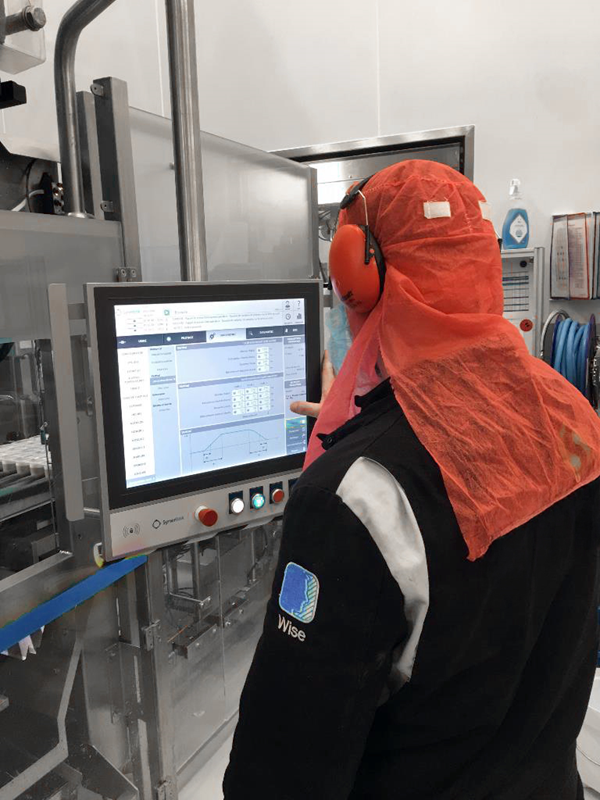 Efidrive: From Line Operation to Connected Factory
June 30, 2020
<p><em>BW Packaging is the first packaging machine manufacturer to enhance its systems with the functionalities of a Manufacturing Executing System (MES). The Efidrive line management module is a straightforward solution to connecting the modern factory. This packaging line operation software has been supplemented with an optional module, which enables the manufacturer to connect their lines to the company’s ERP as well as to various third-party devices.</em></p><h2>MES made easy</h2><p>BW Packaging's line management module acts as an interface for data coming from the shopfloor and from the ERP, as well as a production coordinator. It provides real-time information on the planning of production orders, raw material supply, and completion of all stages of the process. It also collects traceability and performance data automatically.</p><p>Developed by a packaging line specialist for packaging lines and integrated in the Efidrive software, this line management module can be implemented much more quickly (and thus at a lower cost) than a third-party MES.</p><h2>Adopted by the Schreiber Foods factory located in Cléry le Petit (France)</h2><p><a href="https://www.schreiberfoods.com/locations/clery-le-petit/" target="_blank" data-sf-ec-immutable="" data-sf-marked="">Schreiber Foods</a> is using the Efidrive software and the new line management module to operate 4 packaging lines (1 FS line and 3 FFS lines) simultaneously. Together, they produce 80 SKUs of yogurts, cottage cheese, and milk desserts for Système U.</p><p>The lines are connected with fruit preparation dosing units, labellers, laser printers, and AGVs. Recipe changeover is fully optimized, significantly reducing the possibility of human error.</p><p>Production machinery is linked to Schreiber Foods’ ERP, which in turn is connected with the ERP of the customer. The supply needs of Système U are automatically integrated into the production workflow, production is adjusted to demand in real time, and the logistic platforms can check the status of their orders at any time.</p><h2>About the Efidrive</h2><p>The packaging line operation software Efidrive was created in 2010 by the Industrial IT department of BW Packaging. It was designed with interoperability (using PackML and OPC standards) and communication in mind, anticipating the revolution of connected objects in the industrial environment.</p><p>Running on over 200 machines around the world, Efidrive is highly appreciated for its reliability, secure architecture, and ergonomic interface, as well as for the production analysis functionalities it offers to increase the performance of packaging lines.<strong></strong></p>
 BWFC helps Algerian customer stand out with large-volume cups
April 28, 2020
<p>At the end of 2017, BW Filling & Closing (BWFC) upgrade team made a potentially game-changing observation while in an upgrade visit to Betouche, a dairy customer in Algeria. </p><p>In analizing the Algerian market, BWFC experts noticed that the offerings of dairy products in large-volume cups is weak., With most of the competition, their packaging is unattractive, because it consists only of preformed cups that are filled manually by local workers.</p><p>BETOUCHE is a dynamic outsider in the very competitive Algerian market for dairy products. They decide to follow BWFC’s advice and even ask them to develop the marketing design of the cup. </p><p>At the time, Betouche had an ARCIL A6 - 2x6 - 63x63 machine that had been sitting unused for three years in their yogurt packaging plant. BWFC experts created a cup shape completely new to this market, compatible with the industrial productivity of the ARCIL thermoformer, and at the same time studied ways to modify the machine already on site.</p><p>The tooling designed for this new cup format was installed at the customer’s site by BWFC technicians: a heating box for the plastic strip, a trimming tool, a mold, a lid sealing tool and a nozzle plate.</p><p>Mission accomplished! The machine, which formerly produced 75 g and 100 g cups, now makes 400 g thermoformed cups on a platform measuring 1x3 - 126x126. It runs at a rate of 28 strokes per minute and dispenses plain and flavored parboiled yogurt with no wave effect. </p><p>The customer BETOUCHE is very satisfied — they have a new production line for 15–20% of the price of a new FFS machine!</p><p>The cup is attractive and stands out on the shelf from the competition because of the quality packaging. And after just two weeks on the store shelves, this new yogurt’s sales success is the talk of the Algerian dairy markets!</p>
 Customize your Form-Fill-Seal Cups with Engraving!
April 28, 2020
<p>From a marketing point of view, the decorative strip applied around a yogurt or dessert cup during thermoforming — which also makes it possible to reduce the plastic thickness — is an attractive means of communication for a manufacturer. </p><p>But another prominent marketing trend is on the rise, engraving. More and more, brands are deciding to show an engraving on the wall of the cup itself, which may or may not be labeled.</p><p>At BW Packaging, we’ve been making engraved cups with etchings in a wide variety of images and lettering for a long time. But the recent rise of engraving in packaging is a response to customers’ quest for customization. “The trend has been growing ever since we engraved the bottom of the new Danone Kiss cup,” explains Fabien Jego, an expert engraving designer for BW Packaging. “Because of this success, customers are coming from all over, in ever-increasing numbers, asking us to engrave their brand name or logo, or even a motif that differentiates their cup.” </p><h2>What is the mark of good engraving?</h2><p>Usually, the customer will propose a motif or logo that the designer in the studio studies and redesigns. We are experts at adapting logos, as well as other images or characters. The exact design rules must be respected: the width and thickness of the characters or motif calculated in proportion to the thickness of the plastic film, calculation of the space necessary between the various elements to be engraved, so that the embossed relief is properly distinguished in thermoforming. And the plastic film must be able to go into and come out of the engraving process. This group of techniques is part of our thermoforming expertise.</p><p>Production of the mold is the next essential step. In the late 1990s, the design studios and digital tool and die machines at our mold-making partners gained the ability to execute digital engineering designs meeting our requirements. When Danone’s Kiss cup launched in 2011, ARCIL (a BW Packaging brand) teams created beautiful engravings of the Danone logo at the base of the new yogurt cup, thanks to the competitive costs of complex mold making. Creation of air evacuation holes in the mold allows the plastic to adhere perfectly to the intaglio engraving on the walls of the mold during thermoforming.</p><p>If you want your product to stand out on the shelf, engraving is one way to differentiate yourself from the competition that is more and more in demand. If you’re interested in exploring this new trend in packaging design, BW Packaging's thermoforming experience, expertise, and creativity give us the edge over other packaging equipment companies. </p>
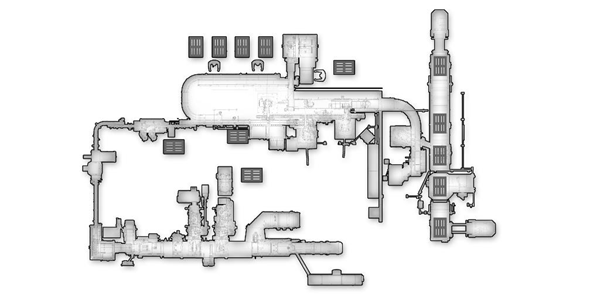 The True Flexibility of Our Form‑Fill‑Seal Machines
February 4, 2020
<p>How do you produce a large variety of dairy desserts in different cup types on the same machine? SAPY, a copacker for the dairy industry in Martinique, is equipped with a complete multi-product Synerlink line to produce a wide variety of items for its customers.</p><p>To respond to their customers’ requests, dairy industry co-manufacturers needed to perform short production runs that were very diverse in terms of product, cup shape, and SKU.</p><p>SAPY had a number of needs like this. The SOMES Group (Société Martiniquaise des Eaux de Source) wanted to bring all of its production — previously done on three lines — into a single integrated thermoforming line. It had to package 125-gram yogurt units, 100-gram cream desserts, 60-gram petit suisse, and 100-gram flan units. The variety of products and cup shapes required very broad filling expertise, not to mention a multitude of options beyond the line to deliver the required sales units.</p><h2>An efficient, fully integrated line</h2><p>BW Packaging accepted the challenge and provided a complete packaging line, from cup thermoforming to palletizing sales units, while integrating multiple other functions, such as an X-ray monitoring device, a labeler, a fruit station, and a wrapper. </p><p>Everything on this line is designed to improve productivity, including fast label height changing, an automatic emptying process that takes less than five minutes, and two magazines of overpacking cardboard that allow the operator to prepare production at the same time. The line’s communication helps monitor whether cup type, recipe, packaging mode, and overpacking are consistent with the production order. Moreover, the line is equipped with two symmetrical control stations to allow control of the interior of the line.</p><h2>A very versatile multiproduct FFS</h2><p>The packaging machine is made up of an <a href="/products/rigid-filling/form-fill-seal">Arcil FFS</a>, which thermoforms, fills, and seals five different cup formats with two label height options and a capacity of 21,600 cups an hour. The thermoformer is equipped with three specific fillers, as well as a flavor filler and a fruit station to allow multiple recipes: a blended fruit yogurt filler and FOB (fruit on the bottom) with a fruit station, a white mass filler, a timed caramel filler for flan, and a flavor filler for yogurt.</p><h2>An innovative end-of-line — efficient and flexible</h2><p>The line continues with a robotic wrapping machine that is ergonomic and flexible to use. For example, packs of cups can be overpackaged or not. Moreover, each type of package has its own cardboard format. The label height and format can be changed in a few minutes, as can automatic emptying, to respond to the specifics of this line. The line does some very short production runs — about 30 minutes to an hour, while maintaining very good technical output. Today, the bulk production yield (packs that are not overpackaged) is about 98% and is above 89% for the production of overpackaged packs.</p><p>A compact, ergonomic box former also exists for the overpacking process — the boxes are loaded horizontally and at the operator’s height. The glue is placed at a single point, which secures the wrapping machine and the box former at the same time.</p><p>To make production even more flexible, Synerlink has developed programming for robotic packaging to mix single-fruit packs and deliver SKUs with a mixture of flavors, in keeping with the customer’s request.</p><p>A palletization system ends the packaging process on the line.</p><p>All this occupies a small footprint (23 m long by 17 m wide).</p><h2>Our expertise</h2><p>This technologically complete project showcases the competence of BW Packaging teams in designing and orchestrating complex, innovative packaging projects.</p><p>But let’s hear what Jérémy Holin, industrial director at Sapy, has to say about the project’s realization:</p><p>“The line designed and implemented allowed us to overcome two major challenges: On the one hand, we have achieved a level of excellence in food safety while meeting all our franchiser’s requirements. On the other hand, we have improved our industrial capability by improving productivity (labor and packaging loss). The support from BW Packaging's technical team allowed us to rapidly identify points for improvement during startup and introduce suitable solutions for sustainable performance.”</p><p>It’s in our DNA to support and assist our customers, so they achieve better performance and flexibility in responding to market changes.</p>
 TNUVA Selects a Flexible BW Packaging Filler for Its Yolo Product Line
February 3, 2020
<p>To support the successful launch of its new Yolo cream dessert — producing up to one million cups per week — <a href="https://tnuvausa.com/" target="_blank" data-sf-ec-immutable="">TNUVA</a> partnered with BW Packaging and installed a <a href="/products/rigid-filling/fill-seal/dairy-pack-rm12c">Dairy Pack RM12C filling machine</a>. The RM12C offers outstanding flexibility, accommodating a wide range of products as well as various cup formats and materials.</p><p>Operating under aseptic conditions, the machine consistently fills up to 24,000 cups per hour. The Yolo cream dessert is cold‑filled, with the option to apply a generous layer of cream on top for enhanced product appeal.</p><p>The RM12C accepts two cup diameters (65 mm and 87 mm) and two cup heights. The 65 mm format is available in cardboard with a cardboard lid, as well as in PP cups that can be sealed with either aluminum or PET lids.</p><p>Thanks to the high hygiene standards of the DAIRY PACK filling technology, TNUVA achieves a 60‑day shelf life, fully meeting customer requirements.</p>
 Tapping Into the Full Potential of On‑the‑Go Drinks
November 28, 2019
<h2>Capturing Growth in Dairy and Juice Beverages</h2><p>Dairy- and juice‑based drinks represent the fastest‑growing segment of the global beverage market. To succeed in this dynamic space, companies need more than the right recipes—they also need strong branding, efficient distribution, and cost‑effective production.</p><p>BW Packaging supports beverage producers with <strong>highly efficient, flexible packaging lines</strong> designed for a wide range of dairy, juice, and specialty drinks. Our solutions help brands bring innovative products to market quickly and profitably.</p><h2>Single‑Serve, Well‑Branded Products for On‑the‑Go Consumption</h2><p>BW Packaging’s <a href="/products/rigid-filling/fill-seal">FS (fill‑seal) bottle filling lines</a> support two neck diameters and a variety of materials, including PS, PP, PET, and HDPE. With aluminum lids and multiple closure options—such as screw caps, snap‑on caps, and sport caps—these lines are ideal for single‑serve formats, from 65 ml to 200 ml and beyond.</p><p>These convenient portion sizes are perfectly suited for on‑the‑go consumption at festivals, sporting events, airports, railway stations, and other high‑traffic locations. Bottles also offer extensive design possibilities, helping brands stand out on the shelf and strengthen their marketing impact.</p><h2>Highly Flexible Lines for a Wide Range of Recipes</h2><p>Today’s beverage market is more diverse than ever, blending traditional favorites with new, innovative recipes. From drinkable yogurts, cold‑filled juices, smoothies, milk, kefir, and vegetable juices to protein drinks, coffee and tea beverages, soups, and products containing fruit pieces, seeds, or nuts—the variety is enormous.</p><p>As a result, beverage producers need packaging lines that allow them to enter new sub‑categories easily, switch between products quickly, and manage changeovers with minimal downtime and cost.</p><p>BW Packaging answers this need with versatile, future‑ready packaging lines deployed around the world, enabling customers to fill multiple recipes on a single line with maximum efficiency.</p><h2>BW Packaging: Your Beverage Packaging Partner</h2><p>As a beverage specialist, BW Packaging collaborates with regional leaders, co‑packers, and multinational brands worldwide to develop packaging solutions that align with evolving market demands.</p><p>Our focus is on delivering efficient, easy‑to‑operate, and scalable packaging lines — so beverage companies can provide exceptional products at competitive value. Whether supporting established brands or innovative newcomers, BW Packaging helps convey what matters most to today’s consumers: natural ingredients, strong brand identity, and convenient formats.</p><p>With the flexibility of our FS filling lines, we are ready to partner with you as you innovate and grow in this expanding beverage market.</p>
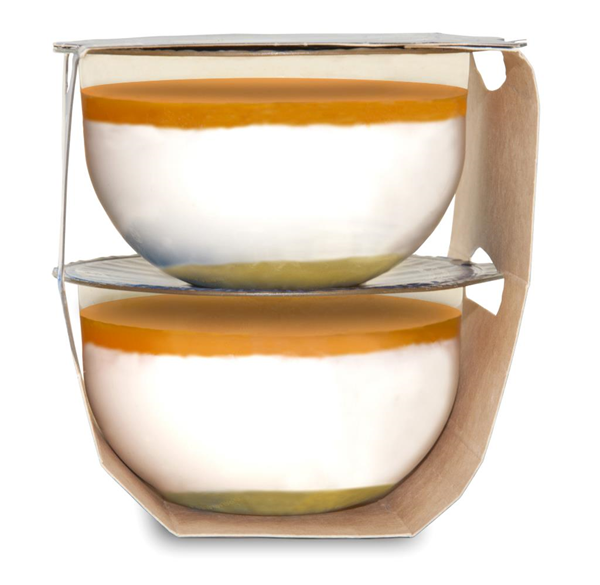 Balancing Recyclability Requirements with Product Differentiation
November 28, 2019
<p>As a leader in packaging and wrapping solutions for fresh dairy products and desserts, BW Packaging supports manufacturers as they adapt to evolving market requirements—offering multiple solutions to meet today’s challenges.</p><p>One of the latest innovations appearing on store shelves is a three‑layer gourmet dessert packaged in a single cup thermoformed from transparent PET. Combining premium visual appeal with recyclability and cost efficiency, this packaging format responds directly to growing market expectations.</p><p>Balancing differentiation, recyclability, and profitability is a complex challenge for marketing and production teams alike. At the request of a major global dairy player, BW Packaging rose to this challenge with a highly advanced solution.</p><p>The proposed system is an <a href="/products/rigid-filling/form-fill-seal">Arcil Form‑Fill‑Seal machine</a> equipped with three fillers, capable of producing up to 40,000 cups per hour. It precisely fills three distinct flat layers: a fruit‑based bottom layer with large, clearly visible pieces, a middle layer of high‑protein yogurt with a smooth surface, and a uniform topping of fruit coulis.</p><p>The cups are sealed with a heat‑sealed PET lid, trimmed inline to deliver a smooth, glossy finish. This surface quality clearly stands out compared with the honeycombed or micro‑perforated lids often found on premium preformed cups.</p><p>Designed for flexibility and hygiene, the machine operates in ultra‑clean conditions. Two of the fillers can be removed for purging or cleaned in place (CIP) during masked time, allowing maintenance and product changeovers without interrupting production.</p><p>Filling accuracy and product presentation are uncompromised. The use of crystal‑clear, thermoformed PET showcases the dessert’s layered structure with a 360‑degree view, enhancing shelf appeal. Made from 100% PET, the packaging offers a glass‑like appearance while being fully recyclable as a mono‑material solution.</p><p>As market trends push manufacturers to rethink traditional production practices, BW Packaging helps guide this transition—delivering solutions that address recyclability, elevate premium positioning, and maintain low production costs.</p>
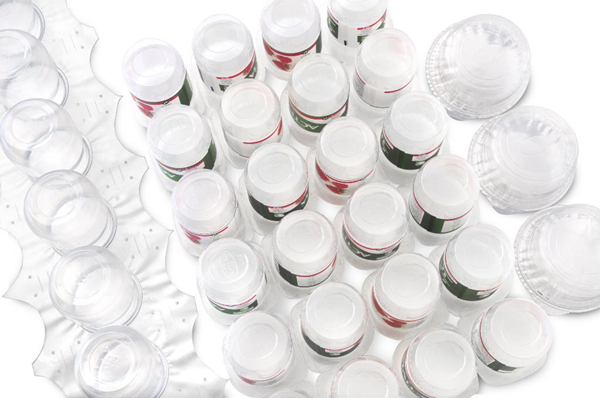 A Material Alternative on ARCIL Form-Fill-Seal machines
September 9, 2019
<p>Consumers’ expectations change, and manufacturers are confronted with growing demand for recyclability and reduced packaging. This movement illustrates a new consumer tendency toward nutrition that is healthier, more environmentally friendly and more sustainable. Regulatory trends in the EU and in specific countries strengthen packaging recyclability measures and require the agrofood industry to adapt in coming years.</p><p>To respond to these new requirements — specifically in the dairy market — ARCIL teams have developed solutions for using materials perfectly adaptable to our FFS technology and that respond to the packaging quality standards expected by manufacturers. Several options have been identified for equipping new production lines and adapting existing ones. Currently, most lines are equipped to work with polystyrene (PS), which is considered easy to thermoform but is currently difficult to recycle, since the channel currently isn’t very organized.</p><p>One of the paths explored by BW Filling & Closing ( BWFC) R&D teams involves PLA (polylactic acid), already used in the United States and Spain. It has several major advantages: It is biosourced, which means it is 100% of natural origin, often made with cornstarch fibers. However, it is an abrasive material, and difficult to cut, especially when it is thin. </p><p>BWFC R&D teams did tests on all the stations so that the machine could be adapted to the constraints associated with PLA material. The results have helped our customers decide in favor of a material that meets packaging quality standards while perfectly combining with FFS technology. </p><p>Another material considered: PET (polyethylene terephthalate), which also has notable advantages. PET already has an established recycling channel for many types of packaging — especially bottles — and its price per ton is much lower than that of PLA. </p><p>The BWFC teams have developed technical solutions for high-quality cutting and precutting of PET. Using transparent PET allows consumers to see the product, which makes it more attractive on the shelf. In the quest for product superiority, this cup can receive a PET lid and sleeve, making the packaging completely recyclable. To achieve this result, BWFC offers manufacturers its expertise in complete line integration. Thus ARCIL has been chosen for a project to fill PET cups, along with placement of a PET lid and integration of a PET sleeve label using its EL SLEEVE machine.</p><p>Several ARCIL lines operate with PET material, and the results speak for themselves! PET cups’ transparency and recyclability match the needs of manufacturers looking for an alternative to polystyrene cups with the demands of environmentally conscious consumers. </p>
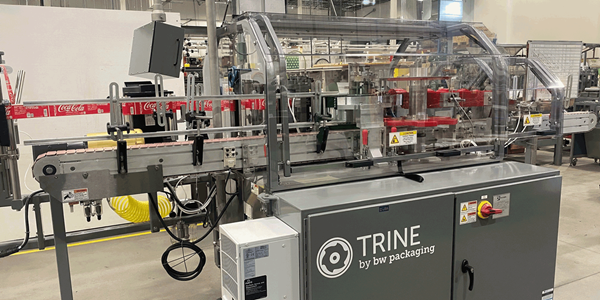 Trine Certified Parts, the Only Parts for your Trine Labeling Machine
August 8, 2019
<p>When it comes to parts for your <a href="/brands/trine">Trine labeling machine</a>, imitation is not a form of flattery.</p><p>If you’re a manufacturer with tight production schedules and high customer demand, you can’t afford to have downtime or to have a simple repair or part replacement done twice.</p><p>Trine machines are made and serviced by BW Packaging. Despite what you may find on the internet, there are companies who claim to sell parts for your Trine machine. However, they are not Trine Certified Parts – the only parts made by the manufacturer of Trine labeling machines, specially made for Trine labeling machines.</p><p>When you have a machine that is so important to your business, why accept a poor substitute? Why buy a part from a third-party company? BW Packaging is the most trusted source for Trine parts and upgrades for your Trine labeling system.</p><p>But don’t take our word for it – here’s what our customers have to say.</p><h2>Longevity</h2><p>A multinational South American beverage company, who runs over a half dozen Trine labeling machines in one of their key plants, increased their upgrade and change part spend with BW Packaging by over 350% in 2016 versus their previous seven-year average spend.</p><p>When we reached out to the customer to thank them for their business and better understand what happened, they shared the following:</p><p>“We had previously purchased most of our change parts, spare parts and upgrades from a Trine competitor. In 2015, our team conducted a series of analyses comparing the additional investment associated with purchasing genuine Trine OEM parts and the longevity associated with these parts relative to our previous supplier. Our conclusion was that we derived much greater value from the genuine Trine parts.”</p><p>The customer remains tremendously satisfied with the durability and high quality of genuine Trine parts.</p><h2>Satisfaction Guaranteed</h2><p>A major global beverage brand based in the southeast United States purchased a series of change parts for their Trine machine from a Trine competitor. Upon receiving these parts, they did not fit the customer’s Trine labeling system, so they were sent back to the provider. Once the customer received the correct parts, they found that these “correct” parts again did not fit their machine! What further complicated the matter was that the third-party provider insisted they had sent what the customer requested and was therefore unwilling to issue a refund. The customer ceased doing business with the Trine competitor and now trusts BW Packaging for genuine Trine parts.</p><h2>Highest Quality Solutions</h2><p>A beverage company based in the southern U.S. purchased two Trine labeling systems that had been rebuilt by a third-party company. The servo registration system they installed was not a true servo-based system but was instead a dated version of a registration system. The registration system’s timing was incorrect and imprecise, as was its window of correction, and after much frustration, the customer contacted Trine and invested in a genuine Trine servo registration system. “To us, Trine has been a true partner who offers best-in-class solutions,” stated the customer.</p><h2>A Trusted Partner</h2><p>A customer based on the east coast of the U.S., who specializes in decorating milk and tea bottles, purchased a rebuilt glue system from a Trine competitor. Unbeknownst to the customer, the glue pan heater was positioned backwards, and the incorrect positioning required that a certified Trine technician disassemble and reassemble the glue system. The customer has trusted BW Packaging with all their service, parts and upgrades business since.</p><p>Another global beverage leader with a location in the Midwest United States that runs multiple Trine labeling systems had a competitor to Trine install a servo registration system that consistently underperformed and caused problems on their packaging line. After much frustration with this provider, they contacted BW Packaging for assistance. The Trine technician was unable to find any schematics, bills of materials or any necessary details to understand the changes this provider had made. Furthermore, due to the provider’s wiring and program differences, the Trine technician needed to do extensive repairs to their Trine system in order to have it working properly. The technician finished the work on schedule, and the customer now places their trust exclusively with BW Packaging for genuine Trine parts and service.</p><p>Accept no substitutes. You too should trust BW Packaging for all your Trine parts and upgrade needs.</p>
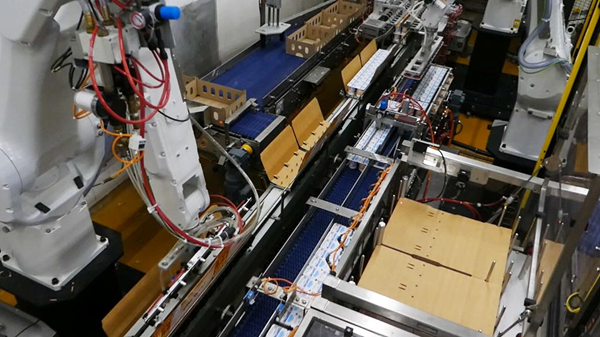 Flexibility, Agility, Ergonomics and Integration: BW Filling & Closing shows it's leadership in Complete Turnkey Packaging Lines
January 14, 2019
<p>Flexibility, agility, ergonomics and integration: BW Filling & Closing (BWFC) shows its leadership in complete turnkey packaging lines. Our solutions are designed to meet the growing demand for multi-functional production lines in the food and beverage industry.</p><p>At Sapy, our line produces crème desserts, flan, petite suisse, stirred fruits, flavored parboiled yogurt — each associated with its own cup format. The packaging machine offers two different types of in-machine labeling and, for some applications, can even label cups as they exit. Thanks to a very innovative and compact end-of-line wrapping/packaging module, a wide variety of packaging formats (x4, x6, x8, x12, x16 and x24) can be handled through to robotic palletization and pallet wrapping.</p><p>This line — completely integrated and automated by BWFC — offers superior versatility in 50 different product formats.</p><p>“Our customer wanted to buy this production line to replace three machines, with the idea of grouping several product formats while increasing productivity,” says Olivier Coste, Key Account Manager at BWFC. “Today, Sapy is very satisfied with our overall solution, which goes from thermoforming the cups all the way to palletizing them before they’re stored in the fridge or heating chamber.”</p><p>This line is equipped with a Form-Fill-Seal packaging machine with four fillers and a robotic line from FANUC (a longstanding partner of the customer), offers both great agility and reliability in production. In addition to offering the capability to run production in short series with various mixed-product groupings (such as multi-flavor packs), it also adds additional efficiency by allowing use of the end-of-line during the packaging machine’s cleaning in place process.</p><p>“This whole line was conceived to boost productivity. The quick change of decoration level, an automatic emptying process of less than five minutes, two magazines of wrapping boxes that allow the operator to prepare production in concealed time. The line’s communication allows monitoring cup consistency, the recipe, the packaging method, and wrapping in relation to the manufacturing sequence.”</p><p>This performance is a result of BWFC’s integrated project management, which allowed the customer to receive this line completely at the BWFC site in mainland France. Jérémy Holin, industrial director at Sapy, remarks on the accomplishment: “The line conceived and implemented by ARCIL has allowed us to overcome two major challenges: One is achieving excellence in food safety while integrating all of our franchiser’s requirements, and the other is enhancing our industrial efficiency by improving productivity (labor and packaging losses). The support from BWFC’s technical team allowed us to quickly identify points for improvement during startup and provide solutions that would ensure sustainable performance.”</p><p> </p><p><span style="text-decoration: underline">Technical description:</span></p><p>A complete multi-functional line of 22,000 cups an hour, operating at a rate of 31 cycles a minute. The line is equipped with a thermoforming machine allowing 5 cup shapes, 2 levels of in-machine labeling, equipped with 4 volumetric fillers, a fruit station, an out-of-machine labeler, an X-ray detector, a box shaper, a compact wrapping machine/packer, equipped with a package mixing station, palletization, and pallet wrapping.</p><div><div></div></div>